Stories, Essays, Rants, Appreciations, Long Walks With Mookie The Dog, History Lessons, Occasional Social Justice Warfare and Bad Advice For Parents from the Left Bank of Duffy's Creek.
The South Taconic Trail chops through miles and miles of deep woods, climbing the peaks of three mountains while rambling north and south through three towns in New York and one town in Massachusetts. Near the point at which those two states and Connecticut all stand on one foot, there’s a side trail along the Mighty South Taconic that scrambles up and down Mt. Frissell and leads to the far Mightier Appalachian Trail, which runs parallel at that point just a few miles to the east. Behind our backyard on Trisha’s Mountain is five and a half miles of unbroken wilderness to the east, stretching to the next cup of caahfee in Sheffield, Mass. This wild and pristine swath of the Earth is one of the Nature Conservancy’s designated Last Great Places, which lends to its no street cred.
And it all smells fantastic.
Along a ridge on Trisha’s Mountain, which is really the southern descent of Sunset Rock Mountain, is a trail that’s only about a mile long, called either the Wood Thrush Trail or the Blue Trail, depending upon whom you ask. The Wood Thrush Trail sounds more like morning in the English countryside and The Blue Trail sounds more like a Cannonball Adderly record, so for these purposes I’m going with Wood Thrush. This humble and fabulous little trail starts at Sunset Rock Road, just off the high point of North Mountain Road, then provides a fine aerobic workout up and down a few hollows before easing down at the end into the camping area of Taconic State Park.
On the official New York State Parks South Taconic Trail Map, available for $6.95 at the park office, the Wood Thrush Trail appears to be within close proximity of the point at which our lawn meets the wilderness. I was very excited at this discovery. So much so that I bought a Fiskars 29-inch machete axe on Amazon for $40 with which I planned to bushwhack my own trail through the woods and up the mountain, thus connecting to the Wood Thrush Trail, which would connect me to Sunset Rock Road, which would connect me to the Sunset Rock Trail, where I could in turn access the South Taconic Trail, along which I could travel south past Bash Bish Falls, up and over Mt. Frissell and on to the Appalachian Trail, from where I would have my choice heading north to Mt. Kahtadin in Maine or south to Springer Mountain in Georgia.
It’s a cool looking axe, as you can see. I showed it to Trisha when Amazon delivered it and she said, in her best Karl Childers from the movie “Slingblade”: “I’d like to be baptized.” That’s why I’m in love, boys.
But ain’t nobody gonna be walking to Georgia from our backyard.
Not that I didn’t try. It was in February of 2020. Six weeks after we bought our house in the country and three weeks before the criminal mismanagement of a coronavirus outbreak became a worldwide pandemic that broke everything and screwed everybody. A Buddhist friend from Long Island was doing us a huge favor (kindness and generosity being two of the five pillars of Buddhism) by following Jack, Mookie, Lou the Subaru and me up Route 22 in his van carrying stuff for the house, including two new toilets, obviously the most valuable of cargo, which would later be installed by a local plumber who plays Santa Claus at the Copake Town Christmas Parade every year and plays the organ at a local church every Sunday morning.
Details like that are what makes life worth living.
Being familiar with the area, my Buddhist friend stopped at Brewster Pastry, located in a grand city-state shopping plaza on a shining hill just south of the official upstate line at the Red Rooster, to procure for us the most delicious danish ring I have ever experienced. Due to family obligations, which evolved in the time that took him to drive the 36 miles of Interstate 684, it turned out that instead of crashing on an air mattress on the mountain, which was the original plan, he only had a few hours before he had to turn around and go back to Long Island.
Patience and compassion are two more pillars of Buddhism. Plus he gets credit for the fifth one, wisdom, for knowing about Brewster Pastry.
After we unloaded the toilets and other somewhat lesser valuables, and after a cup of coffee and a memorable danish, we decided to do a little reconnaissance on the Wood Thrush Trail. It was dry and cold under a powder blue winter sky, a perfect afternoon for a good little hike through the woods.
To save time, we drove the three quarters of a mile uphill to the corner of North Mountain and Sunset Rock Road, which is a narrow dirt road that twists all the way through the wilderness from Copake Falls to Mt. Washington, Mass. The parking lot for the Sunset Rock Trail, which merges with the Mighty South Taconic, is about a mile straight uphill, but there is also a sign warning that the road is not maintained from November until March and I don’t think they’re just saying that.
Having been either cruelly deluded by the South Taconic Trail Map or too stupid to comprehend its scale, I figured that we’d eventually be able to see at least the tops of the houses along North Mountain Road, of which we’d be looking for the seventh one. It seemed promising that the trail actually started within a stone’s throw of the road.
As trails are hiked by humans, of course, they get a little wider and a little less wild over time, until they eventually become the Cross Island Parkway. It was clear that the Wood Thrush Trail, despite its frequent blue trail markers, was not as heavily traversed as the other local trails. It also became clear that, after one big dip, we were steadily gaining elevation, to the point where we could see the sky angling through the top of the mountain to our left. This meant that the houses that were down there somewhere to our right were hidden from view because of the extreme slope, except for the chimney and the very top of the great center hall colonial colossus next door to us. It was hard to judge the distance between us and the house, and it was of course, straight downhill. I had already figured out from the $6.95 trail map that there was a 400-foot elevation gain between the yard and the trail, which didn’t seem like a lot until one looked down.
Meanwhile, not only did my Buddhist friend have a tight schedule that winter afternoon, but I also had an appointment to have a propane tank delivered and connected to the stove sometime after 2 p.m. by the good folks at Herrington’s. It was and is my first ever propane tank, so it was obviously a special moment for me. Before we headed back to the house, we took a look at our surroundings on the Wood Thrush Trail. The plan was to take a mental snapshot of sorts of the spot on the trail that seemed to be directly in back of the yard, then walk up from the yard, back into the woods and back up to the trail, which despite the brush would be a mostly possible in February but completely impossible in April without a machete axe and a pair of loppers at the very least, and would also more than likely end in a prolonged bout of Lyme disease.
A quick stop for more danish and coffee and we were climbing the hill behind the house and stepping into the domain of the bears and the owls. I had already ventured into the woods one other time, the day we closed on the house. According to Zillow property line maps, which are almost uniformly useless, Trisha and I own some of these woods. The rest belongs to the People of the State of New York, so technically we own that, too. I had also seen on my trail map that a small stream ran through the woods not far from the edge of the yard. Some careful stepping and a few whacks with the machete got me to this stream, which, on that day at least, was not much more than a trickle of muddy water cutting through the rocky ground, easily bridged if one were blazing a trail to Maine.
My Buddhist friend understands that life is suffering, but the fact was he only had one pair of shoes with him and he was looking at another three-hour drive. So while I pulled myself up the hill with a big walking stick, he took his time to avoid any serious mud.
A few pertinent facts regarding the almost 58-year-old body to which my soul is tethered:
It has spent the majority of its life on the South Shore of Long Island, where there are far more escalators than hills, and no matter how much time it’s spent upstate, it has never truly gotten used to climbing.
It picked up a 24-piece case of Redpack 28 oz. Whole Tomatoes in Aisle 3 of the North Woodmere Foodtown in October of 1981 without bending its knees first, walked a mile back home looking a human jackknife, and has had a pain in its lumbar region ever since.
It was sideswiped and thrown to the ground by a large golden retriever in March of 1989, in a case of tragic miscommunication, resulting in several broken ribs on its right side.
It fell from a chair that flipped from under it sometime in late summer of 2013 while it was stapling bulletin board paper over a white board in Room 111 of Middle School 202, banging its left leg off a desk on the way down, resulting in a cramping pain every time it tries to accelerate or walk uphill.
It smokes.
But in my magical thinking world, I’m just as capable of blazing a trail up a mountain through the woods as anybody. All I have to do is switch into Little Engine That Could Mode and play through the pain.
Remind me of that when this body has 68 years on it. Maybe I’ll still have a sense of humor about it, but you may find me a grave man. (Joke credit: William Shakespeare).
I took the four-hundred-foot incline one step and one breath at a time, stopping every so often to avoid dropping dead of a heart attack. I kept calling down to my Buddhist friend that I was pretty sure I could see the path from where I was, but this was magical thinking as well. At the point where it became impossible to move forward without grabbing hold of the nearest small tree, I got the call on my rectangle from my soon to be new friend Paul from Herrington’s, who is just about everything you’d hope for in the guy that services your furnace and makes sure you don’t blow yourself up with propane. It was time to put this adventure to rest, and I still have no idea how close I got to the Wood Thrush Trail.
I took the Wood Thrush Trail again for a spectacularly good little hike in early May. I got past the point reached three months before with my Buddhist friend and I found a spot where a dry culvert ran straight down the mountain. Across that culvert, a mighty oak had fallen. So like the insects and fungi and other parasites that also took advantage of this tragedy, I found a great new place to sit down in the woods for a while and get some thinking done.
This accomplished, I turned around and headed back to Sunset Rock Road. While the sign marking the trailhead there clearly states “Campground 1 Mile”, and I have no idea how close I got to the campground, which I really didn’t want to get to anyway because it would mean a whole lot of uphill on the way back, it sure felt like I had walked over a mile.
One evening in August, Trisha and I were sitting in camp chairs on the front lawn, doing our Zen sunset thing, and a couple of guys came walking down the road from the direction of Sunset Rock. Figuring out that we were sitting out there just to watch the sunset, one of them asked if we do this every night. We told them every night we can. Then he told us that they were walking back to the campground after walking up the Blue Trail, believing it would be an easy mile, and that they could then walk from there up to the trail that goes to the rock, which, in the ultimate of ironies, closes at sunset.
They didn’t make it to Sunset Rock, and they were now racing daylight to get down North Mountain and back to their campsite. But they stopped to chat from ten feet away. One of the guys said that the trail seemed a lot longer than a mile. I said that’s what I thought.
So I checked it on Google Earth.
It’s a mile.
Maybe he also picked up a case of tomatoes when he was younger, or he got run over by a dog or decided to stand on a chair to staple bulletin board paper. Or maybe a mile through the woods is so full of sensory stimuli that it seems longer than it is.
Or maybe it’s just that trail.
The Sunset Rock Trail, which is a little over a mile round trip, does not seem as long when you’re hiking it. It could be because it changes so drastically in such a short time, or it could be because after not much effort at all you get to sit on a rock and look down over the Peaceful Roe Jan Valley and out into the Catskills, infinity and beyond while you eat your peanut butter and jelly sandwich.
I would have expected that a trail that leads to a rock with a million-dollar view would be a tough uphill climb, but most of the uphill is in the car on the seasonal dirt road to the parking lot. I sure enough feel the burn where my leg hit the desk on the one steep ascent, but my walking stick does most of the work.
Once you level off on the Sunset Rock Trail, you’ve reached a new climate with a little dash of alpine. Here you enter a clearing where there are smaller trees and bushes. There are big clumps of mountain laurel blooming in June and July. The air seems to improve suddenly. You’re at the turnoff where the Mighty South Taconic moves on north to its terminus at Catamount Ski Resort, and if you go that way by mistake, you’ll be back in the deep woods and you’ll miss the rock and your peanut butter and jelly sandwich. So don’t do that. Walk to the right.
If you go the right way, you pass through a wild place that looks like it was personally landscaped by God. It’s a tunnel created by high hardwoods on either side leading you through a path of ferns. One does have to be aware of mother#$%ing snakes up here, as they like to move towards the light when it starts to warm, and they like big sunny rocks as much as people do. And those particular Taconic-Berkshire mother#$%ing snakes just happen to be deadly rattlesnakes.
I’ve never run into one, thank Jesus, but I keep them in the back of my mind, like my own impending death. But so far, I’ve evaded both. I’m told that rattlesnake encounters are relatively rare. Besides which, this one little stretch of trail seems so removed from civilization that you might just as likely run into gnomes and fairies, which, while they can enchant you, will not attack you with venomous poison.
Still, I never let my guard down.
The view from Sunset Rock just goes on and on and on, and under ideal conditions, it will make all your worries disappear and you will be born again. But there’s always the chance that a few of the droves have broken loose from the Bash Bish Trail and have wandered up to the rock, waiting to annoy you upon your arrival. A friend of mine who hiked the Mighty South Taconic all the way up from the campground to the rock one day ended up having to share the view with a group of people who just wouldn’t shut up, a situation he described perfectly as, “kind of a buzzkill, John Daniel.”
Not to take anything away from the Bash Bish Trail. It is the Kingdom of the Droves and it always has been, but it’s a beautiful, beautiful place that, ultimately, people can’t ruin, although they have tried very, very hard.
First Insider Tip on the Bash Bish Trail: Take a Monday or a Tuesday off from work. Or be prepared to share it with lots and lots of people on a Saturday or Sunday. Second Insider Tip: All Massachusetts State Parks are alcohol-free, by decree of Governor Michael Dukakis forty years ago. So if you happen to be working on a forty in a brown paper bag as you swagger along the trail, because that’s how you roll, you’re going to have to either finish it or pour it out on the state line.
Third Insider Tip: When you get to the falls, don’t even think about climbing up to the top and diving 200 feet down into the inviting pool of water below, because if you make it you’ll likely get arrested by the Mass Park Police, and if you’re anything like twenty-five reckless or inattentive people in the last century or the mythical Native American woman named Bash Bish with a lot of emotional baggage who didn’t make it, it will be the last thing you do.
Trisha would call this an “unchristian” thought, but it is kind of cool to live near one of the most dangerous tourist attractions in the world. More no street cred. And the thing I love about the falls most of all is, no matter where I am or what I’m doing, It’s always up there Bashin’ and Bishin’, twenty-four-seven, waiting for me to come back and stare at it. It’s Bashin’ and Bishin’ right now. People like me who have been hiking up to the falls for years feel a sense of ownership, like they’re on their way to the home of an old friend who’s always up for a visit. People who have visited once never forget it, and they usually plan to get back there someday.
The trail from the parking lot to the falls is the epitome of a good little hike. Which is to say, that, among good little hikes, there is no better good little hike. Especially if you’re Mookie. Three-quarters of a mile through a state and a commonwealth, deep woods full of interesting scents rising to your left, the trail wide enough to ensure social distancing for people and dogs passing the other way, although Mookie doesn’t really know what those words mean. All he knows is there are people and dogs of all sizes everywhere and the freshest swimming water in two counties. It’s a festival of external stimuli.
The instant that my nine-and-a-half-year-old labby gets out of the car at the Bash Bish parking lot, he’s a puppy again. The first stop is to check the trail kiosks for the latest pee mail. Then he knows the path slopes down gradually until the place where he goes swimming, so he takes me for a walk, and I let him lead.
On one good little hike, when we he was around two years old, Mookie and I were playing in the Bash Bish Brook when we met some nice Massachusetts hippie girls – paisley bandana kerchiefs, nose rings and everything – who had a baby girl with them. The baby was six weeks old, but the hippie girls thought it would be cool for the baby to meet Mookie, and Mookie thinks it would be cool to meet everybody on Earth. And there I was, standing in cold water under warm summer skies, watching an animal for whom I was legally responsible and whose teeth were designed to rip through flesh and bone leaning in to sniff the face of a six-week-old baby. It was one of those moments early on when I realized I was walking around with God’s Most Perfect Dog.
And by the way. That water? Go ahead and drink it. Fill up a bottle with it. Yeah, I know, dogs and barefoot droves. Still. It’s holy water. It cures everything. @ me.
Everybody loves this stretch of the Bash Bish trail. On hot days, people stake out a spot on the brook and just sit there in for hours. There’s lots of big boulders in the middle of the brook to play on or take your narcissistic selfies on. Please be advised though, that if you decide to build a little balancing stone statue on one of the boulders, which seems to have been a thing for a while now, the manager of Taconic State Park, normally the most affable of gentleman, will come along at some point and angrily kick them over. God put the stones where he needed them. As much fun as stone balancing is, God know what he’s doing. Leave the damn stones alone.
Things got out of control in the summer of 2020 during the Pandemic. Droves invaded from every direction. They parked all over Copake Falls and dragged barbecue equipment and other bad ideas into the park and down the trail to the falls. On the weekends of these Drove Invasion Days, Mookie and I went up to the Roe Jan Park that the droves don’t know about – yet- to get in our swim and our good little hikes.
By the third week of July, there were police roadblocks at the two entrances to Copake Falls off Route 22. To go get take-out from Dad’s Diner or the Church Street Deli, I’d have to get waved on to make the left out of the hamlet, then fifteen minutes later, smile, roll down the window and say, goofily, “Hi! Just goin’ back to my house with lunch!” to armed law enforcement officers. Fact is, all my ID says I’m from Long Island, so I had to rely on their kind nature to gain entry to Route 344.
This insanity reached its zenith when people began lining up in their cars in a staging area for hours on Saturdays and Sundays just to get the chance to get in a good little hike to Bash Bish Falls. Mookie and I stuck to the Rail Trail, the Roe Jan Park and our secret little spot under the bridge.
You can’t blame the droves. Not all of them were unrepentant assholes from Long Island. Some of them were good, nature-respecting folks who were just trying to get out of the house. Of course, I didn’t have to clean up after the unrepentant assholes, so my sympathy comes easy. But these have been miserable times, and I’ve been using a good little hike through the woods to Bash Bish Falls for years to inject my spirit with some instant happy. Why would I, a nauseatingly lucky son of a bitch, deny that to anybody else, especially now?
Mookie and I went back to the Bash Bish Trail on the last day of September. It was a Wednesday. To the untrained, non-park-employee eye, the area showed no signs of the human invasion it had experienced over the summer, but the friendly Mass Park Policeman on duty that day to make sure nobody jumps off the falls told me stories that would bend your bones. The air was crisp, the trees were in color, and the brook was not too cold yet. So Mookie got in his swimming, then we walked along and said hi to people in masks as we climbed the big hill past the Mass border and up into the trees, where you’re at eye level with the birds. Our old friend was waiting for us up at the end of the trail, Bashin’ and Bishin’ away, and we sat on a rock, and we stared for a while.
We were there again for the First Day Hike on New Year’s Day of 2021, when everyone was guilty of a little magical thinking, but that’s how it should be. The First Day Hike was led by the affable park manager and his beautiful Newfoundland dog Mahi Bear, whom Mookie resents because Mahi gets more attention. There were only about ten or twelve people with us on the hike, but there were lots and lots of other visitors on the trail. The weather had suddenly improved and a few hundred people had the same idea at the same time: 2020 was such catastrophe of sadness that they were damned if they weren’t going to start 2021 by heading up to Bash Bish Falls for an injection of happiness. We greeted every single one of them, and they greeted us back. A few of them told Mookie how beautiful he was, and he wagged to say he knew that, but thank you for saying it.
Mookie and I love the Bash Bish Trail, and the Harlem Valley Rail Trail, which is great for broken down old guys from Long Island. Neither one of us needs to walk to Maine, or even the three mountains of the Mighty South Taconic Trail. But it is nice to know they’re up there. In his good dog life, he has gotten little licks of peanut butter while looking down from Sunset Rock over the Peaceful Roe Jan Valley. And if I want to go get lost in the woods for a while, my giant oak tree bench on the Wood Thrush Trail is there waiting for me. If it’s time for a little excitement and some holy water, we’re off on another good little hike to check on our old friend, always up there Bashin’ and Bishin’, and always up for a visit.
And if it ever seems like I’m taking any of this for granted, please don’t hesitate to pick up a couple of stones from the brook and aim them at my head.
I was not there for the corn snake. When I heard about it, the first person I thought of was Samuel L. Jackson. Motherf#%&ing snakes crawling around in this motherf#%&ing country house. Great.
The corn snake was, as reported by reputable sources related to me by blood, well in excess of 3 feet long. He was not crawling up the wall from behind the oil tank in the basement machine room in order freak anyone out. This was purely incidental on the snake’s part, as I assume it is with any snake. Snakes don’t intend to freak people out, and I would think they’re annoyed and distracted when it happens. I guess they have to look at it as the cost of doing snake business sometimes. Goddamned people.
Corn snakes are not venomous, but rattlesnakes are, and there are many, many rattlesnakes in Columbia County. Trisha and Jack did not know the corn snake was not a rattlesnake. A rattlesnake in the machine room of the basement would have been enough for any of us to say, “OK. Tried living Upstate. Didn’t like it. Let’s make a profit on this deal and get the hell out of here.”
But it wasn’t a rattlesnake. It was a corn snake, which are similarly fat, spotted and creepy. And the corn snake was there in the basement machine room to eat the mice.
And the mice were there because up until this year, they lived there.
The House on Trisha’s Mountain was more or less vacant for two years before we bought it, although it was being minimally maintained. So there was plenty of quiet time with no people around for the mice to workshop ways of getting in, but since there was no food or water once they did, they were most likely taking up residence to escape from the coyotes and other predators who couldn’t follow behind them, or else just to get warm, since the boiler was running for no one to keep the pipes from freezing, as it is right now.
Somewhere in the midst of this year of Pandemic, social unrest and civil war, in a small rural town in Upstate New York, a man and a woman removed more mouse shit from habitable space than they had ever before or will ever again. Cleaning the garage alone should have killed us via hantavirus, but here we are, still standing.
The very first time I stood outside of the garage on the Mountain, on a hot and murky September afternoon in 2019, when it was a vacant house full of mice and snakes, there was also a shed full of wasps to my right, and one of those wasps rightly saw me as a potential enemy and stung me on my right arm, which screamed silently in pain for the rest of the afternoon as we assessed the potential investment in a house full of mice and snakes surrounded by angry wasps. But neither the wasp that stung me nor the squirrel I accidently ran over on the way up the hill that afternoon was enough to make me think there was any sort of bad mojo embedded in this whole buying a second house plan. Though I still feel bad about the squirrel and I always will.
One key difference between my wife Trisha and I is that I’ll always try the stupid idea first and work my way up to the practical one. After I tried to drive the wasps away with noxious gas in a can from the Herrington’s Hardware store, Trisha called Meerkat. After vacuuming out two years of mouse shit from the kitchen drawers, I bought some of those plug-in things that are supposed to emit a deafening noise torturous to mice and drive them away, or something like that, and stuck them in various electrical outlets around the house.
Trisha called Meerkat. This was shortly after a hot day in July when Jack and I came back from a peaceful, positive morning bike ride on the Rail Trail from Millerton to Coleman Station and I cooked four slices of leftover pizza and a mouse in the oven.
The first thing I can tell you is that a mouse cooked in an oven at 400 degrees on a hot July afternoon, even for a just few minutes, is just about the most horrific thing I’ve ever smelled. And I consider myself lucky in that regard.
The second thing I can tell you is that Meerkat is a company well on their way to building a rodent and insect control empire in Upstate New York, in part you can be sure through contracts with people who have come from Long Island and other more barren places to find a countryside teeming with critters they have never had to deal with in any sort of large numbers before. Lyle Cat had effectively (and proudly) taken care of the comparatively few mice that have made their way into the House on Duffy’s Creek, but it was way too problematic to temporarily export a cat, and the problem was bigger than Lyle, as big as he thinks he is.
Of course, The Country Way would be to get rid of those critters oneself: Trap all the mice, and the motherf#$&ing snake if necessary. Blast those wasps out of the yard and seize their nest while they slept. Painstakingly seal up all the crevices between out there and in here which would be big enough to accommodate a stone-cold outlaw mouse with nothing to lose.
Around the same time I cooked the mouse, I discovered an angry nest of yellow jackets living under the front porch, directly beneath the front door. I discovered them because they all swarmed up and attacked me the moment I arrived on the Mountain. Another trip to the Herrington’s Hardware store procured some more noxious gas in a can designed to take them out, and that was my stupid plan. But the electrician who was working at the house advised me on one of his trips out to the truck that the Country Way, as it were, would be to just get in there and take the nest out. He grabbed a plastic bag, wrapped it around his hand, and proceeded to crawl under the porch and grab the yellow jacket nest with one hand, wrapping it into the bag in one motion. After that we hit it with the noxious gas. Problem solved.
He told me, “they sense fear.”
The Suburban-Pretending-To-Be-Country-Way is to write checks. The Meercat Guys who had rid us of angry wasps in the springtime were more than happy to return to Trisha’s Mountain to rid us of mice and the snakes who love them. This was not their first circus. In regard to the very large corn snake (who was probably the descendant of a long-ago escaped pet, as they are not native to the area), as well as some smaller garter snakes that Trisha and Jack had also met in the basement, one Meerkat Guy suggested that the snakes would find their way out once there were no more mice, which would be after they did their Meerkat thing, baiting and trapping the mice inside the house and sealing up the entry points for adventurous and/or desperate mice outside the house. He also suggested that we might find a few dead mice here and about upon our arrival after this process was completed, and that was certainly the case.
When asked how the snake would find its way out if they were sealing up the house, he suggested the disengaged dryer vent where no dryer was at the time. I’m hoping the corn snake overheard him.
The other Meerkat Guy pointed out to Trisha that the unfinished attic space under the roof was full of snake shit, which he noticed was part of the general potpourri of the house when it was closed up for a while. Having no idea what snake shit actually smells like, I could only accept this information at face value, and I have no reason to go into the attic. The Meerkat Guys cleaned the attic, and the house smells just fine to me. I burn a lot of Yankee Candles when I’m there.
Apropos of nothing, every deer is Bambi to Trisha Duffy. And if there are more than one, it’s not “Look! Bambi and her family!”, it’s simply the plural: “Bambies!” Which really makes no sense. This has been going on for twenty-one years, but I’m not tired of it.
The House on the Mountain is bordered on one side by a cornfield (more about that in a future chapter) and in the back by Taconic State Park woodland. There’s a large crabapple tree at the top of the hill in the backyard, which is convenient if you’re a deer on your way from the cornfield to the woods and you decide to stop for lunch. It’s a swell place to be a deer, Trisha’s Mountain is, although it’s tough being everybody’s favorite large prey.
We’d like to have a garden on the Mountain someday. The deer of course, would like everything about that idea, as would the bunnies and the chipmunks and the groundhogs. So without a significant investment in infrastructure; fencing, raised beds, fake owls, air horns and the like, there’s a lot of stuff we just couldn’t grow. Food, for instance. And it would certainly be the end of the road for the bread and butter pickles I’ve been making from creek-grown cucumbers and passing around to people for the last few years. Anyone who’s tried one could tell you that would be a tragedy.
The bunnies and the groundhogs live in the brush bordering both sides of the property, along with the chipmunks and the little brown squirrels who seem smarter than the grey ones who run in front of moving vehicles. They have all given Mookie Dog new purpose. Long ago on Long Island, he decided that squirrels were not worth his time or attention, but he knows the scent of every outdoor cat within 3 square miles of Duffy’s Creek and they should all consider themselves under surveillance. We haven’t run across one outdoor cat on Trisha’s Mountain to date, but we’ve got bunnies in every bush, and Mookie knows it. He knows them as small but highly entertaining pretend prey, slightly bigger than Lyle the Cat but with similar markings. He’s chased a couple of bunnies back into the bushes and he knows damn well when a groundhog or a chipmunk is watching him from under the back porch. He enjoys picking up their tracks, which had done wonders for his self-esteem. I’m glad I was able to give him that experience.
But there are some tough fellows in the neighborhood, and you never know when you might run across one. If you happen to be large or small prey, it might prove a fatal encounter. If you’re an old man and an old dog from Long Island, you just have to keep your guard up and try not to make eye contact and you should be all right.
Fortunately, I have not come across a bobcat, a coyote or a black bear while hanging out with Mookie. The only bobcat I’ve come across at all ran across Route 22 directly in front of my car at night in the middle of a nasty summer thunderstorm. I considered it a close call, but I’m sure the bobcat knew he had it all along. If Mookie were to come face to face with a coyote or a black bear, he’d likely growl and be a jerk about it, because he grew up on Long Island and he thinks he’s hot shit, and this would likely make a tense situation worse. He would even make a fool out of himself trying to stand up to any passing deer, and the local wild turkeys probably smell vaguely like dog food. So if we’re chilling up at the top of the hill in the backyard, with several hundred square miles of New York and Massachusetts wilderness directly behind us, I have his leash where I can grab it and I listen for rustling, ready at any moment to save my stubborn friend from himself.
Because Trisha and I have, in fact, seen both a coyote and a black bear on the Mountain, and both relatively up close. Oddly, they were both traveling the same path, though I would think they’d stay out of each other’s way generally speaking. The path starts at our mailbox on the opposite side of the road from the driveway and travels straight downhill between our neighbor’s heavily wooded property and the southern edge of tree farm, ending at the Orphan Farm Road parking lot for the Harlem Valley Rail Trail.
I took an unauthorized walk down there one day, without Mookie, then Trisha told me about the coyote she saw coming out from the path and heading up the road and I took no more walks down there. A month or two later, I happened to look out the front door just at the right moment to see a black bear circling the mailbox. I managed to get a loch ness type picture and video of him. I thought about running outside to follow him once he started back down the path, picture-taking rectangle in hand, but then I remembered that he could kill me.
I have to listen for wild animals while this knucklehead rolls upside down.
As a matter of fact, when were in the process of buying a house where the wild things are, I conjured up a scenario wherein if I were ever diagnosed with a terminal illness, and was told that I would suffer and die in a short time, I would simply eat four or five “infused” chocolate bars from Theory Wellness in Great Barrington, cover myself in peanut butter and go to sleep in my hammock up where the yard meets the woods. Trisha noted that this would definitely make the local news, and that I could go out as “Copake Falls Man.” When I decided for whatever reason to share this little joke at the conference table where we all met for the house closing, our lawyer suggested honey would work better than peanut butter, which is the difference between a teaching degree and a law degree, never mind a Long Islander and a Copakean.
My Loch Ness Bear Photo.
For now I am alive and well and staying away from doctors. And when the moon rises over Trisha’s mountain, the coyotes howl and my friends the barred owls hoot, I feel like the luckiest bipedal son of bitch in the world to be in their presence.
As I finish up this chapter, the House on Trisha’s Mountain is quiet, but the boiler is running for nobody to keep the pipes from freezing. I can only hope that the mice and the snakes who love them are no longer able to gain access. I can’t help but imagine coyotes and black bears sitting around on the La-Z–Boy furniture watching Spectrum News, burning Yankee Candles, maybe inviting the bobcats in for Scrabble around the kitchen table. But this is only because I watched a lot of cartoons as a child.
Black Bears and Coyotes are excellent spirit animals. Owls, too. The bear totem is quiet strength, a grounding force of peaceful confidence and courage in the face of adversity. I also learned that the bear “medicine” is healing through quiet solitude and rest, which was pretty cool since the day after I met my bear I headed out on a trip to the Adirondacks with Mookie after 25 years of being yelled at under fluorescent lighting. I don’t know about him, but I needed that bear medicine real bad, never mind the chocolate bars from Theory Wellness.
Our totem pole, a housewarming gift from a friend. It sort of relates and I thought you might want to see it.
The Coyote Spirit (according to spiritanimal.info) is one who imparts his wisdom indirectly through “jokes or trickery. The spirit of the coyote may remind you to not take things too seriously and bring more balance between wisdom and playfulness.” Part of its magic is to reveal the truth behind illusion and chaos.” Lord knows there was plenty of that to sort through this year.
The Owl Spirit announces change. The death of one thing and the start of another, and the wisdom to accept it and live with it. I’ll look to him for comfort when the time comes that I have to drag myself kicking and screaming from my little creek in Valley Stream.
For now, I’m blessed to live even part of the time in a place where all this animal magic abounds. Even snakes, of course, whose likeness is rarely printed on country décor lampshades and curtains, have their own magic and their own wisdom. “The snake as a spirit animal can be to provide guidance about life changes and transitions, whether they are happening at the physical, emotional or spiritual level. “
I don’t know how exactly they transmit their magic, the spirit animals, but the folks up at the Six Nations Indian Museum in Onchiota, New York convinced me as a small child that this stuff was as real as anything the Catholics taught at Sunday Mass, and I’ve never had reason to doubt any of it.
Still, whenever I get up to the Mountain, the first thing I do when I go down to the basement is grab the broom at the bottom of the stairs. Spirits notwithstanding, I am so tired of these motherf#$&ing snakes in this motherf#%&ing country house.
If you decided, for some strange and indefensible reason, to drive from the bottom to the top of New York State in a straight south to north direction, starting at Kennedy Airport and ending at the Canadian Border, at two points in the first half of your pointless journey, you would be just a couple of miles from my house. I can’t say for sure whether I’d be home. Or home. But if I am, please stop by. We don’t get many visitors these days.
Call first.
And if you chose to take the scenic route on this silly excursion (and you may as well), you would also get to know New York State Route 22, which runs 337.26 miles from the Bronx almost to Quebec, and parallels the borders of Connecticut, Massachusetts and Vermont. One stretch of this mostly two-lane road runs about 60 miles, from Brewster to Copake Falls.
That stretch is mine.
Between myself and Trisha, plus one run from a friend with a van (who stopped at Brewster Pastry to buy us a Danish that couldn’t be beat) we did twenty round trips from Valley Stream to Copake Falls in the first six months of owning a second house, logging around 4,000 miles, back and forth, back and forth, hauling, among other things, three air mattress, a four-seat dining room set, a complete set of curtains with bear and deer silhouettes, a 12-Cup Mr. Coffee, eight lamps, six framed pictures, four patio chairs and a matching table, a set of silverware, plates and bowls, a portable firepit, two window fans, a space heater, a TV and the stand to put it on, a microwave oven, two air conditioners, a dresser, two nightstands, five end tables, a set of fireplace tools, two rugs, a shower curtain, a shower head, two strings of party lights, a desk and chair set, seven folding chairs, two toilets, a combination pool table/ ping pong table, a convertible couch, a copper rooster wind vane, a dog crate with two dog beds and a new kitchen sink, so don’t even bother saying it, ‘cause we did.
Lou the Blue Subaru getting ready to go to work
I knew those miles of Route 22 pretty well before. Now, either way I’m traveling, north or south, it’s the street that goes to my house. So while the other chapters in this book will either be somewhere around my house or somewhere around my other house, in this chapter, I’m going to take you on a ride, and hopefully show you what makes this stretch of road so interesting and so unique. But you have to promise to want to learn things that you really don’t have to know. And I have to hit you over the head with two-thousand words of backstory first.
Now, as anyone who has traveled north to south from Upstate into New York City and Long Island knows, the experience is kind of like sitting home watching this nice show about farms and trees on TV and BANG! Suddenly a bunch of stormtroopers break in and grab you, throw you behind the wheel of your car and force you to drive while they torture you for an hour and a half. (“Faster!” “Trooper!” Slow Down!” “Watch Out!” “Move Right!” “Move Left!” “Stop!” “Now Crawl, Mother#%&er!”). They slap you around with psychopaths in monster trucks, people in very old Japanese sedans merging from ten-foot-long entrance ramps for the very first time in their lives and lightening-flash traffic jams on the Hutch, and right before they release you, they threaten to throw you off the Whitestone Bridge.
On the south to north route, you can sort of keep your dignity as you’re being tortured, knowing that no matter what they throw at you, you’re going to make it to that country road that takes you home.
Just watch out you don’t get killed first.
Had I known how much necessary driving I’d be doing now, I might have done less unnecessary driving when I was younger, but that unnecessary driving is how I wound up with a house upstate in the first place.
When I was young and restless, in my mid-twenties and living on the creek with my parents, I used to like to just get in the car and go. I had nobody to go with, the upside being that I could go wherever I wanted. But once off Long Island, I would always go north, or north then east. My family went to the Adirondack Mountains every summer when I was a kid, so that had a lot to do with it. Plus, I’ve always just plain old loved Upstate New York and New England, and the chance to explore the next new route and the next new town. If asked where I was planning to go on these trips, I’d say I was driving to Massachusetts for a cup of coffee.
That’s because the first time I did this, I decided to take Route 7 through Connecticut and Massachusetts up to Bennington, Vermont, then turn around and go home. It was October 1987, and I wanted to look at the leaves in color, because I lacked any real ambition. Plus, I wasn’t smart enough at the time to check the weather forecast, because I picked a cold, rainy, grey day, though I did learn that the fall leaves do have their own special charms and their own special smell on days like that.
I left at six in the morning and decided to stop (in the pouring rain) at the Sunrise Diner in Sheffield, Mass for breakfast around 8:30. The diner occupied a cape-cod house smaller than my house in Valley Stream, and it was packed solid for breakfast. A little digging revealed that the Sunrise Diner operated until around six years ago, and it closed still looking exactly as it did in 1987. It was one of those places you’d find in The Land That Time Forgot.
And I guess they didn’t get a lot of out-of-towners, as the entire place went stone silent when I walked in, like they had been talking about the poor, pathetic single guy driving aimlessly up Route 7 in a Honda Civic and someone said, “Shhh!!! He’s walking in!”
I didn’t want to take up a whole booth for myself, so I sat at the end of the counter and I smiled in polite acknowledgement at the people who weren’t smiling back at me. The man behind the counter, tall as a tree, bushy moustache, glasses, plaid shirt, well-worn jeans with suspenders, he smiled at me for all of them, and he said the magic word:
“Caahffee?”
I love coffee more than just about anything. People on Long Island say, “cawwffee.” Something about the way this gentleman said “caahffee” made it sound somehow like it would be better coffee than cawwffee.
So I said yes, please. And it was excellent caahffee. As good as any cawwffee I’d ever been served on Long Island. I ordered scrambled eggs and sausage with what I thought was a side of hash brown potatoes, but which turned out to be a gigantic side of corned beef hash. With everyone still staring at me, I felt compelled to eat all of it. It was the best corned beef you could possibly ever imagine.
And that was my introduction to Berkshire County, Massachusetts, as well as to hospitality New England style. We’ll serve you up the best breakfast you ever had, but don’t expect a hug. I could totally get with that. And it was the beginning of a day of happy little discoveries along the road that I could file away for future reference.
I drove on through Great Barrington and my first impression was that I could live very happily in a place like this. And this was 32 years before the first legal weed store opened next to the Price Chopper twelve miles from my upstate front door. Stockbridge looked just like the Rockwell picture, even though it wasn’t Christmas. I would’ve stopped at Alice’s Restaurant, but I was still high from the corned beef hash. Even Pittsfield, as apocalyptic as some if it looked in 1987, had Waconah Park, the oldest professional ballpark in the country, where the Rookie League Mets played back then. And above Pittsfield (which looks a whole lot better now) was Mount Greylock, which I came back to climb, but which you can also drive to the top of and get a hot dog (and a cup of caahffe) when you got there. You can’t beat that.
I did make it to Bennington on that first trip, also a beautiful little town, with a cool 306-foot tall obelisk, The Bennington Battle Monument, that I also came back to climb when it wasn’t raining.
I told as friend of mine about the trip later. He said, “Dude. You really need a girlfriend to do this stuff with.” But more solo trips were in my future before I ever found one. One I could keep, anyway.
Sitting in my parents’ attic that winter, staring at my old Rand McNally Atlas, I planned a route to circumnavigate New York State. It was fun to plan, but the reality set in that this was a journey of close to 1,200 miles, so I scaled back, and decided just to travel up Route 22, which parallels “Big 7” on the New York side, just to look around. It was the Spring of 1988, and I still didn’t have a girlfriend, so off I went.
My first stop on Route 22 was about 60 miles up from Interstate 684. I pulled off on Route 344 to look around Taconic State Park in Copake Falls. I liked waterfalls, and I wanted to see one. I stopped in what appeared to be one of the only two commercial business in town (the other being Bash Bish Bicycles). It was a denim blue building with deep red trim around the windows that looked as if it had been built many, many upstate winters ago. The sign outside indicated that I was about to cross the threshold of the Depot Deli, unknowingly for the first of thousands of times.
I bought something, don’t know what, and I asked the girl about my age behind the counter how to get to “Cop-A-Key Falls.” She was very patient about correcting me, though I was embarrassed just the same. (It’s “Co-payke”). She also explained to me that there was no such thing, and what I was looking for was Bash Bish Falls, which was down that way about two miles.
So I walked out of the Depot Deli having made a complete ass of myself, but it all worked out, as the girl about my age is now my neighbor three mailboxes down North Mountain Road.
The Depot Ddeli as it looked when I found it.
The Depot Deli as it looked when I found it.
Bash Bish Falls is a glorious place, though in the summer you have to beware of the droves. One of the first things I bought for the upstate house was a framed print of a painting of Bash Bish called “Rocky Pool”, painted in 1856 by John Frederick Kensett, who was a Hudson River School guy. We also have a small painting of the falls by an artist friend of ours whom we met while she was painting a mural on the walls of the Depot Deli. So like a lot of people, my love for Bash Bish runs deep. It was early spring the first time we met, and I had it almost to myself. I don’t know how long I sat on a rock and stared that day, but I know it was longer than I can usually sit in one place. I’m sure I was getting all dramatic and philosophical sitting there by myself, maybe musing about where the path my life was on would ultimately end up, not realizing I was soaking in it.
Rocky pool by John Frederick Kensett
My neighborhood waterfall
I filed Copake Falls away that morning and pressed on with my absurd journey up 22. I went as far as Hoosick Falls, where I passed a sign telling me that Grandma Moses was buried nearby moments before I passed a bar in a two-story-porch house with a giant Grateful Dead “Steal Your Face” logo hanging on the railing of the upper porch. I thought I might start looking for work up this way. I hung a left and headed over the mountains and across the river at the Collar City Bridge in Troy, on the way to annoy some friends in Albany before going back down to the torture chamber.
When Trisha and I met, eleven excruciating years later, I soon found out that even though she was more of a beach and ocean gal, she loved the Upstate vibe as much as I did. I don’t know who brought up Copake Falls first, but it was like one of said, “you know Jesus? I know Jesus!” And she had an ace up her sleeve that I didn’t know about. She had booked a cabin in Taconic State Park months before and was planning on going up into the woods to celebrate her birthday by herself three weeks from then. My kinda gal. Then she had to figure out what to do with the new guy, so she said screw it, and she asked me to come along. I thought about it for a millionth of a second.
She drove. Even though riding shotgun brings out every OCD tendency in my sad little brain, she wanted to drive, and I didn’t want to blow this thing. It was after work on a Friday and we had to be at the park by 9 pm in order to check into the cabin. So of course, I had to mansplain that driving straight up Route 22 was more direct than taking Interstate 84 eight miles west to the Taconic Parkway, then heading 8 miles back east again. Plus 22 had lots of places to stop and eat, and I was hungry.
So since she didn’t want to blow the whole thing either, we drove up 22, stopped for dinner at Karen’s Diner in Patterson and arrived 15 minutes late at Taconic State Park, before cell phones, where we found Melissa Miller, who stuck around and waited for us because she thought we might have just gotten caught in traffic. Today Melissa is second-in-command at the park, and I will always be indebted to her for the fact that we didn’t have to sleep in a Dodge Daytona that night because I needed a cheeseburger.
The Dodge Daytona had as name. Her name was Chelsea. (And yes, apparently she had a gender as well). All our cars have had names because Trisha insists on naming cars, which I think is just adorable. Over the twenty years of renting cabins in the park, we drove up Route 22 (which she ultimately did admit was the faster route, if you didn’t stop at any diners) behind the wheels of Chelsea, Nameless (the Civic that I was driving when we met, which she named Nameless because it had no name, nor gender), a Honda Accord Sedan passed down from my parents that I named “Whitey” because I had to name it before she did, and Buster, the Honda Fit that ultimately replaced Chelsea, and is currently our son Jack’s learning to drive car.
Trisha with Chelsea, her brand new car in 1993, six years before we met, when she was 22. Wherever I was in 1993, it was the wrong place.
Now we have two Subarus, ‘cause we’re annoying: Trisha’s Crosstrek is a female named Jessie, and my Blue Outback is a guy named Lou. Lou the Blue Subaru. I’m sorry.
Lou replaced Dan the Van. Dan was a 2001 Ford Minivan that we bought when Jack was a baby because we convinced ourselves that we were going to have a second baby which we never did, and that we needed a vehicle big enough to carry two babies and all their belongings to Copake Falls. Dan was very comfortable, with captain’s chairs, sliding doors on each side and lots of other little bells and whistles, but he was nothing but trouble. Trisha would say that Dan was trying as hard as he could, and it wasn’t his fault he was a Ford.
Among the many things that inexplicably broke on Dan the Van was the windshield wiper motor. Not having a good go-to local mechanic at the time, I took him to a local Ford dealer, who replaced the windshield wiper motor, thanked me for my patronage and sent me on my way.
Fast-forward to our summer week in the cabin at Taconic State Park. Driving up 22, Dan develops a little cough, and is struggling on the hills. I’m a little concerned, but we make it OK. And this time around we’re bringing so much baby stuff for just one baby that Trisha is driving up solo in Chelsea.
And as would happen in some years when we only had a week in the cabin, it rained and it rained. And as it rained, Dan coughed more. I had been planning to take a Sunday Morning drive up a very steep mountain to eat blueberry pancakes with complete strangers at the annual Austerlitz Historical Society Blueberry Festival, because it’s there. But the forecast was running about 40% for drenching Columbia County thunderstorms, and I was afraid that Dan wouldn’t be able to handle it.
On that Saturday afternoon, I was shooting the breeze with the woman who was working the counter at the Depot Deli, one of Copake Falls’ oldest and most esteemed citizens. I told her about my dilemma, and she answered with one of my all-time favorite lines. Interpreting the crux of the problem as one of my not wanting to drive in a storm, this is what she said: “Well, John, that’s not the Country Way!”
I had to admit, it was not.
Of course, the Country Way starts with being able to diagnose and fix problems in your own damn car. That went without saying. And I sure as hell wasn’t going to get stuck in Austerlitz just for a plate of blueberry pancakes (though I had to weigh both sides). At the end of the very rainy week, I gave Trisha custody of the baby, said a prayer and headed down 22 driving a very sick minivan with comfy captain’s chairs, the Suburban Way.
That trip was the first time I looked at every stretch of road between Copake Falls and Brewster in terms of what it would be like to be stuck there for days and days. Believing that your vehicle will die at any moment really gives you a new perspective of place and distance. I have permanent psychic damage from this trip, but it was also the day when I sort of “took ownership” of that sixty-mile stretch of Route 22.
As for Dan, we miraculously made it back to Valley Stream, and the hidden blessing that followed the tragedy of missing the pancakes at the Austerlitz Blueberry Festival was meeting our man Pete, the new mechanic who had just opened a shop around the corner. Pete is the kind of guy who seems like he stays up at night worrying about your car. He has bailed Trisha and I out time and time again, the most spectacular example being last July when Lou the Blue Subaru blew his transmission (as Pete warned me he might) while carrying two kayaks, three people and all their stuff and one very confused Labrador on the Adirondack Northway enroute to Saranac Lake, leaving us stranded in Queensbury, New York, 217 miles from Valley Stream.
The good news was that the transmission was under warranty, and there was a Subaru dealer right nearby, the only one for hundreds of miles. The bad news is they were the only Subaru dealer for hundreds of miles, and they suggested that I might be eligible for Social Security before they’d get around to looking at my car. We rented a van (ironically) to get to Saranac Lake and then back to Long Island.
Enter Pete, the man who had years before determined that the mechanic at the Ford Dealer had not installed Dan the Van’s new windshield wiper motor correctly, and that the poor thing was coughing and sputtering from the water gushing into the engine every time in rained. This time, Pete called his brother who owns a fleet of tow trucks, who in turn sent a young fellow with a flatbed on a 435-mile round trip to rescue Lou the Blue Subaru and transport him to the Gregoris Subaru Service Department in Valley Stream, who fixed him in time for the next trip to Copake Falls in August.
And the people at Subaru Corporate were besides themselves with heartfelt regret about the whole business. Knowing full well that they sold me a CVT transmission that would break if I did everything with the car that they said I could (kayaks on the roof rack and all that) they not only paid for the new transmission, they reimbursed me for the rental car, and, inexplicably, sent me one of the those fancy Dyson cordless high-power vacuum cleaners, along with a little note of apology asking if we could still be friends.
So me and Lou, we’re all right now. Pete keeps us on the road, and we’re never more than a week or two away from “doing the drive” between Valley Stream to Copake Falls. The first half of the 117-mile trip is on parkways, the Cross Island over the Whitestone Bridge to the Hutchinson River Parkway to Interstate 684, where I always thank Dwight D. Eisenhower for knocking at least 45 minutes off the trip.
The second half of the trip starts on Route 22 in the Town of Brewster. There has been an ongoing and very entertaining debate over the years about where exactly Upstate New York starts. The official New York State version is that Upstate starts where commuter rail service to New York City ends, which on the Route 22 Corridor would be at the Metro North Station in Wassaic, about 30 miles south of Copake.
Trisha believes that Upstate starts at Exit 8 on 684, which is Hardscrabble Road in Croton Falls, just south of Interstate 84 and on the Westchester- Putnam County Line. Why? Because where else but in Upstate New York would you find a place called Hardscrabble Road in a place called Croton Falls? It’s a likely answer to: Quick! Make up a place that sounds like it’s in Upstate New York!
And the family from whom we bought our Copake Falls house owns and operates a tree farm that stretches along the valley in our front yard, and when the trees grow up, some of them go to the wholesale distribution center, the Hardscrabble Nursery on Hardscrabble Road in North Salem.
So it’s hard to argue with my beautiful wife on this point, as it is on most points because she’s always right. But I’m allowed to think what I want, and I think that Upstate New York starts just a little north on 22, at The Red Rooster Drive-In in the town of Brewster.
Back on Long Island, there’s a place in Massapequa Park called The All-American Burger. If I’m anywhere near it and I have the time, I have no choice but to stop for a Double Double (double burger, double cheese), fries and a milkshake. It is the best fast food on Long Island, quite possibly the world. Like All-American, and myself, the Red Rooster was first established in 1963, and all three of us have a classic, retro look. The Rooster was originally a single A-frame, with red and white stripes leading from a giant ice cream cone on the roof. A year or two ago they added an indoor dining room with a giant cheeseburger on the extension roof. A big happy white rooster with a mescaline smile, wearing a red and white checkered chef hat and matching apron, greets you warmly at the front doors (despite knowing you might get a chicken sandwich), and there is lots of outdoor seating alongside the kiddie playground and the miniature golf course, which features a smaller version of the same Rooster, along with Pinocchio, the requisite miniature golf windmill and an ersatz Porky Pig.
Rooster Burgers are pretty good. Damn tasty, actually. But they’re approximately 70% of the size of an All-American (single), and just not of the same caliber. Plus, you seem to be paying for the Red Rooster Experience as much as for the food, which depending on how hungry you are, is almost worth it. I’ve never seen anyone really unhappy there. You’ll go away fed and the chocolate shake will get you to Copake Falls.
Brewster is sort of the last suburb of New York City going up 22. But in a little section of the green space behind the Rooster, there’s an area set off with rocks with about 15 headstones called the Sherwood-Minor Burial Ground.
If the local burger joint has a 19th Century cemetery behind it, you may be in Upstate New York.
The six-year-old in my soul longs to putt golf balls through the windmill, but Lou and I press on. We’re a little beyond halfway to Copake Falls, Lou is purring along, my blood oxygen level is rising, and we’re about to check on the state of things along old 22.
There’s one more humongous shopping plaza in Brewster, set way off the road up on the top of a hill like a Greek city-state. Then things really start “Upstating.” The area around 22 for the next thirty miles is part of The Great Swamp, which is exactly what it says it is, filtering the water that flows down to the massive reservoirs that supply New York City’s drinking water. So traveling along through Putnam County and into Dutchess County, first we’re in the swamp, then we’re surrounded by more shopping plaza city-states near the village of Patterson, then we’re in the swamp again, then we’re in Pawling, then back to the swamp for a while, and then we’re in Dover.
And here’s something else: The stretch of New York State that straddles the Connecticut border is called The Oblong. When the border was first proposed between New York and Connecticut as twenty miles east of the Hudson River, the people in the towns of Greenwich and Stamford insisted that they had to remain part of Connecticut, whiny little bitches that they are. So Connecticut got a “panhandle” consisting of 761,440 acres. In return, the entire border of New York was moved 1.8 miles west, creating what was officially known as “The Equivalent Lands”, but which came to be known as The Oblong because of its shape.
Lots of people drive my stretch of Route 22 without knowing that they’re passing through The Great Swamp, or that they’re traveling along the western edge of the Oblong. It doesn’t matter to them. They still get from here to there without knowing or caring about the nature or the history around them. Theoretically, we could all spend our short time on this Earth only learning what we think we need to know. None of the information I will share with you about the towns and landmarks that we’ll pass from here on is the least bit necessary to know to get from Putnam to Columbia County, and what I can tell you only scratches the surface of what there is to know. But to me, that’s exactly why it’s worth knowing.
Case in point. Unnecessary Fact #1: In fifty-eight miles, we will pass four Kingdom Halls, in Brewster, Pawling, Dover Plains and Millerton, plus a massive 670-acre headquarters of The Watchtower in Patterson.
This may not be enough to get your attention. But of course, the wonderful thing about living in the age of information is that you dig up completely useless information like this: The Watchtower in Patterson pours oodles of money in the surrounding community to make up for the fact that they have gobbled up a huge swatch of tax-exempt property. They have established the reputation of being very good neighbors. According to an article I came across in the Warwick Observer, the Patterson Town Supervisor sometimes asks the Watchtower folks to put the cows out in the pasture on Friday afternoons “for the tourists”.
So now you know two more things: The Patterson Town Supervisor is a marketing genius, and Jehovah’s Witnesses have cows.
You didn’t need to know this, of course, but see how much more fun it makes the trip?
It gets better: On a hill across from one of the Brewster City-States, you will find a brown building called the Ski Haus (spelled out in Old English-Style letters). They’ve been in business for 57 years, not only selling and renting skiing equipment but also selling kayaks, bicycles and Adirondack outdoor furniture. Apparently, they will even rent you a vacation house in Vermont.
Approximately 12 miles up the road, you will find The Shed Haus, which is actually a log-cabin style house surrounded by an acre of model backyard sheds on display. Hundreds of them, so it seems. Up until three years ago, the Shed Haus was the Shed Kingdom. This sets off layers of curiosity: Was the name “Shed Kingdom” a deliberate attempt to tap into the Jehovah’s Witness market? Were the people who took over and renamed the business “Shed Haus” deliberately trying to cash in on the success of the Ski Haus? Or was it a complete coincidence? Did it occur to the Shed Haus people that once you bought your skiing equipment, bicycles, kayaks and outdoor Adirondack furniture at the Ski Haus, you would need a Shed Haus to store it all in over the winter? And If the Ski Haus and the Shed Haus were both meant to conjure up the pre-colonial Dutch history in the region, why did they use the German word for house and not the Dutch word “huis”? I could understand that a business that wanted to get you excited about skiing would choose a name that sounded like something in the Alps, rather than in Brewster, but what is the connection between Germans and backyard sheds?
Sometimes the questions are more interesting than the answers. But I have to leave it at that, because we’re heading into Pawling.
Full disclosure: I have soft spot for Quakers. For one thing, I have a 96-year-old uncle in California, son of Irish-Catholics Immigrants, who has been a Quaker for 75 years. But while I’m drawn to Quaker ideas about pacifism and human rights, I could never work up that level of commitment, although I had started going to St. John’s in the Wilderness Episcopalian Church in Copake Falls before the Pandemic ruined everything. I hope to come back vaccinated someday. The Episcopalians are sort of the halfway point on the Religion-O-Meter between Catholics and Quakers, and that’s good enough for me.
Pawling Quaker Meeting House
Akin Free Library in Pawling
Among the things I didn’t really need to know about Pawling, New York is that it was first settled by a Quaker who wanted to get the hell off Long Island. Nathan Birdsall was a surveyor from Oyster Bay who had once cut through the woods from Danbury, Connecticut to Pawling, assumedly to have a good story to tell. He later found out that the land in the Oblong was being sold by the State of New York and he sprang into action, gathering up Quakers from Long Island, Connecticut and Rhode Island to purchase several 500-acre plots of Oblong which became Quaker Hill.
The Quakers of Pawling outlawed slavery in their community in 1776, fifty years before the rest of New York State. Plus, they refused to do business with slaveholders, to the point where they used maple syrup instead of buying imported cane sugar. As conscientious objectors, they accepted George Washington and his Continental Army commandeering their meeting house during the Revolutionary War, but they stayed out of his business. (Acknowledgement to David Levine at HV Mag for this information).
The first time I tapped into this history was when I realized that I passed South Quaker Hill Road, Quaker Hill Road and North Quaker Hill Road in the space of four miles, so I looked on Google Maps to find that it goes way, way, way up, makes a big horseshoe, then comes way, way down. Then I looked at the Zillow real estate ads to find that there’s probably not a whole lot of living simply to please God in the $2 million-dollar houses for sale way up there. And there’s also an Old Quaker Hill Road, where you’ll find the original Meeting House and the Akin Free Library, a bizarre stone Georgian-style building with an ornate copper dome which houses a museum of Quaker artifacts, as well as a natural history museum in the basement, which according to the beautiful Atlas Obscura, features “oddities like meticulously scribed 19th-century shop ledgers, a first edition of The Hobbit, utopian Quaker pamphlets, a shrunken head, snake skins, hundreds of taxidermy local birds from 200 years ago, Native honed seashells, a giant moa egg, fetuses in jars, and spoon handles swallowed by a local mental patient.”
So it goes without saying that a visit to Quakerland in Pawling is on my bucket list, along with a visit to Daryl’s House.
Daryl’s House is just up the road past the Appalachian Trail. It used to be called The Town Crier. It’s now a bar/ restaurant/live-music venue owned by Daryl Hall of Hall and Oats. While I wasn’t a huge Hall and Oats fan, Trisha and I became big fans of his “Live from Daryl’s House” TV series, wherein he invites musicians to his actual house somewhere in Amenia or Millerton (or both) and he performs with them along with his kick ass “house band” (a phrase that takes on a whole new meaning in this case). Daryl Hall is truly a gifted singer, something you wouldn’t necessarily know from listening to bubble-gum pop songs like “Private Eyes” and “Maneater” (sorry, Daryl, but really) and he was able to let loose there in his big old restored colonial house, thus proving to skeptics like myself that he is a major talent, has great taste in music and was selling out to make money all those years, successfully so.
At least he got mega rich without hurting anybody, if you don’t count earworm damage. Most of the time as we were watching “Live From Daryl’s House”, we’d be asking each other over and over how the hell this guy can look and sound so good as he closes in on 75 years old. I guess that’s where the money comes in. Still.
During the height of the Covid-19 pandemic, Daryl’s House helped out the surrounding community by stocking and selling groceries and toilet paper. Anybody who loves the Oblong that much is all right with me. So I’d like to visit Daryl’s House to take in some live music one fine day. In the meantime, I always take a quick look in the parking lot as I pass by, just to see if he’s out there unloading his car.
One Kingdom Hall up the road from Daryl’s House, we pass the preposterously impressive campus of the Trinity Pawling School, massive buildings on a perfect hill one side of the road and a pristine athletic field on the other. Trinity-Pawling is an Episcopalian prep school for boys founded in 1907. Having spent 25 years as a public-school teacher and 13 years as a public-school student, I have no idea what’s it’s like to be up on that hill, never mind down on that field, so my mind immediately drifts to the only reference it has, which is the Robin Williams’ movie “Dead Poets Society”. Though I doubt if there’s a guy standing on a desk up there on that hill yelling “Carpe Diem!”, who knows? There might be. One thing I’m pretty sure of is that every one of the 6,000 alumni of Trinity-Pawling School was and is more comfortable wearing a suit and tie than I’ll ever be. Bless their hearts.
Our next stop on the journey north on Route 22 is Wingdale. There are people living happy, fulfilling lives in Wingdale. I have no proof of this, but I have anecdotal evidence. Not only is there a Pleasant Ridge Road (and how bad could that be?), there’s currently a house for sale with its own 10-acre lake created from a quarry from which came the marble used to build the U.S. Capitol. That house will run you $5 million. But if that’s out of your range, there’s a nice little 600 square-foot modular literally right around the corner you can snap up for $85,000. So it goes in the Hudson Valley.
For all the civic pride I’m sure residents have in their hearts for Wingdale, it just doesn’t have a whole lot of curb appeal as you travel along 22. And yet, it’s home to two internationally known businesses. This fact led to a fun little “when worlds collide” moment on my Facebook page last summer. It started when I posted a picture of the interior of the cabin I was staying in at Taconic State Park.
A woman I know through her extensive research about her native Valley Stream, who now lives just east of the Oblong in Kent, Ct, saw this picture and was convinced, “that table came from Hunt County Furniture in Wingdale!” Another friend, who I know from our time working in a supermarket 40 years ago, saw that comment and answered excitedly “Wingdale! Big W’s!”.
To which the woman responded, “What?”
I felt compelled to explain two things to Friend #1: First, The least expensive table at Hunt County Furniture will run you about $1500, and I don’t think that was in the state park budget, though it’s a very nice table, nonetheless. Maybe they made a deal for floor models.
Second, Big W’s is a barbecue restaurant in Wingdale that people travel from near and far to visit. Big W himself was an accomplished chef in New York City who moved upstate, bought himself a food truck, painted a smiling, slightly stoned pig face on it, rented a space on Route 22, installed a smoker and a woodpile under a car shelter and built himself a successful business. He later bought the deli next door to the truck and a made it into a small restaurant, with several smokers now housed in a prefab metal shed outside. He’s gotten rave reviews in The New York Times and Bon Appetit and no one ever has anything bad to say about him on Yelp or Trip Advisor. He was even featured on an episode of “Live From Daryl’s House,” wherein Daryl Hall takes the band down to Wingdale for the Big W’s experience.
Meanwhile, Hunt Country Furniture, handsome though it is, remains completely out of my league.
As you pass the Harlem Valley Metro North Station, things get very ugly very quickly. You are passing the site of what was the Harlem Valley Psychiatric Center, originally Harlem Valley State Hospital. You are face to face with the meanest looking buildings you ever saw, a whole bunch of them, deep-brick three-story Georgian thugs with barred windows, standing along the road with their arms crossed against their chests, sneering menacingly as they look down on you through the eyes of all the ghosts who live there.
It was an insane asylum. From 1924 until 1994. At its peak, it had over 5,000 patients and employed over 5,000 people on 600-plus acres of grounds. It was also a village unto itself with everything from farm production to sewage treatment. If it’s in your town – a bakery, a bowling alley, a swimming pool – it was in Harlem Valley. You can still see the small grandstand and the baseball field from the road, not quite as creepy as the hospital towers, but still it looks like a perfect setting for the weirdest fucking dream you’ll ever have.
Also back there somewhere is a golf course that was considered so good that a developer bought the land to build an entire community called Dover Knolls around it, but he never got it off the ground. He instead sold the lands to Olivet University, a religious school owned by a Korean evangelist named David Yang, who then got in big-time trouble for exposing workers to asbestos as they began to illegally start rehabbing the buildings and had to pay his way out of it with a couple of million dollars he had in the till. But the good news is that Olivet University will let you come in and play golf there if you pay them.
I’m sure some good things happened over the 60 years of Harlem Valley State Hospital. I’m sure some people who really needed compassion were able to find some. It’s especially nice that there was baseball. But all I can think of as I pass through Wingdale on Route 22 are all the people who were forced to go to places like this in the first half of the 20th Century. What a God-awful existence it must have been to be kept at Harlem Valley against your will, with the train going by all the time like at Folsom Prison. (Thank you Virginia Repka-Franco for that awesome bit of imagery and other information I picked up from an article at https://classicnewyorkhistory.com/harlem-valley-psychiatric-center-testament-changing-times/). All the cupcakes and fresh milk in the world wouldn’t have made a damn bit of difference.
The hospital was also at the “cutting-edge” of electro-shock therapy and lobotomy, so if you were one of those people who were sent there based on the 1920 definition of insanity, and you talked back, you likely ended up like Randle McMurphy. My mind does a mash up as I drive by, and I picture a young homosexual in New York City being declared insane by a judge, maybe a judge who graduated from Trinity-Pawling School and was ashamed at his secret feelings for his roommates. The judge commits the young man to Harlem Valley, where the electro-shock therapy accidently kills him. But no bother, they just bury him in the cemetery right there on the grounds, “The Gate of Heaven”, under a stone with a number instead of a name, to protect his family, who could just check the records to find the right gravestone, except that all the records were lost.
Or, they could have just left him the fuck alone, you know?
And of course, it’s not like the people who we trust to be in charge of things aren’t still making spectacularly stupid decisions. Case in point, about two miles up from Wingdale in the Town of Dover, we’ll drive past the 1,100-Megawatt Cricket Valley Energy Center, which recently went online despite New York State environmental laws that would shut it down in twenty years. While Hydraulic Fracking is banned in New York State, this monster was built to generate power from natural gas that is fracked in Pennsylvania and travels through the Iroquois Pipeline (what a disgusting thing to call it) across New York and into Connecticut.
The people who make money from Cricket Valley will tell you it’s clean energy, but it isn’t. It’s clean as compared to gnarly old coal-fired plants, but it still pollutes the air. The people of Dover who protested against it were also told that it would be a boon to their shitty economy.
This is from the Highlands Current:
In 2017, in exchange for not having to pay property taxes of $11.7 million annually, Cricket Valley Energy made a PILOT payment to Dover for $109,521. Under the same agreement, Cricket Valley Energy avoided $59 million in school taxes — its payment to Dover’s district was $552,559. Other taxes given up by the state and Dutchess County will total about $23 million.
Nice deal, eh? New York Governor Cuomo’s position was that it was already approved and in the works before all the new laws designed to reduce greenhouse gas emissions, so, oh well, deal with it. He does that sometimes. Besides, the energy produced by Crickey Valley will power a million homes, so they say. And all those mega-rich non-Quakers back in Pawling need to keep their central air cranking, and look, Dover, we even paved the road for you!
I don’t need clickbait to tell me that I’m one of the people who are moving up to the Hudson Valley “in droves”, and we droves need to charge our cell phones. I’m part of the problem in this respect, but if it’s any consolation, we generate most of our power back in Valley Stream from solar panels on the roof. Of course, up in the Town of Copake, the fight over a 500-acre (!) solar farm that is also being forced down local residents’ throats is being waged as we speak, and as usual, the locals are losing. This whole goddamn civilization thing is pretty much unsustainable at this point, so we might as well keep on burning gasoline and head north while we still can.
Our next stop is Dover Plains. I have met exactly one person from Dover Plains to my knowledge. She is the branch manager of a bank, and in our one encounter, she was professional, helpful, knowledgeable and exquisitely groomed. To comment on the people I see walking up and down Route 22 in Dover Plains as a means of making some sort of statement about a place of which I really know nothing would be catty. If you judged Valley Stream based on the people walking on Merrick Road, we wouldn’t come out looking so great. I try really, really hard not to look down on anyone, because it’s too easy. You can always find someone who you are “better” than, but it proves absolutely nothing. I wish I had been born with this wisdom instead of having to have learned it by catching myself being an asshole too many times when I was younger.
This brings us to Oniontown. Literally on the other side of the tracks in Dover Plains is a road is now identified as Seven Wells Brook Road. It used to be called Oniontown Road. If you look this up on Google Earth, there’s no street view, but from the satellite view, you will see a long road lined with trailers, many with garbage strewn around them. (You’ll also see footpaths that go off into the woods, which is probably the creepiest part of all of this to me). Historically, it was and is an area of extreme Appalachian-style poverty and everything that goes with extreme Appalachian-style poverty. Articles were written in the 1940’s about the noble savages who lived in Oniontown with no electricity and had to defend their honor constantly against the people in Dover Plains who looked down on them. The story was that they were not only insular but had been inbreeding for generations.
When the first generation of suburban droves started creeping further up the Hudson Valley and reached Interstate 84, they gave birth to intolerable children. Some of those intolerable children decided it would be fun to drive down Oniontown Road at night and pretend they were re-enacting the Blair Witch Project by shining flashlights on the trailers and property of the residents, then posting videos on You Tube. Then these young, affluent cretins started getting their windshields and heads bashed in with bricks, which to me and many others was a totally reasonable response on the part of the people on Oniontown Road. Things spiraled out of control, of course, and it was great fun for all the You Tubers when the Dover Police Chief warned them to “stay out of Oniontown.” It was shortly thereafter that they changed the name of the road.
A writer named Aaron Lake Smith wrote a great piece of investigative journalism for Vice Magazine where he was able to get some of the Oniontown Road residents to open up about their experiences, not only with the misguided thrill-seekers driving up from the 84 corridor but with local Dover Plains people, especially their experiences in having to fight their way through school. It seems that while they were once ostracized for being inbred, now they’re targeted for being mixed-bred.
Ugh.
This area of Dutchess County has always been relatively poor, outside of the dude with the marble quarry lake and the post-modern Quakers. And maybe finding somebody to look down on becomes a more attractive strategy the less you have. But the suburban droves and the citiots can’t be bothered learning anything about the places they’re invading, or the people who live honest lives there, because it isn’t something they have to know to get where they’re going. And let me tell you, there’s a little war brewing up across the entire Hudson Valley between the locals and the citiots, and more bricks, at least figurative ones, will probably be thrown before it’s over.
But we need to shake all this ugliness off, don’t we? It’s been nothing but bad news since we left Big W’s Roadhouse. How about I show you some horses?
Just south of Dover Plains, we’ll pass by Lucky Orphans Horse Rescue, established in 2008 to provide shelter and rehabilitation to abused and neglected horses. According to their mission statement, They are also “committed to working side by side with the horses we rescue to help change the lives of people with a diverse range of struggles such as those suffering with addictions, depression, grief and loss, trauma, at-risk youth and improving relationships in families and groups.”
And since I told you about the Lucky Horses, I have to give props to another local organization. In Amenia, you won’t see the horses from the road (not even if you’re a tourist) but you’ll see a sign at the top of a hill for an organization called Godspeed, “a multi species Animal Welfare Service Rescue that provides food, medical, placement, and solutions to animal welfare problems, free of charge, to large domestic animals, farm animals, companion animals and wildlife.” They also facilitate cat spaying and neutering and support local pet food panties.
What wonderful things these people are doing. And this is one of the things about Upstate New York that I find particularly fascinating: A couple of acres of nasty scary ugly in one place is almost always juxtaposed by a couple of acres of unique charming beautiful in another place right nearby.
A long time ago, Trisha and I drove down Sinpatch Road in Wassaic to look at a house we saw on Zillow. I really have no idea what the hell we were thinking at the time, but it had something to do with a Metro North train to the city being right nearby. Of course, the train takes about two and a half hours to get to Grand Central Station, and I guess we hadn’t fully thought that one through. The neighborhood was “hardscrabble” to say the least. We’re pretty sure there was a guy living in a metal shed in the backyard of the house in question. A few people in the area had junk collections in their front yards which they may or may not have been proud to display.
And yet, right down the road is a place called The World Peace Sanctuary, which started with a man in Japan named Masahisa Goi who received the message “May Peace Prevail on Earth” after meditating on the devastation wrought on his country after WWII. He became known as a sensei, gained followers and began a movement to put up four-sided “Peace Poles” all over the world, with that message written in different languages on each side of the pole. This led to “Peace Pals International”, which encourages schools and youth groups to create peace poles. Plus, at the Sanctuary itself, they have a peace pole representing every nation in the world (so they say), where people gather to mediate once a month. And apparently, if you want to, you can ask for a mallet to ring the “Peace Gong” at the front entrance and send your energy out into the world.
Why, you ask, is a place that began as a reaction to the bombing of Hiroshima and Nagasaki in the middle of nowhere around the corner from Wassiac’s Tobacco Road?
I have two answers for that: 1) I don’t know, and 2) Why not?
Welcome to the mysteries of the Hudson Valley.
We’ve reached the village of Amenia. It’s a nice little place, isn’t it?. The Four Brothers Pizza Restaurant, a chain that actually outnumbers the Kingdom Halls on the Route 22 corridor, opened a little drive-in movie theater a couple of years ago. It’s the kind of thing that lets a little town say to the rest of the world, “we have fun here.” Some beautiful old Hudson Valley architecture surrounds us as we roll through town. Of course, like all of this side of Duchess County, there are also buildings that are in such poor shape that it defies the laws of gravity that they’re still standing. It was while passing by one of those buildings in Amenia that I learned how to say “Please Curb Your Dog” in Spanish (“Por favor frener a tu perro”) from a handwritten bilingual sign taped to a utility pole. It occurred to me that this sign shared the same concept as the Peace Poles. May curbing your dog prevail on Earth.
Nothing much happens between Amenia and Millerton, but at this point, 22 emerges from a series of dark hollows through the Great Swamp and steps out into lush rolling hills and farmland. This is where we’ll find McEnroe’s Organic Farm Market. I’ll be devoting one of the later chapters in this book to all the wonderful places where you can get a fresh turkey sandwich within twenty minutes of Copake Falls, and you’ll learn a little more about McEnroe’s if you can stick around that long. For now, I have to tell you about a little bone I had to pick with them. A figurative one, not a turkey one.
For years and years, McEnroes’s enticed passers-by with a series of small signs on the side of the road with their logo (“McEnroe’s Farm Market” surrounding three happy little tomatoes) with a small rectangular sign titled at a 20-degree angle attached to each of the bigger signs announcing, in big block letters, “LUNCH!”. The last sign, traveling in either direction, had another sign under it that said, “OOPS! YOU MISSED THE FARM!”
On almost every day of my 25-year teaching career, my lunch was a peanut butter and jelly sandwich that I ate in ten minutes. I had completely forgotten that lunch could be a celebration. Why just have lunch if you can have LUNCH!? I was intrigued.
At McEnroe’s in happier times.
Seeing as it was only twenty minutes from Copake Falls, I finally made it down to McEnroe’s, and LUNCH! did not disappoint. But the very next summer whoever is in charge of those signs disappointed me terribly. In horror, I saw that they had replaced all the signs that said “LUNCH!” with signs that say “EATERY!”
Eatery?
Ok, they sell a lot of stuff there. Anything edible that can be grown organically as a matter of fact. So yeah, it is more than lunch.
But EATERY?
You know what this is all about, right? It’s the citiots again. It’s the people who sneer at The Red Rooster and Big W’s Roadhouse Bar-B-Q, or think they’re all hip and in the know because, “Oh, look! I read about that place the Times! How quaint!” The ones who drive their Zip Cars from Manhattan to their ridiculous mansions up in Hillsdale to host fancy dinner parties at long picnic tables where the guys all wear pink polos and khakis and the women wear white dresses and floppy hats. The ones who drive into Hudson for art gallery openings on Saturday afternoon, maybe a tour of the local wineries on Sunday before they head back to the Upper West Side. The kind of people who would drive right by a sign that says “LUNCH!”, but slow down and say, “Honey? Let’s stop at this eatery!”
As one of the droves, I have to suffer for their sins. For one thing, I have to be extra nice and polite to everybody because I have a Long Island accent you could cut with a chain saw. In every encounter I have with a Columbia County native, I have to somehow establish implicitly (mostly through the simple rules of politeness) that I’m not one of them. I like LUNCH! Just like you. And I don’t need to go to no damn eatery to get it.
It’s not enough to keep me away from McEnroe’s. They have everything there. I have no choice but to forgive them for this assault on my sensibilities. I just wish they had left the signs alone.
Then again, up the next hill, at the exact 100-mile mark from my driveway in Valley Stream, there’s a green little restaurant called the Round III (I’m sure there’s a story there) that has been trying to entice me off the road for twenty years with messages like “Breakfast All Day! Apple Cinnamon Pancakes!” This summer, they’re pushing turkey cranberry melt sandwiches on that sign, so maybe I’ll have to step up and choose sides in this culture war over LUNCH!
Moving on, the farms get farmier and the rolling hills get rollier as we approach the Village of Millerton, where the area approaching the village along 22 is known as Irondale. This is one of the many places where iron ore was mined and cooked in giant furnaces in the 19thCentury. The hamlet of Copake Falls started out as Copake Iron Works. That whole story will get its own chapter later on, but in the meantime, I would just like to point out that “Irondale” would be a really cool thing to be able to say when someone asks you where you’re from. They’d sure think twice about messing with somebody who comes from a place called Irondale.
But I digress.
We are at the three-way intersection of 22 and 44 in in the village of Millerton. We’re at the top of the Oblong, right over the border from Lakeview and Salisbury Connecticut, where a lot of the “eatery” crowd can be found. A look to your right and you’ll see stores both hipster and practical lining the street going up to the top of a small hill. Downtown Millerton on 44 seems to have struck a nice balance between eateries and places to eat lunch, between the historic Hudson Valley and The Valley of The Droves.
If you happen to be waiting at a red light at this three-way intersection in warmer months and you look to your left, where the road isn’t, you will see a house on a hill surrounded by stunning perennial flowers. On the day after Tropical Storm Isaias, I “did the drive” from Valley Stream to Copake Falls to see if there was any damage to the house. (I could have bugged a neighbor who did some caretaking for us over the winter, but I figured if there were damage, she’d have her own to clean up, and besides, that’s not the Country Way). At the Millerton light, I noticed a woman outside the house, pulling branches out of the garden. There was no one else at the light and she looked at me and I looked at her, and I called up the hill to her, “I’ve been admiring your garden for twenty years!” And she smiled and thanked me.
On the way back that afternoon, I looked up again to see if she was there, since we’re friends now, but I didn’t see her. But that’s when I noticed the Peace Pole in the corner of her yard.
Kismet, man.
We’re in the homestretch now. A small hollow leads out of Millerton and the road begins to elevate. Out the window on your side of your car, you can see the Taconic Berkshire range start to rise across the farm fields. Up and over a steep hill and we pass the Willowbrook Farm (watching out for crossing geese). As we pass a sign welcoming us to Columbia County, we go up up up and the mountains have stepped onto the stage like the main act that the Great Swamp was warming up for. Alander, Frissell, Brace, Haystack, Bash Bish, Washburn and their somewhat shorter friends (including Sunset Rock Mountain in our backyard) forming a ridge starting from the corner where New York, Connecticut and Massachusetts converge and running straight up the New York / Massachusetts border to Vermont. When you’re up this way, the mountains are always with you, everywhere you go, friendly old giants sitting on their front porches, keeping an eye on the neighborhood, taking in the valley views while the clouds rolling by paint them a hundred shades of green. We are 110 miles away from Valley Stream, Long Island, and we’re on a different planet. It’s a view that never fails to take my breath away.
And you’ll notice that I’ve slowed way down so you can really enjoy this majestic mountain view, but it’s really because the stretch of 22 in Town of Ancram is one big speed trap.
We’re passing the AmeriStore Gas Station at the corner of 22 and County Route 3, and up ahead is the former Hill-Over-Holstiens Farm where I used to buy fresh milk in bottles in their little store. Sometimes nobody was in the store, and you could just help yourself to the milk and leave your money in the cash box. A lot of places still operate like that, but every year there’s one more story about some citiot who drove away from a farm with the money box. This particular farm, 391 acres, is for sale right now for $6.2 million. As with all the farmland for sale in the area, you can only hope that it is not carved up into more space for the droves.
Fortunately, the Town of Copake has a list of zoning regulations as long as the Appalachian Trail regarding what can and cannot be done in the “Scenic Corridor Overlay Zone.” on Route 22. And it’s remained a beautiful place, pretty much as I first found it in 1988, despite the local unrepentant asshole who has been polluting it for twenty years.
You know you’re coming into Copake when you see two things: Tom Hill, a little 892-foot high mini-me mountain that seems to pop right out of the road directly in front of you, and the billboard for Dad’s “50’s-Style” Copake Diner, which gets its own chapter later on. If you want to go to Dad’s, you jump off at Route 7A, where the little hamlet of Copake lies waiting. I’ll show you around a bit before this book is done. I may always be an outsider, but at least I’ve done my homework, and I defy any of the 3,500 residents of Copake Town to call this Lawn Guylander a citiot, even if I can’t fix my own car.
Right across from Dad’s billboard, back on 22, you’ll see a long red building set back from the road behind a very expensive looking stone wall. You’ll see that the sign on the building says, “Farm Market”. If you look closer, behind huge stacks of firewood, you’ll see that the Farm Market building is empty. This is because it’s a complete sham. If you look closer still, you’ll see bulldozers and payloaders, and a sickly-looking cornfield in the distance.
The guy who owns the 300 acres behind the Phony Farm Market has been dumping construction waste on his property for at least twenty years. His apparent strategy was to throw expensive lawyers at the poor little Town of Copake every time they tried to nail him for fragrantly breaking the law, and to a certain extent, it worked. He even built the Phony Farm Market without obtaining permits, along with building a steel bridge across the environmentally sensitive Noster Kill, which runs through the property.
Every time Copake hauled him into court, he’d pay his way out it, and with a big old jolly fuck you, he’d continue to dump polluted soil on his “farm”. Many good people in Copake spent many hours of their lives fighting this truly unrepentant asshole. All that effort spent on the disorder created by one guy in two square miles, but that’s just how they roll, isn’t it?
To their credit, New York State DOC finally stepped in and hauled the gentleman’s wiseguy ass into jail, where he has spent much of the last few years, but apparently the polluted soil remains, and it’s a safe bet that the dumping is still going on.
But the thing that amazes me most of all about this story is that the guy went to the trouble of building the Illegal Phony Farm Market building, seemingly to make the property look nicer from the road. It’s the only thing that makes sense, as everybody knows what he was really up to. On some level I think he was, like me, afraid of being considered a citiot by the locals.
Go figure.
Right before we take the Route 344 right turn into the hamlet of Copake Falls, we pass Our Lady of Hope Catholic Church. When Trisha and I first began our alternative existence up here, it was called St. Bridget’s. In 2009, St. Bridget’s merged with St. John Vianney in Churchtown to create Our Lady of Hope parish. In turn, St. John Vianney had previously merged with Holy Cross in Taghkanic and Sacred Heart in Philmont in 2005. So as you can see, the Catholics are going to have got to step up their game in the Hudson Valley, as they’re plainly getting their asses kicked by Jehovah’s Witnesses.
They’ve just about lost me to the Episcopalians at this point, and if you stick around, there’s a chapter coming up about a great little church in Copake Falls that Welcomes You.
In the meantime, with a winding climb up North Mountain Road, our 117-mile journey is complete. At Trisha’s Mountain, we’re going to bring the stuff in from the car, make a phone call and drive back down to Church Street Deli and Pizza across from Dad’s. We’re going to bring back some genuine Long Island-Style Pizza (not quite on the level Ancona’s in Valley Stream, but close) and later we’re going to drag some camp chairs down the driveway to watch The Show. You’ll see.
Speaking of The Show, it’s time for the next chapter, but I’ll wrap this one up with something I picked up from a Catholic priest at St. Bridget’s many, many years ago. (When they’re good, they’re very, very good). It’s one of my personal mantras, practical advice for any occasion, whether you’re discovering a new town or you’re driving through towns you’ve driven though fifty times, whether you’re stopping for a good old-fashioned LUNCH!, tending your garden, planting your Peace Pole or just sitting and watching the light dance with the mountains.
When they would get to the readings in the mass, the part where they tell the little stories, this is what the priest said:
“Let us be attentive.”
I’d have to go back and ask my old friend from the Depot Deli to find out for certain, but I’m pretty sure that, along with not letting the rain stop you and fixing things yourself, being aware of the nature and the history that surrounds you is part of the Country Way.
Here’s where it starts: At the very end of 2019, the week between Christmas and New Year’s Day, the week when nobody does much of anything, my wife Trisha and I did something complicated, extravagant and totally unnecessary. We bought a house.
Everyone with whom we shared this news was ecstatically happy for us. Nobody called us stupid. Not to our faces.
I suppose if somebody had a problem with us buying this particular house, the problem would be that we already own a house, and the majority of people on Earth don’t own a house, and many don’t have a home, and now we have two. From that perspective, of course it’s clear that we didn’t have any damn business buying another house.
But we bought it anyway. We had our reasons. We think some of them are almost valid, but I’ll leave that to you. If you’re a capitalist, maybe you’ll say we’re smart people and we know what we’re doing and it’s not a problem at all so go ahead and enjoy it. If you’re a Marxist, you’ll likely call us out for the selfish pigs that we are. Fortunately for us, there are way more capitalists than there are Marxists, at least in our circle.
Trisha and I bought my parents’ house eighteen years ago in Valley Stream, Long Island, New York. It’s a little 1,300 square-foot cape cod-style house on a 60 x 100 plot of land. It’s cute. You’d like it. We grow a lot of flowers. The backyard overlooks a pretty little winding creek, the official name of which is actually “Valley Stream”, but people who don’t know me usually either call it Hook Creek or Mill Brook.
People who do know me call it Duffy’s Creek. Some, anyway. Because I asked them to. My parents bought the house in 1955, and I grew up there, the “baby” in a family of five kids. I never went very far, never changed my mailing address. I got married, came back, entered into a real estate transaction, had a son of my own, and began growing old right on that creek. The tide comes in and out from Jamaica Bay, and by the grace of God, I go right on living. It’s a nice story so far, isn’t it?
But here’s the thing: Three weeks after Trisha and I met on the boardwalk by the ocean in Long Beach, Long Island in 1999, we spent a perfect early-November weekend staying in a cabin in Taconic State Park at Copake Falls, in Columbia County, New York, a place we had both discovered independently, she from going to the annual Falcon Ridge Folk Festival in nearby Hillsdale, me from years when I would periodically get in my car and drive long distances because I didn’t have anybody to go to the Falcon Ridge Folk Festival with. We lit a campfire on a crackling cold and clear Friday night full of stars, and on Saturday morning we hiked to Bash Bish Falls under Indian summer skies full of crazy blue jays hopping through orange and yellow trees yelling, “Stay! Stay! Live Here!” We fell in love with each other and we fell in love with the place. And for the ensuing twenty years, we returned there every summer and a couple of falls, probably logging about six months of elapsed time. Our son Jack has never known a year that didn’t include at least one week in Copake Falls.
“It’s like our second home,” we’d say.
But that wasn’t true. It just sounded nice.
So our home away from home stayed up there on the map and up there in our minds year after year as we continued to grind it out on Long Island. The sound of the blue jays and the turns in the country roads stood behind us, tapping on our shoulders to remind us what we were missing; the ancient mountains, the cleaner air, the bigger trees, the wide open roads, the farm stores and the church barbecues, the people who wave when they drive by, the absence of malls and chain stores (except for the Stewart Shop up in Hillsdale, which is perfect and cannot be criticized). I wasted hours and hours of my precious time here on Earth scrolling though Zillow listings.
OLYMPUS DIGITAL CAMERA
Copake Falls was an alternative reality. And as Valley Stream continued to get louder and louder year after year, summer after summer Copake Falls stayed mellow.
Valley Stream is a lot of things. Many of them are good. But “mellow” is not one of those things. A quick check for “antonyms of mellow” on Merriam Webster reveals “discordant, dissonant, grating, harsh, inharmonious, jarring, strident, unmelodious and unmusical.” I guess it would be harsh, maybe even unmelodious, to describe my hometown in these terms. But still, it sure as hell is not mellow, except in our backyard, and then only when our surrounding neighbors aren’t shooting fireworks or holding dance competitions. And if you want to see jarring and strident, live near a mall on Long Island during those seasons when people get in their cars every half hour to go buy more stuff. If grating and harsh is more what you’re after, listen to a Long Islander who has been inconvenienced.
Robert Frost came up with the line, “I had a lover’s quarrel with the world.” It was such a good line that he requested it as the epitaph on his gravestone. As you might guess, Jean-Paul Sartre doesn’t have an epitaph on his gravestone (cool issues and all), but he sure could have gone with one of his best lines: “Hell is other people.”
People are what make a place more than anything. Or break it. There are rural parts of America and suburban parts of Long Island where I’m not too arrogant to say I wouldn’t be caught dead. People who are proud of where they live, wherever they might be, like to come up with slogans to promote their hometowns as places that other people might like to see, possibly even live in, because people spend money, and that’s what keeps places alive. Valley Stream once sold itself as “The Gateway to Suburbia”. Kind of a Dante’s Inferno thing really, but I suppose it was meant as a compliment at the time. The Town of Copake sells itself to this day as “The Land of Rural Charm.” That’s a good one, huh? I hope whoever thought of that at a meeting got the praise and recognition that they earned. But I could show you lots of uncharming rural places around town if I had to. And tell you about some less than charming rural people.
So In fairness to my fellow Long Islanders (and – whether they like it or not – my now-fellow Copakeans), let’s start with the premise that the vast majority of people everywhere, in every place with a name, are really all right. I truly do believe this. But sadly, as you know, while most people are wonderful, some people just suck. So it follows that if there are more people, more people will just suck. That being established, here are what I believe are the four basic groups of problem humans:
1. The Slightly to Extremely Dangerous: Those who have had hard lives or some sort of trauma and have decided than instead of nobility or faith, they will instead make it a point to project their hurt and anger on convenient targets they find around them. While this group of people have to be treated like walking landmines, as a child of God, one can’t judge them if one is not one of them and hopes not to be. I just try to stay out of their way and not to make things any worse for them.
2. The Insufferably Annoying: Those who have been sadly brainwashed by too much TV into thinking they are the star of their own little reality show, and thereby have developed a need to create drama and tension where none should exist in order to compensate for an otherwise tedious existence. Long Island is saturated with people like this, possibly because of its wealth. If your main problems are not the procurement of food, clothing and shelter, you really have no problems, so if you want some, you have to invent them. Ideally, it would help every one of them to be slapped silly, but violence is never an option.
3. The Head-Scratchingly Frustrating: Those who, for a variety of reasons, from deeply neurological to not getting hugged enough as babies, just can’t grasp the simple rules of getting along. They’re not particularly dangerous or overly dramatic. They just flat out boggle the mind. Ask anyone who’s ever worked in retail. But, as my father would have said, you can’t make their problem your problem. You can suffer fools gladly or ungladly. You’re still going to suffer fools.
Now, If you give people in these three categories the benefit of the doubt, and assume that in their essence they really just can’t help themselves, and they probably have many good qualities as well, that leaves us to grapple with the problems perpetuated and the damage done by Group #4, The Unrepentant Assholes: Those who live to purposefully and gleefully gain negative attention from the rest of us by being as unpleasant, uncooperative and self-centered as they can possibly be.
My personal sampling of the several hundred-thousand people I’ve interacted with in 57 years suggests that groups 1, 2 and 3 represent between 7% and 10% of the overall population. Maybe as much as 15% in higher-end neighborhoods. The Unrepentant Assholes in Group 4 are actually a very, very small percentage of the human population. I asked Trisha, and she said 2%. I was thinking three, but I’ll go with her answer.
There are 284.7 square miles of land in Nassau County, New York, and approximately 1,359,700 people call it home, making for a population density of 4,787 people per square mile, with all the people noise and chaos they generate. Bear in mind that there are large swatches of Nassau County where billionaires have reserved lots of land for themselves and their horses and their golf courses, leaving the rest of us to fight over what’s left. The population density of South Valley Stream is 7,583 people per square mile.
Traveling from Nassau County to Columbia County, you’ll pass Co-Op City in the Bronx, which has a population density of 47,000 per square mile. So really, I should just shut up. I’m very much aware of this. But we’re born where we’re born, for reasons that are seemingly random and certainly not fair, and we know what we know. I would like to build a little house with a garden for every family in Co-Op City on all the land currently being used for golf courses. I have no beef with horse farms.
Meanwhile, In Columbia County, there are 635 square miles of land, which is home to 59,461 people, which is 93 people per square mile. This includes Hudson, the county seat, which is two square miles and has 6,144 people, 1238 of whom sell antiques. Extrapolate that funky little metropolis, and now we’re down to 84 people per square mile, and 2% of 84 is 1.68.
This all means that in every square mile of land in Nassau County, you will find 94 Unrepentant Assholes (150 in South Valley Stream, most of them driving). Whereas in Columbia County you might find two. Plus you can factor in the variable that being known as having manners and not being a big fat pain in the ass is much more important in Columbia County, because you don’t want everyone else to agree that you’re that one person in their square mile, whereas in Nassau County, every asshole is competing for attention against 93 other assholes within one square mile, and it’s hard to keep track of them all.
There is no cure for any of this. Not in this life, man. More people create more stress. As the Pandemic of 2020 set in, I started seeing clickbait on my rectangle about how people would start moving from the city up into the Hudson Valley “in droves”. Since it’s an issue that affects my life, I was interested to know how many a drove is and how many droves you could multiply that by, but I try not to fall for clickbait. And the proliferation of people in Groups 1, 2 and 3 will only get worse as cell phones get better. And more Group 4’s means more chances of something unpleasant happening to you or around you every time you leave the house.
So the choice for us seems to have become one of either standing in the Gateway to Suburbia as the Barbarians continue to storm through, or goin’ to the country and buildin’ us a home in The Land of Rural Charm, hoping that agricultural zoning regulations will keep the droves at bay for a while.
And that’s why at the end of the twenty-first year of complaining about the miseries that follow the overpopulation of Long Island, and of idealizing the alternative existence of Columbia County, Trisha and I bought a second home two and a half hours away from our first one, a mellow-yellow ranch house on 1.9 acres of land bordering the very state park where we had once walked around all gooey in love under the autumn sun with the blue jays and everything so many years before. Since I had named the creek in back of our house in Valley Stream after myself, because who could stop me, and since the funds that made this real estate transaction possible were bequeathed through my wife’s family, I insisted that we call our new second home, perched on a ridge 840 feet above sea level, “Trisha’s Mountain”.
We had a dream. We had the money. We jumped off the cliff. And then the whole country broke. And then I quit my job.
Not really, but sort of. I actually retired from 25 years as a middle school English teacher. It’s an important job, and somebody has to do it, but it is no longer me. However, the pension I earned is a lot less than if I had stuck around and made more money for a couple of more years, thereby assuring that eventually, if I wanted to live in the style to which I’ve become accustomed, house in the country and all that, I’d have to suck it up and find a part-time job. So, I gave myself four months to decompress, while the Covid-19 Pandemic and the complete collapse of American Society that will likely precede or follow the Presidential Election of 2020 play themselves out.
In the meantime, in between traveling up and down State Route 22, I thought I’d write a book. But I didn’t know what to write about. I had some ideas, but I don’t like it when people are angry at me, so I had to keep thinking of other ones.
The whole “we left the crowd in the city and moved to the country but we didn’t know the cows next door would smell so bad and why are there bees and snakes” thing has been done to death. That’s not what I’m after here. There isn’t a whole lot of Upstate / Downstate culture shock for me to write about because I pretended that I had a house in the country for twenty years before I actually had one. And nobody up there has to explain to us how not to be “citiots.” We get along just fine with everyone. Not much material there. Of course, In order to be considered a local in Copake, your family has to have lived there for two-hundred years, so we know we’ll always be outsiders. We try to counter that by being polite.
So ultimately I decided to write a book of stories and word pictures, twenty of which are set in Columbia County, the other twenty in Nassau County.
My only claim to originality is that I write from the perspective of one whose heart truly lives in two places at the same time, and who knows his time in the one place, the place that created him, is likely winding down.
A Little Side Note: Right now, if you’re reading this book in its competed form, and not in installments on duffyscreek.com, you’ve established that 20 plus 20 equals 40 and not 41. Very astute. Chapter 1, the longest one in the book, is mostly about New York Route 22, the road in between (and how I found it). As we’re making this several years long transition, the road from here to there and back has become sort of my third home.
Valley Stream and Copake Falls, while they are almost united by a common language, and while you can drive from one to the other in two and a half hours, and while by virtue of boundaries drawn up 400 years ago are both in New York State, could not be less alike. But this book is not about comparing and contrasting them. It’s about things that define these places for me. They are both home now. When I’m in one place, I feel the other one trying to pull me back. Neither of them seems to understand that I can’t be in two places at once.
I have become a human wishbone.
I grew up in Valley Stream (and by extension, Long Island) in days when it wasn’t quite as strident and jarring. As another one of my heroes, Mose Allison, said of Tippo, Mississippi, “I am of that place, and the stamp is upon me.” But the little hamlet of Copake Falls has been yanking at the sleeve of my soul for most of my adult life, and now our plan is to go there for good someday.
But not today.
I guess you could say we have a plan. But we don’t, really. Our right-now-16-year-old son has two more years of high school and likes it upstate just as much as we do. So he would be more or less on board if we actually had a plan. Trisha is very successful at her mommy-takes-the-train-to-the-city job, so she’s not in a hurry to leave (as we’d be broke, and she’s in charge of the money) but I know Long Island’s obnoxiousness gets to her even more than it gets to me. And as I write this in the summer of 2020, you can’t even go sit on the beach unless you want to risk getting horribly sick (or getting somebody else horribly sick), and Long Island is pretty much pointless without the beach and the ocean. It seems predetermined which way the wishbone will eventually snap, and I guess if there is a plan, that’s the plan.
Abraham Lincoln said that the best thing about the future is that it happens one day at a time. I’ve outlived him by a year, so I’m happy to be here at all.
And as people suffer all over the world, my main purpose in life in August of 2020 is waiting for people to call me to schedule delivery of some comfy furniture.
I never thought it would come to this.
Of course, If we decided to put our house in Valley Stream on the market tomorrow morning, it would take the better part of two years to shovel out of it anyway. So for the foreseeable future, part of me is watching the tide come and go on the creek and part of me is watching the light dance across the mountains. I am a stupidly lucky son of a gun and I have not a thing in this world to complain about, but if you’re nice enough to read on anyway, I’ll try not to be boring.
When a friend at work would complain to me, he’d often say, indignantly, “this is not what I signed up for!” Well, this is exactly what I signed up for that mellow December day last year in the lawyer’s office in Millerton.
I am a human wishbone. I am Gumby, damn it. With one arm and one leg stretched north, the other arm and leg stretched south.
Which would put my center somewhere around the Red Rooster.
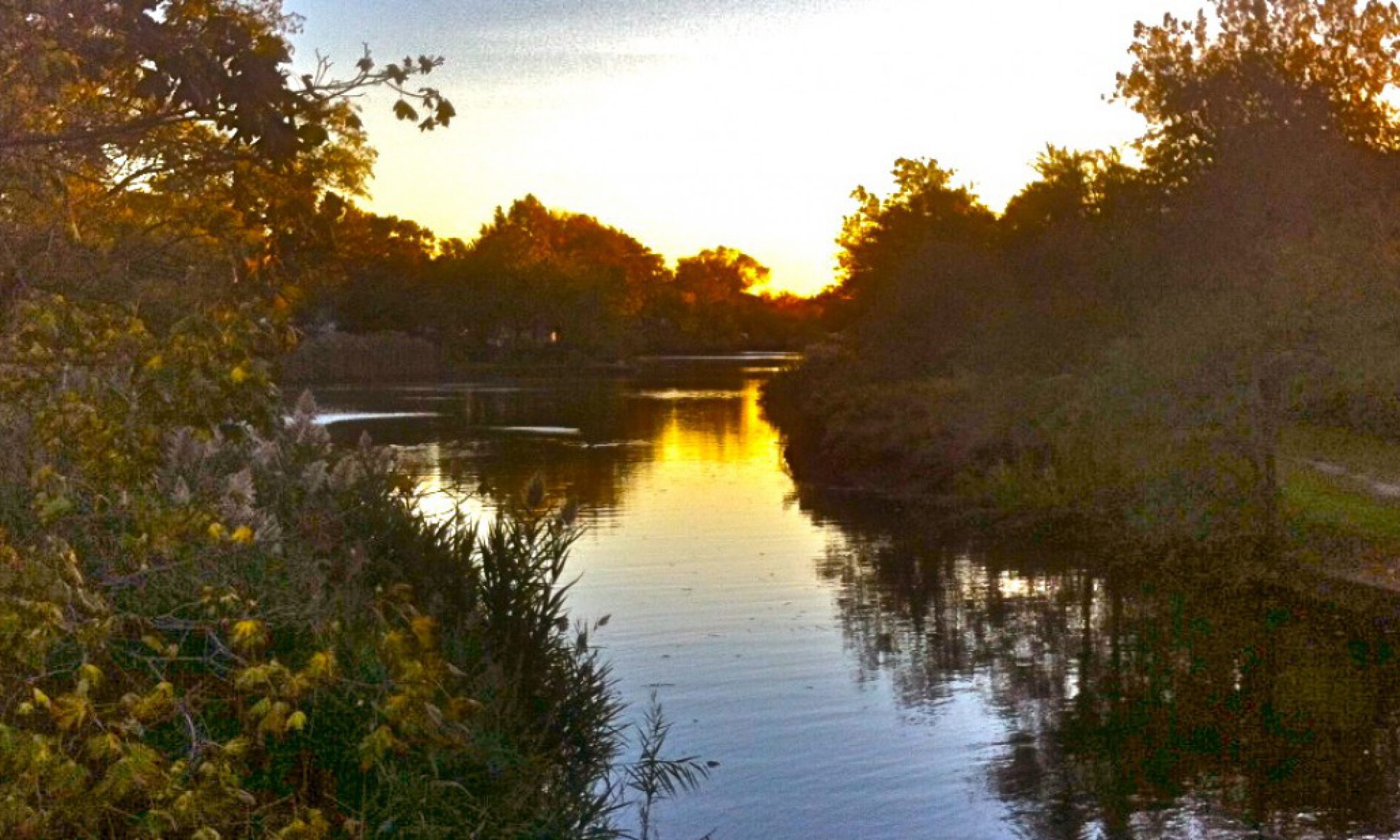


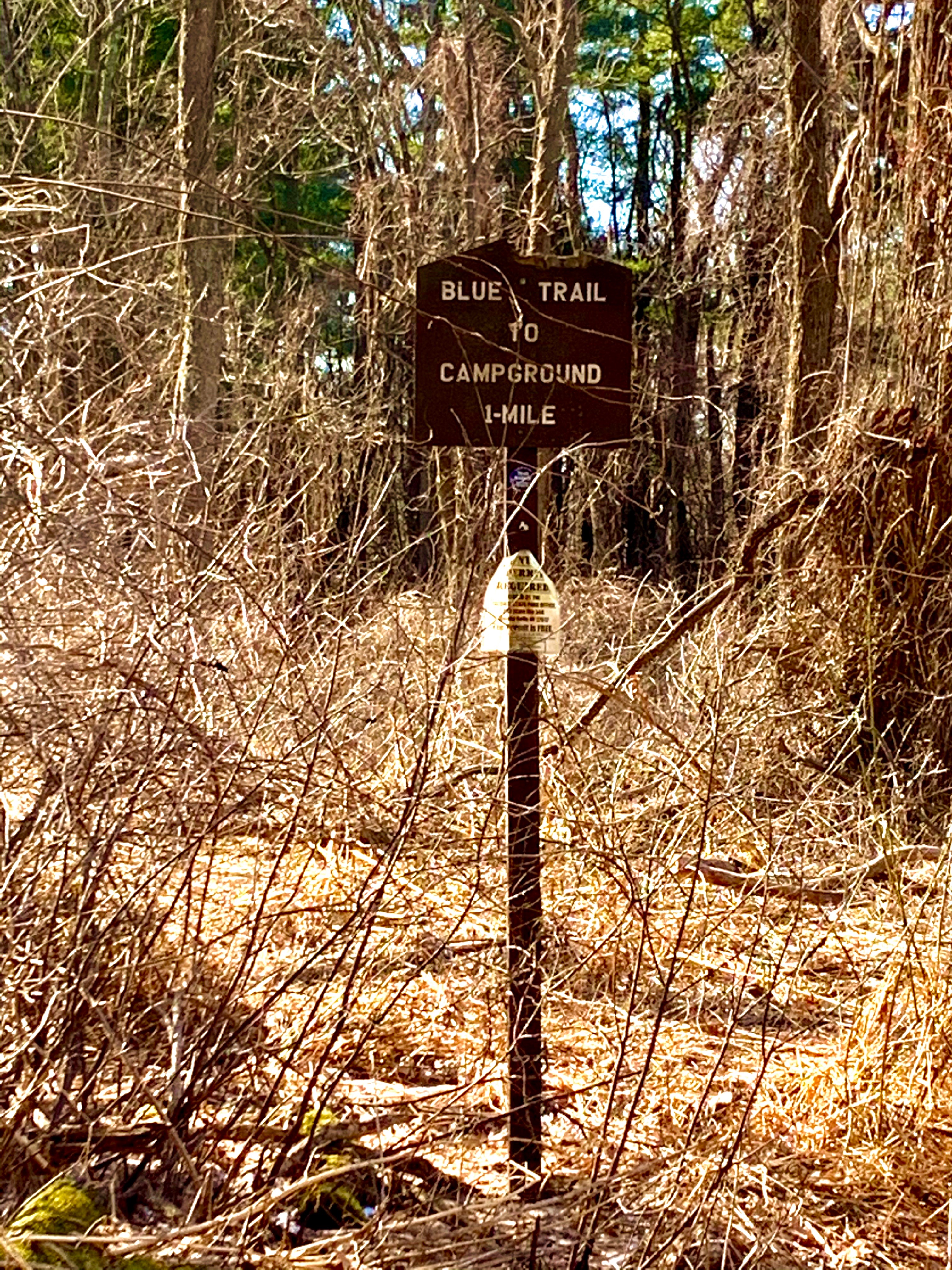
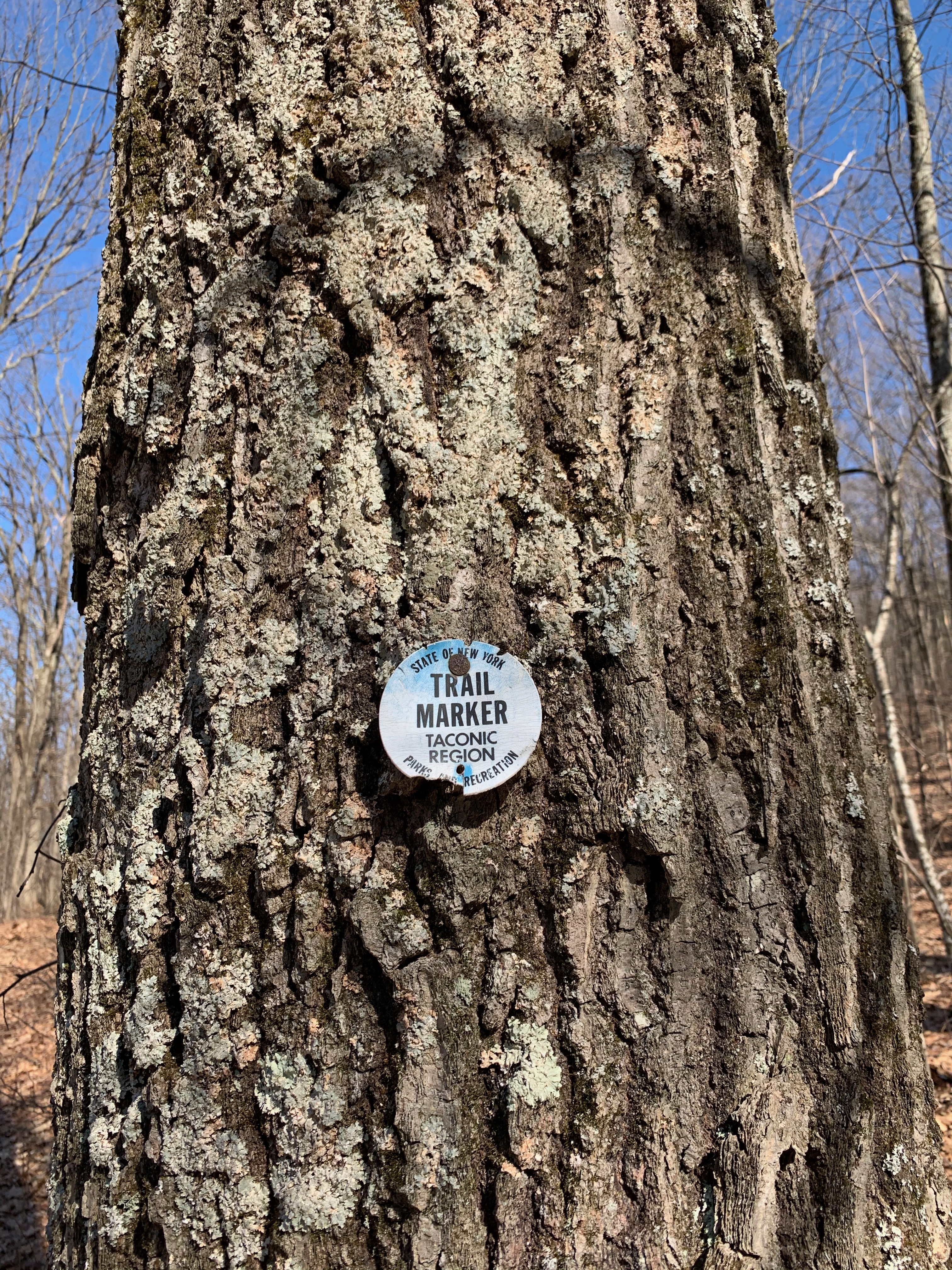

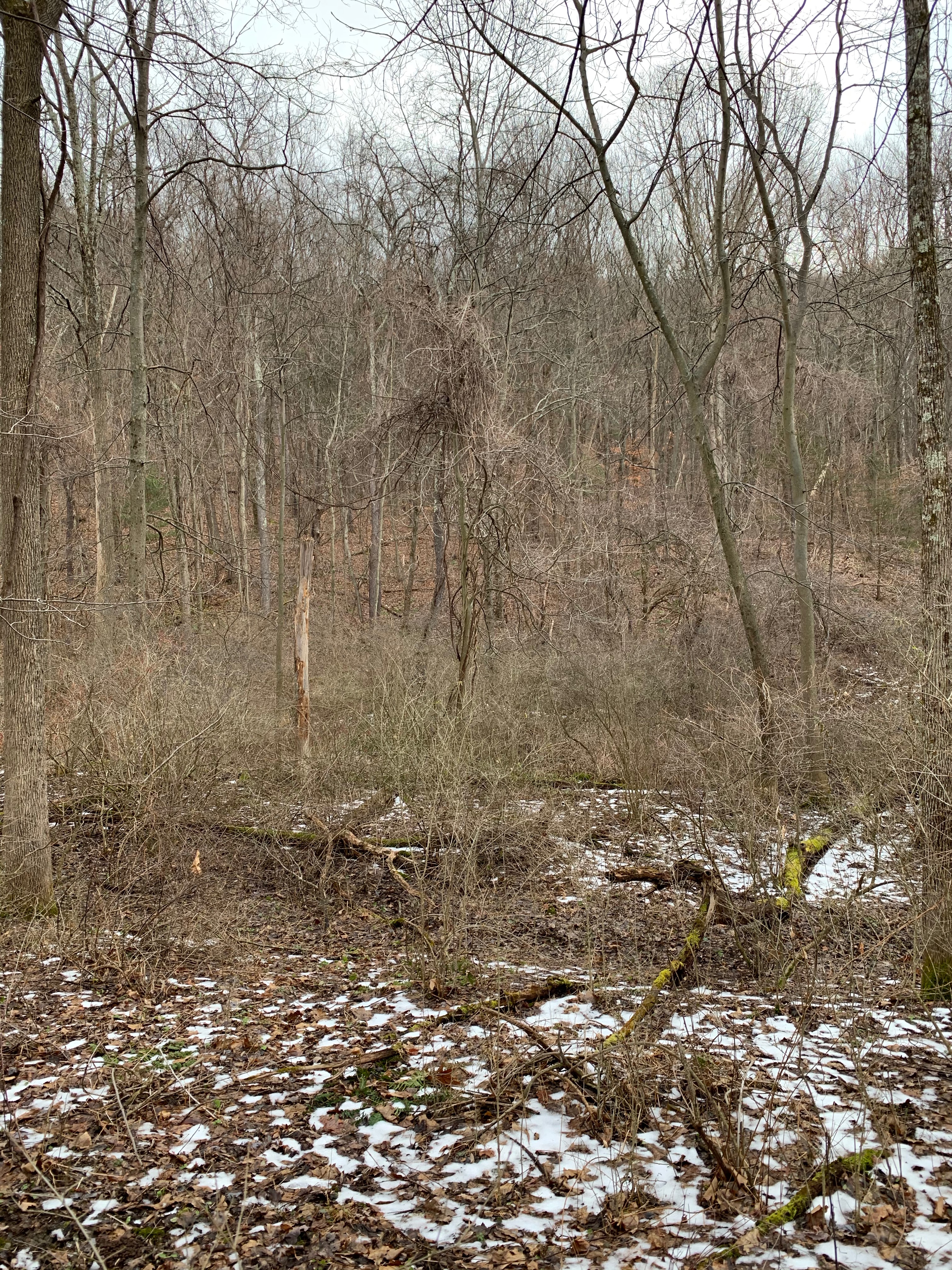

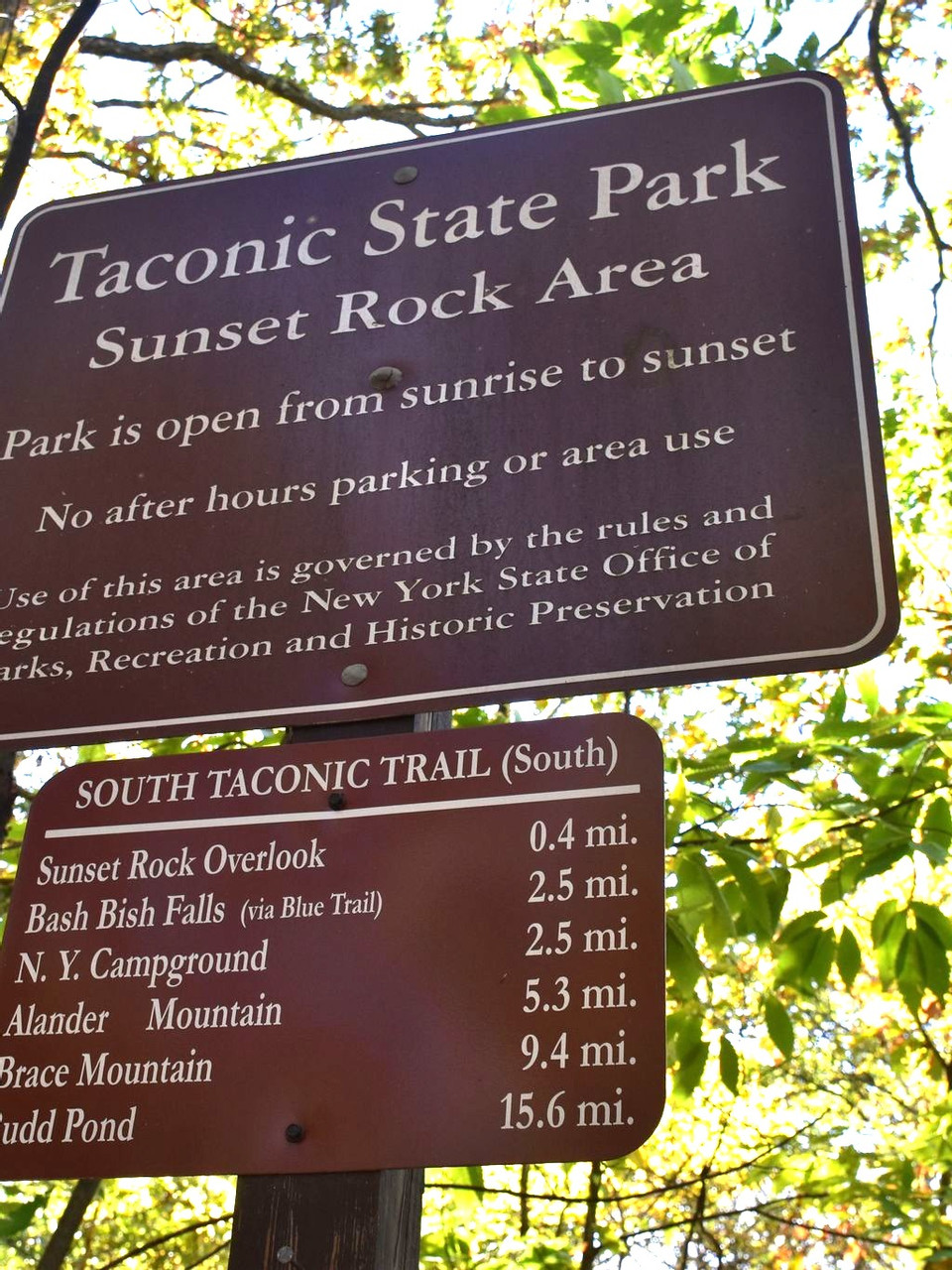
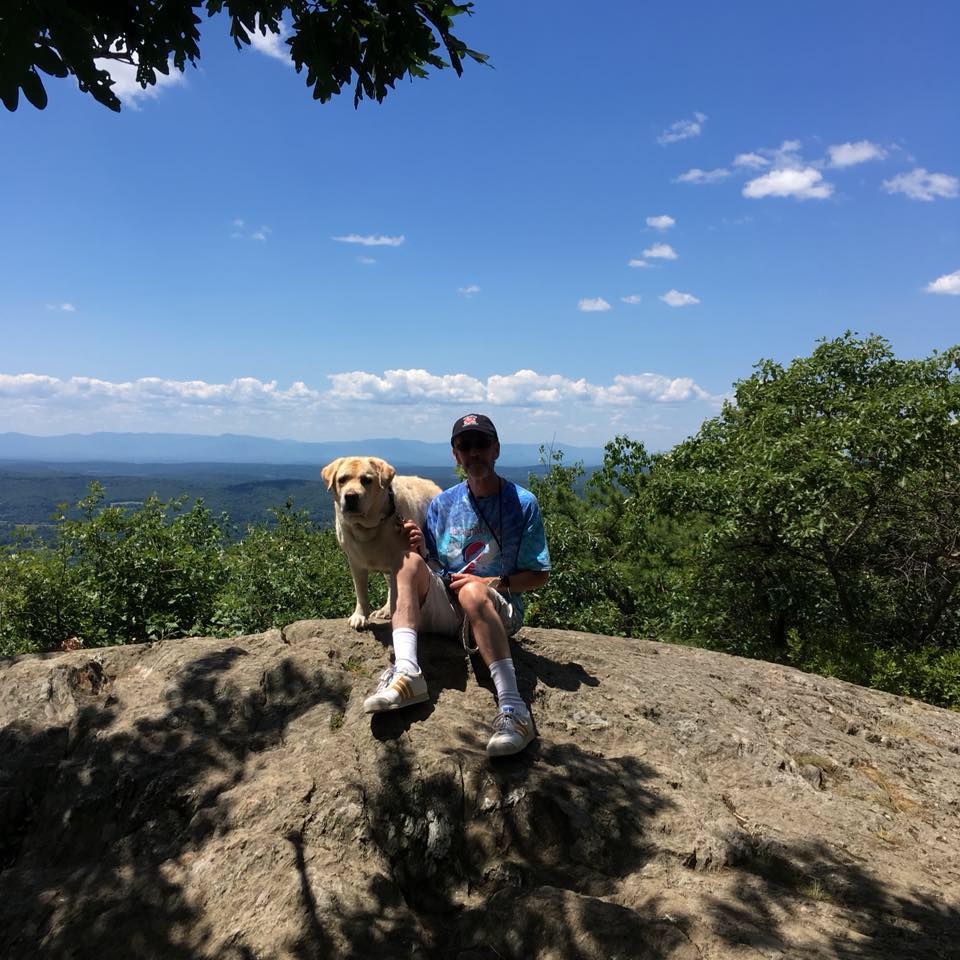
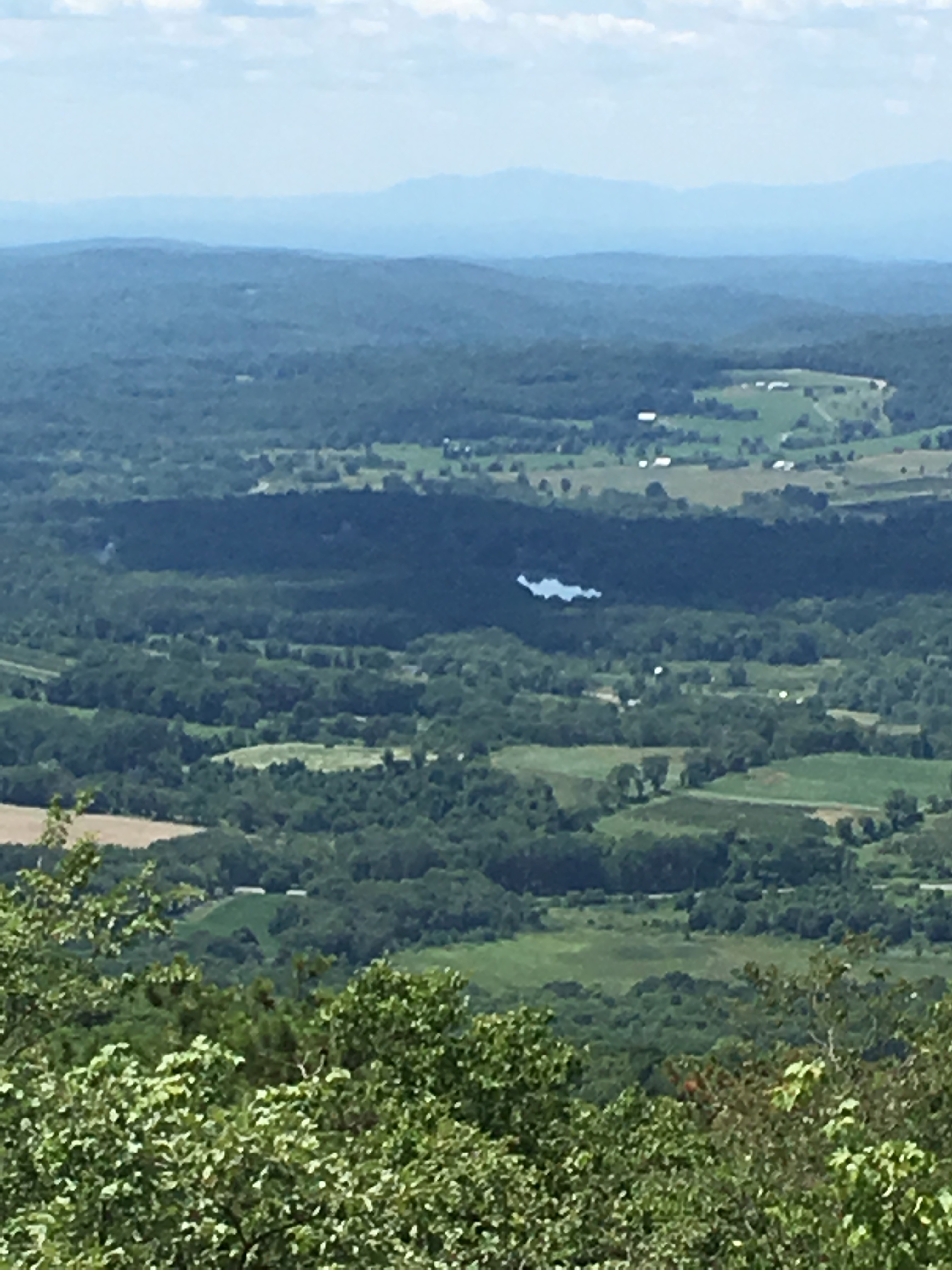



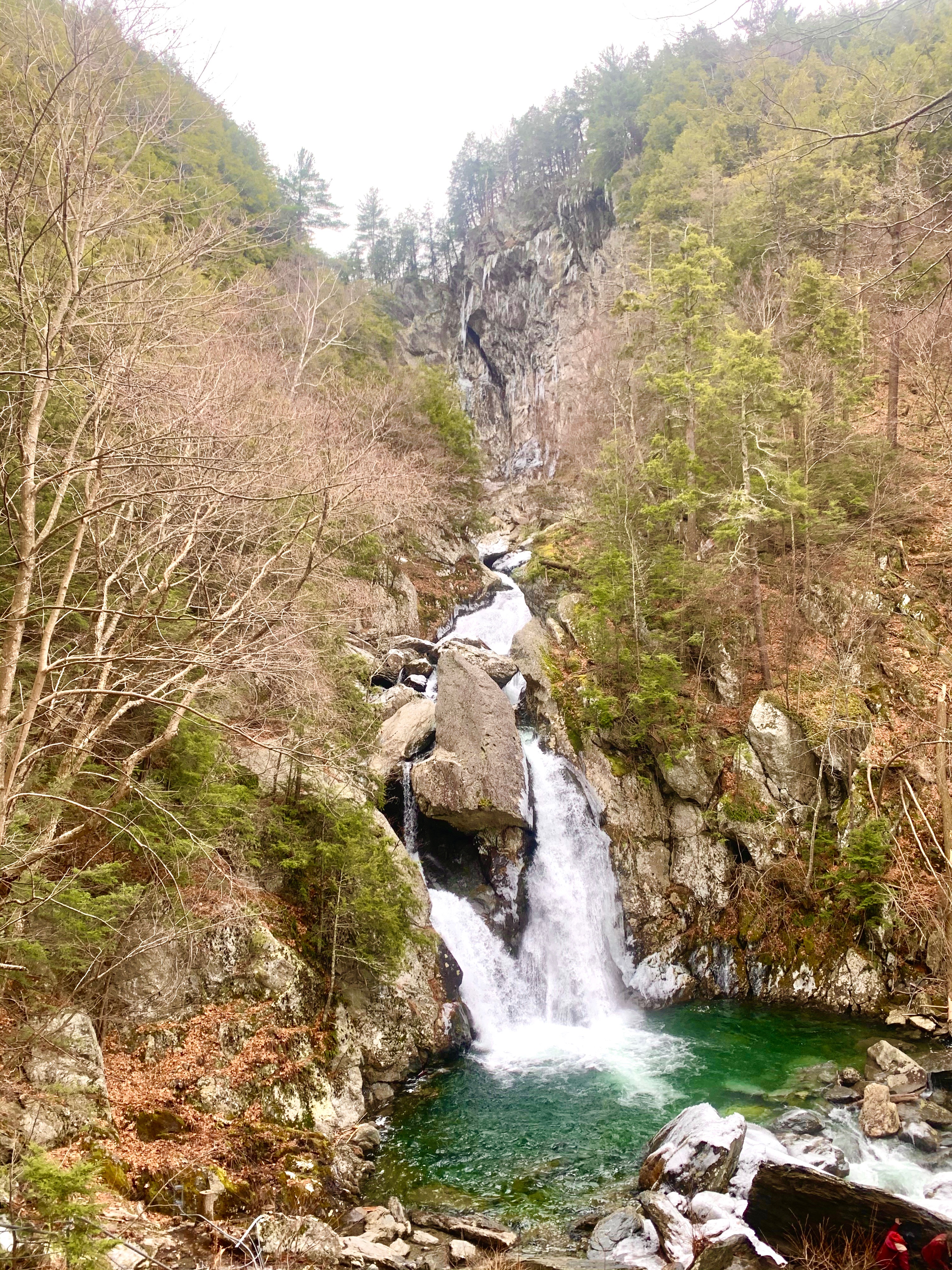





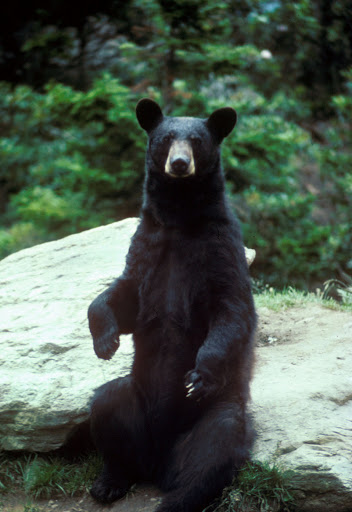
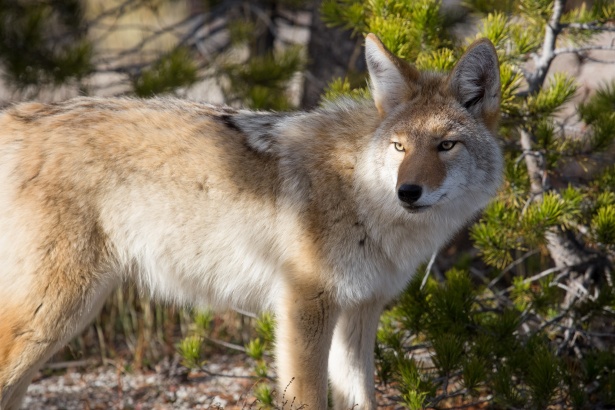


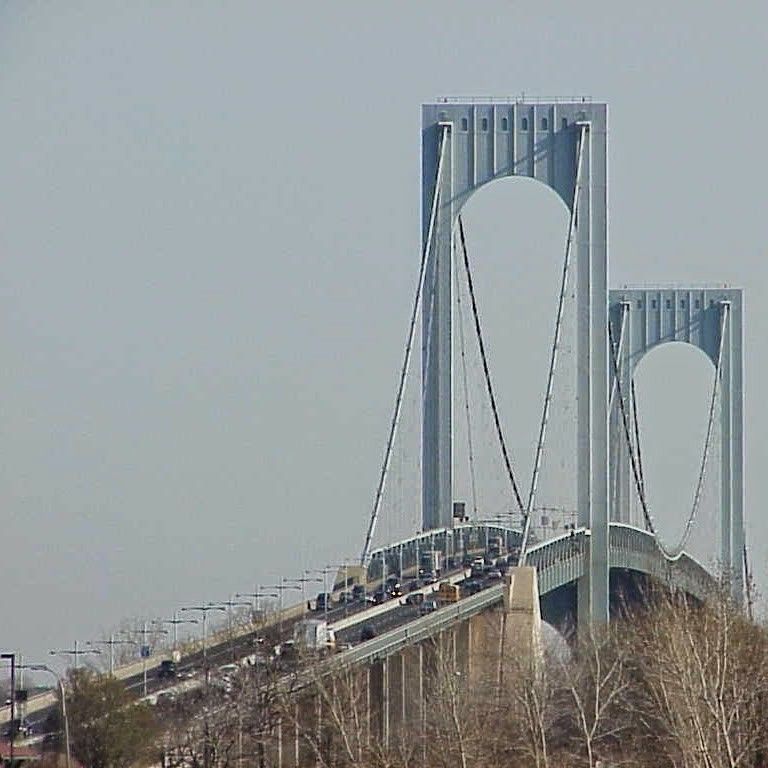
 And I guess they didn’t get a lot of out-of-towners, as the entire place went stone silent when I walked in, like they had been talking about the poor, pathetic single guy driving aimlessly up Route 7 in a Honda Civic and someone said, “Shhh!!! He’s walking in!”


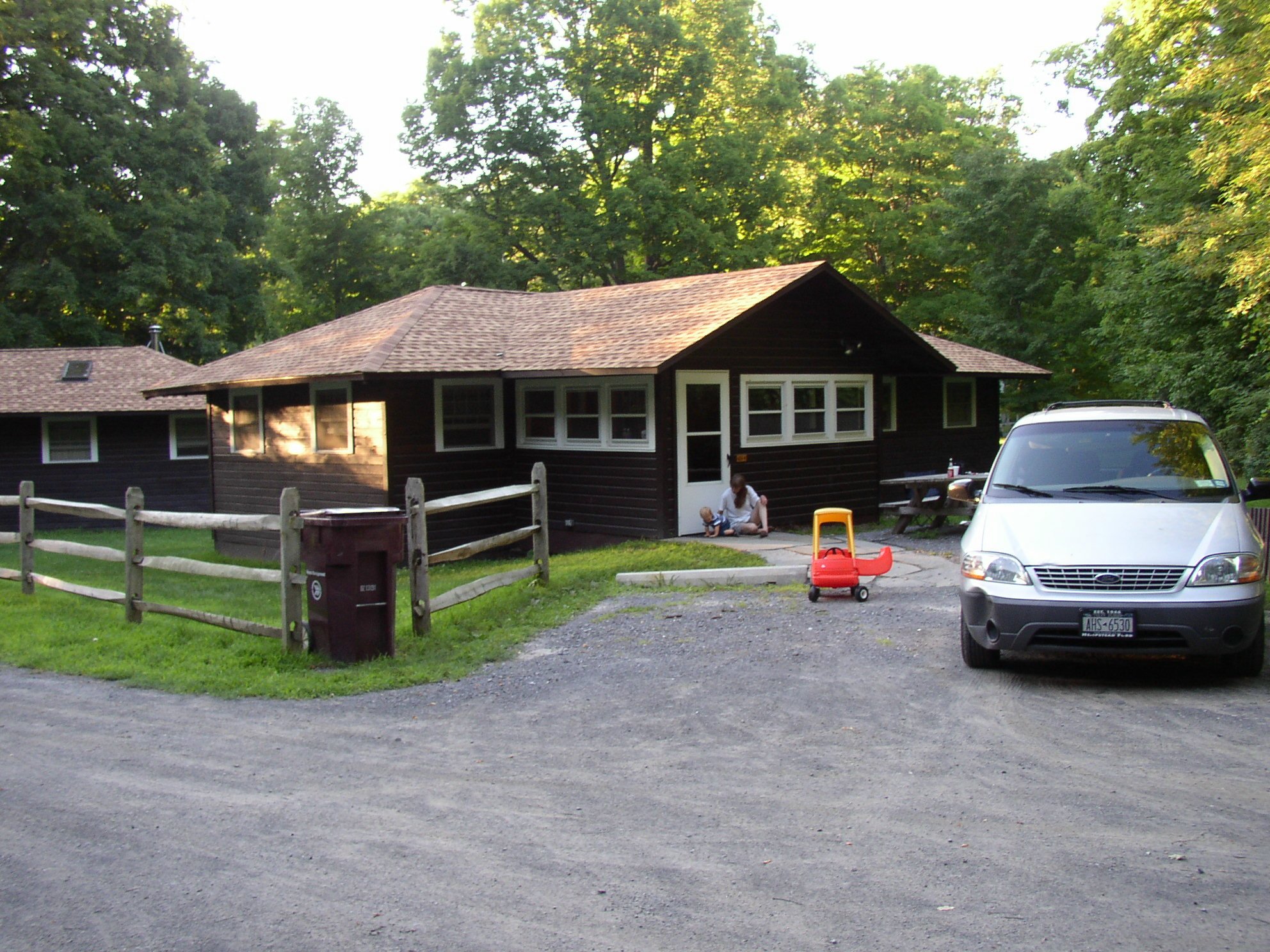


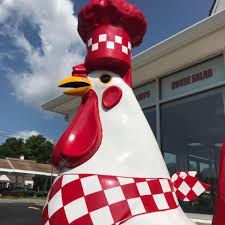


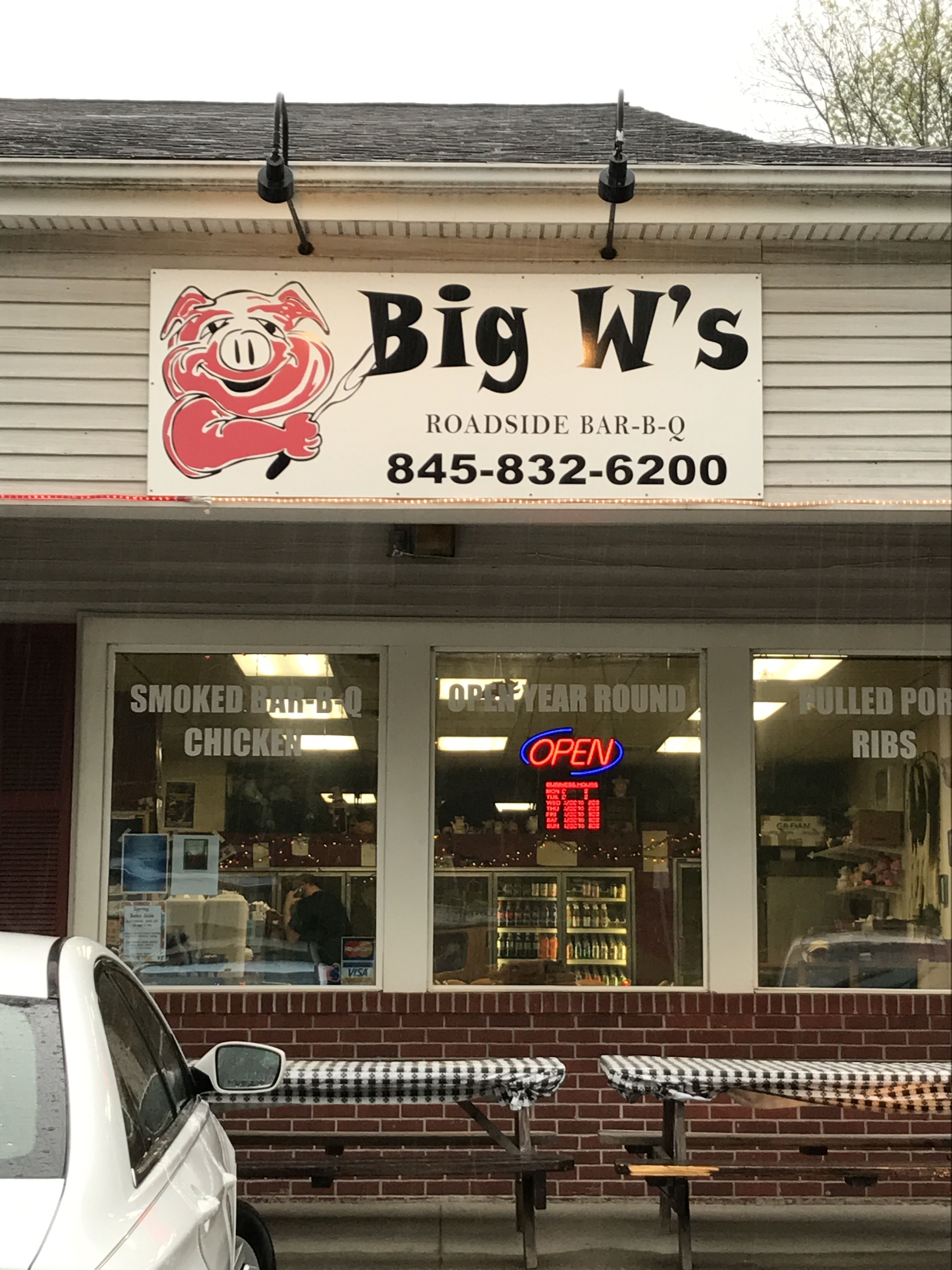


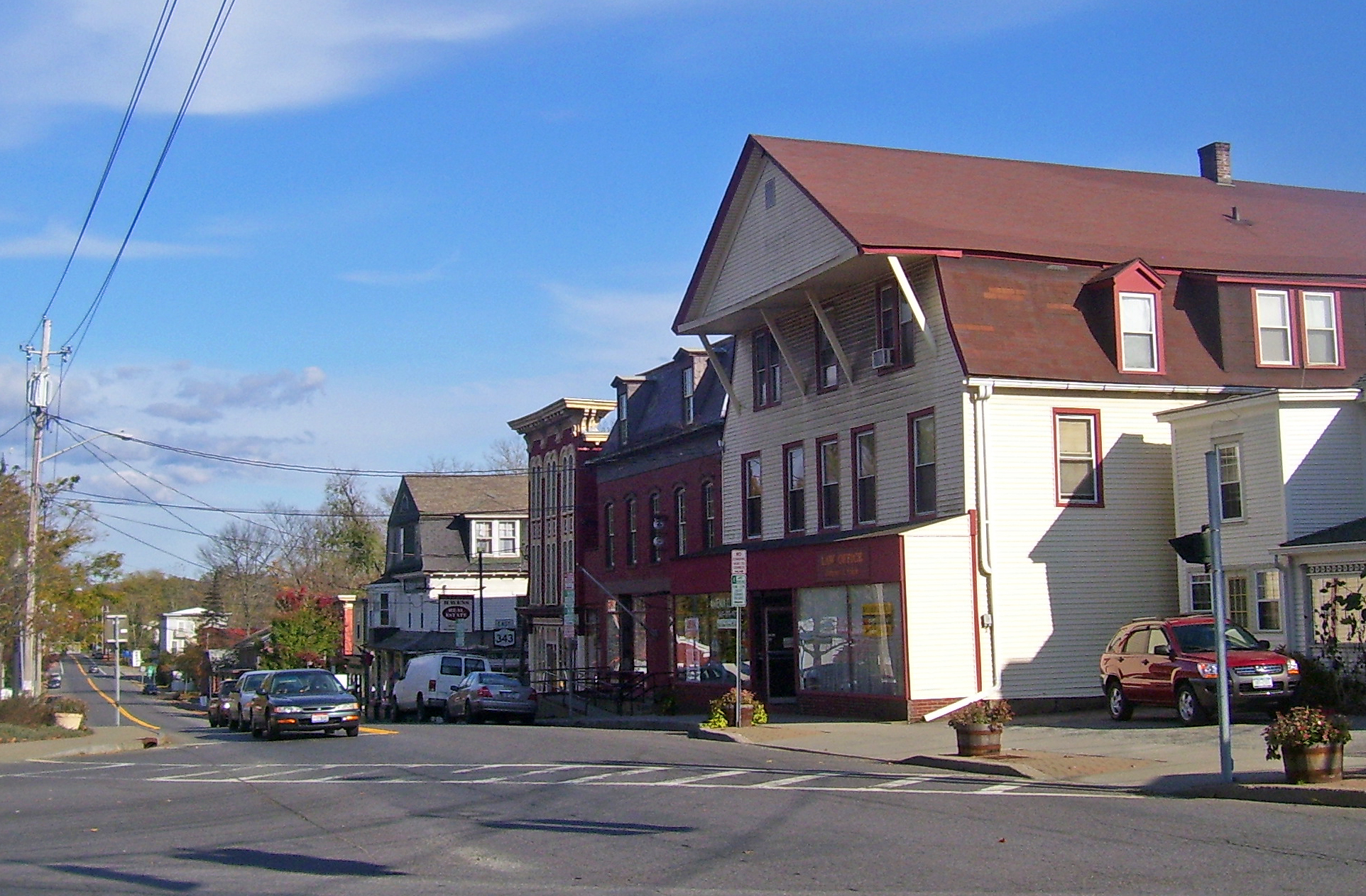


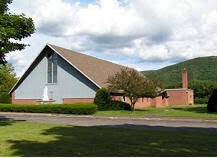


 A Creek Runs Through It