
Chapter 9 of Mountain High, Valley Low or My Life as a Wishbone: Tales of Valley Stream and Copake Falls, New York: “How I Spent My Winter Vacation, Part 1: ‘BROOKLAAANNN!!!’”

When I started writing this “e-book” series of blog posts, in August 2020, I was shooting for what’s called “evergreen content,” meaning that the months and years in which the chapters were written wouldn’t really factor into the subjects of said chapters, which are, to date: 

  • An insider’s guide to New York Route 22
  • Watching the sun set over the Roe Jan Valley
  • The path along Duffy’s Creek
  • The Harlem Valley Rail Trail
  • Cats
  • Vermin, sprit animals and motherf#$%ing snakes
  • Christmas trees and mulch
  • A big rock with a view and a famously deadly waterfall. 

Despite these very general and innocuous topics, the damn Pandemic kept sneaking into the narrative. 

Yes, the original premise was a guy from Valley Stream, Long Island who had just retired from twenty-five years of teaching and bought a second house in Upstate Copake Falls with his wife because they loved the area, thus becoming human wishbones. But I thought that it wouldn’t matter what particular month or year any of this took place, as long as the setting alternated from one chapter to the next. 

But it’s become clear that the Pandemic of 2020-2021 makes “evergreen content” not only impossible right now, but pretty much pointless. This is a time in history that no one alive has seen the likes of, and no matter what (or where) the subject is, it can’t not go through that filter.

So, if you’re an historian who has happened to have come across any of these first nine chapters in the year 2121, you would realize that the guy who wrote them was ultimately just trying to stay alive until the coast was clear. 

He drove from Nassau County to Columbia County and back again. He hunted, foraged and gathered at nearby grocery and hardware stores in both places for food and supplies. He walked his dog; he took naps with his cats; he did some writing for Pay Pal peanuts; he read books and magazines, he watched TV, he played some guitar, and he did a lot of crossword puzzles. 

As the cold, dark and dreary winter of ’20-21 wore on, he spent most of his time confined to one or the other home and, while the company was always swell, he became increasingly bored and restless as a result. At the same time, he considered himself very, very, very lucky and he tried not to complain. 

Nonetheless, person of the future, I have included the following memo, just for you: 

To: Mr. or Ms. Historian

Re: The Pandemic of ‘20-21

It sucked. 

However, here in February of 2021, despite the disturbing, more contagious and more deadly variants of the Covid-19 virus that keep popping up (how nice), it seems like we’re actually seeing a dim light at the end of this hellish tunnel, though try telling that to a half a million or so dead people, including my father, or the other people who lost family members, or jobs, or homes, or the businesses into which they had thrown their souls. 

Still, we can now safely say that the President of the United States is not actively trying to infect and kill its citizenry. Imagine that. Plus, we survived an attack on the Temple of Democracy by ten thousand of most disgusting and ignorant people in the world, stirred into a twisted, violent rage by that same, now ex-President’s Big Lie about the election in which, by the grace of God and Stacey Abrams, he got his ass kicked to the goddamn curb and he knows it. 

Their insurrection failed, mostly because once they breached the Capitol, these overwhelmingly deluded and dimwitted organisms were too busy posing for selfies to get around to murdering the Vice President, the Speaker of The House or any democrat they could get their hands on. It was the series finale of the four-year, reality TV nightmare that they inflicted on the rest of us, solely to punish us for electing a black guy twice, and for suggesting that maybe they were the damn problem. 

But we survived, and the miserable failed Hitler who tried to kill us all has been as muted as he gets for the time being. Now that we’re back to living in actual reality, we have a real President and a functioning federal government again. Imagine that. More people are being vaccinated than are getting sick, and there are vaccines on the way by July for everybody with the sense to get one. 

Plus, we’re past Thanksgiving, Christmas, New Year’s Eve and the Super Bowl, so all the unrepentant assholes who just HAD to get together and spread deadly germs in small spaces don’t have any excuses to cough on each other and thereby kill your grandmother for at least the next couple of months. 

So things are looking up. 

But it’s still necessary to quarantine as much as possible. And it’s still winter. In fact, this has been as close to a good, old-fashioned, pre-climate-change winter as we’ve had in a lot of years. Lots of cold, lots of snow. And by the grace of God and my immigrant grandparents, I live in New York, so I can find ways to enjoy the cold and the snow then come back inside to a warm house, unlike the millions of people in Texas who suffered miserably in the cold this month because the elected officials who are supposed to protect them let their power grid and their water supply freeze up. 

Forgive the digression, but it seems that we can determine from this evidence that the average squirrel has more intelligence, more moral fiber, and certainly more empathy than the people who run Texas. Say what you like about the people who run New York. They know not to get caught unprepared for winter weather. Nobody forgets that shit. 

Of course, even if this were in a non-Pandemic winter, there would be fewer things to do and fewer places to go, because, well, it’s winter. But in the alternative reality of a non-Pandemic winter, some of my favorite troubadours might have come to places a short car or train ride away from Valley Stream to sing for me, and I would have been able to accommodate them, even on a weeknight and even on a pension. And there would be museums and diners and libraries and movie theaters for the occasional change of scenery. 

The troubadours are all home streaming on Instagram, and while there are theoretically places to go for that change of scenery, I haven’t died from coronavirus yet, and I don’t want to, nor do I want to experience any of the long-term effects that survivors are going through, so I’m not going anywhere I don’t have to go until they get to the 55-65 group and I can make an appointment at the CVS as easily as when I got my flu shot, even if that means five or six more months of semi-hermitage. 

For now, everybody who was working at the King Kullen supermarket, the Pets Supplies Plus and the Raindew Variety Store a year ago is still alive and working there today, and we all wear our masks, and nobody hugs anybody. During the Valley Stream weeks, I go to these places, I get what I need, I go home, I stare out the window and I wait for spring. 

But I do love winter weather. As a matter of fact, I love all weather. Every season has its unique charms, and to embrace each one of them when they arrive is among the great privileges of being alive. I wouldn’t live anywhere else but the Northeast for that reason. I’ve never been to Florida, have never had any burning desire to go to Florida, and I sure as hell am not going there any time soon. Apologies to my Floridian friends, but to me, living in a place without true seasonal extremes is, how shall I say, wack.  

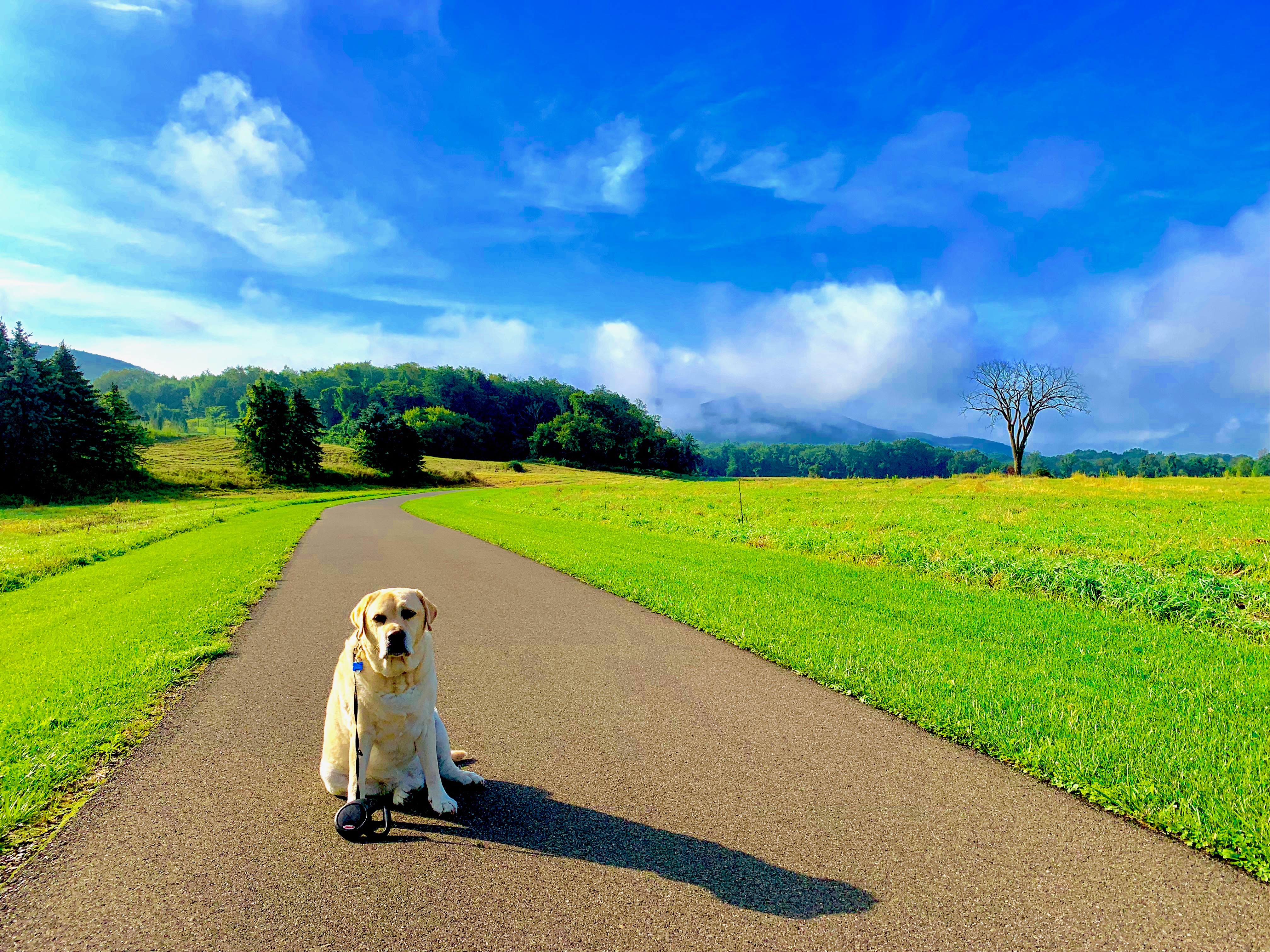
Admittedly, as someone with very little natural insulation, I sure didn’t enjoy waking up at 4:45 am to commute to work in winter weather, though it did get the initial shock of cold over with every day. Now I have to rely on my personal trainer to get me out under the sky and moving every morning. He does this by lying on the floor and staring at me forlornly until I put on my boots and my big coat, which is a really effective strategy if you’re thinking about starting a personal training business, but you’d have to be a Labrador retriever. 

We go for walks, we enjoy the weather, then we come back inside so the one of us who isn’t covered in thick fur and blubber can warm up for a while. But as I enjoy my first extended winter vacation since I was four years old, there’s just isn’t much to report on from Long Island. Any “evergreen content” I could come up with involves places I can’t justify going to or people I can’t justify seeing. 

So this chapter is about basketball. 

And since it all starts with reading the morning Long Island Newsday, it counts as a Valley Stream chapter. 

It all started on the morning after Christmas Day on Duffy’s Creek. I was flipping through the paper and Mookie was getting his leg scratched. Upon reaching the sports pages, and since I didn’t have to be anywhere fast, I read an article about the Brooklyn Nets. 

Now, I flip through every single page of the newspaper every single day in Valley Stream. When I’m upstate, I substitute the Berkshire Eagle and the Register Star, so if you want to know about the new restaurant in Pittsfield, Mass or what people are upset about in Hudson, I’m your man. This obsessive-compulsive disorder of mine also allows me to always know who’s winning and who’s losing among the New York Sports teams, who they’re big stars are and how much money they’re making. 

I’m a baseball guy. I’ve been a baseball guy since Mrs. Milne brought the TV on the cart into our first-grade classroom so we could all watch the Mets play the Orioles in the 1969 World Series. I went home that October afternoon to check if the Mets were on my TV, and sure enough they were, and they’ve been there ever since. Thirty-one years after that, I set my personal record by being at Shea Stadium twenty-five times to root on the 2000 Mets, including three playoff games and the last game of the World Series against the Yankees, which was the last professional baseball game played in the 20th Century.  

They lost. 

I’ll take it one step further. I’m one of those nauseatingly sentimental baseball guys. The ones that get all blubbery watching “Field of Dreams” and have the Ken Burns documentary on DVD. At our wedding, Trisha and I gave out autographed baseballs as table gifts, and we had a friend bring along his catcher’s mask and glove so my best man could throw out the first pitch to him.

I named my dog Mookie, then I stood on a line in a sporting goods store to show Mookie Wilson himself a picture of my dog. 

So being a baseball snob, I was conditioned to believe that every other sport was inferior. Football, soccer, basketball and hockey were categorized together in my narrow little brain as “the back-and-forth games.” They were faster than baseball, as is your average sloth, but all they essentially did was go back and forth. 

I pretended to like football from high school and into my twenties because nearly every single person I hung out with was a football fan. That’s not an exaggeration, and I’m not sure how that happened. I never really had a favorite team, and I don’t watch it anymore. I think it would be better if they just played flag football instead of trying to pulverize each other, but I digress again. 

Way back when, I taught English as a Second Language to rich kids from all over the world who were pretending to go to school so they could get visas and hang out in New York. They, and my brother-in-law, who was born in Chile, taught me to appreciate World Cup Soccer, particularly in 1998, when France beat Brazil in the finals. Again, like football, I could sort of see what the fuss was all about, but it didn’t light my soul the way a base hit up the middle with two out in the ninth does. 

Then I started teaching in Queens. There were plenty of good baseball fans among the kids, and more and more soccer fans as immigration increased (not to mention cricket). But “ball” in the city is basketball, and to hundreds of the junior high school kids that I crossed paths with, basketball was a serious a matter as the heart attack I would’ve suffered if I’d played them one-on-one. 

When sizing me up, shortly after demanding to know my age, hometown, marital and housing status, they’d ask me, “you got game?”. And I, at 5’9’’ and 120lbs. at the time, would smile and reply matter-of-factly, “no, I suck.” Then they might ask me who my favorite NBA team was, and I’d have to tell them delicately that I was a baseball fan and didn’t really follow basketball, and they’d look at me sort of the way you’d look at somebody who says, “I really don’t think Tom Hanks is that good an actor.”

In my first year of teaching in Rockaway, I was asked to referee the faculty-student basketball game. To this day, I have to rely on the refs to tell me when I’ve seen a personal foul on a basketball court. But I was going to do it, because first-year teachers don’t say no. Thankfully, my assistant principal, who like me majored in Mets baseball but unlike me had a minor in NBA studies, took over and bailed me out. If I had refereed that game, knives would have been drawn before halftime. 
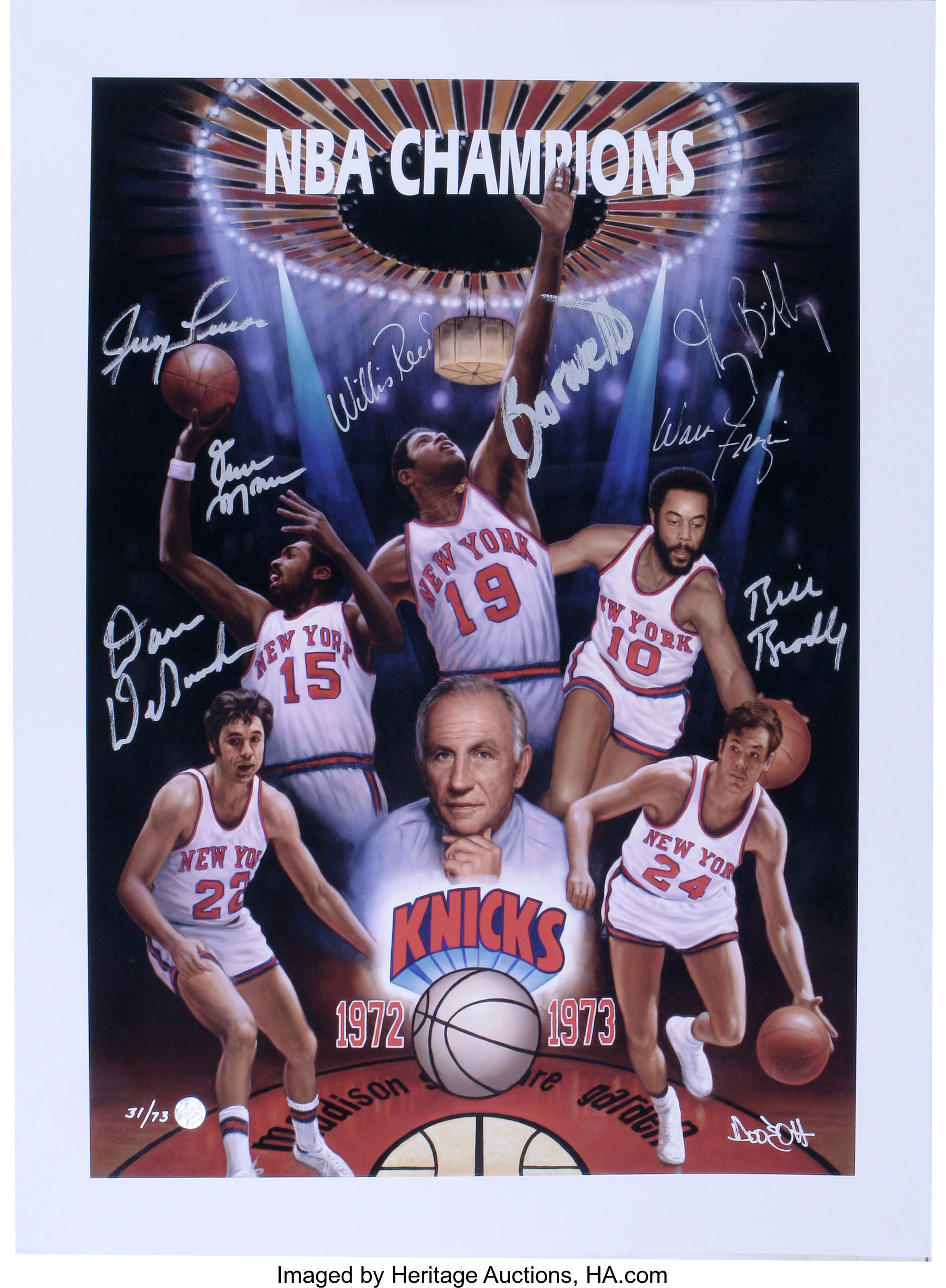
Nevertheless, for the benefit of having something else to talk about with the kids when it wasn’t baseball season, I always knew what was going on. I knew who all the NBA stars were in the 90’s and the 00’s: Jordan and Pippin on the Bulls, Hakim Olajuwon on the Rockets, Shaq on the Lakers, Patrick Ewing on the Knicks, Charles Barkley, Karl Malone, etc. etc. I’d know who was in the playoffs and occasionally watch the games. And I could always tell the kiddies that I watched the great Knicks teams of my childhood, because I did: Willis Reed, Dave DeBusschere, Earl the Pearl Monroe, Walt Frazier and Phil Jackson. Ask your grandparents, kids. Those guys could have made a basketball fan out of a duck. 

Jason Kidd was the biggest star for the New Jersey Nets when I was a young teacher. The Nets had a couple of good seasons around that time, but they were usually overshadowed by the Ewing and the Knicks and their annoying courtside celebrities at the Garden. 

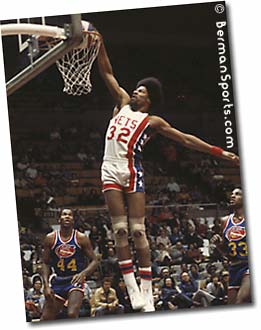
But I already had a soft spot for the Nets because I had actually seen them play a couple of times when they were the Long Island ABA team, with Julius Erving (Dr. J.), his cool afro and the red, white and blue ABA basketballs. The first time was at the Island Garden, right next store to the place where we’d get our Christmas trees in West Hempstead. Once in a while, my father, never a sports guy, would get free tickets to see the Nets when they moved to the brand-new Nassau Coliseum, and we’d go so my mom wouldn’t be able to tell him that he never did anything besides yell at me. 
New York basketball in the late ‘00’s and early ‘10’s was mostly average if not outright bad, so not even the kids at school weren’t talking about the Knicks or the Nets. By this time of course, they all had iPhones and Xboxes and Play Stations, so most of them spent their free time out in an alternative-reality ether, which I couldn’t even begin to relate to. But I did think it was pretty cool when the New Jersey Nets became the Brooklyn Nets and chose black, white and grey as the team colors. Snazzy-looking uniforms if you ask me. 

And in my last couple of years in Ozone Park, a new assistant principal came in and put together a team that no middle school in Queens could beat. One of the best students in my Year 25 classes was the star, well on his way to 7 feet tall, the dean’s list of whatever college he goes to and maybe the NBA draft. You couldn’t help but soak up a little basketball appreciation working at MS 202, and maybe part of the reason I’m watching it now is that I miss that city vibe, painful as it is for me to admit. 

Fast forward back to where we were sixteen paragraphs ago: Not going to the city, sitting on the couch, flipping through the Newsday and scratching the dog on the morning after Christmas. From the article about Brooklyn Nets, I found out that Kevin Durant and Kyrie Irving, who had both signed with the Nets after winning championships with other teams, were playing together for the first time, and that they had won their first two games of the 20-21 season with neither the Warriors nor the Celtics putting up much of a fight. They had a former great player as a first-year coach (Steve Nash, whom my wife calls “the stern fellow”) and the buzz was that this could be their year. 

So being trapped at home by a Pandemic, I decided to watch the next game, on a Sunday night against the Charlotte Hornets. I saw one of the Nets’ best players, Spencer Dimwitty, suffer a nasty season-ending knee injury, then I saw those Nets still standing come roaring back from a 14-point deficit in the fourth quarter, only to lose by two points, 106-104.

Trisha, who justifiably had to break my chops for sitting on the couch watching a back-and-forth game, said, “Wow! This is just like the Mets!”

But it was fun watching another live competition on TV again besides Jeopardy. (It was enough that we’re still grieving Alex Trebeck). So I watched the game after that. And they lost again, in overtime. Nether Durant nor Irving was playing, so I got to know some of the other guys. You can’t help but notice D’Andre Jordan, who is 6’8” with shoulders big enough to tattoo entire verses of scripture on them and a more impressive ponytail than my wife’s. I quickly adopted him as my favorite. 

Jan 7, 2020; Brooklyn, New York, USA; Brooklyn Nets center Deandre Jordan (6) reacts in the third quarter against the Oklahoma City Thunder at Barclays Center. Mandatory Credit: Nicole Sweet-USA TODAY Sports

And though I’m already sick of the broadcast team on the Yes Network, they did teach me some of the better nicknames: Joe Harris, who seems to never miss a three-point shot, is “Joey Buckets.” Jeff Green, 34 years old and playing in his 13th season, is “Uncle Jeff.” Timothe Luwawu-Cabarrot is “TLC”, ‘cause how the hell could you say all that when you’re calling basketball play-by-play? I give Ian Eagle, the voice of the Nets, credit for calling TLC’s baskets “French Dips” and “French Connections”, but other than that, the broadcasters all giggle too damn much and between them and the pathetic fake crowd noises I’m muting the TV more and more every game.

As my first weeks of being the accidental basketball fan unfolded, Durant and Irving were back on the floor together for a game against the Washington Wizards in which they both missed shots with seconds to play and lost by one point, 123-122. 

Just like the Mets. 

But I started to see what makes these guys special. “KD” is 6’10’’ and moves like a man who has oil flowing through his veins instead of blood. “Kai” is 6’2’’, and one of the most gifted natural athletes I’ve ever seen playing anything. He reminds me of the last line of the song, “The Cape” by Guy Clark: “He did not know he could not fly, so he did.” 

And because I flip through every page of the newspaper every day, I knew about some things in the first week of January. I knew that there was this player out in Houston, James Harden, who was unhappy with the direction of his team and wanted to be traded to the Nets so he could play with Durant and Irving. But Durant was ineligible to play for a week because he’d been exposed to Covid-19 and Irving was taking some time off, which everyone said was directly related to the Capitol Insurrection. 

So I find a happy little pastime to take my mind off all the misery and keep me entertained through the winter, and the misery kicks the door in and trashes the room. But I kept watching anyway, as I had nothing else to do. 

Irving never directly said that he didn’t want to play because he was upset about the Insurrection, but that’s what was widely assumed. It didn’t help that he got also caught breaking covid protocols to go to his niece’s birthday party. There were a lot of big mouths on Twitter questioning his commitment to the game and his inner fortitude. 

Here are some things I’ve learned about Kyrie Irving: His mother was Sioux, and he supports the Standing Rock Reservation in North Dakota in their fight against the Dakota Pipeline, which has earned him the Sioux name “Little Mountain.” He burns sage before games. When the WNBA players opted not to play last year out of covid concerns, he donated $1.5 million towards covering their salaries. He gave $300,000 to Feeding America and helped launch Share A Meal, a NYC charity that has delivered 250,000 meals during the Pandemic. He’s trying to eat a plant-based diet and he had to apologize for punking the press into believing he was a flat-earther, which is funny as hell. 

And I’ll tell you what: If I were an African American professional athlete in this country, I would think that it’s a constant moral dilemma knowing that, at the same time at which I’m serving as a hero and a role model to kids who badly need one, I’m also providing entertainment for rednecks married to karens who pull their kids in close if they see a guy who looks like me coming up the street and yahoos who tried to destroy the country because my people outvoted their people. That wouldn’t be an easy thing for me to reconcile. The same guy who tried to kill a policeman with the pole of an American flag on the steps of the Capitol probably had shit to say about Colin Kaepernick kneeling during the National Anthem. I wouldn’t want these unrepentant assholes rooting for me to throw a ball through a hoop, either. 

So I’ll appreciate the joy of watching the joy that Kyrie Irving gets out of playing basketball at a level that few mortals can, and as far as I’m concerned, he can take the day off anytime he needs to. 

Meanwhile, in Kyrie’s absence during the first weeks of January, KD was trying to carry the team, but they were treading water. I continued to get to know the other guys, including Landry Shamet, to whom I like to yell, “Dammit, Shamet!” when he misses, and I’m sure I’m not the only one. I also came to appreciate Travis Allen, a young center with afro that would stop Dr J. in his tracks, and Caris LaVert, sort of a Kyrie-Lite, but very talented. 

Then I met The Beard. 

Brooklyn made a big trade on January 12, giving up Allen and LaVert and all their draft picks for the next hundred years to get James Harden. The only thing I knew about him was that he looked like the guy you want to be around when the party gets going. The bubbleheads on TV and the articles in the Newsday were all speculating as to how an elite, MVP player who led the league in scoring three times would get used to sharing the ball. Harden replied that he just wanted to win a championship, which is the only thing he hadn’t accomplished. 

It was an interesting subplot. I kept watching the games.

You might know this already: The man is a magician, a grand imperial wizard of basketball. He passes the ball behind his back and over his shoulder without looking, he passes under other guys’ legs, he passes across court through a crowd of large, sweaty men to put it right into the unguarded hands of Joey Buckets for the three, or up over the basket where DeAndre Jordan brings it home with a pony-tail flyin’, bible-thumpin’ slam dunk. He hits field goals and free throws like my dog marks telephone poles and I pour cups of coffee and he regularly tricks his opponents into fouling him when he drives into the paint. 

Watching Harden, Durant and Irving come together, I finally “got” basketball on the same level I’ve always understood baseball. A baseball game is a Beethoven Symphony. There are slow, quiet movements where you’re drawn into a particular instrument, but you know if you follow along, they’ll be great bursts of joyous noise that will lift your soul and set your spirit free, or sometimes make you weep. 

Basketball is jazz.

 Forgive me for just figuring this out at 57. I was busy learning other stuff. 

A quick Google search credits this idea to a joke by Michael Scott on “The Office”, but Kareem Abdul-Jabbar and Wynton Marsalis were both on it before that. Marsalis said that both basketball and jazz “reward improvisation and split-second decision making against the pressure of time.” 

To say that two basketball teams are just going back and forth is to say that a jazz ensemble is just playing “When The Saints Go Marching In” over and over again. One of the things I love about baseball is the endless possibilities. As the great Mets’ announcer Bob Murphy would say, every time you come to the ballpark, there’s a chance that you’ll see something you’ve never seen before. You could subsequently say that about every time the ball leaves the pitcher’s hands. But I never realized until watching the Brooklyn Nets this year that basketball is also full of endless possibilities, every time the shot clock starts. 

My Netsies went on a tear through the Western Conference this month, winning five games straight on the road against some of the best teams in the league. The last game of the road trip was tied with two minutes left and ended with Harden throwing himself into Paul George of the Clippers to force him into an offensive foul, thus taking two points off the board and getting two free throws, of which he hit both, after somehow missing two other free throws just minutes earlier, plus a shot by Irving that would have bounced off the rim if DeAndre Jordan hadn’t reached up like he was touching the hand of God to guide the ball through the hoop. 

Nets 112- Clippers 108. A half-game behind Philadelphia for first place with 20 wins and ten losses. If you’re thinking about jumping on the bandwagon, I was the last one on the back, so I’ll help you up. 

One of my favorite bands is The Band. There were five guys, each an exceptional player on one or more instruments. There are hardly any solos in The Band’s songs. But each musician is aware of what the others are doing, and they seamlessly create space for all the sounds to come through individually at the same time you that hear them in harmony. 
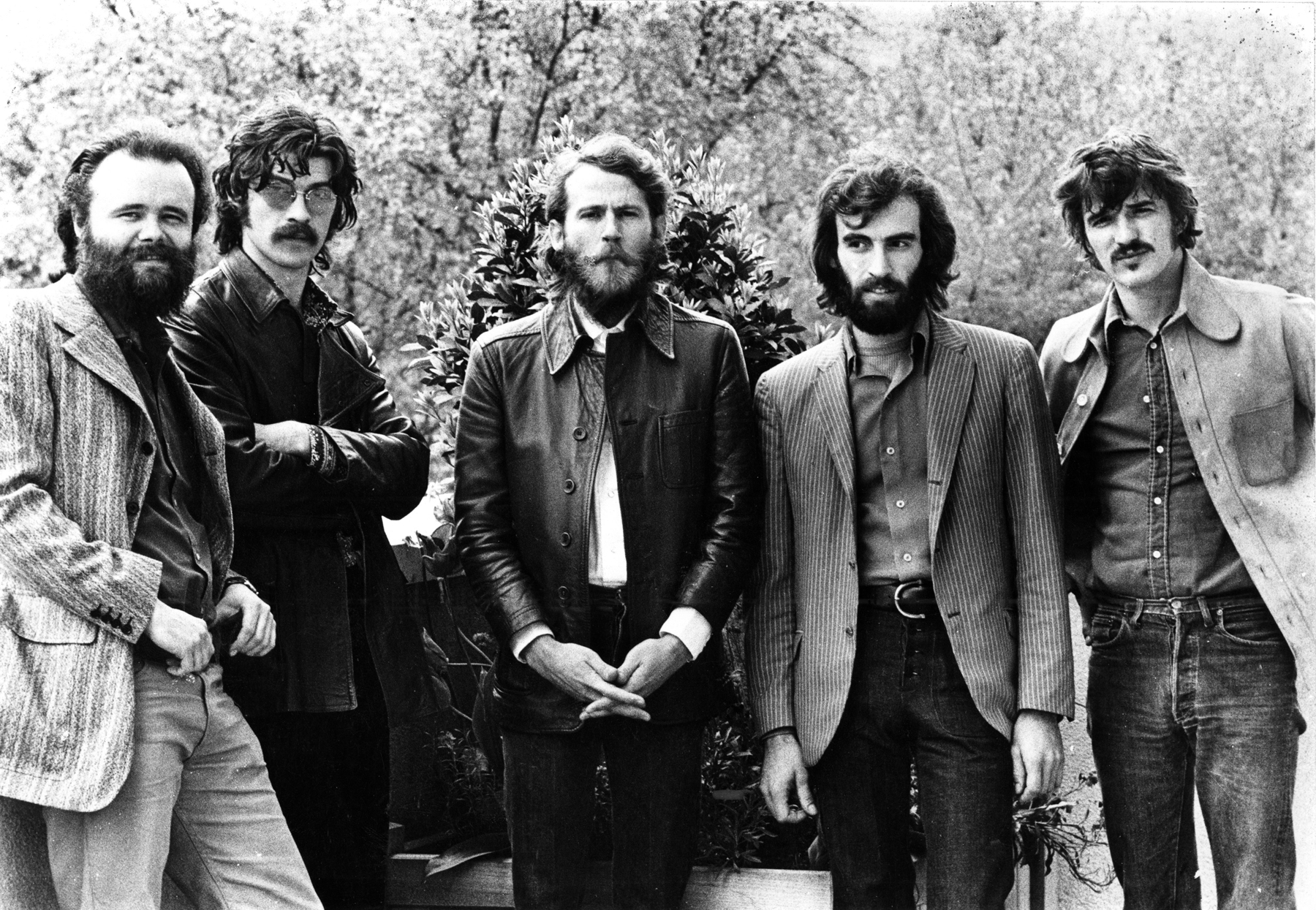
All these years, I had no idea they were playing basketball. 

In baseball news, the Mets are loaded with talent and personality this year, and their new owner is a nerdy hedge-fund guy with wads of money who wants desperately for everyone to like him. 

In basketball news, there will be 300 masked, socially-distanced fans at the Barclays Center tonight when the Nets play the Sacramento Kings, the first time spectators have been present in a year. When the Pandemic is over, I’ll be a half-hour train ride away, at least part of the time. Maybe a way to get that change of scenery next February.   

It appears that I’ve become a basketball fan. People can evolve. While the Boys of Summer are doing their stretches down in spring training, and President Biden is shoveling us out from four years of the toxic, deadly incompetence and corruption that at times felt like a blizzard that would bury us alive, I’m enjoying the happy, swashbuckling exploits of Brooklyn’s Boys of Winter. 

Trisha always knows what night there’s a game on. When Jeopardy ends, I walk out to the kitchen to heat up a cup, and on the way, I yell out, “BROOKLANNN!!!”

I also shop, cook and clean, so she’s letting me stay for now. 

Of course this means conflicts are bound to occur in my pathetically, disgustingly cushy little existence. What happens when June comes around, I’m still refreshing the CVS website for my vaccine, Jacob DeGrom is throwing a perfect game with only 80 pitches in the sixth and the Nets, who have never won a championship, are up 3-1 in the finals? And what if both of those games are on the West Coast and the next morning promises perfect kayaking conditions on Long Island or a perfect morning for a bike ride on the rail trial in Copake Falls?
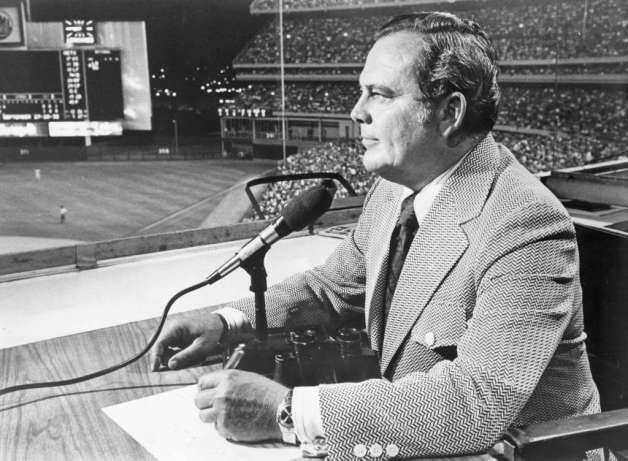
Bob Murphy had another great line. Every spring, there’d be six good pitchers for five spots, or five outfielders for three spots, and all the talk would be about how the manager would decide who plays and who sits. 

Bob referred to this as a “happy problem.” 

I suppose that’s my wish for everyone of good will right now. May we all live to see days when we have happier problems.

Copyright 2021 by John Duffy

All Rights Reserved

Chapter 2 of Mountain High, Valley Low or My Life As a Wishbone: Tales of Copake Falls and Valley Stream, New York – “One Runs The Risk of Weeping a Little”

106359156_10213483135272533_3362060296191845768_n

(With acknowledgement to Antoine de St. Exupery for the help). 

My father was a Covid-19 statistic. He died at the age of 90 on April 26th, 2020, at the height of the Pandemic in New York. He suffered from advanced dementia, and the fight left in his body was no match for the virus. As he was living in a skilled nursing facility, none of his children or grandchildren (or great-grandchildren) could be with him to say goodbye. The last time I saw him was on February 16th and I could see even before he was stricken that he had taken a general turn for the worse. Of course, if you tell me that his contacting coronavirus was a blessing in disguise I’m gonna come over there and kick your ass.

Neither he nor my mother, who died in 2012, ever saw Copake Falls. If they had been just a couple of years younger and healthier back in the Early Aughts, maybe they could have come up and stayed at a local B & B and hung out with us at Taconic State Park for a day or two. I sure would’ve liked that. As a matter of fact, it’s a recurring dream that I have every once in a while, and I even like the distorted dream version of them visiting.

IMG_1481
My parents at a house they rented on Rainbow Lake in the late 1970’s.


They were the ones who first took me upstate after all, and they would have loved the Peaceful Roe Jan Valley. They actually kicked the tires on a house way up in Rainbow Lake in the Adirondacks when they retired, but they decided that it was way too much of a hassle to have two houses hundreds of miles apart. They were practical people.

I had a conversation with my father once about moving upstate. We were standing in the backyard on the creek in Valley Stream, the one that used to be theirs and became ours. He had grown up in an apartment in Astoria, Queens, so the 60 x 100 plot was all the room he’d ever hoped to have. He was a city guy.

Of course, since he started me out on the 60 X 100 plot, naturally I wanted something bigger someday. So we were talking in the backyard on the creek that day about how Trisha and I were very happy with buying the house in Valley Stream, but that we always followed the upstate real estate market around the place where we went on vacation every year.

This is how that conversation went:

Me: “… So we keep an eye on the properties for sale. I mean, this is great, but for what you pay on Long Island, you could have a couple of acres of land upstate, and that might be nice someday.”

Dad: (Genuinely perplexed) “What would you do with a couple of acres of land?”

Me: (Slight pause, unprepared for the question) “Stare at it! Walk around on it!”

At which point he responded with his hearty laugh and his million-dollar smile and we moved on.

Around this same time, I started teaching in a school in Ozone Park, Queens where I’d work for the next 16 years. I parked my car outside one morning in September right near where my new assistant principal (who would later become principal) had just gotten out of his parked car. I noticed that he had Vermont license plates. I thought to myself, “well, heck, there’s some pleasant small talk for the walk inside. This guy has a house in Vermont and I’ve been to Vermont. In fact, Copake Falls, where I go every summer, is only about 60 miles from the Vermont border. I’ll ask him about Vermont. Maybe he drives up Route 22 to get there.”

This is how that conversation went:

Me: “Vermont, huh? Beautiful up there. We go to a place near the Berkshires every summer. Copake Falls, New York. Ever hear of it?”

Him (distractedly): “Maybe. I think so… What do you DO there? Do you ski?”

(Narrator: “The Catamount Ski Mountain is one of the big tourist attractions nearby”).

Me: (Again unprepared for the question, and at a complete loss for what to say next) “Not much… Uhhh…We hang out. We watch the birds.”

Him: (long pause). “Hmmm.”

And then we went to work. But (sorry, boss) after I reported this disastrous attempt at friendly conversation to Trisha, it became an inside joke between us. We’d be sitting staring at a campfire or watching the trees swaying in the wind from the front porch of the cabin, and one of us would say to the other, loudly, “What do you DO there?”

IMG_1436
What we did there. On the front lawn of Cabin GH 7 in Taconic Star Park.


Well, now we have a place of our own in Copake Falls. With 1.9 acres of land. And to be honest, when we’re there, we don’t do a damn thing, really. In the words of the great Robert Earl Keen, “I kinda like just doin’ nothin’. It’s somethin’ that I do.”

You might see me taking Mookie Dog for a swim in the brook and a walk on the rail trail in the morning. You might see me and Jack on that same rail trail later on riding the bikes I bought from a guy on Craigslist who I met in the parking lot of the Pittsfield Walmart. You might even see us doing a little tree trimming and minor brush clearing around the yard. You might see me and Trisha watching birds from the front porch. We have campfires. We make dinner. We play ping-pong, pool and darts in the basement. We read and watch stuff. We drive on country roads to re-stock or to look around, then we drive back to the Mountain. Then we stare at it and we walk around on it.

IMG_0994
Mookie on the Harlem Valley Rail Trail.


And when weather conditions are favorable, and the Earth’s orbit is aligned correctly, we watch The Show.

106359156_10213483135272533_3362060296191845768_n

The Show, also known as the Trisha’s Mountain Driveway Sunset Festival, is made possible by four elements: The Earth’s rotation around the sun, the topography of the Roe Jan Valley and the surrounding mountains and hills, a road that rises to 800 feet up the side of a 1200-foot rise, and the Shagbark Tree Farm.

It was in 2002 when Trisha and I first stayed in Copake Falls for a full week together. One of my hobbies that week was to learn every road in the area, and how those roads connected to each other. It was so long ago that I did my research with a paper Hagstrom Map of Columbia County that I bought at the AmeriStore gas station. (Today, of course, you could look up our Valley Stream address on Google Earth and see Trisha getting out of her car in the driveway).

Early in this grand pursuit, I found North Mountain Road. The south end of North Mountain starts in the hamlet of Copake Falls off Route 344 and raises you up steadily. The north end takes you for a big twisty up and down ride past some very expensive houses set back on lawns with the square footage of the Pittsfield Walmart. Right in front of these fabulous properties is a small cemetery where the first St. Bridget’s Catholic Church was located. (Upstate New York: Home of the Incongruent Cemetery). The road then twists you sharply downhill and quickly back uphill several times for a roller coaster ride around a dairy farm where they raise Brown Swiss cows (imagine that) before it finally plunges you straight downhill and it spits you out on Route 22 close to the Hillsdale Town Line.

In the middle, when you’re up about as high as you’ll get, there’s a leveling off, and to your west about three or four miles away are hills that are just about equal in elevation to the one you’re on. Between you and those hills is the Roe Jan Valley, which we always refer to as the Peaceful Roe Jan Valley, because in 2002 we saw a guy who called himself the Singing Dentist perform a really campy song by that name in the auditorium of Taconic Hills High School and we laughed and we laughed. “I will spend my days / singin’ songs of praise / in the Peaceful Roe Jan Valley”. It’s catchy, isn’t it?

The Peaceful Roe Jan Valley is dissected by the meandering Roe Jan Kill, which is short for Roeliff Jansen Kill, which was named for a guy who led a party from New Amsterdam that got stuck in the ice on the Hudson River one chilly day in the 1630’s and stumbled across a tributary that runs 56.2 miles through Dutchess and Columbia Counties. And when the sun hits the valley just right, you can see the reflection of the Roe Jan Kill from North Mountain. It looks like silver mercury in a giant crooked thermometer. I already have a favorite creek, but the Roe Jan is my favorite kill.

Meanwhile, back in the Summers of the Early Aughts, Trisha got used to me taking the better part of an hour to come back from a ride to the IGA in Hillsdale five miles from Taconic State Park because I’d always have to check out another road that I found on the map. North Mountain was a no-brainer, as it led directly off 22 and planted me right in Copake Falls, so it was one of my first detours, if not the first.

I was flat-out flabbergasted by my first glimpse of the million-dollar view I’m going to try to describe here in words, and I should point out that among the mental pictures I took on my first journey was that of a yellow house that looked like an oversized mobile home, but had a little piece of that million-dollar view. How much less than a million dollars for that?

At the point where the hills level off along the top ridge of North Mountain, if you’re traveling south from Hillsdale, you pass a couple of gorgeous properties with ponds on the west side of the road. Past there, and continuing for about three-quarters of a mile, the entire long slope in front of you is part of the 800-acre Shagbark Tree Farm, on land that used to be a dairy farm called Orphan Farm. Here you’ll see seemingly infinite rows of happy little Aspens and Birches and Colorado Blue Spruces patiently awaiting their adulthood in backyards and bank parking lots.  And if you look into the distance beyond that slope, where the Peaceful Roe Jan Valley below levels off, you’ll see another piece of the tree farm that runs along Farm Road west of Route 22. As the hills on the other side rise up, the biggest piece of the tree farm looks straight back at you from Overlook Road. Behind that is more hill and behind that in the afternoon is the sun.

IMG_2610

And to make it even more fabulous, if you turn around and look north or south, the Peaceful Roe Jan Valley ends right below Copake and right above Hillsdale, so it’s nothing but mountain peaks stretching out to the horizon. Squint your eyes and you can see the faint outlines of Catskill Mountains on the other side of the Hudson.

All of this adds up to some motherf#%&ing beautiful sunsets.

I was a big fan of Bill Geist on CBS Sunday Morning. His thing was reporting little offbeat stories, mostly from small-town America. One of his best was about Sundown Days in Hanlontown, Iowa (now called the Sundown Hoedown), where they tried to promote the town with a festival built around the fact that right around the time of the Summer Solstice, the sun sets directly in the middle of the abandoned Union Pacific railroad tracks that run through town. I was totally charmed by the idea, as I am by every goofy idea (as is Bill Geist, God bless him), and luckily, there was a beautiful sunset that in fact lit up the railroad tracks for the CBS cameras.

The people in Hanlontown admitted they came up with this idea because there wasn’t much else to do. But if you’re watching the sunset, you’re doing something, even if it looks like doing nothing.

Our asphalt driveway on North Mountain Road is not quite straight like a railroad track. It is, however, directly in front of the southern boundary of Orphan Farm. Going south down the road from there towards downtown Copake Falls it’s all private property, with lots of big trees that block a full view of the sunset from the road. But from early spring to early fall we have a front row seat to the sun setting behind the hills to the west, above thousands and thousands of happy little baby trees. And for week or two after the sun lights up the rails in Hanlontown, Iowa, it lights up our driveway in Copake Falls.

Being apparently desperate for attention, I’ve shared a lot of pictures of those sunsets on Facebook. I’ve even apologized for it and flat out admitted that I was just showing off. People keep telling me they like the sunset pictures and they don’t mind seeing them at all. But as I turn The Show into more and more a ritual, because I have obsessive-compulsive disorder and it’s what I do, I’m trying to turn it into more of a meditative thing, like a Japanese Tea Ceremony. And if you want to meditate successfully, it’s always a good idea to unplug yourself from that stupid phone and walk away from it.

From the website kcbinternational.com:

In ancient times, Buddhist monks designed the tea ceremony to directly work to affect all five senses, to wake up the person both physically and spiritually. The double nature of the ritual works in such a way that it brings a deep inner peace and tranquility by bringing the mind and body together.

Of course, sometimes I’ll bring the camp chair down to the driveway and the sunset will be so gorgeous I will not be able to fight off the impulse to run back up to the house and get the stupid phone and take a bunch of pictures. I’ve done videos, time-lapse, panorama, crazy photo edits, and portrait mode. I’m weak of will.

In my mind, Buddhist monks shake their heads and softly say to me, “you’re freaking hopeless, dude.”

But I’m trying.

And though I know you’re not supposed to think about anything but the Here and the Now when you’re trying to achieve enlightenment, down on the driveway watching the sunset, I’ve gained a little self-knowledge (and not-self-knowledge) from thinking about the little prince.

The 2019-2020 school year was already going to be my last as a middle school English teacher. Knowing that I was eligible for a full pension at the end of 25 years, I pretty much decided in September of 2019, while staring forlornly at the long line of red break lights stretching in front of me and Lou the Subaru on the Belt Parkway at 6:08 am, that I was done.

Oh, and by the way: When people tell you about teachers spending all those hours of their own time doing prep work, communicating with parents and grading papers, when they tell you how much of their own money teachers spend on supplies, when they tell you how many obstacles are thrown in the way of doing the job effectively, they’re telling you the truth.

And all that stuff about it being a rewarding career? That’s all true, too. I met more great people and saw more of the good in humanity close-up in 25 years than many people ever will. You’ll have to trust me on that one. That was my reward for a workday that was like being hit in the head repeatedly with a two-by-four. But I got to live deeply as heck for 25 years. It was exhausting, but I don’t regret it, and I’m glad I took over the family business from my Mom. I might start tutoring at some point, but as for juggling 90 eighth graders for 185 days a year, twenty-five trips around the sun was plenty.

My last day in a school with kids in it was supposed to be June 26th, 2020. Instead it was March 13th. For many of those 106 days, it was my job to keep the kids going with “virtual lessons” on Google Classroom. However, acknowledging that many teachers had to keep their own kids going through remote learning, the periods were shortened from 42 to 25 minutes. There’s really not a whole lot you can accomplish as a teacher in 25 minutes. That’s where pdf’s come in.

We finished the novel we had been reading in class before Trump broke the country, The Wednesday Wars by Gary D. Schmidt, which I loved teaching because through of a funny and charming coming-of-age story set on Long Island, the kids got to learn what a mess everything was in 1968, and why it’s still a mess. That took about three weeks. Then what? Well, for my next trick, I was planning on breaking out Steinbeck’s The Pearl to teach the young ones to avoid greediness and how to spot unrepentant assholes, and lo and behold, there it was in public domain on pdf’s all over the place. Mission accomplished. However, my ingenious plan, breaking the book down into 15-minute bites with questions meant to promote critical thinking, ‘cause that’s how I rolled, gave me three more weeks to fill up after Memorial Day.

What to do, what to do. It was totally on me. And even if it weren’t, who was going to stop me from doing whatever I wanted? It had to be something relatively short and simple, that was old enough to be ripe for stealing from a pdf. file. Ideally, something good. The kids had suffered for the incompetence of their leaders. Some of them never saw the light of day for the three and a half months that I was in contact with them online.

One of them lost his father just like I did, except his father was younger than me, probably a lot younger, and he also lost 45 years with his father that I got with mine, so it wasn’t like I did at all. I was communicating electronically every workday with 13-year-olds in the epicenter of a Pandemic. Just writing that sentence feels surreal. There was misery and anger and confusion and sadness all over the place, and I know Duffy’s Google Classroom was a bright spot for many of them. There was something there to think about, and somebody thanked them for thinking. I had to go out with a bang, even if I was sitting on my couch with a laptop computer. I needed a book that could help them think about sadness and loss, about love and friendship, about hypocrisy and human folly, about seeing with your heart.

There’s only one book in the world like that. And I’m happy to report that it was a smash hit on Google Classroom.

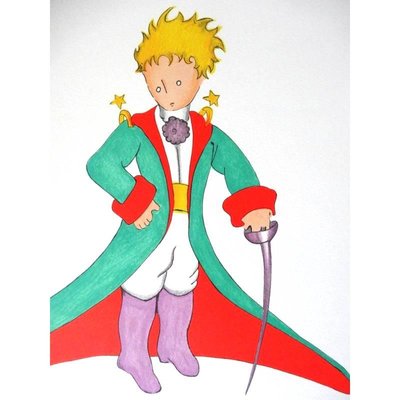
the-little-prince-in-a-big-coat-lithograph-by-antoine-de-saint-exupery-1

Here’s The Little Prince by Antoine de St. Exupery in short with  too much left out:

A pilot has crashed his plane and is stranded in the desert. He meets a tiny little prince from the Asteroid B-612, who has come to Earth after a long journey through the universe, a journey he took because the love he felt for a single flower was too much for him to bear. The little prince recounts his journey through different planets to the pilot, telling of his conversations with, among others, a king, a man who has nothing but believes he is rich, a drunken fool, a lamplighter, a cartographer, and a train switchman. They each allow him insight into some paradox of human behavior. On Earth, he meets a fox, who teaches him true wisdom, which he then imparts to the pilot. When the little prince leaves the pilot (I’m not telling you how) he promises that pilot will be able to see him in the night sky.

images

And if you’ve read The Little Prince, you’ve already figured out what this all has to do with sunsets. This is from chapter 6:

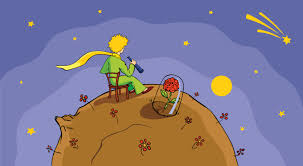
Oh, little prince! Bit by bit I came to understand the secrets of your sad little life… For a long time you had found your only entertainment in the quiet pleasure of looking at the sunset. I learned that new detail on the morning of the fourth day, when you said to me:

“I am very fond of sunsets. Come, let us go look at a sunset now.” “But we must wait,” I said.
“Wait? For what?”
“For the sunset. We must wait until it is time.”

At first you seemed to be very much surprised. And then you laughed to yourself. You said to me:

“I am always thinking that I am at home!”

Just so. Everybody knows that when it is noon in the United States the sun is setting over France.

If you could fly to France in one minute, you could go straight into the sunset, right from noon. Unfortunately, France is too far away for that. But on your tiny planet, my little prince, all you need do is move your chair a few steps. You can see the day end and the twilight falling whenever you like…

“One day,” you said to me, “I saw the sunset forty−four times!”
And a little later you added:
“You know−− one loves the sunset, when one is so sad…”
“Were you so sad, then?” I asked, “on the day of the forty−four sunsets?” But the little prince made no reply.

In Chapter 10, on the first stop of his journey, the little prince meets a king who lives alone on a planet with no subjects. The king tells the prince that he has absolute authority over everything. The little prince is intrigued by this notion, and so asks the king if he can command a sunset, since he is feeling homesick and hasn’t seen one since he left Asteroid B-612.

Such power was a thing for the little prince to marvel at. If he had been master of such complete authority, he would have been able to watch the sunset, not forty−four times in one day, but seventy−two, or even a hundred, or even two hundred times, without ever having to move his chair. And because he felt a bit sad as he remembered his little planet which he had forsaken, he plucked up his courage to ask the king a favor:

“I should like to see a sunset… do me that kindness… Order the sun to set…”

“If I ordered a general to fly from one flower to another like a butterfly, or to write a tragic drama, or to change himself into a sea bird, and if the general did not carry out the order that he had received, which one of us would be in the wrong?” the king demanded. “The general, or myself?”

“You,” said the little prince firmly.

“Exactly. One much require from each one the duty which each one can perform,” the king went on. “Accepted authority rests first of all on reason. If you ordered your people to go and throw themselves into the sea, they would rise up in revolution. I have the right to require obedience because my orders are reasonable.”

“Then my sunset?” the little prince reminded him: for he never forgot a question once he had asked it.

“You shall have your sunset. I shall command it. But, according to my science of government, I shall wait until conditions are favorable.”

“When will that be?” inquired the little prince.

“Hum! Hum!” replied the king; and before saying anything else he consulted a bulky almanac. “Hum! Hum! That will be about−− about−− that will be this evening about twenty minutes to eight. And you will see how well I am obeyed.”

Just as the king commands, twenty minutes to eight is about what time The Show starts in Copake Falls, during the weeks when the Trisha’s Mountain Driveway Sunset Festival is in full swing. It’s completely reasonable. We carry the camp chairs down to the end of the driveway and we sit there, like we’re at the Village Green Bandshell in Valley Stream and The Nassau Pops are coming out to perform. Sometimes we shoot the breeze while we watch the show, and sometimes we start getting silly and laughing ‘cause we do that. Sometimes we point phones at it. But other times we sit there and stare, and we think our own thoughts.

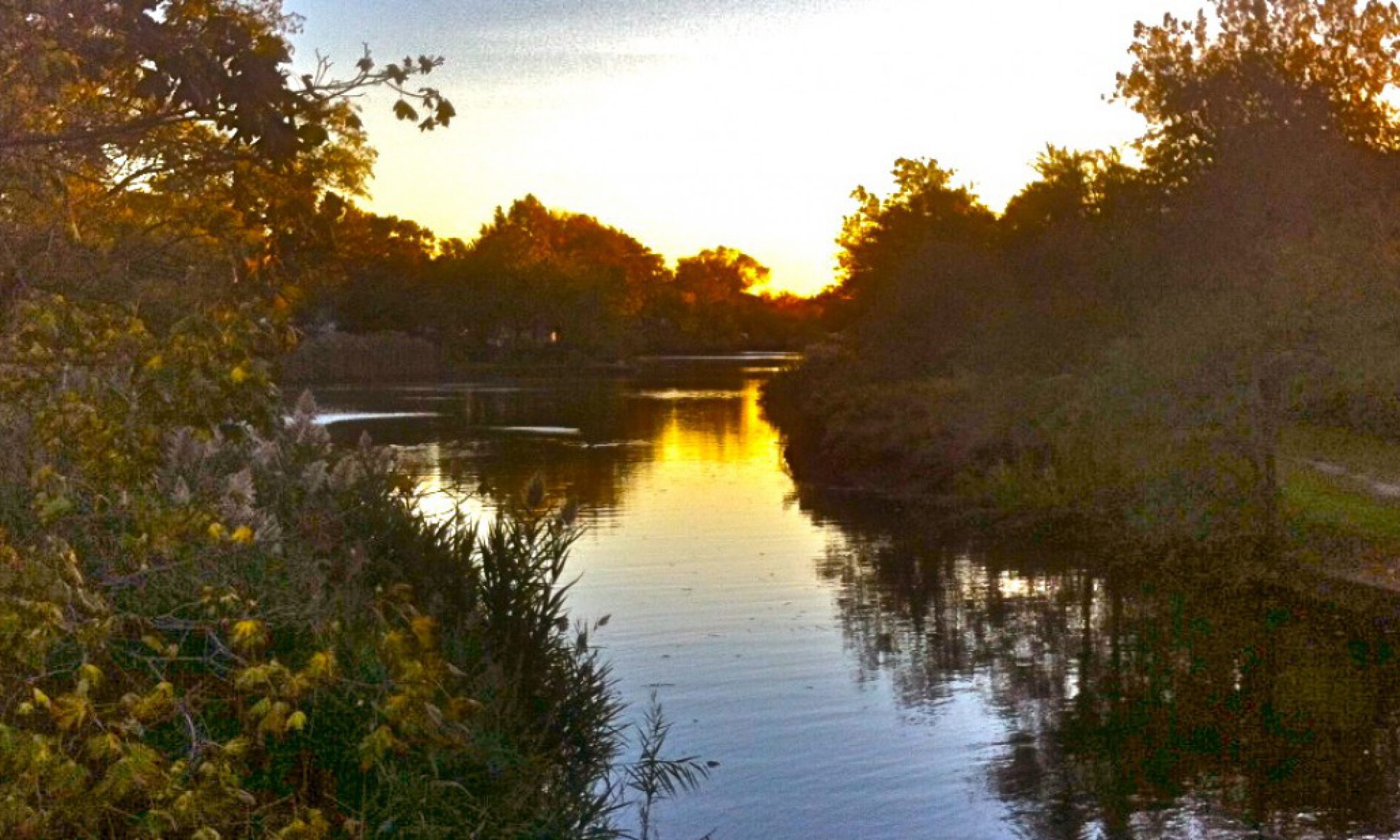
And as all sunset fans know, it’s different every time. Sometimes fluffy cumulous clouds glow like they’re being heated on a stove when the sun sets beneath them. Sometimes there’s a little break in a blanket of cloud cover so that the sun suddenly appears right before it sets behind the mountains and throws a ribbon of orange and red straight across the ridge. Sometimes cirrus clouds splash streaks of peach and mustard and cherry red against the darkening blue like brushstrokes from an abstract painter, and sometimes giant stratocumulus dragons and bunnies change colors as they float by. You never know what you’ll see, so it’s always worth watching.

So shortly after the day of my final sign-off on Google Classroom, I was up on The Mountain, sitting in a camp chair next to Trisha in an illuminated asphalt driveway as the clouds and the sun and the tree farm and the hills performed another new, never-seen-before version of The Show and I was thinking about the little prince.

“You know, one loves the sunset – when one is so sad…”

There’s something intrinsically sad about a sunset. It’s the end of another day of one’s life. It’s the last gasp of light before total darkness sets in. So even if one is sitting happy as a clam watching a spectacular sunset, one is bound to feel a little bit of melancholy. I suspect it has something to do with the fact that we’ll all be dead someday.

But besides feeling sad for the state of the world right now, and sad about all the grief in the collective consciousness, and all the unnecessary suffering that has been inflicted by greed and stupidity, and of course sad about the death of my father in the middle of all this, I realized I was also feeling a little sad watching the sunset that evening because there are flowers back on the creek that have tamed us, and Trisha and I are responsible for them.

Our backyard in Valley Stream faces west, and the sunsets there are no slouches. If they were the sunsets we watched for the rest of our lives, we’d die lucky. But nothing compares to the big sky over Copake Falls. It almost feels like we’re cheating on our house. But we’ve allowed ourselves to be tamed by this 1.9-acre plot of land on a hill overlooking a tree farm, and since the day we first stepped foot on it, nothing has been the same. And sometimes it feels like the future is coming at me too quickly.

The little prince loved a rose that grew on Asteroid B-612. Being the only rose there, he thought she was unique in all the world. But his rose was very vain and very demanding, and she was breaking his heart, which is why he decided to tidy up his volcanoes, pull up the weeds to stop the baobab trees from taking over and go out into the universe to find wisdom. Later, while exploring Earth, he comes across a garden of roses, and realizes that his rose is not unique, which makes him cry.

He next meets the fox, who wants the little prince to tame him, but the Little Prince doesn’t understand the concept, so the fox explains:

“It is an act too often neglected,” said the fox,” It means to establish ties.”

“‘To establish ties’?”

“Just that,” said the fox. “To me, you are still nothing more than a little boy who is just like a hundred thousand other little boys. And I have no need of you. And you, on your part, have no need of me. To you, I am nothing more than a fox like a hundred thousand other foxes. But if you tame me, then we shall need each other. To me, you will be unique in all the world. To you, I shall be unique in all the world…”

The fox goes on to explain the process of taming:

It will be as if the sun came to shine on my life. I shall know the sound of a step that will be different from all the others. Other steps send me hurrying back underneath the ground. Yours will call me, like music, out of my burrow. And then look: you see the grain−fields down yonder? I do not eat bread. Wheat is of no use to me. The wheat fields have nothing to say to me. And that is sad. But you have hair that is the colour of gold. Think how wonderful that will be when you have tamed me! The grain, which is also golden, will bring me back to the thought of you. And I shall love to listen to the wind in the wheat…”

maxresdefault

So at the fox’s insistence, the little prince tames him. Part of the process is to establish rites. The little prince has to show up at the same hour as he did the day before so the fox can look forward to that hour. Soon, the fox has been tamed. But the little prince, who never wanted to tame the fox in the first place, feels like he has to move on.

“But now you are going to cry!” said the little prince.

“Yes, that is so,” said the fox.

“Then it has done you no good at all!”

“It has done me good,” said the fox, “because of the color of the wheat fields.”

“Go and look again at the roses. You will understand now that yours is unique in all the world. Then come back to say goodbye to me, and I will make you a present of a secret.”

The little prince comes to realize that the rose he left behind on Asteroid B-612 is unique from the other roses because it has tamed him. And he tells the other roses just that:

“But in herself alone she is more important than all the hundreds of you other roses: because it is she that I have watered; because it is she that I have put under the glass globe; because it is she that I have sheltered behind the screen; because it is for her that I have killed the caterpillars (except the two or three that we saved to become butterflies); because it is she that I have listened to, when she grumbled, or boasted, or even sometimes when she said nothing. Because she is my rose.

And he went back to meet the fox.

“Goodbye,” he said.

“Goodbye,” said the fox. “And now here is my secret, a very simple secret: It is only with the heart that one can see rightly; what is essential is invisible to the eye.”

“What is essential is invisible to the eye,” the little prince repeated, so that he would be sure to remember.

“It is the time you have wasted for your rose that makes your rose so important.”

“It is the time I have wasted for my rose−−” said the little prince, so that he would be sure to remember.

“Men have forgotten this truth,” said the fox. “But you must not forget it. You become responsible, forever, for what you have tamed. You are responsible for your rose…”

“I am responsible for my rose,” the little prince repeated, so that he would be sure to remember.

The House on the Creek tamed me as a little boy, then it tamed me all over again when our son was a little boy. I know every single flower and weed that grows on that 60 x 100 plot of land. I have spent thousands and thousands of hours taking care of it.

There’s a wisteria bush that grows in the corner of the yard next to a large and beautifully crooked maple tree that leans out towards the creek. Both of these plants were there before my parents were. If not for our regular intervention, the wisteria vines would have swallowed up the maple tree long ago. Someday we’re not going to be there and there will be nothing we can do about it, but on some level, we’ll still feel responsible for it.

Over almost twenty years on the Creek, Trisha and I have planted over a hundred perennials, roses shrubs and trees. We’ve grown thousands of flowers and fallen in love with every single one of them. We made a place surrounded by too much ugly into something uniquely beautiful. We tamed it and it tamed us. Though the siren call of Copake Falls was always calling, we made a little paradise in Valley Stream.

But the first time we drove up that asphalt driveway on North Mountain Road, we both knew we were going to be tamed all over again. The sweep of grass that slopes upwards to a trail through the woods in the backyard, the solitary mountain standing watch over the cornfield next door, the way the house itself nestles into the hill like a giant stick of butter on a plate, the big old trees that needed a little help from the vines trying to eat them, the leaves of the tall cottonwoods dancing in the breeze along the driveway, and those sunsets over the Peaceful Roe Jan Valley.

The little prince points out that on Earth “Men set out on their way in express trains, but they do not know what they are looking for. Then they rush about, and get excited, and turn round and round...” And not only that, they “raise five thousand roses in the same garden−− and they do not find in it what they are looking for.”

That’s us all right. All the years we spent building a little Eden in Valley Stream surrounded by crowds and noise and litter, we kept looking for our place in Copake Falls, and just like when the little prince and the pilot go in search of a well in the desert, we just kept going until it found us. And when we did, it was as if it had been waiting to be found, waiting to be tamed, and waiting to tame us.

The first time we walked up the hill in the backyard, I said to Trisha that this was a canvas that we could paint something brand new on, something that started with us. She was always more than cool about making a home and a family in a place where I had already been part of one, instead of us building from the ground up together. Now this was her turn. Trisha’s Mountain. But after twenty years and a thousand roses, she’s just as tamed by the creek as I am. To let go of it completely is, to quote one of her favorite expressions, something I can’t get my head around right now.

Monsieur St. Exupery said it best: “One runs the risk of weeping a little, if one lets himself be tamed…”

When it comes time to say goodbye to Valley Stream, to say goodbye to the place where I was a little boy and where we raised a little boy, time to say goodbye to that physical connection to my parents, it just ain’t gonna be easy.

But the fox reminds the little prince that, “it is only with the heart that one can see rightly; what is essential is invisible to the eye.”

So when I’m doing nothing on Trisha’s Mountain, sitting and staring or walking around, I may not be able to meditate like a Buddhist Monk, but I’m trying like hell to stay in the here and the now, to see with my heart, everything essential that happens to be right in front of me, and everything essential that I love that can’t be right in front of me. It’s all there if I see rightly.

IMG_2932

When it’s time for little prince to leave the pilot, on the one-year anniversary of his descent to Earth, he comforts the pilot by telling him to look up at the stars.

“And at night you will look up at the stars. Where I live everything is so small that I cannot show you where my star is to be found. It is better, like that. My star will just be one of the stars, for you. And so you will love to watch all the stars in the heavens… they will all be your friends. And, besides, I am going to make you a present…”

He laughed again.
“Ah, little prince, dear little prince! I love to hear that laughter!”
“That is my present. Just that. It will be as it was when we drank the water…”

“What are you trying to say?”

“All men have the stars,” he answered, “but they are not the same things for different people. For some, who are travelers, the stars are guides. For others they are no more than little lights in the sky. For others, who are scholars, they are problems. For my businessman they were wealth. But all these stars are silent. You−− you alone−− will have the stars as no one else has them−−”

“What are you trying to say?”

“In one of the stars I shall be living. In one of them I shall be laughing. And so it will be as if all the stars were laughing, when you look at the sky at night… you−− only you−− will have stars that can laugh!”

And he laughed again.

“And when your sorrow is comforted (time soothes all sorrows) you will be content that you have known me. You will always be my friend. You will want to laugh with me. And you will sometimes open your window, so, for that pleasure… and your friends will be properly astonished to see you laughing as you look up at the sky! Then you will say to them, ‘Yes, the stars always make me laugh!’ And they will think you are crazy. It will be a very shabby trick that I shall have played on you…”

And he laughed again.

“It will be as if, in place of the stars, I had given you a great number of little bells that knew how to laugh…”

There isn’t much room for the stars in our neighborhood on light-polluted Long Island. There’s no limit to the stars on our hill in Copake Falls. After The Show fades to dark red and then to black, you can move the camp chair to the wide-open hill in the backyard and take them all in. And of course, the longer you look, the more stars you see.

IMG_2078

The little prince is up there. You know that. But then there’s all the people whose time in my life has passed like another day’s sunset. Some of those little stars up there are all the thousands of kids and thousands of grown-ups I met in 25 years as Mr. Duffy the Schoolteacher. Some of them are people I met before those 25 years even started, people from my neighborhood, people from school, people I met while working at the supermarket, driving a cab, working at a magazine and a newspaper, going to college, going out to bars and clubs, going on an Outward Bound expedition when I was 16, going to Camp Lavigerie in the Adirondacks every summer and every other thing I ever did.

Some of those stars are friends and family who I haven’t seen in too long because of this Pandemic, and I hope every one of them of them can come here and sit down on this hill someday. But in the meantime, they’re out there. So I’ll think of them and hope they’re doing well and I’ll pick each one out a star for the time being.

But the brightest stars up there, some of whom are planets following the path of the sun?

Those are my parents, and Trisha’s parents, finally getting to visit, and to share in all this beauty that has tamed us. Those are the stars that guide our way into the future.

Because someday, when we cross the Whitestone Bridge with nothing left to go back to on the other side, the sun will go on rising and setting, and we’ll have a front row seat to a beautiful sunset every night there is one. Over time our sorrows about leaving Long Island will start to be soothed. And some of those stars on that hill at night will be all the flowers we grew on a little 60 X 100 plot of land along a creek in Valley Stream.

And we can say it’s what we did there. And we can say it was something.


Copyright 2020 by John Duffy

Fair use (hopefully) of excerpts and illustrations from The Little Prince, which was written in 1943 but renewed in 1971, copyrighted by the widow of Antoine de St. Exupery.