Stories, Essays, Rants, Appreciations, Long Walks With Mookie The Dog, History Lessons, Occasional Social Justice Warfare and Bad Advice For Parents from the Left Bank of Duffy's Creek.
Here’s where it starts: At the very end of 2019, the week between Christmas and New Year’s Day, the week when nobody does much of anything, my wife Trisha and I did something complicated, extravagant and totally unnecessary. We bought a house.
Everyone with whom we shared this news was ecstatically happy for us. Nobody called us stupid. Not to our faces.
I suppose if somebody had a problem with us buying this particular house, the problem would be that we already own a house, and the majority of people on Earth don’t own a house, and many don’t have a home, and now we have two. From that perspective, of course it’s clear that we didn’t have any damn business buying another house.
But we bought it anyway. We had our reasons. We think some of them are almost valid, but I’ll leave that to you. If you’re a capitalist, maybe you’ll say we’re smart people and we know what we’re doing and it’s not a problem at all so go ahead and enjoy it. If you’re a Marxist, you’ll likely call us out for the selfish pigs that we are. Fortunately for us, there are way more capitalists than there are Marxists, at least in our circle.
Trisha and I bought my parents’ house eighteen years ago in Valley Stream, Long Island, New York. It’s a little 1,300 square-foot cape cod-style house on a 60 x 100 plot of land. It’s cute. You’d like it. We grow a lot of flowers. The backyard overlooks a pretty little winding creek, the official name of which is actually “Valley Stream”, but people who don’t know me usually either call it Hook Creek or Mill Brook.
People who do know me call it Duffy’s Creek. Some, anyway. Because I asked them to. My parents bought the house in 1955, and I grew up there, the “baby” in a family of five kids. I never went very far, never changed my mailing address. I got married, came back, entered into a real estate transaction, had a son of my own, and began growing old right on that creek. The tide comes in and out from Jamaica Bay, and by the grace of God, I go right on living. It’s a nice story so far, isn’t it?
But here’s the thing: Three weeks after Trisha and I met on the boardwalk by the ocean in Long Beach, Long Island in 1999, we spent a perfect early-November weekend staying in a cabin in Taconic State Park at Copake Falls, in Columbia County, New York, a place we had both discovered independently, she from going to the annual Falcon Ridge Folk Festival in nearby Hillsdale, me from years when I would periodically get in my car and drive long distances because I didn’t have anybody to go to the Falcon Ridge Folk Festival with. We lit a campfire on a crackling cold and clear Friday night full of stars, and on Saturday morning we hiked to Bash Bish Falls under Indian summer skies full of crazy blue jays hopping through orange and yellow trees yelling, “Stay! Stay! Live Here!” We fell in love with each other and we fell in love with the place. And for the ensuing twenty years, we returned there every summer and a couple of falls, probably logging about six months of elapsed time. Our son Jack has never known a year that didn’t include at least one week in Copake Falls.
“It’s like our second home,” we’d say.
But that wasn’t true. It just sounded nice.
So our home away from home stayed up there on the map and up there in our minds year after year as we continued to grind it out on Long Island. The sound of the blue jays and the turns in the country roads stood behind us, tapping on our shoulders to remind us what we were missing; the ancient mountains, the cleaner air, the bigger trees, the wide open roads, the farm stores and the church barbecues, the people who wave when they drive by, the absence of malls and chain stores (except for the Stewart Shop up in Hillsdale, which is perfect and cannot be criticized). I wasted hours and hours of my precious time here on Earth scrolling though Zillow listings.
OLYMPUS DIGITAL CAMERA
Copake Falls was an alternative reality. And as Valley Stream continued to get louder and louder year after year, summer after summer Copake Falls stayed mellow.
Valley Stream is a lot of things. Many of them are good. But “mellow” is not one of those things. A quick check for “antonyms of mellow” on Merriam Webster reveals “discordant, dissonant, grating, harsh, inharmonious, jarring, strident, unmelodious and unmusical.” I guess it would be harsh, maybe even unmelodious, to describe my hometown in these terms. But still, it sure as hell is not mellow, except in our backyard, and then only when our surrounding neighbors aren’t shooting fireworks or holding dance competitions. And if you want to see jarring and strident, live near a mall on Long Island during those seasons when people get in their cars every half hour to go buy more stuff. If grating and harsh is more what you’re after, listen to a Long Islander who has been inconvenienced.
Robert Frost came up with the line, “I had a lover’s quarrel with the world.” It was such a good line that he requested it as the epitaph on his gravestone. As you might guess, Jean-Paul Sartre doesn’t have an epitaph on his gravestone (cool issues and all), but he sure could have gone with one of his best lines: “Hell is other people.”
People are what make a place more than anything. Or break it. There are rural parts of America and suburban parts of Long Island where I’m not too arrogant to say I wouldn’t be caught dead. People who are proud of where they live, wherever they might be, like to come up with slogans to promote their hometowns as places that other people might like to see, possibly even live in, because people spend money, and that’s what keeps places alive. Valley Stream once sold itself as “The Gateway to Suburbia”. Kind of a Dante’s Inferno thing really, but I suppose it was meant as a compliment at the time. The Town of Copake sells itself to this day as “The Land of Rural Charm.” That’s a good one, huh? I hope whoever thought of that at a meeting got the praise and recognition that they earned. But I could show you lots of uncharming rural places around town if I had to. And tell you about some less than charming rural people.
So In fairness to my fellow Long Islanders (and – whether they like it or not – my now-fellow Copakeans), let’s start with the premise that the vast majority of people everywhere, in every place with a name, are really all right. I truly do believe this. But sadly, as you know, while most people are wonderful, some people just suck. So it follows that if there are more people, more people will just suck. That being established, here are what I believe are the four basic groups of problem humans:
1. The Slightly to Extremely Dangerous: Those who have had hard lives or some sort of trauma and have decided than instead of nobility or faith, they will instead make it a point to project their hurt and anger on convenient targets they find around them. While this group of people have to be treated like walking landmines, as a child of God, one can’t judge them if one is not one of them and hopes not to be. I just try to stay out of their way and not to make things any worse for them.
2. The Insufferably Annoying: Those who have been sadly brainwashed by too much TV into thinking they are the star of their own little reality show, and thereby have developed a need to create drama and tension where none should exist in order to compensate for an otherwise tedious existence. Long Island is saturated with people like this, possibly because of its wealth. If your main problems are not the procurement of food, clothing and shelter, you really have no problems, so if you want some, you have to invent them. Ideally, it would help every one of them to be slapped silly, but violence is never an option.
3. The Head-Scratchingly Frustrating: Those who, for a variety of reasons, from deeply neurological to not getting hugged enough as babies, just can’t grasp the simple rules of getting along. They’re not particularly dangerous or overly dramatic. They just flat out boggle the mind. Ask anyone who’s ever worked in retail. But, as my father would have said, you can’t make their problem your problem. You can suffer fools gladly or ungladly. You’re still going to suffer fools.
Now, If you give people in these three categories the benefit of the doubt, and assume that in their essence they really just can’t help themselves, and they probably have many good qualities as well, that leaves us to grapple with the problems perpetuated and the damage done by Group #4, The Unrepentant Assholes: Those who live to purposefully and gleefully gain negative attention from the rest of us by being as unpleasant, uncooperative and self-centered as they can possibly be.
My personal sampling of the several hundred-thousand people I’ve interacted with in 57 years suggests that groups 1, 2 and 3 represent between 7% and 10% of the overall population. Maybe as much as 15% in higher-end neighborhoods. The Unrepentant Assholes in Group 4 are actually a very, very small percentage of the human population. I asked Trisha, and she said 2%. I was thinking three, but I’ll go with her answer.
There are 284.7 square miles of land in Nassau County, New York, and approximately 1,359,700 people call it home, making for a population density of 4,787 people per square mile, with all the people noise and chaos they generate. Bear in mind that there are large swatches of Nassau County where billionaires have reserved lots of land for themselves and their horses and their golf courses, leaving the rest of us to fight over what’s left. The population density of South Valley Stream is 7,583 people per square mile.
Traveling from Nassau County to Columbia County, you’ll pass Co-Op City in the Bronx, which has a population density of 47,000 per square mile. So really, I should just shut up. I’m very much aware of this. But we’re born where we’re born, for reasons that are seemingly random and certainly not fair, and we know what we know. I would like to build a little house with a garden for every family in Co-Op City on all the land currently being used for golf courses. I have no beef with horse farms.
Meanwhile, In Columbia County, there are 635 square miles of land, which is home to 59,461 people, which is 93 people per square mile. This includes Hudson, the county seat, which is two square miles and has 6,144 people, 1238 of whom sell antiques. Extrapolate that funky little metropolis, and now we’re down to 84 people per square mile, and 2% of 84 is 1.68.
This all means that in every square mile of land in Nassau County, you will find 94 Unrepentant Assholes (150 in South Valley Stream, most of them driving). Whereas in Columbia County you might find two. Plus you can factor in the variable that being known as having manners and not being a big fat pain in the ass is much more important in Columbia County, because you don’t want everyone else to agree that you’re that one person in their square mile, whereas in Nassau County, every asshole is competing for attention against 93 other assholes within one square mile, and it’s hard to keep track of them all.
There is no cure for any of this. Not in this life, man. More people create more stress. As the Pandemic of 2020 set in, I started seeing clickbait on my rectangle about how people would start moving from the city up into the Hudson Valley “in droves”. Since it’s an issue that affects my life, I was interested to know how many a drove is and how many droves you could multiply that by, but I try not to fall for clickbait. And the proliferation of people in Groups 1, 2 and 3 will only get worse as cell phones get better. And more Group 4’s means more chances of something unpleasant happening to you or around you every time you leave the house.
So the choice for us seems to have become one of either standing in the Gateway to Suburbia as the Barbarians continue to storm through, or goin’ to the country and buildin’ us a home in The Land of Rural Charm, hoping that agricultural zoning regulations will keep the droves at bay for a while.
And that’s why at the end of the twenty-first year of complaining about the miseries that follow the overpopulation of Long Island, and of idealizing the alternative existence of Columbia County, Trisha and I bought a second home two and a half hours away from our first one, a mellow-yellow ranch house on 1.9 acres of land bordering the very state park where we had once walked around all gooey in love under the autumn sun with the blue jays and everything so many years before. Since I had named the creek in back of our house in Valley Stream after myself, because who could stop me, and since the funds that made this real estate transaction possible were bequeathed through my wife’s family, I insisted that we call our new second home, perched on a ridge 840 feet above sea level, “Trisha’s Mountain”.
We had a dream. We had the money. We jumped off the cliff. And then the whole country broke. And then I quit my job.
Not really, but sort of. I actually retired from 25 years as a middle school English teacher. It’s an important job, and somebody has to do it, but it is no longer me. However, the pension I earned is a lot less than if I had stuck around and made more money for a couple of more years, thereby assuring that eventually, if I wanted to live in the style to which I’ve become accustomed, house in the country and all that, I’d have to suck it up and find a part-time job. So, I gave myself four months to decompress, while the Covid-19 Pandemic and the complete collapse of American Society that will likely precede or follow the Presidential Election of 2020 play themselves out.
In the meantime, in between traveling up and down State Route 22, I thought I’d write a book. But I didn’t know what to write about. I had some ideas, but I don’t like it when people are angry at me, so I had to keep thinking of other ones.
The whole “we left the crowd in the city and moved to the country but we didn’t know the cows next door would smell so bad and why are there bees and snakes” thing has been done to death. That’s not what I’m after here. There isn’t a whole lot of Upstate / Downstate culture shock for me to write about because I pretended that I had a house in the country for twenty years before I actually had one. And nobody up there has to explain to us how not to be “citiots.” We get along just fine with everyone. Not much material there. Of course, In order to be considered a local in Copake, your family has to have lived there for two-hundred years, so we know we’ll always be outsiders. We try to counter that by being polite.
So ultimately I decided to write a book of stories and word pictures, twenty of which are set in Columbia County, the other twenty in Nassau County.
My only claim to originality is that I write from the perspective of one whose heart truly lives in two places at the same time, and who knows his time in the one place, the place that created him, is likely winding down.
A Little Side Note: Right now, if you’re reading this book in its competed form, and not in installments on duffyscreek.com, you’ve established that 20 plus 20 equals 40 and not 41. Very astute. Chapter 1, the longest one in the book, is mostly about New York Route 22, the road in between (and how I found it). As we’re making this several years long transition, the road from here to there and back has become sort of my third home.
Valley Stream and Copake Falls, while they are almost united by a common language, and while you can drive from one to the other in two and a half hours, and while by virtue of boundaries drawn up 400 years ago are both in New York State, could not be less alike. But this book is not about comparing and contrasting them. It’s about things that define these places for me. They are both home now. When I’m in one place, I feel the other one trying to pull me back. Neither of them seems to understand that I can’t be in two places at once.
I have become a human wishbone.
I grew up in Valley Stream (and by extension, Long Island) in days when it wasn’t quite as strident and jarring. As another one of my heroes, Mose Allison, said of Tippo, Mississippi, “I am of that place, and the stamp is upon me.” But the little hamlet of Copake Falls has been yanking at the sleeve of my soul for most of my adult life, and now our plan is to go there for good someday.
But not today.
I guess you could say we have a plan. But we don’t, really. Our right-now-16-year-old son has two more years of high school and likes it upstate just as much as we do. So he would be more or less on board if we actually had a plan. Trisha is very successful at her mommy-takes-the-train-to-the-city job, so she’s not in a hurry to leave (as we’d be broke, and she’s in charge of the money) but I know Long Island’s obnoxiousness gets to her even more than it gets to me. And as I write this in the summer of 2020, you can’t even go sit on the beach unless you want to risk getting horribly sick (or getting somebody else horribly sick), and Long Island is pretty much pointless without the beach and the ocean. It seems predetermined which way the wishbone will eventually snap, and I guess if there is a plan, that’s the plan.
Abraham Lincoln said that the best thing about the future is that it happens one day at a time. I’ve outlived him by a year, so I’m happy to be here at all.
And as people suffer all over the world, my main purpose in life in August of 2020 is waiting for people to call me to schedule delivery of some comfy furniture.
I never thought it would come to this.
Of course, If we decided to put our house in Valley Stream on the market tomorrow morning, it would take the better part of two years to shovel out of it anyway. So for the foreseeable future, part of me is watching the tide come and go on the creek and part of me is watching the light dance across the mountains. I am a stupidly lucky son of a gun and I have not a thing in this world to complain about, but if you’re nice enough to read on anyway, I’ll try not to be boring.
When a friend at work would complain to me, he’d often say, indignantly, “this is not what I signed up for!” Well, this is exactly what I signed up for that mellow December day last year in the lawyer’s office in Millerton.
I am a human wishbone. I am Gumby, damn it. With one arm and one leg stretched north, the other arm and leg stretched south.
Which would put my center somewhere around the Red Rooster.
Francis James Duffy died early on the grey and rainy morning of Sunday April 26, 2020. He was a great guy to have as a friend, an even greater guy to have as my father.
As of two days ago, he was one of 120,000 people who have died as a result of the Covid-19 Coronavirus in The United States of America, 446,000 on Planet Earth. As you probably know, Long Island suffered unbelievable losses. Over 4,000 people have died from the virus in Nassau and Suffolk Counties alone. I feel like I’ve heard more ambulance sirens this year than in my previous fifty-six combined. For weeks in April into May, every morning brought three or four more pages of people, particularly grandpas and grandmas, ripped from the living, smiling above their names and the sad news of their departures in the Newsday Obituaries.
He was one of them.
Today is Sunday June 21st, 2020. The first full day of summer. Father’s Day. Francis has been gone eight weeks. Born at the start of the Summer of 1929, he would have been 91 years old tomorrow, June the 22nd.
Which means that this morning, in an alternate reality that didn’t include a worldwide pandemic, Trisha, Jack, Mookie Dog and I would have driven an hour and fifteen minutes east from the house my parents bought in 1955 (and sold to us in 2002) to the Jefferson’s Ferry Life Care Community in South Setauket, where they moved 19 years ago.
He would have been asleep in his wheelchair when we got there, and while he would eventually come around to the notion that he had visitors, he wouldn’t know who we were. But he’d like that we’d brought a dog. We would have wheeled him from the Memory Unit, down the long hallway, past the rooms of those he used to call “the inmates”, then out to the patio with the high maples and the oaks and the rock garden with the recirculating waterfall and the upscale outdoor furniture with the oversized umbrellas, the red corduroy chair cushions and the cool summer breeze.
And there we would have sat with him and there we would have tried as we always did to communicate with him through the darkened synapses of his advanced dementia. If we’d been lucky, he might have opened his eyes once or twice, and maybe light them up with his smile, a smile like no other. And more than likely, Mookie would have made that happen.
After his wife of 60 years died in August of 2012. I visited my father once a month. Usually it would be just Mookie and me, back out on the road at the crack of dawn on a Saturday Morning. It was exactly a 50-mile trip. We’d zip out before the Long Island traffic, east on Sunrise Highway, north on the Seaford Oyster Bay Expressway, east again on the Long Island Expressway to exit 62 , up Nichols Road to Northern Boulevard to Shep Jones lane, where we’d park in the Nature Conservancy parking lot for a hike through High Farms and up into Avalon Woods in Stony Brook. Then, fully born again, we’d head back down Nichols Road to 347 to Wireless Road to go see Grandpa. For me it was sort of like going to church and getting to physically kiss Jesus on the top of his head at the end of the mass.
Mookie made lots of friends over the years at Jefferson’s Ferry, and as far as we’re concerned, he was a working therapy dog when he was there. Now I don’t have the heart to tell him we’re never going back. Being a dog, He never stops hoping. And I don’t know about him, because, again, he’s a dog and he can’t tell me, but I assume he also holds those mornings with his grandpa as preciously in his Labrador heart as I hold them in my human one. Being the only one of us (I can only assume) who was aware that every one of those monthly visits might be the last one, I tried to stay in the moment as we three sat together, even as the man whom my dog knew as Grandpa slipped further and further away from us as the months turned into years.
Not counting Mookie, Francis J. Duffy was grandpa to eight people and great grandpa to five. He leaves behind a family of 26 people. And if not for the dedicated and wonderful people who work at Jefferson’s Ferry, he would have died alone, because the pandemic led to the prohibiting of visitors to nursing homes after March 15th.
The last day that Mookie and I made that trip was Saturday February 15th. And I knew it might be the last. I always knew that. Grandpa was getting closer and closer to that dreaded last stage of dementia, the vegetative state.
But never in a million years would I have guessed why it would be our last visit. I guess maybe I shouldn’t have been this naïve, but discouraged and beaten down as I’d been by the last three and a half years of news, I still actually thought that we had at least some scrap of a functioning Federal Government left, some bare system of oversight and protocol, accidentally left over from the Obama Administration, that would have had at minimum some shred of a plan in place to protect its citizenry from a national health emergency.
Instead, it’s 120,000 people dead and counting. And I don’t know who you think gets most of the blame, or who you think should take most of the responsibility.
But I have no doubt.
And so, while this blog post is first and foremost a tribute to my father, a great man in every sense of the word, I know that he would have wanted me to address the sons of bitches who killed him.
My pleasure, Francis. Stick around.
First though, I have to go on one of those long, wonderful tangents that Mom would go on, which as you lovingly pointed out, always started with: “To make a long story short…”
And I also need to explain something to you dear reader from the get-go: More often than not, I refer to my father by his first name, rather than “my father” or “dad”. I jumped back and forth between addressing him either way from the time I was a teenager. He eventually got used to it, and there’s a reason for it.
“Dad” and “Francis” are sort of a Yin and Yang in my mind: In the yin, my father, who taught me structure and self-discipline, optimism and faith; who called out all my bullshit, took care of me, worried about me, helped me out of jams and told me what a goddamn dopey bastard I was being any time it was necessary that I be informed as such. In the yang, Francis, the guy who was an absolute rip to spend time with, the guy who dove right into life whenever he could, and most of all, the guy who taught me the awesome power and potential of thinking for yourself, and the art of expressing those thoughts with style.
Now of course (to go on a further tangent), the name “Francis” often becomes “Frank”, and Francis actually used “Frank” as a sort of professional name, but my mother never called him that, unless she was among the people who knew him professionally. (Sometimes she’d call him “Frankie” with a dash of passive-aggressiveness, which was fun). Francis was his family name, the childhood name by which his Irish immigrant parents called him. “Frank Duffy” was his “stage name”. He had legions of fans as “Frank Duffy”, but more about that guy later.
For now, I don’t mind telling you that in my young and stupid days, my father and I took a long, long ride together on an emotional roller coaster. But emotional roller coasters have highs as well as lows, just like real ones. We had some real good times in there, too. And of course, rides on emotional roller coasters eventually end, just like rides on real ones do. And the first thing you do when it’s over is laugh. So let’s get all of what he would call “the silly shit” out of the way right now.
For the record, the three of us laughed like hell at this picture from my confirmation at Holy Name of Mary in 1976. And the apartment building at left is where Trisha and I “lived in sin” 24 years later, a year before buying the House on Duffy’s Creek.
The fighting was both of our faults, really. It took a long time for both of us to figure the other one out, and I’m not sure if we ever made it all the way there, but we definitely reached a detente. There were things about me, as I began developing into the me that am, that he didn’t particularly like. Exhibit A: My younger propensity for being perfectly happy spending an afternoon strumming on a guitar, quite likely stoned (you dopey bastard) often along with a stereo that was turned up way too loud goddamn it. I suppose if he hadn’t wanted me to pick up on 60’s hippie culture, he shouldn’t have given me four older siblings. But there they were, and I was soaking up everything I saw and heard from them and from their friends. But for Francis, rock and roll, Marlboros and Cannabis, would forever be among things he associated with the rednecks he met in the Merchant Marines.
A side note (I can’t resist irony, even when it breaks the flow of my tangents): My second-greatest loss in the Coronavirus Pandemic (I hope) was the April 7th death of singer-songwriter John Prine. I never tried John’s songs out on Francis, but I bet he would have gotten a kick out of them. (I know he would have known the song “Paradise” from our annual three-week party at Camp Lavigerie it in the Adirondacks. It was practically the national anthem up there). But even if Francis could appreciate a song like “Fish and Whistle” or “It’s a Big Old Goofy World”, Dad would have written off Prine for his drug abuse and for his cavalier, good-timing lifestyle, which was of course, one of the reasons I loved John Prine.
My father didn’t much like anything that was counterculture, I suppose falling right into the whole point of counterculture, which is to piss off your parents. I think the thing he didn’t realize about Monty Python and the Grateful Dead, for example, is that they were actually great art, despite some of their fans. My mother got that, but my dad, not so much. We had to agree to disagree in the end. When Jerry Garcia died in 1995, Francis’ take was: “That’s a shame. Another dopey bastard that didn’t take care of himself.”
He also rightly called me out on a regular basis for emulating working-class kids in Valley Stream (“’you’ze?’ Are you kidding me?”), and it annoyed him that someone with his last name would dumb down to fit in. I know that he and my mother sometimes regretted the decision to send me to the Valley Stream Public Schools instead of Holy Name of Mary School and Maria Regina Catholic High School. We’d get into mighty battles when I was in high school, and he’d point up Jedwood Place to the Big Brick Building on the hill at the end of the street and say, “you got that shit from up there!”
And of course, whatever that shit happened to be on that day, I did, and he nailed it.
Where I got that shit from.
But one huge factor at the time was money, as my parents were paying for four college tuitions on civil servant salaries. Education was above everything, though, and my parents were going to give their five children the American Dream if it killed them.
Another factor that I’m sure entered into the equation was that my parents, especially mom, had grown politically more liberal than the church, though they never gave up on it. Ultimately, they saw my unrealized Formal Catholic Education as something could be redlined if they were going to balance the budget.
I’m telling you all this because when the dust started settling on my years’ long fight with my father, he told me once that in a way, I was the one of his five children who was the most like him. I actually couldn’t believe it when he said it. But Francis never lied, and he sure as hell never said things to make you feel better. I still think it’s my brother Thom. Nevertheless, I sort of knew where he was going with this notion. Francis and I did have a lot of personality traits in common. (Among them to this day, the habit of walking around closing all the windows in the house when waking up from a Saturday afternoon nap, purposefully making small talk with strangers, and a long, slow “wooooowww!” when confronted something unexpectedly good or bad).
But if he ever realized what I realized about the two of us as I was writing this, he never told me.
My parents met at and both graduated in 1948 from W.C Bryant High School in Long Island City. Francis joined the Merchant Marines and sailed all over the world straight out of high school while his future wife went on to the College of New Rochelle, run by the Ursuline Sisters. She then got her master’s degree from the Jesuits at Fordham. My two older brothers and two older sisters all had twelve years of Catholic School. All four went to Catholic Colleges at some point. I never went away to college. I chipped away at it for 14 years until I earned myself a master’s degree from CUNY Queens College. Francis got his bachelor’s degree from Pace University when he was 47 years old.
So Francis and I were the only public school kids, and the only night school kids. And maybe that made the two of us quicker on the draw, and a little less filtered.
While a more christian soul you’ll never meet, my father had an explosive temper, and I found myself on the receiving end a lot, but in fairness, only when I had it coming. Because it wasn’t displaced anger in any way. Yeah, he had a lot of pressure as a working father of five, but when he was pissed at me, it wasn’t frustration about money or work or anything. He was just pissed at me. I learned that It’s hard to hide from that, and harder still to defend yourself from somebody who is going to raise you right whether you goddamn liked it or not. As a father, as he always said, he was in business to put himself out of business.
And there were things about my father that pissed me off and frustrated me, and of course, when I was young and assholish I felt compelled to let him know all about these things on a regular basis. I could yell, too. I was like him, remember? But on one of these occasions, when I was way too old to be getting into these pissing matches with him, he said something that landed.
“You know,” he said, in his sidearm delivery, “I’ve made it. I’m a success. I don’t have to prove a goddamn thing to you.”
The gauntlet was thrown. I wanted to be able to say that back.
Which brings me around to why he’s Francis to me as much as Dad.
Dad always had the potential to erupt in that quick-tempered volcano of anger. He got loud, and it got old. If you left a storm door open for more than ten seconds between November and May, he would scream, “The HEAT damn it!” If you opened that same door for more than ten seconds between June and October, he would scream, “The BUGS damn it!” The yelling drove my mom nuts, but she yelled right back. And then he yelled some more. They were Great Depression kids, and they were Irish and they were from Queens and they were yellers. I don’t know about my brothers and sisters, but that was something I had to unlearn. I thought everybody yelled at their families.
But when he wasn’t Angry Dad, yelling about opening the wrong windows or mowing the lawn or getting the inspection done on your car three weeks in advance or stepping on the kitchen floor he just friggin’ waxed two hours ago, he was Francis.
And Francis was as cool as they come.
A guru, a great philosopher, a mind fertile with lightning-fast comebacks and one-liners, clever adages and common-sense wisdom that have stuck to me like barnacles. Francis could put you away in five words and you’d have no choice but to laugh at how fast he shut you up. He once tried to convince my brother Mike to buy a used car rather than a brand new one. (“For Christ’s sake! You’re paying for new!”). Mike told him he needed a car he could rely on. Francis came back smiling and snarling with: “Not me! I want a car that breaks down all the time! It’s exciting!”
Francis was fun to listen to and knew how to carry a conversation. Like my mom, and his mom and dad, and most of the population of Ireland, he told a great story. He had an artist’s eye for detail, especially with a camera in his hands. His game face to the world was that warm, twinkling bug-eyed Irish smile, a firm handshake and a confident laugh. He was a Dale Carnegie disciple who developed a magic ability to connect with people, a skill that made him hundreds and hundreds of friends (some of whom of course called him Frank). And not only that, he had friends of all colors, religions and persuasions. And while he couldn’t resist a wise ass remark about any given person it fell in his lap, he did not discriminate. He was an equal-opportunity ball-buster, but he was also a lot of peoples’ friend, and he took that obligation seriously.
And here’s another thing I can tell you: Francis found every way he could to love the life he lived and live the life he loved. I even saw this as a kid. He enjoyed waking up on a weekend morning and announcing loudly, “THANK GOD FOR A NEW DAY!!!”. And the older he got (until he hit the wall), the more fun he had. In his prime, he kept his deposition sunny, despite yelling about the mud you just tracked into the house. He never let life wear him down.
He loved his family and he loved his religion. He wasn’t a fan of taking shit. When we would get in fights amongst the seven of us in this tiny house, he’d quote Jesus and say “Love One Another!”, but he’d bark it in a loud, sharp staccato, as to suggest that if we didn’t shut up, stop annoying him and start loving one another immediately, it was going to be somebody’s ass.
I don’t think that’s how Jesus said it, but he well may have. No matter.
Francis Duffy was a template in how to live a life in which, as he said, he slept like a baby every night. He was faithful to the same woman for over 60 years. He always put his family first and earned every penny he made. He didn’t smoke, and he let me know I was a horse’s ass for doing so, but beyond that he didn’t preach. However, it was vintage Francis when he decided he had enough of my leaving extinguished cigarette butts on his property, picked them all up one day and left them waiting for me on my pillow.
He was not slimy nor duplicitous. He was exactly who he was, right in front of you. He never had to cover his ass because he never did anything wrong. He never needed a drink, though he’d enjoy one when he felt like it. (I can still taste the quick sip of Rheingold Beer from his German Stein when I was a wee lad). He managed to avoid the word “fuck” 98% of the time. He valued learning and expanding one’s horizons above all else. He especially disliked the “uncouth”.
He was honest, generous, straightforward, responsible and trustworthy. He was a grown up and a gentleman through and through. And all the while (and more and more as he got older) he walked through this world as comfortable in his own skin as in his myriad collection of L.L. Bean flannel shirts.
And this above all: He was not, as he specifically instructed me that I, as a Duffy, could not and would never be, “one of those ‘gloms’.”
I’m pretty sure he made that word up, but goddamn if I don’t know a “glom” when I see one.
You can’t swing a dead cat without hitting a glom these days.
He yelled at me and threatened me as my father because he felt like he had to. He even said to me once in anger, “I’m not your friend. I don’t want to be your friend. I’m your father,” which was a notion I totally didn’t get and very much resented greatly at the time, especially since my mother always managed to be both my mother and my friend.
My mother loved my father and my father loved my mother, but my mother would get as frustrated as I would with his stubborn intractability, his impossibly high moral standards and his quick judgement on people who didn’t live up to them, me chiefly among them. One day when I was in my twenties we were talking behind his back and I hit on something that made her laugh and laugh, to the point where she had to fill him in on the joke later and we all three got a good laugh about it.
This is what I told her: My father has divided the world into two groups of people: Great guys and dopey bastards.
Ultimately, I became one of the few people, if not the only one, who crossed that bridge.
I don’t think he had to be as hard on me as he was, but in retrospect, there was no way for him to know that. I guess he didn’t realize that I was studying the Art of Being Francis the whole time he wasn’t yelling. And once he didn’t have to be my father as much, and I began recovering from assholism to the extent that he could finally put himself out of business, Francis and I became good friends, the way I’d always wanted it. And as I morphed from what my mother called “an old Irish bachelor” in my early thirties to a husband and father, landed suburban gentry, the guy who bought his house in Valley Stream, my father and I never had a cross word between us again, and we enjoyed each’s other’s company as I wished we’d always been able to. I spent his last twenty years going out east every four or five weeks to spend some time with my old friend Francis Duffy. And there were a few years there, in between Mom’s dying and his dementia swallowing him up completely, where he was able to get a few words in edgewise.
Francis loved technology and cool contraptions. He kept Brookstone Hard To Find Tools in business for many years. Right here he’s saying, “how much do one of those things cost?”
And while I am not him, and quite frankly (pun intended), not worthy to carry his legacy, and while to this day I still enjoy strumming a guitar and playing the stereo too loud, I’ve adopted a lot of his ways, and a lot of his ways of thinking. People say I’m more my mother’s son, but that’s chiefly because of the things I love, which she taught me to love. Vivaldi, Steinbeck, the Impressionists, stuff like that. Francis is more responsible for my game plan, for the way I show up in the world and what I say and do when I get there, not to mention how I talk about the world when it’s not listening.
As a matter of fact, once my wife got to know both of us pretty well, she pointed out to me that I was essentially “Stoned Francis”, an appellation which I wear proudly. Interpret this as you wish. I will say no more, other than to say that, as usual, she got that right.
And though I may be more flexible about who has to stand in which corner, I’ve come to realize that the great guys of this world (and by the way, the female equivalent is “smart woman” and the opposite of “smart” isn’t “dumb”, it’s “silly”), the critical thinkers of this world, the compassionate, the empathetic, the fair-minded, the educated: We are in a constant, never-ending struggle with the dopey bastards who want to take us down, mostly because we seem so much happier, and they hate that.
So in order not to let the dopey bastards win this round, settle back and let me tell you the story of a great guy. It has a sad ending, as we all do, I suppose. Maybe sadder than most though. But it’s a hell of a story.
Francis had a childhood tougher than most, followed by a blessed and wildly successful adulthood, followed by a truly amazing second act that got going once he had begun to “put himself out of business” as a father, followed by a heartbreakingly sad final stretch to the finish line.
He was born the second child of Daniel Duffy and Mary (aka Molly) Duffy (nee Geraghty). They lived in a walk-up apartment at 41-07 28th Avenue in Astoria, Queens. His older brother Daniel is still with us, living in California. His father Daniel Duffy was from Derry, Northern Ireland. His mother was from a little town called Granard in County Longford, right in the center of the Old Country.
So I guess I don’t have to tell you where the Duffy Family stands on immigration issues.
Wish I had a picture of Dan and Molly in their younger days. This is probably 1956.
Dan and Molly met here in New York and were married in June of 1923 at the church of St. John the Evangelist on East 55th Street in Manhattan. This was four years after Dan earned his honorable discharge from the U.S. Army, where he fought on the Western Front from September 1918 until Armistice Day ended WWI fourteen months later. Dan volunteered his services to the Army at the age of 25 in order to earn his American Citizenship. His engagements included the Meuse-Argonne Offensive, where 26,000 soldiers died.
But Dan didn’t. And with that old Duffy Luck working in his favor, he found Molly, who had come over with her sister Agnes from small-town Granard, working first as a domestic and later as a cook at Jack Dempsey’s Broadway Restaurant. (Yes, the prize fighter. And Aunt Agnes, who lived into her 90’s and got to tell me lots of stories, was the hat check girl at the Biltmore Hotel, and “oh, Johnny, I got ta meet everyone!”).
During Francis’ grade school years, smack in the middle of the Great Depression, Dan was not well for a long time. I’d tell you why, but when it comes to discussing other people’s problems, I share the mantra of the guys of Dan’s and Francis’ generation: “It’s none of your goddamn business”. Suffice to say, Molly had to keep the family afloat, and it could not have been easy.
Dan Duffy behind the wheel with his two boys. When Francis showed me this picture, he said it was the first family car, and wondered how many we’ve had since. We lost count.
In his public school years, Francis was not the most natural student, which is how he met the love of his life. He was just trying to get through 11th grade English at Bryant High School when he caught the eye of the best student in the class, a blonde-haired, blue-eyed knockout from a more “lace curtain Irish” family by the name of Joan Marie Scully. They began dating and got married four years out of high school.
And, because he looked at life through his own little funhouse mirror (and taught me to do the same), in Francis’ world, you had to hum along when you drove over drawbridges (aka “singing bridges”), and the guy who painted the arrows for the twisting road signs upstate was drunk on the job. And thus, he told me when I was very little that he had to get married at 23 because he started losing his hair and it became a race against time before my mother wouldn’t want him anymore. He also told me that the monks who he stayed with in Germany had tattooed the Lord’s Prayer in miniature on his bald spot, but you had to look really close to see it. And when you’d look really close to see it, he’d start tickling you and say “Stop means go!” You’d stay “STOP!”, and he’d keep going until you said “GO!”, then he’d keep going anyway.
During the four years between high school and marriage, Joan earned a bachelor’s degree in English from the College of New Rochelle, making her mark as the editor of the school newspaper. She went on to earn a master’s degree in English and education and began what would be 25-year teaching career with a 16-year maternity leave in the middle of it.
But Francis’ application to the Officers’ Training Program at Maine Maritime Academy was rejected, and he decided that “regular college” was not for him. He joined the merchant marines as a seaman at 18 years old. His dream of going out to sea had been the candle burning inside his brain since he was a boy. And that candle was still burning when he co-authored The New York Harbor Book with his friend Bill Miller half a century later.
Francis in his merchant marine dress whites, with Blondie the cocker spaniel on the roof of the apartment building in Astoria.
So here is Francis J. Duffy himself to tell you all about it, from the introduction to the book, published in 1986, when he was 56, a year younger than I am now:
“It was one of those moments that never faded from my memory, during a walk with my father across the recently opened Triborough Bridge. Looking down from the walkway, 315 feet above the East River and the infamous Hell Gate waters, I watched the ships and boats below and confidently told my father that when I grew up, I wanted to work on ships…The panorama of vessels was endless; tankers, cargo ships, military vessels, tugs, barges and railroad car floats, enough to hold a young boy’s attention for hours on end and encourage him to build dreams of sailing away someday…I did fulfill my dream after high school, sailing in the merchant marine on tankers, liberty ships, troop transports and even refugee carriers. Although the romance of the sea paled after I was married and had children, even after swallowing the anchor and coming ashore to work, my fascination with things maritime has never ended.”
As you can see, Francis was a really smart guy who was frustrated that he didn’t do better in school. In the course of his life, he went on to write two books and hundreds of magazine articles, not to mention his ten years as the editor of Towline, the in-house magazine of the Moran Towing Company, who not only had the flashiest tugboats in NY Harbor but also the best season-ticket box at Shea Stadium.
As a teacher, I saw this a lot over 25 years. Young people with loads of natural intelligence who I knew were going to turn out just fine, but who just were not good at “the school game.” As a matter of fact, when I started a teaching job in 1995 at Rockaway Beach Junior High School, in one of New York’s poorest neighborhoods, Francis tossed me a piece of wisdom that nobody in the Education Department at CUNY Queens ever thought to say, something that guided my whole approach to conquering the job. He said, “Don’t expect those kids down there to have middle class values. If you were them, with what they go through, you wouldn’t give a shit either.”
If you think this advice smacks of racism, you didn’t know Francis. It was his way of warning me that throwing your white privilege around won’t win you friends in the projects of Rockaway. You’d be amazed how many people I worked with who didn’t get that. Then again, no you wouldn’t.
As far as I’m concerned, my parents were on the right side of history on just about every issue: Race, immigration, social services, human rights, worker’s rights, you name it. They were dyed-in-the-wool Liberal Democrats who worshipped FDR and mourned John F. Kennedy, and they weren’t fooled by Nixon or Reagan for a damned second. I try to see things from other people’s political and social points-of-view. I really do. But more often than not, when I run it through my parents’ filter, it comes out horse shit.
As a young man sailing on transport ships as a merchant seaman, Francis got to meet other young men from all over the country, and as a straight-arrow, ultra-Catholic Northeastern Liberal, he took an immediate dislike to the “yahoos” from the South (with their guitars and their cigarettes). Everyone had to share quarters with a bunkmate, and Francis became aware that one of these yahoos was complaining that his bunkmate was black. Francis told him he’d switch bunks with him, as the black guy had to be a better bet than the asshole redneck he had gotten stuck with. And he and a seaman named Charlie Calhoun became good friends and kept in touch throughout their lives. AND, when he found out that Charlie’s son Will was the drummer for the band Living Colour, he also had something cool to tell his son John, who likes that kind of music.
I heard my father make lots of snide comments about people of all races and creeds, mostly for what he saw as the sin of falling into the stereotypes they would have been best to try to avoid. He hated the negative stereotypes of the Irish, but he hated even more the Irish that perpetuated those stereotypes. There was a subset that he called “The Bullshit Stage Irish”, the ones that talked way too loud and drank way too much and gave the rest of us a bad name. He liked Irish music if it had some depth, but he referred to the more commercialized stuff as “that diddley-diddley shit.”
But Francis was ultimately every ethnic group’s rooting squad, in that he’d rip into anybody who would attempt to disparage any group at large, or to suggest that any color or creed was inherently inferior. I learned that one very early on: Only dopey bastards think they’re better than everyone because they’re white.
Francis didn’t like to talk about his childhood much, but he loved to talk about his time in the merchant marines. In case you don’t know, (and I probably wouldn’t have), the simplest way I can explain the merchant marines is that it’s sort of an auxiliary of the Navy, with privately-owned ships that are commissioned by the government to move cargo and troops. It’s sort of quasi-military. They wear uniforms and they have officers, which is what he wanted to be, but his high school grades weren’t good enough. He would work as a merchant seaman six months on and six months off. He did this straight out of high school until his first child came along about five years later.
As I was writing this post in the weeks after Francis’ death, my brother Thom actually did something useful, pulling some strings to get a feature obituary article published in both The New York Times and Newsday. He then sent links to the email addresses that Francis still had in his old-fashioned rolodex. What ensued was a kind of slow-motion virtual wake, with many of his colleagues from the “Frank Duffy, Maritime Writer and Photographer” years checking in with kind words and memories.
In an ironic twist, after not making the cut for officer’s training, years and years later, he was one of the founders of the Maritime Industry Museum of SUNY Maritime College at Fort Schuyler. Jim McNamara, one of the gentleman he worked with on this project, wrote a letter to the directors and friends of the museum informing them of the sad news. The information he included in that letter filled in a few blanks for me regarding Francis’ merchant marine Service.
Because of Mr. McNamara, I know that Francis attended The Seamen’s Church Institute, still in business today at 25 South Street in Manhattan. He earned his seaman’s papers and spent the majority of his tours working for the Army Transport Service aboard a troopship called the Alexander Patch.
His crossed the North Atlantic, the Mediterranean, through the Suez Canal and into The Mideast at the age when I was flunking out of classes at Nassau Community College and posing in bars that blasted Depeche Mode and Haircut 100, not to mention living on his dime.
On one of his tours, he signed up to take care of military dogs who were being transported to Europe, because he’d get to hang out with dogs all day. I loved the image of my father as a young man in uniform surrounded by a bunch of German Shepherds. Mookie could certainly attest to his love of animals.
Many, many years later, my parents ended up taking in a formerly feral cat that, despite being very small, had pumped out more than one litter of kittens in the backyard. At some point during her life in the wild, Runt the Cat had gotten her tail bitten off. But she was an excellent cat, and my parents even took her with them when they moved out east.
It’s a pretty safe bet to judge people by how they treat animals, never mind their children. My oldest sister brought home a kitten that a guy was about to drown in the creek on my second birthday in 1965. Herman the Cat went on to live with us for 18 years. When Herman was an old man, he would jump up next to his buddy Francis at dinner every night. And every night, Francis would greet him by saying, “Hello son!”.
And because I had started bugging my parents for a dog from the time I was five, I have a vivid picture in my head of my father’s one in a million smile when they brought Ace the Dog home to me one August afternoon when I was eight.
Runt The Cat
Herman The Cat
Ace
Runt the Cat died in Francis’ lap one night out in Jefferson’s Ferry. In retrospect, it was a turning point, as it seemed like my parents really started to decline after they had nobody left to take care of.
Anyway (as our long story lengthens), we have to make one last Port of Call for the merchant marine years, so I can tell you the story of how Francis ended up in the job that he turned into his “marketable skill”, a phrase with which his children were all very, very familiar. From the 1950’s until the 1980’s, Francis made his living with his stationary engineer’s license. He was a member of Local 891 of the International Union of Operating Engineer’s, and proud of it. As he told it to me, the reason that he chose this particular career path is because he was sailing through the North Atlantic, and it was bone-chilling cold. He happened to go down to the ship’s boiler room for some reason and saw a group of guys sitting at a card table, drinking coffee, all toasty warm. And he said sign me up.
The punchline is that once he started working in the boiler room, all his assignments were sailing into the Middle East, and it was 500 degrees in the boiler room.
So Francis has his around-the-world adventures, finds out he’s going to be a father, resigns from the merchant marines the year the Korean War ends, takes his marketable skill and his engineer’s license and gets a job helping to run the terminal buildings at Idlewild Airport, a decade before it became JFK.
Apparently, somewhere in this ship’s boiler room was a place where you could sit down and grab a cup of coffee.
And it’s funny: Had he gotten into Maine Maritime Academy and had he become an officer; he would have been away from his family six months a year. I could not imagine what that would have been like, and I’m sure once he settled into his new role as Dad, he couldn’t have either.
Francis started his Dad Career at the age of 24 and he and Joan bought a house when they were both 25. Valley Stream was an easy commute to Idlewild, but Joan wanted to be near the water. And Francis’ overriding mantra was “Whatever Joan Wants.” So first they looked at houses on the Freeport Canals and I’m glad they didn’t buy one. For them, and later for Trisha and me, finding The House on Duffy’s Creek, which had gone up for sale by the original owners only five years after it was built, was Divine Providence. But the mortgage on $13,500 scared the hell out of them.
By the time I arrived as the Fifth Duffy in 1963 (“The Last of The Mohicans” was one of my Francis Names, along with dopey bastard), my parents had already been in the family-raising business for ten years. And when I was sixth months old, and Francis was 33, his own father died suddenly at 69. Joan had already lost her father in 1955, also in his 60’s. So no Grandpas for me.
As a matter of fact, the three people John Daniel Duffy was named for, including a Grandpa, a Pope and a President, all died the year I was born. My mother told me, lots and lots of times, that one of her nun buddies from the College of New Rochelle remarked that this meant I had “three good friends at the right hand of God,” which I bet is just about the most Irish freaking thing you’ve ever heard.
Needless to say, I’ve always loved the creek that runs in back of our house. It’s been flowing nonstop through every story I’ve told you today, and the ones I haven’t gotten to yet, and to me that’s something worth paying attention to. Francis liked to look out the window at the creek changing with the seasons and the tides and say, “it’s like being on vacation every day.” So for the point at which I enter the story, we may as well start with the creek.
Duffy’s Creek is actually a brackish tidal basin that takes in saltwater from Jamaica Bay and fresh water from a stream system and a small lake running about six miles north. It was commonly known as Watt’s Creek when I was a kid, until I changed it. Francis bought an aluminum rowboat and a 15mph Johnston Outboard Motor to take us for rides. A couple of times we hitched the boat to a trailer and went out from the Woodmere Docks to explore the Bay Houses. At the time, you could get all the way out to the airport and the bay from our backyard, and there was actually a “5 mph speed limit sign” posted on the creek. People would come down in motorboats, wave to us, realize they couldn’t get past the dam on Mill Road, turn around, wave to us again, and go back towards Rosedale.
But an adventure of this sort was not advised, as the tide in Jamaica Bay could mess you up bad if you didn’t know what you were doing. And this gave rise to Francis’ favorite bedtime story, about the boy who didn’t listen to his father and took the boat out without permission, “and he went down past Mr. Campbell’s house, down past Mr. Burnett’s House, down past Mr. O’Neill’s House, down past the high school, under the bridge, out past the airport, into the ocean, and they never saw him again.”
Aerial Photograph of Duffy’s Creek courtesy of Granard Associates.
My brother Thom asked me once what I believe is the single biggest gift I got from being raised in The Art of Being Francis. One thing came to mind right away. My father taught me the incomparable feeling of piloting a boat on the water and knowing what you’re doing. I definitely don’t like it as much as he did, though. I went on an Outward Bound trip in Maine when I was 16, where we sailed on the open ocean, and while I’m glad I had the experience, I pretty much hated it. I’m more of a flat water guy. My parents loved to go on cruises, and personally I would rather be trapped in a basement for a week. But about six years ago, I got in touch with my Inner Francis and started kayaking, and to teach my son to love it. And my dad is right there with me any time I’m not on terra firma.
Meanwhile, heading the other way up the creek, my maternal grandmother, Julia Scully, bough the house next door to us a year after my parents moved here, and commenced to drive Francis up the wall for the next thirty years. But he was the one who had originally convinced her to move out to the suburbs when the house went on the market shortly after my grandfather William Scully died. Whatever Joan wants.
While it was nice having a contiguous lawn to play on, I could tell from when I was very young that Grandma Scully was a handful. She paid my parents one dollar every night to deliver (via me) a plate of whatever they were having for dinner that night across the lawn to her kitchen table. Francis pointed out many, many times what a great deal Grandma was getting on the “dollar supper”, which wasn’t adjusted for inflation once in over thirty years.
Grandma Scully with my sisters at Sunken Meadow State Park
She also decided that she would help my mother out by having one of us bring freshly dried laundry in baskets over to her attic, where there was an ancient, out of tune piano that I’m sure she must have insisted had to be carried down the stairs of her apartment building in Astoria, into a van and back up the stairs to the unfinished attic of 81 Jedwood Place in Valley Stream. There, next to this never-played piano, she would separate, fold and iron the laundry so one of us could be sent back over to get it later, sometimes followed several hours later by Francis saying, “where the hell is my (shirt / underwear/ pajamas / etc.)?”
And thus was born, in the wonderful mind of Francis J. Duffy, the Legend of The Sock-Eating Piano.
And here’s another legendary family story: My father’s personal mic drop when it came to my maternal grandmother. Grandma Scully took Francis aside on his wedding day to tell him that there was no room for him in the Scully Plot at St. John’s Catholic Cemetery, which they have had since the mid 19th Century. Really. That happened. And If he told the Scully Plot story once, damned if he hadn’t told it five-hundred times. And yet he made sure she was taken care of by moving her out to Valley Stream and making it seem like her idea, when it was his idea.
And today, he is buried in the Scully Plot, but they spelled his name on the headstone with an “e” by mistake.
So I guess it was a draw.
Now, when I was very little I had a thought that I knew I couldn’t express out loud, which was that I wished the fun Grandma lived next door to us instead. My father’s mother was my good buddy until I was eight years old. She would come to visit every few weeks from Astoria, or we would go to see her. I once told her that I liked the little cartoons on the Quaker Instant Oatmeal envelopes. From that day forward, she saved me every single oatmeal envelope that she emptied, carefully torn off at the top. She probably had just saved another one the day she fell on the street and broke her hip, which was when they found out she had advanced bone cancer.
My “Grandma Duffy” and I lit up around each other. I was “her Johnny” and I could listen to her Irish lilt all day. Having a grandparent from the Old Country was like having access to a TV station that no one else got, where they even speak a different kind of English. And I later found out, through reading captions she wrote on old photographs in an album I found in the attic of my house, that she was the real reason why we were all funny. I knew there was a reason I liked her best when I was little, but I couldn’t put my finger on it at the time. That was it. She was funny. And now that I know that her birthplace was established in the year 256, I like to think that being a wiseass is buried deep in the Duffy DNA. You probably had to be pretty good to make people laugh in 256.
When she was dying of cancer in 1971 at St. Rose’s Hospice on the Lower East Side, my father drove me in on a Sunday morning to say goodbye. Of course he did his tour guide narrative on the way, telling me all about the buildings and history around me, as he did whenever we drove into the city. Still, that must have been a rough one for him. I know this because the day I drove my own eight-year old son to Mather Hospital to say goodbye to his Grandma Duffy forty years later was a rough one for me.
Through most of the 60’s and 70’s, my parents didn’t have two dimes to rub together. Yet every summer from 1966 to 1974, we went on a two or three three-week vacation to a paradise in the Adirondack Mountains called Camp Lavigerie. Francis hauled hundreds of pounds of humans and cargo 700 miles round trip in the red VW Bus he bought new in 1964 and sold to some hippies in 1972. (It was white Ford station wagons after that. Then nothing but Honda Accords).
Now, you ask, what would a guy who loved hanging out around New York Harbor and watching the big ships sailing past the Statue of Liberty be doing in the Adirondacks for three weeks every July? Well, the answer to that question is Whatever Joan Wants. My mother was introduced to the North Country by her college roommate and she fell in love. And Francis loved Joan, so he also learned to love mountains and lakes. And so did I. The 15 mph Johnston Outboard Motor was the first thing to go in the bus every summer, ready to be hooked up to a rented aluminum boat, ready to take us to Bing Tormey’s General Store across Lake Kushaqua, where Francis would pick up the New York Times and where I first picked up a mournful taste for Dr. Pepper. And I and my brothers and sisters have been drawn back to Lake Kushaqua like moths over and over as the years pass. Last summer, I had the unique pleasure of kayaking on Kushaqua with my son Jack, my brother Mike and his girlfriend, more than fifty years after that first trip to Tormey’s.
In August of 1972, the year after Molly died, we took another week or so of vacation to circle the coast of Ireland in a rented car, with a trip inland to the village of Granard in County Longford, where she was born before the first dawn of the 20th Century. My parents decided to take just me and my brother Thom, four and a half years older than me. The older three stayed back and threw parties while Grandma Scully was in charge next door. We couldn’t go to Derry in the North to see where Dan was born because of the troubles at the time. Of course, Francis was ready to go anyway, but the car rental company wouldn’t let him.
In Granard, I remember Francis getting out of the car to talk to a local fellow to find out directions to the home of some cousins he thought he might find, and the guy turned out to be his cousin. I can see that moment like it happened yesterday; the stone house, the hedgerows, my dad’s hat and trench coat, the whole thing. I even remember the red rental car. The trip was magical to me: Exploring castle ruins, watching the patchwork of green from the airplane landing at Shannon Airport, meeting other distant relatives who looked and sounded like leprechauns (their name was Ellis and they lived on a farm), following Thom as we snuck out of the hotel room in Dublin to do our own exploring when my parents left us there for a couple of hours, and best of all to a seven year-old, hotels with heated indoor swimming pools.
Years later (and we’ll get there if you stick around), when my father became Frank Duffy, everybody’s go-to maritime writer and aerial photography specialist in New York Harbor, and built his own free-lancing business by, among other adventures, taking pictures of all manner of sailing vessels while hanging out of rented helicopters and scaring the crap out of my mom (whom he reassured by telling her they were all piloted by Vietnam Vets), he named that business Granard Associates. And the genesis of Granard Associates was when he bought his first of many SLR cameras for that trip to Ireland in 1972, probably about five years before he sold his first picture as Frank Duffy.
Ireland, of course, is a really good place to take pictures, provided you follow some simple, established protocols.
Alas, the rules of society were nothing in the face of Francis J. Duffy with a camera. If the shot was there, he was going for it. Trespassing on private property was of trivial concern compared to getting a great picture, which explains why several years after the Ireland trip, he committed several felonies one Summer Sunday afternoon to take a pilot boat out to the then abandoned Ellis Island – the place where both of his parents first met New York City – to break into the buildings and take pictures, taking his two youngest sons along for the history lesson, but fortunately not to witness him being arrested and led into custody. Naturally, he and his buddy the pilot boat captain got away with the whole thing,
This is what the Great Hall at Ellis Island looked like before it was renovated into a museum. The composition of the photo is pure Frank Duffy artistry.
Sometime in the early 1990’s, I heard that they were tearing down the vaudeville-era Rio Theater in my hometown of Valley Stream that week.
I happened to mention this to my father on a Saturday afternoon. We were literally inside the theater taking pictures half an hour later. There were guys working on the demo crew who saw him walk in with the big, fancy camera around his neck and just assumed he belonged there.
But he met his match the afternoon when we saw the Tinkers’ trailer parked along the road. Tinkers are the Gypsies of Ireland. The name derives from making a living as tinsmiths. It is politically correct in Ireland to call them the Travelers. Francis called them the Tinkers.
Not the one where I was almost kidnapped, but a fair representation.
We pulled over to get a look at a Tinker’s trailer. I can see it. Ornate wood designs painted bright reds and blues and oranges, with three steps up to a red door that looked like the door in the tree in fairy tales. He told me to run over and stand in front of it while he drew that SLR Camera from the bag. Dutifully, I stood on the steps. The little second-generation leprechaun.
And the Tinker emerges from that fairytale door, looking quite like a fairytale character himself, and not one of the nice ones. He grabs me by the collar of my windbreaker and suggests to the man with the camera that ya may want to pay me a few pounds fer takin’ pictures of me house, Yank. And the man with the camera quickly came to a financial arrangement with the Tinker, who in turn released me.
And for years and years and years, I could count on Francis to pull out one of his all-time best lines, every few times I wised-off to him, or was otherwise annoying:
“I should have left you with the Goddamn Tinkers.”
Francis was a busy guy in the 1970’s. With four kids in college, his wife went back to work as a New York City high school English teacher when I started first grade. He had left the airport around 1965 for a new, better-paying job as a school custodian engineer for the NYC Board of Education, then by the time he was sporting his 70’s sideburns, he grabbed a position as the supervisor of school custodians. His territory was Greenwich Village down to Chinatown. On school vacations, I had designated “Go to Work with Dad” days. That would mean getting up early to drive to the Queens Courthouse Municipal Parking Lot on the Belt Parkway and the Van Wyck Expressway (the first time I heard him say “fuck”), then taking the E or the F downtown (where I was instructed that people on subways do not make eye contact) to the office that he shared with the other supervisors on 7th Avenue South. I can still see Mr. Strom, the big guy with the round glasses who talked about his place up in the country, and Mr. Lambert, the black guy with the jazzy sportscoat and hat who followed the Mets just like I did.
Francis’ job was to go from school to school and check in with the custodian, take a look around, then sign the book. Interestingly, he and the men he supervised were all in the same union. He referred to them as “The Good Brothers”. Not a dopey bastard among them as far as I know.
On my first Go to Work with Dad Day, we were walking through the cafeteria of an elementary school in Chinatown. Every single child in the room was Chinese except me. So just to screw with me, he said, “you’re gonna eat lunch with the kids here while I go to the office, OK?”, then enjoyed replaying my reaction to one of the Good Brothers, then to everybody in the family when we got home.
Lesson: Being freaked out because you’re in a room where nobody looks like you is just silly. Get over it.
One of the main highlights of Go to Work with Dad day was lunch at the Blue Mill Restaurant, tucked away in a little side street of 7th Ave South. As a man who thought cooking was something his mother, the ship’s cook or his wife did, Francis was a huge fan of restaurants, and had a collection of matchbooks from every restaurant he visited under glass on the top of his dresser, though of course he didn’t smoke. He and the Good Brothers always took their full hour for lunch. I remember Francis greeting the owner of the Blue Mill warmly, even though to me he looked like the guy who used to beat up Charlie Chaplin.
The other highlight of the day was the S.S. John Brown.
The John Brown was a WW II Victory Ship, one of 2,700 built in the blink of an eye when this country could do things. “The Brown” operated as a merchant marine ship before being converted into a New York City Vocational High School in 1946. Until 1983, the “School Ship” trained thousands of guys to be merchant marines. In retrospect, I think Francis took that commute downtown for the better part of twenty years just to get to know restaurateurs and hang out on the John Brown every chance he got.
The Brown was docked on Pier 43 at the end of West 25th Street, where the locals would sunbathe in thongs while rubbing suntan lotion on each other intimately and Francis would walk right by like they weren’t there.
He loved showing his kids around the kind of ship where he had lived his youthful adventures. And I cannot smell diesel fuel to this day without being seven years old with my dad again.
The John Brown also had a small “training vessel” called the “Pisces”, which is the one we stole to go to Ellis Island.( As you see, I was piloting for a bit, out on New York Harbor). It still astounds me what a ballsy thing that was to do.
And there’s two things I can tell you about the S.S. John Brown: One is that it’s still around, one of the only two remaining Liberty Ships, currently operating as a museum in Baltimore, and if you’re near there, you can visit it. The other thing is that it launched the career of the man everyone connected to New York Harbor would come know and love as Frank Duffy.
Francis Duffy lived in Valley Stream, Long Island for 44 years, but you could have found him in Downtown Manhattan, as his alter-ego Frank Duffy, a good chunk of that time. A couple of nights a week in the years when the tuitions were piling up, he taught aspiring stationery engineers at Apex Technical School. He also took several years of night classes at Pace University to get his bachelor’s degree. This of course gave him more time for restaurants in between jobs, but he also started getting involved in various organizations and projects connected to the Harbor.
Then he started writing articles and taking pictures and getting them published. As a guy who needed my mom to get him through 11th grade English, he was over the moon proud to see his byline in publications like Steamboat Bill and The National Fisherman. (My mom was, of course, his editor, and they fought like hell, but they got the job done). And he kept coming up with new ideas for articles. He loved this cartoon he saw in The New Yorker by Frank Booth, where a man is sitting in front of a typewriter on his front porch staring into space, as ten dogs of different breeds sit around him and his wife says from the doorway, “Write about dogs.”
Frank Duffy wrote about ships. And he took lots and lots and lots of pictures. And he met more and more people and got involved in more and more projects. When the Bicentennial rolled around in 1976, with its parade of big sailing ships passing the Statue of Liberty and its humongous fireworks display, we were on the roof of a local NYC School having a big party. When they renovated the Lady of The Harbor for her 100th birthday ten years later, Francis climbed up on the scaffolding to take pictures.
Here’s the proof:
The side gig got bigger and bigger, to the point where he checked out of there civil service the second he hit 25 years in 1985. Over the ensuing 20 years, he was for ten of them the head of Public Relations for the Moran Towing Company (The tugboats with the big “M” on them). He co-authored a book with his friend Bill Miller called The New York Harbor Book, then wrote his own book, Always on Station, the story of the Sandy Hook Pilots who guide gigantic ships and barges into the Harbor.
One thing I definitely picked up studying The Art of Being Francis was his passion for finding out every single thing he could about any subject that grabbed his attention, then having to tell people what he found out. And, of course, he did most of that before there was an Internet.
At some point, he got interested in the story of The General Slocum Disaster, a major incident in NYC history from June 15, 1904 in which an excursion boat with outdated or non-existent safety equipment caught fire on a day trip shortly after leaving the dock at nine o’clock in the morning. The boat had been rented by St. Mark’s Lutheran Church on the Lower East Side for $350, and was carrying mostly German immigrant woman and children. Of 1,358 passengers, 1,021 died, with the unthinkable choice of being burned alive on the boat or jumping off and drowning in the water. The captain, Harry Van Schaick, was later found guilty of criminal negligence.
Yes, stubbornness, stupidity, poor planning and lack of decisive action can lead to a lot of people dying who shouldn’t have. That’s how the man whose passions led to all sorts of people learning about the forgotten tragedy of the General Slocum ended up dying himself.
But because he lived his life as he did, lots of people know the story of the General Slocum who otherwise wouldn’t, and the memorial for the 1.021 dead that was run-down and neglected in Tompkins Square Park in the East Village is now maintained, and a wreath-laying ceremony started by Frank Duffy still takes places on June 15th to this day. He even made friends with two women who survived the fire as infants: Catherine Connelly, who lived to be 109, and Adella Wotherspoon, an infant in 1904 who died at the age of 100 the month my son was born in 2004. If you want to learn a little more (and get away from me for awhile) You can take a look at Francis himself in this History Channel documentary:
Now, you can imagine with all these irons in the fire, and all this recognition and ego-affirming as Frank Duffy, and all these accomplishments piling up (one of his family jokes was if he were criticized him over something trivial, he’d come back with, “how many guys do you know who have readers all over world?”), he didn’t really have the brain space for this snotty youngest kid who kept screwing up in school, who didn’t share his interests, and seemed to be involved in suspicious activities.
But he never gave up on me. And he always tried to find ways to meet me where I was.
I was his son, and that never stopped counting for something.
Case in point: Francis was not a baseball fan. Couldn’t care less about it. But after my first-grade teacher let us watch the ’69 World Series (which the Mets won on October 16, which was my mom’s 40th birthday) following the Mets was one of my own personal “looking out from the Triborough Bridge” little-boy epiphanies.
And every year from when I was seven until I became an intolerable teenager and started taking the train to Shea with my intolerable teenage friends, Francis would hand me the Mets schedule in March and say, “pick two games”.
Fifteen years or so later, he regularly got the best seats in the house, right behind home plate, from his job at Moran Towing. We got the tickets five or six times a year for over ten years, and I know he especially liked that this made him cooler in my eyes. Plus, he started going to more games himself because his wife really enjoyed it. Whatever Joan Wants.
And twenty years or so after that, shortly before his long, slow decline began, he was flipping through the Times at his table in the yellow cottage at the Jefferson’s Ferry Life Care Community and he saw an ad for a framed picture of the Mookie Wilson’s slow ground ball going under Bill Buckner’s legs in the 1986 World Series, signed by both Bill Buckner and Mookie Wilson, and he said, “I bet you John would like that”, and he ordered it for me on the spot. It is one of my most prized possessions.
So you’d think I would’ve been nicer to him when I was younger.
But, Christ I was a dopey bastard.
My mother saw me going to Syracuse University, majoring in communications, being a famous guy who communicates. Through they were not the least bit rich, Francis would often say to me, “you know I’d pay for Harvard if you got in.”
But with my grades in high school, Nassau Community College was where I wound up.
Then I fucked THAT up.
So after several missteps and several incomplete college courses which cost money, I found myself working at the Foodtown Supermarket during the day and taking classes at night, and instead of going away to college and then going away, I crept further into my twenties still living at home, keeping from Francis from going out of business. Then again, while he was hanging out with what my mom called his “ship buddies in the city”, I was back in Valley Stream mowing the lawn, doing the grocery shopping and driving people to and from the airport when necessary. Then he’d come home and we’d fight about something. So, in a nod to The Pink Panther (and because I inherited Francis’ funhouse mirror), I started calling myself Chan the Houseboy.
Francis introduced me to two people during my Chan the Houseboy years who helped point me in the right direction. One was a world-famous doctor and professor, the other was a custodian engineer.
After one of our regularly scheduled battles, Francis didn’t know what the hell else to tell me, so he gave me a book that he had kept for most of his life. It was a 45-page book, a little bigger than a tin of Altoids, published in 1937. Its text was a speech by Dr. William Osler, a Canadian who was one of the four professors who founded Johns Hopkins Medical School, credited with being the first to include residencies in medical school training.
The speech was given to the Yale Graduating Class of 1917, and it was called “A Way of Life.” Francis was trying to give me the secret of how he became Francis, and I said, “yeah, yeah, whatever.” But I read it. And it got me thinking.
Osler’s philosophy was basically, “get up off your ass and do something.” His “Way of Life” was to take each day of your life as a separate entity (a sort of Zen Buddhist “there is no past there is no future” kind of thing). He proposed that this “handle to fit your life tools.” was to suggest that “life is a habit.” Mastery of life comes through repetition, which means being the same guy every day, preferably a good one.
I’ll let the good Dr. Osler take it for a little bit here:
“Now, for the day itself! What first? Be your own daysman!…Get in touch with the finite, and grasp in full enjoyment that sense of capacity of a machine working smoothly. Join the whole creation of animate things in a deep heartfelt joy that you are alive, that you see the sun, that you are in this glorious earth, which nature has made so beautiful, and which is yours to conquer and enjoy.”
Great stuff, but Osler went on to say that I should quit smoking (“Lady Nicotine”) so I’d feel better in the morning, and I found that an unreasonable request. But he also gave me this pearl of wisdom: “Life is straight, plain business, and the way is clear, blazed for you by generations of strong men, into whose labors you enter and whose ideas must be your inspiration.”
Again, I totally got it, and it’s a part of my overall philosophy. But I found guys like Dr. Osler and my father to be a little too tight in their presentation. I guess I needed “A Way of Life Lite.”
And then I met Joe Darcy.
Mr. Darcy was the Custodian Engineer of PS 205 in Oakland Gardens, south of Bayside, Queens. In the summer, I would go on hiatus from Foodtown, where I was beloved but made $6 an hour, and I’d work as a school cleaner for one of the Good Brothers, where I’d make $13 an hour. (I am the only person you know who did his student teaching in the same school where he had once cleaned the bathrooms). Mr. Darcy was one of my summer bosses.
He was from the Old Country, the size of a thatched cottage, so Irish it was practically exploding out of his face from under a shock of grey hair. He was funny as hell and we took an instant liking to each other. To this day, when I ask my wife if she knows the score of the ballgame, I’ll call out in Darcy’s booming brogue, “SO HOW’RE ME METSIES DOIN’?” The crew was only four guys, but he insisted that we observe holidays, which meant a cold case of Budweiser cans around 2 pm on July 3rd.
At around 4:30 pm that day, walking out to our respective cars, Mr. Darcy had some wisdom for me, which he imparted by practically swallowing me up under his arm:
“Let me tell ya somethin’ about yer father, Johnny. Yer father? He’s a PROUD motherfucker! And ya got to do right by him, Johnny! ‘Cause he’s a good man. Now you and me, Johnny, we’re a couple of fuck ups. We’ll always be a couple of fuck ups. But YOU! (poking me in the chest with a gigantic finger at this point) You gotta do right by him! You can’t embarrass him! You hear me, Johnny? He’s a PROUD mother fucker!”
Now I knew from Francis that Darcy was not a fuck up. Not at all. After emigrating to New York from Ireland, he had put himself through school at night while working as a bellhop in a Manhattan hotel and had earned his stationary engineer’s license. He was a husband, a father and a homeowner. But Darcy could see that I was not as tightly wrapped as my father, and I’m sure he had heard stories about me, so he took it upon himself to point me towards an achievable goal: Be who you are, but don’t embarrass that man.
I guess that was the first step towards becoming Stoned Francis. But I can be a proud motherfucker, too.
The Chan The Houseboy Agreement was that I paid for my tuition and expenses and lived rent-free as long as I was chipping away at a degree. Rent on Long Island was and is insane, and many of my friends had gotten around that by getting married. It was not an ideal situation of course, but one upside is that Francis and Joan were gone about six weeks of the year at this point, going on cruises and other trips that Francis was either getting gratis in exchange for his photojournalist services or using as a fat tax write off. The grandchildren started coming around this time and my parents were in their glory. (Chan The Houseboy was also very good at being Uncle John). They had finally put themselves out of business, notwithstanding the young fellow living in their attic.
In the end, I took Chan eight years to get a four-year degree, parlaying an Associate’s credits to a B.A in English degree from CUNY in 1989. I was completely embarrassed by how long it took, and that I was living at home at 26. But Francis insisted that we celebrate the occasion. At the time, he owned a small share of a “party boat” operating near the South Street Seaport called the Mystique. My parents invited a bunch of their friends and insisted that I invite a bunch of my friends, and we sailed around New York Harbor on beautiful summer night and we had a grand old time.
It’s funny to me in retrospect that I normally would try to keep my friends away from Francis, even though he’d always fool me and wind up finding something in common with them, long hair, leather jackets, bloodshot eyes, tattoos and all. That was his Dale Carnegie thing. Years later, my wife said whenever she saw him, he’d ask about her parents and her sisters and brothers, and he’d remember something she said last time, and there’d be no question that he wasn’t just making small talk. He actually wanted to know. And if you’d introduce someone to Francis, he’s often come back at you a month later, and say, “Hey, did ____ get that job?” You could say It was a pretty amazing gift he had, but it wasn’t a gift. It was a habit he had worked at. A Way of Life.
My first post-BA job was in the production department of New York Magazine. Francis was impressed. My first place off Jedwood Place was a house I shared with two Valley Stream buddies 20 miles north, overlooking Hempstead Harbor in Sea Cliff, Long Island. Francis was both impressed and happy to get rid of me. It helped that my share of the rent (for a room the size of a walk-in closet) was $400, because the glamourous city job paid $18,000 a year. After a year in Sea Cliff, the other two guys, who had lived there for five years before me, were completely sick of each other and decided not to renew the lease, and I was back to the attic of my parents’ house at the age of 27.
The starting salary for a NYC teacher at the time was $28,000. After experiencing the kissassitocracy of the New York Publishing world, civil service, the family business, started looking better and better. Despite my mother warning me (and rightly so) that it was a lot harder than it seemed (Francis always thought a marketable skill was a good idea), I went back to CUNY Queens for my Master’s degree and a teaching license, and spent another couple of years as Chan The Houseboy.
But by this time, Francis and I were done fighting. We’d talk politics and current events, we’d watch “Seinfeld”, I’d know what was going on at the Maritime Museum and talk on the phone to the old ladies who survived the General Slocum. It was frustrating as hell to be there, but he didn’t make it intolerable. And I guess we both figured it was a temporary situation and we may as well enjoy each other’s company.
The Maritime Industry Museum at Fort Schuyler remains a physcal legacy to my father’s passions.
Ultimately, it was a temporary situation, but it ended up lasting way, way longer than it should have. Once I was licensed in the Fall of 1992, my mother had a friend who had friend who was a principal of a high school in the Bronx and I had a job. (It happens to be the building that was built over the Hutchinson River Parkway, and I drive under it and thank it for the four months of service credit I got towards my retirement on my way to our house up in Copake Falls, which is as far from the Bronx as you can get in two hours).
The school was not good. For the most part, I didn’t like the people I worked with. I was a Nassau / Queens guy and the Bronx was another country. I was having trouble finding the right tone with the kids in the crappy program they gave me. The building itself made my head hurt. The principal was not the nice guy he had sold himself as to me, and I was not the confident, ready-to-go rookie teacher I had sold myself as to him. It was a terrible situation, but I was determined to see it through. On a Friday afternoon in early October, one of my Sea Cliff roommates tipped me off to a studio apartment for rent in his building in Douglaston. I had a blank check in my hand, but somebody had scooped it up by the time I got there.
The next morning my parents took a beautiful October day to go walk around the Old Westbury Gardens, and I went to see Dr. Rivara about something that hadn’t seemed quite right, and that I had been putting off for a couple of months. Dr. Rivara sent me directly to Dr. Stanley Landau, a urologist in Rockville Centre.
And that afternoon, my parents coming home all spiritually refreshed from their golden afternoon at Old Westbury Gardens, I had to sit them down and tell them I had testicular cancer. My mother told me something later about that day that I’ll never forget. She said, “In all the years I’d known your father, that was the saddest I’ve ever seen him.”
Francis let me stay in his house as long as I needed to be there, and I need to be there three and a half more years.
Because it got to the point where I let myself get fired from the high school in the Bronx for too many days absent, and I didn’t care anymore. It was hellish under ordinary circumstances, and I refused to even entertain the notion of working in a hostile environment in between chemotherapy treatments, which turned out to be a very good decision, as those treatments knocked me on my ass completely.
But by that summer, I was cancer-free. Turns out testicular cancer was well-researched, and one of the most curable forms of cancer, I suppose because historically, most doctors had testicles. I got a job teaching ESL Classes to rich Europeans and Asians milking their student visas at a place called Aspect Language School that operated on the CW Post Campus in Old Brookville. I drove a cab in Port Washington and helped a friend in his cleaning business.
Francis loved hearing the details of all these jobs, because they were outside of his experience and he could learn something new. And now that we had stopped fighting with each other (he and mom still yelled at each other all the time), I could just enjoy him for the character that he was. If Joan were making him a sandwich, he would call from the other room, “make sure you use the nice mustard!” Which is to say, the Grey Poupon and not the French’s. To this day, I personify all food based on its temperament. The nice chicken.
And while once again functioning as Chan the Houseboy around my three poorly-paying jobs, I went on lots of job interviews at Long Island schools because I didn’t want to go back to the city no way no how. And I’d get invited in because my resume and cover letter contained no typos, and I’d have wonderful, positive interview, sometimes two, and they’d send me a follow-up letter saying how much they enjoyed meeting me but in the end they decided to hire the business manager’s nephew. They didn’t really say that, but they may as well have.
So Chan the Houseboy was slowly turning into what my mother called, “one of those sad, old Irish bachelors living with his parents.” (Her confidence was in me was inspiring).
This went on until Francis had seen enough. In the fall of 1995, he spread my resume around among the Good Brothers all over Queens, who would then drop them on principals’ desks all over Queens. People were always ready to help out Francis because they knew he’d help them out, or else he already had.
On the week before Columbus Day, staring down the barrel of another year of living in the attic, I got a call from Bob Spata, principal of Rockaway Beach Junior High School 180. He yelled everything, and that afternoon, this is what he yelled into the phone at me: “You come very highly recommended from Harvey Weintraub! And if you’re good enough for Harvey, you’re good enough for me! Come on in Tuesday morning!”
I had no idea who Harvey Weintraub was. But I came in Tuesday Morning and managed to work around it. It turns out that Harvey was a principal of another school who had taken the resume of a guy looking for an English teacher job from his custodian engineer, then remembered talking to Bob Spata about how he needed an English teacher.
So Francis set me up with the job I kept for the next 25 years, nine in Rockaway (which unlike the Bronx was more my kind of crazy), and 16 years in Ozone Park. You can imagine how happy I was to grab him on a Saturday afternoon early the next spring to drive over and look at my new apartment on the second floor of a house on the side of a six-lane highway in Lynbrook. I was still an old Irish bachelor, but at least I wasn’t living with my parents anymore. That was something. The first thing Francis did was buy himself the best self-propelling lawn mower he could find.
And it was a privilege to hang out with him in those years. No Dad Drama, just Francis Fun. He was always up to something. And if you were in with Francis, every once in a while, it would be your turn for a helicopter ride.
It happened to have come around to my turn again the day after Frank Sinatra died, May 15th, 1998. I remember that because when Francis came over to pick me up at my apartment in Lynbrook, I figured that was something I could lead off with. “Hey, did you hear about Sinatra?”
The whole world was buzzing with tributes and hagiography for one of the biggest stars of the century, and Francis says this: “I never liked him much.”
I nodded and I laughed out loud. Of course he didn’t like him much. In Francis’ World, vocal artistry, or any great talent, didn’t get you off the hook for being an asshole. Why should it?
That morning, Francis was dressed in his Frank Duffy, Granard Associates work uniform: The matching khaki pants and safari-style field coat with a hundred giant pockets among them, the brown baseball cap with the oversize brown sunglasses resting on the brim, and locked up tight out in his Honda Accord, the gigantic army green camera bag with several thousand dollars’ worth of equipment at the ready.
We were heading out of Republic Airport to take photos of a barge coming into New York Harbor from under the Verrazano Bridge (guided by the Sandy Hook Pilots). Francis would always remind you that all the pilots he worked with were Vietnam Vets. As if to say whatever happens, they’ve seen worse.
It was a beautiful Long Island morning, but already getting early-summer warm. Usually he flew from the 34th Street Heliport, so it was an extra treat to fly from Farmingdale straight over Nassau County, where we learned there are people making some serious money in the backyard swimming pool business, then out past Rockaway, where we flew right over my school.
Guests rode up front with the pilot, while Francis worked both windows in the back with his telephoto lens. It’s quite possible that one of the pictures he took that day is still framed on somebody’s office wall somewhere. He literally built an international reputation for being the best maritime aerial photographer in New York, and he could also whip you up a nice little press release and get it planted somewhere if you liked. He was 69 years old and having the time of his life. And if you also liked, he could come to your group with a couple of wheels of slides and give you a presentation on everything from the forgotten islands of New York Harbor to the Victory Ships of WWII.
He’d been known to take pictures hanging half out of his buckled seat, and he actually preferred it if there were no door in his way. In a nutshell, he was freaking crazy up there. When Joan expressed her worry (which she did so well), first Francis would do his patented twisted-mouth expression with a hand waving across your words like they were Camp Lavigerie mosquitos, and then he’d say, ‘Ahhh, go on! I’ll be fiiiiine! Besides, if I fall out, you’ll be a rich old lady. What do you care?”
As I told you before, once we didn’t need anything from each other, Francis and I got to be pretty good friends, and one of the best ways to cement a friendship is to get in some trouble together, whether intentionally or not. On the helicopter ride back from the Verrazano Bridge, it became clear that we were racing a wicked thunderstorm, and that we weren’t completely assured of winning.
Storms come across the city from the west into the Long Island suburbs, and apparently this one had popped up earlier than our pilot had anticipated. By the time we were a mile or so out of Republic, the black-clouded thing had caught up to us, complete with lightning flashing on both sides of the helicopter, and enough turbulence to wipe the smiles off the respective faces of both the veteran war pilot and Frank Duffy, veteran Smug Aerial Photographer.
Fortunately, we landed safely, and Francis and I drove home through the drenching rain with a new story to share. (“We probably shouldn’t tell your mother”). He was quick to tell me that in over a hundred flights, that was as scared as he ever got, and while I could’ve lived without it myself, it was a great honor to have been on the flight that actually frightened Frank Duffy.
Granard Associates changes up up a little bit for a different sort of air transport.
I think back on that day because you could say it was one of the last times I saw “Frank” in action. Sharp-eyed boatsman that he was, he could see plainly that at 69, the tide was slowly turning, and the river of his life was getting harder to navigate. My parents’ glory days; Columbus Day weekends at the Mohonk Mountain House, cruises on windjammers in Maine, taking their oldest grandchild to Ireland, fancy nights out in the city, spoiling everyone silly at Christmas, started winding down when Joan was diagnosed with Parkinson’s Disease in 1995.
She had wondered what was wrong with her for about a year. She didn’t have the tremors, but she more and more difficulty in moving her arms and legs, and she had developed what I now know as the “Parkie Shuffle.” We realized that Grandma Scully, who left the house for a nursing home in 1983 and died there at 98 six years later, had walked like that for years and had never had a diagnosis. Mom had been working at Hofstra University as an adjunct professor, and loving every minute of it, but now she could barely walk across the campus.
She got the diagnosis right before she and Francis were supposed to hop across the ocean for another adventure. I think it was Italy. Right before she left, she started taking dopamine. And she was practically jogging when she came back. It was miraculous, but it was also temporary. The level of dopamine would have to keep being increased as the disease progressed, and the disease would eventually win.
So around that time, Francis started looking into a new option for old folks called Life Care, which he no doubt learned about one morning while eating an Entenmann’s sticky bun with the New York Times Sunday Real Estate Section spread out across the table and the other sections spread all over the couch behind him. In a Life Care Community, you put a very large sum of money down as a deposit and you chose between living in a cottage (my parents’ choice) or an independent living apartment. Once you can’t handle that, you move to right into assisted living. From there you go to skilled nursing and from there you slide into the back of a Caddy.
There were two Life Care Communities on Long Island, both in Suffolk County: One all the way at the tip of the East End in Orient called Peconic Landing, and one about five miles south of Port Jefferson called (in a stroke of marketing genius) Jefferson’s Ferry. They kicked the tires on Peconic Landing, but ultimately settled on Jefferson’s Ferry.
Meanwhile, a year and a half after safely landing in a helicopter at Republic Airport, the old Irish Bachelor met a not-as-old Irish and Dutch Cat Lady, and True Love happened. And as you know, it doesn’t happen every day.
Trisha and I are both the youngest child in our families, me of five and she of ten. I was 36 and Trisha was 28, so we were both welcomed warmly and with much relief into each other’s new families. Some of our older brothers and sisters had all taken turns disappointing our parents by “living in sin” before marriage. So we knew what we were getting into (not that we cared very much). So to smooth it over, we announced that we were engaged before we announced that we moving into an apartment together across the street from my parents’ church, Holy Name of Mary.
Being a city teacher, Mom was hipper than Francis. She still never got used to the idea of people living together before they got married, but she realized that to question it would be, in one of her favorite expressions, “like shoveling shit against the tide.” I told her about it first, and she was worried about how Francis was going to take it. Twenty years before, when one of my siblings was “living in sin”, Francis asked me out of nowhere what I thought about it. I was 16 and I told him I thought it was pretty cool. He snarled and said, “I’m sickened by it.”
He inherited his religious traditions directly from his immigrant parents and he never saw a need to change them. But now the old dog didn’t have the same bite.
So this is the way the conversation went down in June of 2000:
Me: “Hey, you know that old apartment building on South Grove Street across from the church?”
Francis: “Sure. What about it?”
Me: “Trisha and I are moving into an apartment there next week.”
Francis (after a very long pause): “Where do you park there?”
Me: You can park overnight in the village lot on Hawthorne.”
Francis: “Ah.”
The end.
Francis got to know and love Trisha. He called all his daughters-in-law, “dear.” We had already established that the McCloskey family nursery and florist business in Rego Park, Queens had been getting an annual order for years from a lady named Joan Duffy in Valley Stream who wanted to make sure there was a nice fresh flower arrangement on the Scully Plot at St. John’s Cemetery next door. Jack’s father, Theodore McCloskey, had actually started the business next to the cemetery in the 1920’s to serve all the good grave-decorating Catholics in the surrounding neighborhood. Theodore also built one of the original houses in the beach community of Point Lookout, three houses up the block from the Town Beach. That’s where Trisha was living when we met.
Francis was never a shopkeeper, and he never had a house on the beach, so he asked his “dear” Trisha lots of questions because he liked to learn about people. And when he learned how far back Jack McCloskey went with Point Lookout, he took some aerial pictures of the town and Jack’s house at various altitudes while out on a Granard Associates gig. When Trisha presented those pictures to her dad, Jack was stopped in his tracks. He said, “Wowww! That’s something!” And Francis didn’t need to do it, of course. Just like when he bought me the signed Mookie Wilson / Bill Buckner Picture, he just said to himself, “I bet you Jack McCloskey would like that.”
At our wedding rehearsal dinner at the Point View Inn, my father stood up to make his toast. He wished us all the best, then he looked straight at me. I had long burned the bridge and left the dopey bastard on the other side. In the eyes of my father, and my friend Francis, I was a fully realized great guy.
And this is what he said: “This is my son, with whom I am well pleased.”
For me, it was sort of like when Harry Bailey says, “to my brother George. The richest man in town!” That’s it. Nothing to add to that. The movie’s over. Merry Christmas.
It was actually Christmas Day a year and a half later when Trisha and I took possession of the House on Duffy’s Creek. We had looked at other houses, but none of them had creeks, and none of them had the family discount built into the price. Still, Francis sort of tried to talk us out it. I think he was embarrassed at how much work it needed, that he had let it slide too much in between pursuing his passions, driving my mom everywhere, and grabbing naps. To quote mom: “I’m sorry this place is such a wreck. I was sick and your father couldn’t give a good god damn.”
And when he thought something was not your best idea, he’d always say, “ahhh, you don’t wanna do that!” Which Trisha was the first to point out to me is in itself a very odd thing to say. Once my sister’s boyfriend, in his forties at the time, told Francis that he was thinking about getting a new tattoo. Francis said, “ahhh, Ed, you don’t wanna do that!” And Ed looked at him dumbfounded and said, “I’m 45 years old, Mr. Duffy. I’ll do what I want!”
So, despite, “ahhh, you don’t wanna buy this place!”, we did what we wanted, and he was just as happy not to have to deal with real estate people or hire his own lawyer, as they were already late in getting out of the house and into Jefferson’s Ferry because Joan had been diagnosed with breast cancer earlier that year. She was wearing a chemotherapy wig at our wedding. It’d been a tough year and he had enough on his plate.
So when we met them for breakfast after church at the Golden Reef Diner in Rockville Centre on Christmas Morning 2001, they were staying at a local hotel so they could have dinner at my sister and brother-in-law’s house, and we were living in their house.
Over time, Jefferson’s Ferry became home for them, and Jedwood Place became home for Trisha. I was fine all along.
I love gardening because my mom taught me to love it when I was very young. I had a designated “diggy spot” in the corner of the backyard. One day I sometime in the 1960’s, I was playing in that very diggy spot when my father came along and said to me, “you know, this little plot here, this is your piece of the Earth. Did you ever think of that? The whole planet Earth, but you’ve got this one little piece.”
Fast-forward forty years, and Francis and I standing in the same yard at a family party that my wife and I are hosting for his 75th birthday. I tell them that he told me when I was five that this was my little piece of the Earth. He said, “Wow, you really took that one to heart, didn’t you.” Yeah. I did.
Unless the Coronavirus or something else kills me before I get the chance, I will probably move upstate to Copake Falls permanently at some point and we will sell this house someday. And when that day comes, I know I can speak for Trisha when I say I will cry and cry and cry and cry some more.
Meanwhile, after everyone was settled, Trisha and I brought our gardening skills out to Jefferson’s Ferry. We planted bulbs and annuals and shrubs and hybrid tea roses all around their cottage. It was a very comfy place, and despite mom’s health, my parents were pretty happy there.
But as so many things that end up defining our lives do, the dementia that stole from Francis every memory I’ve shared with you snuck up on him, and it overwhelmed him and us before we knew it.
I don’t know if he was aware. If he was, he wouldn’t have breathed a word of it. One the phone, my mother would inform me (after telling me every single pain she was experiencing that day and asking me if I got Final Jeopardy), “your father is starting to lose his marbles. He’s forgetting things all the time.” And you think to yourself, OK, he’s an old man, old men forget stuff all the time. And he’d get on the phone and you’d ask him how he was doing and he’d say, “I’m fiiiiine!,” because he’d say that if he had blood gushing out of his head.
2004: Francis’ 75th Birthday in the backyard at Duffy’s Creek
2014: Francis’ 85th Birthday at Duffy’s Creek
2014: Francis’ last visit to the house he bought in 1955
And then he started getting lost. I’m not sure if it was a flying around in a helicopter gig, but he went to the city on some sort of Granard Associates job, and it would be his last. He could not remember how to get back from the city. Somehow he eventually did, but it took him hours and hours and scared the living bejesus out of my mother.
So no more driving to the city. He scared himself enough to decide that on his own. But then he got lost again driving from Jefferson’s Ferry to my sister’s house in Lynbrook. This began a several-month negotiation to get the car away from him, which my mom was actually against, because Francis not being able to drive her around anymore meant the end of the last physical freedom she had.
Then he fell and broke his leg. And that was the end of independent living in the cottage. My parents were relocated to a perfectly nice assisted-living apartment.
And then he fell again, and mom had to be moved to skilled nursing, and when he got out of the hospital, they were living separately.
And a month after their 60th wedding anniversary, my mother was taken to the hospital after being found unresponsive. (As soon as I heard “your mother” and “unresponsive” in the same sentence, I knew it was just about over).
On a Sunday morning in August of 2012, I drove Francis to Mather Hospital in Port Jefferson to see his wife. I spoke to the doctor while he sat with her, so I got to be the first to know that she had pneumonia and she had about a week left.
As she slept, I delivered that bad news to him as gracefully as I could. Then I tried again, with slightly different graceful words. The third time through it landed. He looked at her sadly and he said what I now say every time I have to go to a wake and make somebody feel better:
“No matter how much time you get, you always want more.”
We got seven and a half more years of Francis. There’d be good and not-so-good monthly visits. It was always wonderful to see him, but at the same time it was sort of like visiting a museum every month to find someone had stolen another couple of your favorite paintings off the wall. One year, he’d forget that mom was dead and he’d ask when that happened, the next, he’d forget who she was entirely. One year he’d want to know all about the iphone gadget I was using to show him the old family pictures, the next year he’d sleep in the wheelchair and wouldn’t wake up the entire time. One year, he’d be pleasantly surprised to see that I had brought the books he had written, the next year those books may as well have been copies of the Reader’s Digest. One year, he’d remembered where I lived and what I did, the next he looked right through me with no recognition at all.
But one thing remained constant, right until that last visit on February 15th.
That smile.
Francis’ eyes would light up when he smiled. I mean literally. The same eyes that could throw angry poison darts at you could smile straight into your soul like morning light sparkling on an Adirondack lake. And everybody from the blue-eyed blonde girl in his English class at William Bryant High School to the girls at the nurse’s station at Jefferson’s Ferry loved that smile.
And when he smiled, it reminded me of everything good. Though he pretty much stopped talking in the year before his death, I could usually count on at least one good Francis smile during our visit, usually directed at the dog.
It made it OK, that smile. It stopped time. I could put it in my pocket, drop it into the gas tank of the car and drive home on it.
You know who doesn’t smile? Trump. As a matter of fact, when I thought of this subject-changing pivot in our narrative, I did some research, painful as it was. If you Google Image “Trump Smile”, the first two subheadings are “transparent” and “smug”, only because “shit eating” wouldn’t make it through the algorithm. He smiles like he just got back from a lynching with the boys and nobody has found the body yet. He smiles like he just got off the phone with Vladimir Putin and they’ve figured out a way to shut the electrical grid down on Election Day. He smiles like somebody just told him about a new way to steal from you.
Furthermore, because of Trump, I believe that reincarnation is one possible afterlife scenario. Born fourteen months after Hitler committed suicide? That’s a creepy coincidence if you ask me. Of course, back in 2015, more than one person told me that any comparison to Hitler was a false equivalence that invalidated my argument.
To those people now: Do you like apples?
Actually, if you want to be Catholic about it instead of Hindu, I believe that the motherfucker is the Devil Incarnate.
@ me.
Actually, I ran all this by my wife and my son. We’re all Copake Falls Episcopalians at heart now, but I was born to doubt. I asked them if they believed that someone could be born evil. Nature vs. Nurture. One of my favorite unanswerable questions. They said no. I said, well then, could any one of this in this room theoretically become as evil as Trump if we had been raised to be so? That is, if we had been raised by nasty, heartless racists who worshipped the God of Money, who provided us with shortcuts and free passes through every one of life’s milestones, who taught us to lie, to steal, to cheat, to bully, to abuse, to hate, to generally just be an unrepentant, unapologetic smirking asshole who enjoys making people suffer?
They said yes. But I still think he’s Hitler. And the Devil. Because why not? So it came to a point in the conversation when my mother would have said, “I just don’t know anymore, honey,” and I went out in the yard for a cigarette.
As for what this has to do with Francis? Well, he read the New York Times cover to cover every day until he couldn’t anymore. (“You’d think I’d be smarter.”). He could have told you that Trump was Satan in a blue fat suit 50 years ago, when Young Twitler and his white-hooded father were caught discriminating against black and Puerto Rican people in their Brooklyn and Queens housing developments. Francis couldn’t take it when Trump inserted himself into everything in New York City in the 80’s and 90’s. He knew the guy was a self-promoting con man, a stupid one at that, more than likely connected to the mob, without question completely full of shit.
In fact, dopey bastard wasn’t good enough to describe this guy. In Francis-speak, Trump was an “goddamn ignoramus.” A guy who shoots his mouth off but couldn’t find his ass with both hands.
Not the guy you want in charge of a nation of 331 million people when worldwide pandemic time rolls around. Well you can’t blame me. I certainly wasn’t one of the dopey bastards who voted for a career criminal.
I wasn’t one of those gloms.
Because here are three simple assertions that I could easily prove: 1. Hillary Clinton was the most qualified person ever to run for the Presidency. 2. She would have been all over Covid-19 like a mother bear. 3. She would have borne responsibility for every death on her watch.
Even George W. Bush, who used to be our worst President, actually read books instead of holding them upside down for cameras after tear gassing innocent civilians, and when Dubya read a book at his ranch about the Spanish Flu Pandemic on one of his month-long summer vacations, he said by golly it’s almost 100 years. I should probably do something.
People questioned the idea of New York Governor Cuomo becoming a hero for doing nothing more than calmly making sense in his daily press conferences. They say he waited too long to shut everything down and made the hospitals send positive patients back to nursing homes, leading to all those dead grandmas and grandpas.
But Governor Cuomo was following federal guidelines, and certainly did not have access to the intelligence that Trump ignored going all the way back to November, while he was watching Fox News and golfing and holding hate rallies (No, no, he’s not Hitler), not to mention throwing hand grenades on Twitter so people say his name all day.
The federal government is supposed to lead in matters of national security. Even Dubya came around for a photo op on top of the remains of the World Trade Center, even though he let it happen. He didn’t tell Governor Pataki to figure it out and get back to him. At the same moment early this year that Hillary would have been shutting the entire country down and telling us how screwed we’d be if we didn’t cooperate, Trump, the fake president installed by Vladimir Putin for the express purpose of destroying the United States, looked America in the eye with that transparent, smug grin and said the virus was a hoax, said it would go away on its own in the summer, said all his pasty, brainwashed evangelical zombies could get their nails done and their beards trimmed for church on Easter, right before a big, sweaty sit-down brunch at Denny’s.
And now that we have “flattened the curve” in New York, any leader who understands the concept of leadership would say, “Hey, look what they did in New York! The whole country could to do that!” Instead the goddamn ignoramus politicizes quarantines and masks and convinces the zombies that he, and they, are smarter than the scientists. And besides, if an evil Democrat like Andrew Cuomo tells you something is a good idea, you would just be a sheep to follow along.
And here on Long Island, as in too many other places, we got to watch Trumpbilly Covidiots on News 12 waving American flags, berating objective reporters who are giving them publicity in the first place only because they’re a sentient accident on the side of the road, bitching and moaning because masks are an inconvenience and besides, they couldn’t get their mani-pedis done by Korean women, or get served their red meat at Applebee’s by minimum wage brown-skinned workers. Especially when compared to the Black Lives Matter protests that began several weeks later (and should continue indefinitely as long as they have to) when millions of people took to the streets to protest something insidious, immoral and deadly, the willful ignorance and gleeful obnoxiousness of these people complaining about having to make small sacrifices for the larger good make me hate the island and the country I love.
You want to know how stupid some people are? There was a woman at one of these protests; track suit, frosted blonde hair helmet, big glasses, screaming “yoo-wa faaake newzzz!” at the News 12 Reporter. I swear I had seen her before and later it hit me. Women dye their hair all the time, and wasn’t she the one who went to visit Benner’s Farm in Setauket, found out that Minnie the Cow would be hamburgers in a couple of weeks, then came back with her friends to protest against a beloved local farmer who invites children onto his family farm to learn things, carrying a sign that said, “Animal Lives Matter!” while wearing a leather jacket, with a matching leather boots and leather handbag?
You can’t swing a dead cat without hitting a glom these days.
And now people are getting sick and dying in record numbers in Florida, in Texas, in Arizona, places where Trumpbilles are a measurable percentage of the population, rather than people who the majority of sensible New Yorkers have learned can usually be stepped around like land mines, except when you tell them they have to wear masks. The emergencies in these places seems like they’re just getting started as I write this, and I’m not the least bit happy that I called this a month ago, or that these dopey bastards are going to kill other peoples’ Francis with their recklessness.
We’ve shown here in New York that relatively simple measures can slow the spread of Covid-19. We’ve also shown how horribly deadly it can be, especially to the elderly. Republican governors refuse to execute those measures, because they are Republicans first, humans second. I wonder how many red hats who lose their parents or grandparents in the next month or two will turn around and call somebody a pussy for wearing a mask at the grocery store? They don’t call ’em deplorables for nothin’.
You could make the case that part of the plan has become to kill people on purpose. Trump (or Hitler, or The Devil) enjoys human suffering, and apparently he’s not alone in this. I could easily prove that assertion, too. (see “babies in cages”). I believe that he does not care how many people die on his watch. It’s almost like a badge of honor to this pig that we have more than a quarter of the world’s Covid-19 deaths. And besides, dead people can’t vote.
So knowing what you know about my father’s underlying health conditions, you know that I cannot state for a fact that this sloppy, chaotic, cynical, repugnantly evil response to a national emergency actually led to his death.
But I can’t not say it, either.
My name is John Duffy. You killed my father. Prepare to get ripped a new one.
For months, when it became clear that the virus was coming this way, Trump did nothing. He had a big assignment to finish and he was going to be graded on it, but he decided he would just fake his way through it ‘cause that’s what his mommy and daddy taught him, along with telling him that everything the blacks do is bad, which is the sole reason why he fired Obama’s pandemic response team. He also had to loot the federal government to give tax breaks to his donors, enablers as bad if not worse than his elected party members. We paid $6000 more in taxes after that. It went straight into the My Pillow Guy’s pocket.
The federal response to the Covid-19 Coronivirus Pandemic of 2020 has been a horrible, horrible shitshow that has led to waves of human suffering that simply did not have to happen. We only get so many years, and of course anyone who hasn’t actually gotten sick or who didn’t see their income disappear overnight this year can’t really complain. But just taking away a year of graduations and baseball games and playgrounds and gym workouts and weddings and birthdays and funerals and visits to grandma and grandpa’s house, just taking away these precious moments of people’s lives, is in itself a tragedy.
Francis’ youngest grandson would have been ready to start his first paying job as a counselor at the Valley Stream community day camp in two weeks. He enjoyed attending the camp for seven years, then volunteered as a junior counselor last summer. If I let myself think about how my son and all those little kids are getting ripped off, I get angrier than a generally happy-go-lucky guy should get. There’s no Camp Barrett because the President of the United States didn’t want to upset the Chinese Government, because he thought they could help him get re-elected. There’s no Camp Barrett because people voted for a fucking game show host to lead the free world.
But you can’t blame it all on one person, even if he is the devil or Hitler reincarnated. The insanity that defines American life right now was, or course, years in the making.
So with the sincerest of apologies to Mr. Rogers, in times of crisis, look for the scumbags.
We could go all the way back to Roger Ailes and Richard Nixon, who perfected the dark art of vilifying your fellow American (not only minorities, but Agnew’s “pointy headed liberal college professors” as well), in order to win votes because they knew that lazy people loved to hate. I could show you where the seeds were first sown of portraying the other party not as “the loyal opposition” but as less than American, and how they co-opted our common flag and turned it into a hate symbol. I could sew Ronald Reagan into this, with his union busting and his welfare queens. And Daddy Bush and Willie Horton. I could weave you through how John McCain let himself get talked into Sarah Palin and inadvertently spawned the Dumb And Racist As Fuck And Proud Of It Movement that swept much of White, Red-State America in 2008, and has now reached feverish levels of scary. But we just don’t have time. I’ve just crossed 20,000 words and you’ve got other stuff to do.
So I’ll stop ranting and just put it as two simple questions : 1) After three and a half chaotic, divisive, exhaustingly cruel years of Trump, how the hell can anybody still support this guy? 2) How could anyone add two and two together and not conclude that the Republican Party is standing on the neck of democracy as they murder your country in broad daylight with the cameras rolling?
As Francis J. Duffy lay dying in the Memory Unit of the Bove Health Center of Jefferson’s ferry in the last week of April, with nothing to be done but to wait for the inevitable, I woke up one morning as I wake up every morning and took a quick look at the apps.
I have friends who like Trump. Not very many, but some. We have enough in common to work around it, I suppose. Still, I cannot fathom why they think what they think. If I asked, they might tell me it has something to do with hating Democrats more. Or they might tell me that they didn’t trust career politicians and they thought a businessman was what we needed in the world’s most powerful political position.
OK, so at the end of this month, I’ll be retired from doing nothing else for the last 25 years but teaching Junior High School English. Since I have some spare time, I’d be happy to intubate you if you need to be placed on a ventilator. I’ve never done it, but look how smart I am.
Or they might tell me that they liked how he speaks his “mind” and “tells it like it is.”
Ok, well, I was a successful and beloved teacher. I regularly told parents that their children were stupid and had no hope. I spoke my mind. I told it like it was. I found that people appreciate that quality in teachers. I also regularly asked parents where they came from and if they were here legally. Because, hey, I pay taxes.
I hope I don’t have to explain that I’m being sarcastic. I know I’m really good at it. I learned it on my father’s knee.
On January 20th, 2017, I made a conscious decision to not to post anything political on Facebook ever again, and I haven’t. Because I can’t get into it with them, because the only purpose would be to change their minds and tragically, I’m not going to.
So I suffer through other people’s posts and I don’t engage. And I showed great restraint that April morning when, as the death toll was closing in on 50,000, as that raging asshole wanted the governors to be nicer to him so he’d be more inclined to help innocent people who were suffocating to death, as I was planning on being on a Zoom call later that day so I could see my dying father’s face, I read a post that said “CAN I GET AN AMEN FOR PRESIDENT TRUMP?”
No. No you can’t.
But this is what I can give you. My father made up a prayer that we’d say every night as kids, right after the Our Father and the Hail Mary. This is how it goes:
God bless us all and keep us well.
God bless all our friends and benefactors.
God help us in our work and play.
God give us a vocation
God give us peace.
I led the participants in the Zoom meeting through the Francis Prayer that morning. My brother had it printed on the back of the mass cards. But there was no wake, no funeral mass. We felt fortunate to have been able to attend the burial at St. John’s eleven days after he the day our father died. A cousin who is an ordained deacon led the service. Around the Scully Plot, we stood in masks, approximately six feet apart from each other, and we said the saddest of goodbyes.
One of the million ways that I am stupid lucky is that I’ve never experienced the helpless feeling of a loved one being the victim of a violent crime. Knock wood and God forbid. I cannot imagine what it would be like to have something like that eat at you every day and I hope and pray that I never do. But I believe that I have a little inkling of what it’s like after this, after dopey bastards created a situation that led to the loss of the greatest of great guys.
Yes, tomorrow would have been my father’s 91st birthday. If you asked him on one of his happier birthdays how it felt to be another year older, he’d say to you, “it beats the alternative.”
We couldn’t go see him today, which really sucks for Mookie, because Mookie hates boats and Jack and I are going to strap the Eddylines to the top of the car, and we’re going to celebrate Father’s Day with a paddle around Stony Brook Harbor, a place where my parents would go to get out of the house when they first moved to Suffolk. It beats the alternative of sitting in the air conditioning, staring at a rectangle and getting angry. We only get so many days. Learning to make the most out of them was Lesson One in The Art of Being Francis.
I talked to the spirit of my father when I was out walking Mookie a couple of evenings ago, along the same creek where my parents would walk the dog they brought home for me fifty years ago because they loved me. I told my old friend that I was writing about him and I asked him what he’d like the world to remember him for most of all.
He told me to tell you that he loved his wife and his children, and that he loved his life, the life that I hope I’ve shown you was a wonderful and beautiful work of art.
Then I asked him what he would say to the people in this broken country.
It’s New Year’s Day, 2019 as I begin this post. Of all my blog posts since June of 2015,this one will easily win the award for most depressing. I apologize for that in advance. The fact is, though, I can’t complain at all right now. I’m camped out on one of the comfy couches in our little warm and dry Creek Room, surrounded by contented furry beasts, half-watching the Odd Couple, a show that I first saw sitting on a couch in this house on a Friday night with my mom when I was 9 years old. Unlike many things, it’s still funny, and unlike my mom, I can still see it. My wife, Trisha, who loves me and knows me better than anyone ever has or ever will, knows how much I love shopping malls (like hemorrhoids) or going anywhere on New Year’s Day, and has therefore blessedly volunteered to take Jack, who’s almost 15 (shudder), to the Apple Store to see what the Geniuses can do with his Mac Book battery. I have the first of seven recently-made quarts of homemade spaghetti sauce all ready to go for dinner, one of the many things I’ve recently had time to get around to by virtue of having the last eleven days off from work. I tell you all this so that you may understand that, although I get up disgustingly early and work hard all day for what I have – when I’m not on eleven day vacations – I am above all a stupidly lucky individual, and I have been for a long, long time now. I think that’s important to know.
Because now I’m going to tell you how much everything sucks.
Out our windows on this New Year’s Day, the creek still flows past our little house as it flowed past farms seventy-five years ago and past fisherman from the Rockaway tribe seven hundred and fifty years before that. But last October, the chain-link fences and the Big Machines from the Town of Hempstead finally rolled in on the opposite bank. The $3 Million New York Rising Rehabilitation of Duffy’s Creek – shoreline resiliency to protect against future storms and aesthetic improvements because people like nice things – is underway.
This project was first proposed in 2013, the year after Hurricane Sandy changed everything in this place and the death of my mother and father-in-law changed us. The path and the open space across the creek was a familiar place, the same view out the kitchen window every time you looked, changing only with the seasons and the tides, unaltered since I rode it’s bumps and potholes on my little red Schwinn, looking for bunnies. But it had become a shabby, outdated place, and when we learned about the plan to make it cleaner and more native-friendly, we were optimistic about the change. Then five years went by and nothing happened. And we had a lot of cynical conversations about that.
Then last year, 2018, something happened. Lots. First, at the end of the summer, we discovered a giant crack in the majestic old oak tree that looked over our yard from the yard next door since before they were yards. My neighbor saw the danger immediately and had the tree taken down the following week. And we knew that losing the presence of that tree was going to be as joltingly nasty as someone opening up the blinds in dark, cool room where you’ve been sleeping peacefully for nineteen years, and that it was. Then, in October, in came the Big Machines, and the first thing they did was take down three more majestic old trees that graced our view and took care of our birds.
Then the Big Machines ripped out the Phragmites. They are, of course, an invasive species. More pleasant, well-mannered native plants will be planted to replace them. But my father, who doesn’t remember them now, called them Woozy-Woozies back then, and we picked them and he’d tickle my face with the seed heads and I did the same thing with my own little boy. And two of the first signs of spring on Duffy’s Creek were when the white-throated sparrows, getting ready to fly north, started to peep amongst each other in the phragmites at sunrise, and the rowdy bands of blackbirds gathered there later in the day to chat loudly about the winter vacations.
As the Great Rising progressed, the Big Machines ripped up what was left of the winding blacktop path, removed every last blade of grass and began dumping sandy fill, creating the surface of the moon with moving water that we currently see out our windows. With the trees and the Woozy-Woozies gone, and it being winter and all, it’s a damn depressing site. The birds come around when I fill up the bird feeders, but there are fewer of them. The ducks have all but abandoned us. It’s like the scorched earth left behind after a forest fire. But I’ve read everything that’s been put into words about this project, and seen every artist rendering. I’m optimistic that it will be just wonderful when it’s all finished. In those time-lapse videos of forest regrowth after a fire, everything looks pleasant and green and healthy in seemingly no time at all. You just have to have a little faith and let nature do the rest.
I’m a born optimist and I’ll prove it to you: On November 29th, I turned my left knee the wrong way and it’s pretty much hurt like an open stab wound ever since. X-Rays revealed a sprain in the interior cruciate ligament. I have to see Trisha’s pain management guy, or somebody. It may require some sort of knives or needles or something to put it right, but right now I know nothing except that Mookie’s pissed ‘cause I keep cutting the walks short. However, I am absolutely convinced that I will be loading kayaks on my car and climbing mountains without pain this summer, although I have no physical proof that this will be the case. I just feel like it’s going to work out ok, because it always does. Sometimes, magical thinking works.
Then again, I suppose it’s real easy to be an optimistic when you’ve been as stupidly lucky as I’ve been. But then again again, it’s hard to stay upbeat when you live in America in 2019 and you believe in silly, old-fashioned notions like compassion, accountability, justice and decency.
Out beyond the creek, the systematic destruction of America ordered by Trump’s Russian Master slithers like a snake into its third year. Children in cages, racists empowered, the environment willfully ransacked, the economy a ticking time bomb. Every day brings another tweet or news report with one more nail in the coffin of the physical and moral fabric of this country. Unthinkable shit is gong down before our eyes. Looking at what’s happening right now, I can’t help but conjuring up the metaphor of looking out the kitchen window at our creek in its current state. Everything that had value to us has been attacked, ripped out and smothered with dirt. We can live with the view from our backyard, I suppose, because we know it will evolve into something new and beautiful in its own right, even if it takes a couple of years. But you’d have to be a real touched-in-the-head optimist to believe that any good is coming out of the Russian Occupation of America, now, wouldn’t you?
But for the grace of God, any one of us could be the one trying to get the tear gas out of our eyes, or trying to find out where our child has been taken after seeking asylum and a second chance in what was once a country of promise, the reward for a 2,269 mile journey to escape God knows what. I don’t suppose I’d be particularly optimistic if that were my situation. I don’t suppose I could be much of an optimist right now if my livelihood was put into jeopardy by a fight over a goddamn wall, or if I had to absorb the looks of hate that my hajib or my turban earned me on line at the supermarket, or if I were a scientist studying climate change and told that none of what I do matters.
But last November, people voted. Lots and lots of pissed off people. The only major elections the Republicans won were the ones they blatantly cheated in, and they almost lost those, too. Once the elections were over, those same Republicans, led by the evil bastard himself, doubled-down on the same hate and scare tactics that people had just overwhelmingly rejected at the polls, so we can safely conclude that they didn’t learn a damn thing and will be beaten into near-extinction in elections this year and next. Meanwhile, more and more people are speaking out more and more as they get more and more pissed off. And they’re joining forces against a common enemy. And whether it takes this year or next to get rid of Trump and start cleaning up this damn mess, you can bet both of these things will happen. We’ll get rid of Trump, and we’ll start cleaning up the damn mess, though it will take a long time. My creek view will be back long before we undo the all the damage, but I have full faith that the spirit of America will grow back out of this scorched earth, and be healthier for it. This Age of Darkness will be followed by a true enlightenment, and if we survive the climate upheaval, people will look back on now and say what the fuck.
See? Optimism.
A bodhisattva – as well as being a kick-ass Steely Dan song – is a Buddhist who has delayed his attainment of Nirvana even though he could get there easily enough if he wanted to. He can’t be truly at peace as long as others are suffering. I’m not a Buddhist (and I don’t even play one on TV) but I get it: I can’t be as completely content as the well-fed, pampered furry beasts who surround me in this room, though I am well-fed and pampered beast myself, so long as there is this level of suffering around me and I feel powerless before it. I’m glad Mookie and the cats don’t have to know about demons pouring the water out of jugs left out in the desert to purposely cause the suffering of migrants, or people brazenly stealing elections. They’re in their own little Dog and Cat Nirvana, and I need their bliss.
Because beyond the manufactured (and apparently, ordered) suffering created by Trump and his enablers, too much suffering hit my circle of people last year, although who can say how much is too much. I personally don’t want to know. All I do know is that people died who were as important to the people they left behind as the two people whom I share this little house with are to me, and they left a lot of scorched earth on the surface of a lot of hearts. And this of course, scares me, as it well should. Every day I wake up is the day my luck could run out. The day of the terrorist attack, the school shooting, the killer storm, the accidental fire, the car accident, the fatal illness. It’s why I pray, though mostly not on my knees, ‘cause one of them hurts.
I know two families who lost young people in 2018. The first was a young man in his early 30’s who died suddenly in March from an accidental overdose, the second a young woman in her 20’s who died in September after a long and ferocious fight against cancer.
The young man’s father is one of my oldest friends. He and his wife had already lost a son at 17 seven years before. He grew up Catholic like myself, but has evolved through Buddhism into something of an agnostic. Despite these tragedies, he goes on. He woke up one day and his son was gone – again- and he couldn’t do anything about it – again – but grieve and move ahead. I know he suffers, but he assigns no reasons or higher meaning to what happened. It just happened, and it sucked like nothing else. But the sun keeps coming up, and he still finds reasons to smile.
The young woman’s mother is a Camp Lavigerie buddy, someone I’ve become friends with through our shared love of a magic place in the Adirondacks. She grew up Catholic like myself and has kept her belief and faith alive like a fire in her heart that glows out of her. She’s a sharer, and has documented her struggle to overcome and find meaning in the loss of her daughter and the effect its had on herself and her family, an excruciating process she watched happen before her eyes in slow motion over years. And from what she’s shared and written, I’ve learned two things: One is the thing that we all need to learn a million times over the course of our whole lives, and that is to cherish now. The other is that despite having the worse thing happen to you that can happen to you, she still finds reasons to smile.
Me, I was indoctrinated from birth with the inner faith in a higher being who will somehow protect my family and spare us from this level of tragedy, or at least will comfort me if they are somehow “chosen”. At the same time, I have 55 and a half years of life experience that has fostered a sense of inner doubt and dread, constantly leading me away from faith and towards the unsettling conclusion that it isn’t anything more than dumb luck.
And you can’t compare these tragedies to each other, much as our brains are geared that way. One young person who should still be alive gets sick, stays sick and doesn’t get better, ultimately passes away. Another young person is alive one day, dead the next day and shouldn’t be. It comes down to pick your poison. I can’t be as devotedly religious or as stoically existential as these friends of mine are. I guess I fall somewhere in between. And I can’t fathom how I would go on if I lost someone that close to me. I can’t even fathom losing my dog or my cats. But these friends of mine, they both go on. And they both find reasons to smile.
But the sadness I felt for the suffering these people and their families have gone through -and the pounding in my head when my thoughts circle around to the needless suffering of Trump’s Nazi America – was with me a lot of the time last year, though I couldn’t really say that any of it was my suffering in any way. But being something of a bodhisattva, I found it hard to enjoy my lack of reason to suffer. Between people dying young and babies in the cages, even apple picking and kayaking sort of lost their pure joy. But we kept trying to be happy. ‘Cause what would you be if you didn’t try?
There was a beautiful Sunday afternoon, October 7th, when we went down to Point Lookout to visit Grandma Jane. A couple of the sisters were there, so Trisha was happy and chirpy sitting down on the beach. I was sneaking Mookie onto the beach for one of his annual off-seasons dips in the ocean. Jack was in the living room talking to Grandma.
There was a rule I learned quickly when I became a McCloskey: You didn’t leave a conversation with Grandma Jane until she was finished with it. And young Jack had learned that rule, too. Mookie and I were heading to the beach, and she and Jack were talking. I asked him if he wanted to join us, and Grandma would’ve accepted that, because going to the beach makes her people happy, But Jack opted to stay in conversation with Grandma. And there they were a half hour later when I came back. Since Jack is not a stay in one place very long kind of guy, I was impressed with his maturity and warmed by the love he had for his Grandma Jane. She brought out the best in him.
Then, on the similarly beautiful Saturday afternoon of October 20th, around the same time the Big Machines started ripping up the path, Grandma Jane died, and it was our turn to suffer. But the two people I love most in the world, I know they’ve suffered more than I have, and there’s not a damn thing I can do about that but keep being me, lucky bastard that I am.
I loved my mother-in-law. She was a garden in the sunshine, a woman literally bursting with hope, faith, love and charity. But when I first became part of Trisha’s family, I drifted towards my father-in-law, Jack, and I found Jane a little over the top. In retrospect, I realize it was hero-worship of Jack on my part. He was a cool guy, and I’ve studied cool guys my whole life to learn their secrets. The over the top lady married him specifically because he was a cool guy, and loved him for a lifetime. He died three months after my mother died in 2012, and in his last weeks he didn’t have the capacity to know that he had just lived through the worst storm that ever hit his home in Point Lookout, the place that he loved. Point Lookout did all right after Hurricane Sandy, but Grandpa Jack was done a month later at 86. My mother had died in August at 82, and for the last week, she had pneumonia, which I learned that year was called “the old person’s friend”, she knew she was dying, and she got to say goodbye to her youngest grandson.
Pick your poison.
After two deaths and a hurricane in that fall and winter of 2012, optimism was in short supply. We were broke and lots of things were broken. We were hurting. The gardens were like the scorched earth of a forest fire, but destroyed by water instead of fire, if that makes any damn sense. What we did have going for us was a humongous monetary gift from Grandma Jane that we knew would help us get back on our feet.
And we did. The new place that emerged over the last six years from the wreckage and mud of the old place has been a perfectly nice place, and Grandma Jane was a big part of what made it so. She was Trisha’s best girlfriend, and she made our son step up his game when he was around her, because you just couldn’t be snotty around Grandma Jane. Her houses in Stewart Manor and Point Lookout were like big comfy blankets, and over 19 years and 9 days, she and I learned to enjoy each other’s company more and more. Of course, all the stupid shit in life prevented us from spending as much time with her as we should have or could have, but seemingly healthy in her 91st year, we had deluded ourselves into believing she would go on forever, until the phone rang on October 20th with the news that she had suffered a fatal heart attack. (In true Grandma Jane fashion, she was in a restaurant in Long Beach with a large group from the Catholic Daughters of America, who sent her on her way to the arms of God by reciting the rosary while the priest who was sitting at the table with her performed Last Rites).
Within an hour of that phone call, we were walking through the doors of the emergency room next to the empty wreck that used to be Long Beach Hospital. We saw Grandma Jane lying there lifeless. It seemed impossible to me. I cried like I don’t think I’ve ever cried in my life. We were dazed, sucker-punched, our hearts out in the cold. Then came the wake, and the funeral and the burial, and the barren landscape that follows. We entered a period of grief and sadness that hasn’t quite ended, but whose has? We had a wonderful Thanksgiving and Christmas, but we miss her terribly, and of course it’s been a lot harder for Trisha. Apparently, though, I’ve been supportive, which is good to know, ‘cause I really don’t have a clue.
Of our parents, only my father now survives, 89 years old and in an advanced state of dementia. He spends most of his time sleeping in a little room in a nursing facility 50 miles from here. It’s wonderful to be in the same room with him when I can clear all the shit out of the way and go see him, which I do once a month. He enjoys Mookie, and vice versa. I enjoy the fact that I can still look at him and he can still smile at me and we have the same shaped eyes, and I can give him a kiss goodbye on his bald spot like I would have done fifty years ago.
But since my mother’s death, and as my father slips further away, my side of the family has drifted further apart. We don’t see each other much and most of our contact revolves around my father’s health. He will likely slip away at some point, and we’ll drift further. There are a million different reasons for it, none of which I really know, and many of which likely have a lot to do with the way I am, but generally speaking, my siblings have never been as close-knit as siblings I’ve seen in other big families, and I’ve pretty much accepted that as a fact of my life. Not a whole lot of optimism there, I know.
My brother Thom, a thinking fellow, has pointed out that a lot of it has to do with what he called the “bandwidth theory”: We have so many other people in our lives, and so many layers of responsibility and things we want to learn and things that need to get done, that it’s like an AM radio at night in the mountains, where each station is just waves and crackles and some of them you go past because you’re not pulling anything in. We don’t dislike each other. We just have a lot going on, and our respective stations keep fading out.
I know the McCloskey Girls will refuse to let that happen on the other side of the family, and they haven’t so far, which is great for Trisha and Jack. They can’t have Grandma Jane back, but they’re making time for each other.
I suck at making time.
But, to remind you, I am a still a stupidly lucky person. And part of being stupidly lucky, I suppose, was being born with a face that most people seem to trust and a manner that most people are comfortable with, or at least unthreatened by. I’ve made lots and lots and lots of friends, and though I draw into myself a lot, and I wish I were more of a pick up the phone, meet ya for a drink, come on over and drop by kind of guy, there are lots and lots of people whose company I enjoy, and who seem to enjoy my company, when I get to see them.
And no man is failure who has friends. And every time a bell rings, and angel gets his wings.
I made a new friend last year, and right on time as it turned out. We met because through accidents of birth, I happen to have a friendly face and a pleasant manner, and so does my dog, even more so. And though I knew this friend for a relatively short time, and probably only spent an hour or two of elapsed time of his 99 years with him, I grieved his passing in 2018.
His name was Sal. He lived about a quarter-mile from here with his daughter in the brick cape with the built-in covered front porch that he’d bought after World War II. His house and his porch are in the last quarter-mile of one of power walk routes that Mookie and I take around South Valley Stream. When the weather turned warm, we’d see him out on the porch, a face weathered with sunshine, twinkling eyes and a wizened smile, always wearing his WWII Veteran’s ball cap. Of course you have to be extra nice to those guys, and it started with a “good morning, sir, how are you today?” as we passed him by. He and Mookie would make eyes at each other, and he’d tell Mookie what a handsome boy he is, which Mookie just can’t get enough of. Mookie would’ve moved up to stopping to sit on the porch with him a lot sooner than I did, and he eagerly awaited an invitation.
In time, that’s just what happened. Mookie started going up to the porch to give Sal a good sniff and a kiss (and check for crumbs), and eventually, when summer came and we had all the time in the world, I started up pulling up a chair and spent a few golden mornings sitting and shooting the breeze with Sal.
When I first introduced myself by name, he shook my hand and said, “good to know you, John,” which struck me as a wonderful, lost expression from his era that sounds so much friendlier than “nice to meet you.” I’ve started working that one in.
He was a cool guy, and I’ve spent my whole life studying cool guys to learn their secrets. He had the slight growl of an old man’s voice, and that special quality that the old-school Italian guys had of making you feel like everything he said was in confidence, just for you. He wasn’t just talking at you; he was having a conversation. There’s a difference, and those guys knew what it was.
He was born in Brooklyn. He was drafted into the Navy during WWII. He swabbed the deck on an aircraft carrier in the Pacific and he made sure he didn’t get killed. He came back home, had a family and moved them out to Valley Stream. He worked as a carpenter, mostly for a Jewish guy. He went hunting with some guys in the Adirondacks once, got lost in the dark and decided he liked Brooklyn a whole lot better. The house across the street from him once belonged to the mayor of Valley Stream, and he liked having that access to the people in charge. We talked about these things, and we talked about dogs, and weather, and the neighborhood and about growing old. We both enjoyed the company, and Mookie would lie at his feet in the shade under his chair as we talked.
As our conversations continued, he started giving me a better sense of the downside of being 99. Most everybody was gone, he said, and, though he always greeted Mookie and I by name, he felt his mind slipping away. He couldn’t remember things anymore, and it frightened him. And he was frustrated that all he had left was sitting on this porch.
I told him about my own father, lost in a haze of dementia for five-plus years now, institutionalized, and spending most of his time asleep. I said, “I know it’s not a consolation, Sal, but hell, at least you got the porch.” Like me, he understood that he’d been stupidly lucky, but nobody skirts through this world untouched by sadness, and nobody gets out alive. The best we can do is enjoy the better moments, and my morning visits with Sal were among my favorite moments of 2018.
Once summer was over and the grind started grinding again, Mookie and I walked down Sal’s block on Saturday mornings hoping he’d find it warm enough to come out to the porch. I even brought Trisha with me once to see if she could meet him, but he wasn’t out. In the back of my mind, I figured we’d have another summer, his 100th, to enjoy each other’s company again.
Then, one cold gray morning in November or December, I saw a bunch of cars in his driveway and outside his house, and I knew it was over, but I hoped it wasn’t. A few weeks later, I saw his next-door neighbor, who told me that he fell and he never got recovered. Pick your poison.
We passed by his house on our Christmas Day walk, after a wonderful morning of opening presents with my wife and my son, happy for a time even though there’d be no Grandma Jane to visit later in the day. I told Mookie out loud that I wished we could wish your friend a Merry Christmas. Mookie heard “your friend” and stared forlornly up to the porch waiting for Sal to be there, and I felt bad for messing with his head.
To myself, I wished that I could wish my own mom a Merry Christmas, and though I’d seen him two days before, I wished I could call Dad up and exchange Christmas greetings with him, and wished that he could remember as well as I do all the Christmas’ that we shared. I wished that my wife could give her mother a hug on Christmas Day one more time, ‘cause I know how it’s been since I haven’t.
As I wrap up this post and send it out into the big wide world wide web, it’s Sunday January 6th, The Feast of the Epiphany, Little Christmas. We sadly take down another Christmas tree and we suck it up for another year, with it’s own fresh hells, but also its fresh heavens if you look for them. I’ve got kayaks coming from Washington State. My knee has been feeling better lately. I think we’re in the endgame with this Trump asshole and I think we’re going to win, and win big. The new path along Duffy’s Creek will look nice from our backyard, and our backyard will look nice from the new path.
But ultimately, five thousand words after I began writing this, I have no epiphanies for you about anything. No wisdom, and no myrrh either. I’m just thinking with a keyboard, but it’s my blog, so I can do whatever I want. Sorry to have wasted your time.
When I was young man, I read just about everything Kurt Vonnegut ever published, and he once told me that things were getting worse and worse and they’d never get better ever again, and sometimes, especially in the story of this country and this world, and even in the stories of our families, that’s exactly how it seems.
But God bless him, the DNA that my dad gave me, that Kurt Vonnegut’s dad apparently didn’t give him, compels me to hope, to be an optimist, to truly believe that everything will be fine. As a matter of fact, if you were to ask Francis J. Duffy right now how he felt, he would say, “fine.”
As far as the malevolent randomness of death and loss, the view of the optimist was best expressed by Dr. Seuss, who said, “don’t cry because it’s over, be happy because it happened.”
I think that if death struck me as closely as it did to friends of mine last year, I’d be inclined to tell Dr. Seuss to go fuck himself. But damn if he isn’t right. Enjoy the time we have and the people we love and the things that make us happy and bring us closer to God when we can, while we can, knowing that nothing is forever, and only God knows why that is. There’s your wisdom, there’s your epiphany, and there’s your myrrh. When my brothers and sisters and I fought as kids, my dad would quote Jesus: “Love one another.” When Dad woke up and came out of his bedroom in the morning on a day off, he’d say, “Thank God for a new day!” Often, I’d wished he’d shut up with that nonsense, and of course I’d love to hear him say that now, but I don’t feel the need to cry because it’s over, because it’s much better to be happy that it happened.
As for Sal and Mookie and me, there will be no 100th birthday visit in 2019. But it was good to know him. And at least we had the porch.
It’s been another long, inexcusable break from blogging, but for better or worse, A Creek Runs Through It rises from the ashes today. Today, it’s time to go for a good, long walk. If you’re up for it, Mookie and I would be pleased to take you along on a tour of Valley Stream, Long Island, New York, or at least a nice, big chunk of it.
Of course, we’re wired very differently, and our respective life experiences are very different as well, so no doubt Mookie would at some points be putting things in a more positive light for you than I might. But he doesn’t speak English, and he doesn’t blog. So today I’m your somewhat unreliable narrator.
We are eight summers and seven winters into walking our turf together now, Mookie and I, and we’ve interacted with hundreds of our neighbors along the way. And I’ve learned to appreciate his perspective. As a writer named Edward Hoagland wrote about dog training theory, I’ve learned ”to open up myself the possibility of becoming partly a dog.” We even negotiate over which way we’re heading on our walks, since he knows his way around as well as I do. If he could speak English, and he could blog, he’d just look at you with a big smile and say, “Isn’t this great?” But then again, he would say that about every place he’s been.
Futhermore, my dog believes that every person who opens every house or car door as we’re walking by has arrived in his field of vision purposely to see him and tell him what a beautiful big dog he is. He collects people. We’re just walking by your house and you happen to walk out your front door or get out of your car. Mookie stops dead in his tracks, squares his paws, sucks in his gut and targets his prey (you) with his best Labby smile, as if to say, “Hey! Hey you! Here I am! I love you! Wanna say hi waggy waggy?”
He’s very good at it and he scores a “Hey, Buddy!” or a smile back at the very least almost every time. Subsequently, he’s made me like people a little more in general. They’re actually not so bad, most of them.
Mookie deciding whether to bolt over to someone and tackle them, just to say hi.
Yes, my dog loves it here in Valley Stream. So does my son, whose grandparents moved here from Astoria, Queens in 1955, lived for 46 years on a house on a creek and raised five children in it. My son is already planning to send us away someday and buy this house. For the record, that never occurred to me when I was 14. I’m glad he likes it.
Me, I’m the youngest of those five children and right now the I’m guy who lives with his family of three people, three cats and a dog in that same house on that same creek. Do I love living in ValIey Stream? Well, honestly, a lot of the time I’m pretty much awash in ambivalence. I’ve met a lot of great people here, and a couple of soreheads. Plus I suppose it would be impossible not to feel affection for a place where you’ve spent most of fifty-five years and three months.
On the other hand, most of fifty-five years and three months is a very, very long time to live in the same anywhere. I feel like the place where I live could be a lot better if people in general had different priorities. But that’s true of all of Long Island, where people often have some really ass-backwards ideas about what’s important. And I will say this: What strengths Valley Stream does have put it way ahead of a lot of places not only on Long Island, but also in America in general.
So I’m going to take a cue from Mookie and try to keep it positive when I can. We’re going on a big, circuitous, approximately five-mile walk, but we’re going to take our time, and sometimes go back in time. Mookie will need to read his pee mail on the poles and trees, and I’ll be telling you some stories and acting as your tour guide. The goal is to see a place, a town in America in 2018, close up for what it is, as well as what it was and where it seems to be going. Remember, no matter who we happen to meet along the way, Mookie loves them. As for us, you’d probably agree with me that any day is a good day for a walk, and most people are likable enough. So I’d like to show you around our hometown. At its best, it’s a microcosm of the best things about our country. At its worst, maybe not so much. You wanna go for a walk? Come on! Let’s go for a walk!
Duffy’s Creek
Terrapin escaping troubled waters for a bit of sun on a rock
Egrets, we have a few. And I try to look out for them.
The walk starts from the house in which I was conceived and raised, and where I live more or less happily today. The house is on a winding street that follows a winding creek, and it’s called Jedwood Place for no good reason. In that house, on a 60 x 100 plot of land abutting tidal waters flowing in and out from Jamaica Bay (home of many interesting birds and one big-ass airport), I have been a baby, a son, a little brother, a snotty teenager, an occasional host of rowdy parties, a smart kid, a troublemaker, a mostly frustrated , bored but sporadically inspired young adult, a lot of peoples’ friend “Duff” who lives down the block from South High, a college student, a guy who’s been in his parents’ house too long, a guy carrying laundry and Ancona pizza on a visit home, a happy and loyal husband, a pleasant enough neighbor, a not-so-awful father and the guy with the big yellow dog.
Two big, fat side notes before we go walking (you can use this time to stretch, maybe tie your shoes. Mookie Dog will wait patiently on the front lawn and sniff the air) :
Note One: There is no other Jedwood Place on the face of the earth. But after 55 years of using the same mailing address, the name “Jedwood” feels as much a part of my name as my name. Yet there is no logical explanation why Mr. William Gibson, the man whose development company built my neighborhood in the early 1950’s and who built most of the neighborhoods of South Valley Stream thirty years before that, would have named a street “Jedwood Place.” The two most frequent citations of “jedwood” that you’ll find on Google refer to a hunting ground in Scotland and “jedwood justice”, which was a practice rooted in 19th Century Maryland wherein a person suspected of a crime was put to death without trial. Neither of these things have anything to do with Jedwood Place. Hopefully, they never will.
Note Two: Jedwood Place is in it’s own little development, bordered by Duffy’s Creek and dead-ending at Valley Stream South High School. Mr. Gibson called it “West Sunbury” but that name never stuck. The other three street names in this little development are Cluett Road, Sanford Court and Virginia Court. A Google search reveals that the man who developed the process of pre-shrinking fabrics known as “sanforization” was named Sanford Lockwood Cluett. Hmmmm. I have no idea if he was a friend of Mr. Gibson, though they were contemporaries, and captains of industry, sort of. I could find no mention of Sanford Cluett, who was born in upstate Troy, NY, hanging out on Long Island, though if I were from Troy I guess I’d jump at the chance. And oddly enough, Sanford Cluett was married to a woman whose maiden name was Camilla Elizabeth Rising, and the land Jedwood Place was built on was once part of the Riesing Farm, a different spelling but coincidental just the same. I have no idea who Virginia was. All this is interesting to me (if not to you, as you and Mookie wait for your promised walk) because Jedwood feels like part of my name, and it’s only because somebody pulled it out of nowhere in 1950.
Such is the randomness of our existence. Creek Street would have worked just as well.
I wanted you to know all this before we go because I ‘ve spent most of my life walking or driving around in circles, starting from and ending at Jedwood Place, of which there is only one on the face of the earth. And over the last seven years, in partnership with our beautiful, loyal, insanely friendly Labrador Retriever, I’ve taken walking in circles starting from Jedwood Place to a whole new level.
During the twenty-five years in which I was between dogs, I had often wished I had a dog just so I could go for a walk without having a destination in mind (and of course because dogs are generally so, so much better company than people). As we’ve established, Mookie’s mission in life is to say hi to as many people as he can, which in his best-case scenario means you rub his face and he stares deeply into your eyes and tries to kiss you. If you were actually here, you’d know that already, and as you may have guessed, I’m somewhat more reserved. But I enjoy all this about him greatly, and hundreds of people we’ve met on our walks have as well.
Everybody loves Mookie. He’s like walking around with 100-pound bag of magic happy dust.
And so (surprise), having a friendly, good-looking dog and taking long, rambling walks around town is a great way to observe and often meet people, and when you observe and often meet people, sometimes you get talking to them. And when you get talking to people, you get to know the true character of a place. And I can say without any reservation that I (and to an extent, Mookie) know the character of Valley Stream – at least the south half of it – better than anyone, particularly anyone who works at Money Magazine.
Why Money Magazine? Well, apparently, somebody at Money Magazine really likes Valley Stream, so much so that earlier this year Money Magazine voted it the Best Place To Live in New York State. For heaven’s sake why? Well, this is what they said:
First settled by Scottish immigrants in 1834, Valley Stream is a Nassau County village that attracts residents with a reputation of being “neat, clean and safe”. The location is a big draw—it’s just 35 minutes from Manhattan, near two major highway arteries, and served by the Long Island Railroad. Snapple originated in Valley Stream, which also boasts several historic colonial sites, a diverse population, and a close-knit suburban community.
So, to use a buzz phrase that my boss loves, “let’s unpack that.”
First of all, Snapple. Really? What the hell is Snapple doing in three sentences of copy about Valley Stream being the best place to live in New York State? And I believe we have one colonial site. This is why I mostly avoid magazines.
Second of all, I’m very aware of the “major highway arteries” and the Long Island Railroad, thank you so much, as well as being five miles from JFK Airport. It’s often very noisy around here. It’s not “Manhattan noisy”, or even “Queens noisy”. You can still hear the birds. There still are occasional moments of relative quiet. But if you listen for it, there’s almost always a dull roar of the motor noise of trains, plains, automobiles and leaf blowers emanating from our surroundings, and I’m not entirely sure that this isn’t all slowly driving me insane.
Third of all, neat, clean and safe. These are just about the most relative terms you could string together to describe a place. Your idea and my idea of the threshold for earning those adjectives could be very similar or very different, depending on how much you are affected by Obsessive-Compulsive Disorder.
We’ll get to “clean” and “neat” when we get walking. (“Yawwwnnn!!!,” says Mookie). First, let’s talk about “safe”. “Safe” is ultimately what makes or breaks the reputation of a place. But again, it’s completely relative. Do I feel “safe” walking with Mookie at night through Valley Stream? Well, yeah, ‘cause we’re the scariest looking two guys out there if you’re up to something, so that’s a moot point. Do I feel safe if my 14-year old son or my wife is out after dark? Of course not, because I love them and I worry about them and I want to be with them all the time so I know where they are, but that would be true wherever we lived. That’s got nothing to do with Valley Stream.
Less than a mile to my west is Green Acres Mall, which has grown like an ink stain since it was built in the 1950’s. It has, over the years, fostered a reputation as being a slightly dangerous, crime-ridden place. So much so that the first neighborhood we’re going to visit on our walk changed it’s name from “Green Acres” to “Mill Brook” in the early 1980’s to distinguish itself from the shopping mall, a decision that at the time smacked of racism, because many of the shoppers at the mall are people of color from neighborhoods in Queens and Brooklyn. This is ironic in retrospect since all the ethnic groups that people in Green Acres were afraid of are now raising families and planting flowers in front of the houses they own in Mill Brook.
An aerial picture of Green Acres Shopping Mall taken by my father from a helicopter. He actually did this professionally as you can tell, and was also pretty damn funny in his prime, as you can also tell. Note the date on the picture. Green Acres has expanded yet again in the last 16 years.
Within the last three years, Green Acres applied for and received a PILOT (Payment In Lieu Of Taxes, otherwise known as a big fat tax break) from the Town of Hempstead to expand yet again. Part of their strategy for legally cheating on taxes and stealing money from people in Valley Stream was to sell Green Acres as a “tourist attraction”, since more than 50% of the customer base comes from outside Nassau County. The mall is literally right on the New York City border. And so, when people on Valley Stream social media pages want to make snide comments about people from the city, they call them tourists. Isn’t that clever?
Statistically, I don’t know how true the perception of Green Acres Mall being unsafe is or ever was. But I can tell you this: The creek amplifies noise. All creeks do. It’s a property of water. If there’s a particularly egregious crime at the mall (I’d say an average of between 6-10 times a year depending on how hot the summer is and how much the giant flat-screen TV’s are going for on Black Friday) you’ll know about it at Duffy’s Creek. You’ll hear the angry roar of helicopters circling overhead (followed seconds later by the angry roar of people on the Valley Stream News Facebook page reporting helicopters circling overhead), and the apocalyptic sirens from emergency vehicles racing down Sunrise Highway and Mill Road.
At times like these, Green Acres is less a shopping mall than an encroaching monster that wants to eat my quality of life. Of course, it would certainly be LESS safe here if there WERE no circling helicopters and emergency vehicles ready to respond in minutes to intervene in whatever nonsense is going down. We pay some of the highest property taxes in the country for that sort of thing. And Roosevelt Field, the bigger shopping mall to the east bordered by the much more wealthy community of Garden City, makes it into Newsday for spectacularly stupid crimes as much as Green Acres does.
And the other 99% of the time, when there are no egregious crimes being committed, it’s just a shopping mall. And me, I hate shopping malls. They’re gross. I like forests. And lakes. But if you’re OK with shopping malls, go ahead and visit Green Acres Mall sometime. Don’t worry. It’s plenty safe. It’s a tourist attraction. Go there and waste your money.
Meanwhile, now that we’ve established that “safe” is an illusion that means absolutely nothing no matter where you live, let’s get to that walk. As you look across the street from my house, the first thing you will say is “What the…?” And then you will smile your dopiest smile, because you’ve just had your first look at the house of my longtime neighbor and friend John and his wife Amanda who live across the street. John and I disagree vehemently on politics, so we never ever talk about it when we see each other. However, I have great respect for and truly enjoy his execution of the American rights and traditions that allow one to do whatever the hell one wants to one’s house within local zoning regulations. Plus he does our taxes, and we always do pretty well. So I have no problem living across the street from a house that has been remodeled to resemble a giant log cabin.
Thanks to my neighbor John for giving me permission to share this view of his house from my house.
Yeah. That’s right. A giant log cabin. AND, there are two “showcases” in the front of the house. In one of those showcases you’ll see a life-size gorilla statue, along with a life-size guy who looks a little like John himself sitting in a chair in a white suit and a Panama hat, with a parrot on his shoulder, a totem pole and a monkey scaling a tree behind him. In the other showcase you’ll see a bear, several small hippos and a family of prairie dogs. You’ll also notice the two grazing bison attached to the second floor balcony and the almost life-sized plastic representation of a Tennessee Walking Horse mounted on the fence. Completing the look is a stone wall in the corner of the property with a faux blue pond made of concrete, engraved with various animal drawings, “flowing” out to the sidewalk.
I’ve seen a lot of people take pictures of John’s house. Selfies, mostly. I find it extremely amusing. And I know he doesn’t give a flying rat what anyone thinks of his log cabin, which another reason I like him. And since we have Valley Stream South High School up at the top of the dead-end of Jedwood Place, we have lots of pedestrian and vehicle traffic passing by our houses – and lots of very loud teenagers – when school is open. As a matter of fact, you literally can’t get out of our driveway between 7:15 and 7:40 a.m. on school days as the street is one long convoy of cars dropping those same teenagers off at school, most of whom live no more than a mile away. My friends all walked to school here, even the ones who lived two miles away. Most of them are still alive. Just sayin.’
Valley Stream South High School, where we regularly trespass and occasionally get off the leash to go get it. The new football field really pisses us off
As we set out on our five-mile walk (did I mention that?) we have three possible trails: We can walk towards Valley Stream South High School, my alma mater, where we don’t give damn about trespassing on the field because of the school taxes we pay (and Mookie has lots of friends in high places anyway). They’re currently transforming the South football field from natural to artificial turf, which Mookie and I, along with the sandpipers, agree is a really stupid idea, but we had no say in it at all. Walking up that way, we might see my next-door neighbor, originally from the Philippines, who Mookie has loved since he was a puppy, and how could you not? We might see Raffi, who doesn’t like Mookie sniffing at him, but who feeds me really good noodle and pastry stuff after Ramadan so I give him jars of homemade bread and butter pickles on my summer vacation. (All my other friendly neighbors get them. I don’t concern myself with the unfriendly ones, and Mookie knows not to stop in front of their houses).
We might see Bob walking his dog Eli the other way and we might say something about the Mets. One family of Mookie’s best friends moved to Florida last year and we both miss them. But he’s recently worn some other people down at the end of the street who now say hi to him by name. Up at the high school soccer field, Mookie might get to chase a ball off the leash if no one is around, but if it’s Sunday, they’ll be twenty gentleman of various ages, all in way, way better shape than I am, playing The Beautiful Game like their lives depended on it. When school is open, Mookie collects high school students. They’re not so bad, even with the littering. I digress.
If we take trail #2 and walk up Cluett, we’ll see a house that belongs to some wonderful neighbors of ours that is currently being renovated and has been raised way high off the ground to survive the next big hurricane. From what I can see, I like their chances. Mookie will check to see if his very best friend Vacco is relaxing in the hammock that hangs from the walls of his spotless garage, and if so will have to charge at him and wag his tail maniacally for a face rub while Vacco and I talk about our solar panels.
But we’re going to take trail #3 and walk up Jedwood towards Mill Road and around the Creek, into Mill Brook, which I still call Green Acres. There’s a story I want to tell you about the path on the other side. Walking up to the corner, we’ll pass about twenty houses, and Mookie has friends in at eight of them. He’s working on the other twelve.
You can’t get there from here. The abandoned path at the end of my street that leads to where the bridge isn’t.
The Mill Brook community (when it was Green Acres) used to be connected to Jedwood via a pedestrian bridge over Duffy’s Creek (called, not surprisingly, “the Bridge”) but it was deemed unsafe after a kid got stabbed there (long, stupid story) and it was demolished, meaning most kids from Mill Brook now either walk or get a ride down Jedwood to get to school. So once upon a time, you, me and Mookie could’ve walked to the footpath on other side of Duffy’s Creek from the high school without going to Mill Road and passing the stores. And if the bridge were there, I could tell you about all the bottles of cheap beer and other commodities that were consumed over the years by generations of Valley Stream South students. But it isn’t. So I won’t.
Instead we have to make our way past the insane little white dog that occasionally runs out into traffic to chase after us at the corner of Jedwood and Mill, and walk north past the stores.
Here’s the good news about the row of stores at the corner of Jedwood Place and Mill Road. There’s a dry cleaner, a deli, a pizza place which I don’t like but my son does, a Chinese take-out that everybody likes, and deli that’s really a bodega, which is different from a deli but I don’t have the patience to explain to you why that is if you don’t already know. There is a certain convenience in having these things in your neighborhood. I guess that makes them convenience stores.
Here’s the bad news about the row of stores at the corner of Jedwood Place and Mill Road. 1) It has not been updated since 1950. It’s shabby and run-down looking and there is 68 years of gum embedded in the sidewalk. They use the steel doors use that you see in the picture when they’re closed, which makes the neighborhood look worse than it is, but I suppose it’s better than broken plate glass, which would do the same. 2) Nassau County owns a strip of land next to the row of stores that abuts Duffy’s Creek. They have not cleaned this area in my lifetime. It’s a wasteland of weeds, dead trees and garbage, as disgusting as anything you’ll ever see in a place where the median family income is $85,00 a year. It screams, for all the world to hear, that here in Southwest Nassau County, we just don’t give a fuck. The water spilling from the culvert under Mill Road into the creek smells like death, but more about that later, too. 3) There is a very large laundromat between the deli and the pizza place and people double park in front of it all the time. 4) The first store was a dive bar for most of my life – originally called “The Sportsman’s Rendezvous” – but has become a Nail Salon. It is one of approximately 500 nail salons in a five-mile radius. I never hung out in the dive bar, but I’m sure there were a lot less nefarious things going on in the Sportsman’s Rendezvous than there are in the Nail Salon. But that’s just me. 5) The Garbage.
The Path along the Left Bank of Duffy’s Creek, owned by the Town of Hempstead.
The spillway under Mill Road, where the “fresh” water from Hendrickson Lake and Mill Pond meets the salt water from Jamaica Bay at Diuffy’s Creek,
Mill Pond Park, Village Of Valley Stream
Mill Pond Park, Village Of Valley Stream. They tell me they can’t do much about the pond scum, and I’ve met pond scum, so I get that.
The toxic wasteland is owned by Nassau County. If you don’t believe that it is a toxic wasteland, I’d invite you to go take a whiff.
The amount of garbage on the street in and around Jedwood Place, most of it originating from the row of stores, and the very loud teenagers from the high school, whom Mookie loves and who visit those stores regularly, would have cost Valley Stream our Money Magazine “Best Place To Live in New York” designation if Money Magazine had known about it. I regularly feel like the Crying Indian when I walk around and see all the garbage that kids drop on the street (and that people throw out of their car windows after dropping their kids off at the high school. Don’t worry. I see you). There was a big push back in the 70’s to get people to stop littering, because nobody really wanted to make the Indian cry. But somehow, somewhere along the line, this morphed into the idea that people are paid to pick up after you. And who the hell is the Crying Indian? If you litter on Jedwood Place, ultimately, I pick up after you for free, because I get to the point where I can’t look at it anymore. People walk around with a bottle of something and a magic rectangle everywhere they go but somehow carrying a wrapper, or that now empty bottle of something, to the next garbage can is far too great a burden. This is a Valley Stream problem and a Long Island problem in general. We spent a week in Copake, NY and a week in Saranac Lake, NY this summer. There are fewer people in these places, of course, but none of them throw their fucking garbage in the street. So it’s not like a ratio or anything. People on Long Island – though I like many of them, and Mookie loves all of them – are pigs. There, I said it.
But Mookie, of course, doesn’t mind at all. He’s more interested in smells and finding people to say hi to than he is in aesthetics. This is one part of me that refuses to become partly a dog.
So we’re past the stores now, we’ve checked for terrapin turtles sunning themselves on the rocks next to the horrible-smelling spillway (sometimes we see our friend Steve who works at the high school looking for turtles, too). We’re around to the Right Bank of Duffy’s Creek, going down the path that runs behind the backyards in the “new” section of Mill Brook. We could have gone straight and gone through “Old Green Acres” on the streets north of Flower Road, which was the part of the development built in 1939 and features some very nice tudors and brick colonials that help keep the property value up on our little wooden box, but I would rather show you this path. I have my reasons.
My sister Mary Frances on The Path, around 1958
The same spot in 2018
Unlike much of Valley Stream, the path along Duffy’s Creek -which like Jedwood Place is outside the boundaries of the Village of Valley Stream and within the jurisdiction of the Town of Hempstead – looks pretty much the same as it did when I was a kid, but with one big difference: There’s less of it. The creek has been eroding the path for as long as they’ve been matched together. The hard surface of the path is just about gone in most places. Tall Phragmites (what my father referred to as “woozy-woozies” when he had small children and even when he didn’t) block your view of the water through most of it, except where one guy takes it upon himself to cut them all down with one of his many, many power tools so he can see the creek from his deck, which happens to be directly across the water from our house. It’s a reasonably nice place to walk your dog, as Mookie can attest. But it’s supposed to be a lot nicer. And I can prove that with a 123 page pdf file available online from the New York State Office of Storm Recovery, otherwise known as “New York Rising.”
South Valley Stream got whacked pretty well by Hurricane Sandy (or “Superstorm Sandy” if you insist, but please don’t). Being just south of Sunrise Highway, we were on the northern end of the area that got flooded. Towns south of us, East Rockaway, Oceanside and Long Beach in particular, were whacked much, much more devastatingly. (Not sure if anybody at FEMA uses the term, “whacked” to describe what happened, but I’m going with it).
About a year and a half after Hurricane Sandy surrounded our house in four feet of tidal surge on the night of October 29th, 2012, I heard about a meeting, the first in a series of meetings, at the Forest Road School, where the Mill Brook Civic Association would be taking public comments on how to spend the $3 Million in New York Rising Storm Recovery money that was apportioned to South Valley Stream. I just wanted to make sure they weren’t planning to build concrete retaining walls along my creek and declare it as a permanent open sewer, because that would really piss off the egrets. (I have a few). I was pleasantly surprised to see that this was not the plan.
New York State contracted with the Louis Berger Group as consultants to advise individual communities on how to spend the money they were getting through New York Rising. The Louis Berger Group (I saw them at the Peppermint Lounge in ’83) would work with existing community organizations to formulate and document a plan of action. The exiting community organization here was (and is) the Mill Brook Civic Association, even though Mill Brook is only about one-third of South Valley Stream. Gibson used to have a civic association but it doesn’t anymore because the old one died and I haven’t had the time to start the new one, and neither has Sean Lally.
I was wary of what the folks in the Mill Brook Civic Association were up to, so I kept haunting their meetings. Again, I was pleasantly surprised by the plan, officially published in March of 2014. Through going to the meetings, I got to know a wonderful gentleman who was leading the Louis Berger Group contingent for the project, a Dutch fellow by the name of Niek, or Neiyk. No matter. We got talking about birds. I told him that when I first moved back to my childhood home here, I documented the different bird species we saw.
I had always noticed the variety of birds around here as a kid, but I never got all citizen science about it until I was a homeowner, and they were MY birds. Way back then in 2002 we still had two gigantic maple trees out front and two Bradford pears in the back that were allowed to get out of control before our arrival, and they were all threatening to kill the house, so we eventually had to have them taken down. (We have replaced them, and then some, but trees take time). There were several giant Eastern White Pines in the neighborhood that have since been taken down or blown over in storms. Sadly, a beautiful oak tree on my next door neighbors’ property (once my grandmother’s), a tree that was probably planted along the creek by the Reising Farm owners before the houses were built, had to come down just this summer.
Big trees mean lots of birds, of course. And fewer trees mean fewer birds. And who doesn’t like birds? But sometimes where little wooden boxes are jammed together in 60 x 100 plots, you have to take down big trees, because they might kill you. And when you lose the trees, you lose the birds, who I’m sure don’t understand what the hell anyone would have against a big tree. I used to say that Duffy’s Creek was a great place to be a bird. Sadly, it’s come to the point, especially after losing the oak tree this summer, that if I were a bird, I’d probably blow this hot dog stand and move upstate.
But back when Trisha and I moved in, and we still had lots of big trees, filling up the bird feeders would get you twenty cardinals at sunset on a snowy afternoon. Waves of warblers and other migrant songbirds stopped in our trees in the spring and fall. We still have an impressive variety of waterfowl, especially in fall and winter, but every year the creek is neglected, it gets a little less populated. But in a year or so upon moving back to Jedwood Place in back in 2002, I had identified close to a hundred different species of birds in our yard and on our creek. Most of them I will never see here again because of the whole tree thing, but this little tidbit was still very impressive to Niek, or Neiyk, who had himself grown up in the Netherlands along a river (I knew that without him telling me) and was still something of a bird guy himself. At the meeting where the Louis Berger Group were unveiling the New York Rising plan for South Valley Stream, he told me that I should send him a list of those birds, and so I did.
The plan that Niek, or Nieyk and the Louis Berger Group put together was a beautiful thing. Landscaping and naturalizing the path, planting lots of trees, replacing the sewer pipes with a wetland filtration system (called a “bioswale”) that would clean the water over time. And to top it off, South Valley Stream was awarded another $3 million from New York State in “Race To The Top” money (gag me) for showing that the plan could, among other things, help bring back the birds on the list I sent to Neik, or Nieyk, who gave me some of the credit for the $3 million when nobody else did, which he didn’t have to do because all I did was count birds, but I appreciated it. I met some great people through stalking the Mill Brook Civic Association. They made me feel very optomistic about living here.
Now you may recall, a couple of paragraphs back, that this plan was published in 2014. The Town of Hempstead received the money from the State of New York to implement the plan. They’re sitting on $6 million as far as I know. And as you may have guessed from our walk today, they haven’t done shit yet, besides stick some flags in the ground and mow the grass.
But I’m hopeful. And our walk continues.
We’re around on the other side of the creek now, and in this section, past the path, there are house on both sides of the creek. There’s a style of house here, and on Rosedale Road where we emerge at Hoeffner’s Gas station on the city line (opened when the whole area was still Hoeffner’s Farm) and in the neighborhood on the other side of South High School from Jedwood, which I can only describe as the ”three little window houses”. They’re ranches with attached garages and a room jutting out towards the street with three ridiculously small windows hung in a parallel line at the top of the wall. Having been in those houses, I can tell you they’re nice from the inside. Big open floor plans and all that. They’re just kind of goofy looking from the outside.
The “Lilco Woods”
Hoeffner’s Gas Station. The New York City Line is less than 500 feet from here.
Temple Hillel, Rosedale Road
A Three Little Window House
I can’t say anything if you won’t let me in to see anything.
Which brings us to two “when I was a kid” observations that are true of this neighborhood and the rest of the places we’ll pass on our walk.
Observation #1: Every house on every street used to look like every other house on that street. That’s not quite as true anymore, as people have remodeled, and in some cases created great Taj Mahal-like structures from the little ranches and capes they started out with. This is more true in Mill Brook / Green Acres and the “North Woodmere” section of South Valley Stream. A lot of Mr. Gibson’s streets look structurally as they did 100 years ago. As an architecture fan, I find some of the remodels classy and sharp, and others a violent assault on my senses. But, like John’s Log Cabin, I respect and admire people for making these boxes into their own personal statements to the world. It’s a very American thing to do. We haven’t built a Taj Mahal, but we’ve planted a lot of flowers and trees. That’s a human thing to do.
Observation #2: When I was a lad here, the community of Green Acres, as well as the development along Rosedale Road up into North Woodmere, was a primarily Jewish neighborhood. I personally went to at least five bar and bas mitzvahs. Had a great time, too, as I remember. The majority of Valley Streamers were of Italian, Jewish, German and Irish descent, like my parents, one-generation removed from apartment buildings in Brooklyn and Queens, just like the new folks moving in these days. People of color lived across the City Line (at the time even further, the color line was really Brookville Boulevard in Rosedale, Queens) and that’s the way it was. As a matter of fact, you should read this New York Times story from 1979 and some 2010 census statistics before we go on, so as you continue on our walk up into the heart Valley Stream, you can see how far we’ve come, and why there’s really no such thing here as an anyone’s neighborhood anymore, and that’s a good thing:
VALLEY STREAM, L.I., Aug. 15 – A crude wooden cross was set afire last night on the front lawn of a house that a black family moved into here last week.
The cross was discovered at 10:15 P.M. by Inga Grant, the mother of seven children, who had moved into the two‐story, four‐bedroom colonial house from Rego Park, Queens, according to the Nassau County police.
They said the family had received obscene telephone calls and that windows had been broken while it was moving into the house, at 101 Woodlawn Avenue, in this South Shore village that neighbors said was predominantly white.
A real‐estate agent who had an exclusive listing on the house for several months, but did not sell it to Mrs. Grant, said today that he had been receiving obscene and threatening phone calls since Aug. 1, when the sale, reported at “upward of $70,000,” was closed.
Few of the neighbors gathered near the house today expressed sympathy for the Grants. And some of them said there had been neighborhood speculation that the sale was an attempt at blockbusting that is, inducing homeowners to sell quickly by creating the fear that purchases of homes by members of a minority group will cause a loss in value.
Now here’s the Wiki for the latest demographics of South Valley Stream, not including most of the Village of Valley Stream or North Valley Stream, which for the record are equally or more diverse. The CDP is my little “census designated place”, which is relatively small in area compared to everything that’s called “Valley Stream”. It’s a little confusing, I understand:
As of the census of 2010, there were 5,962 people, 1,969 households, and 1,554 families residing in the CDP. The population density was 6,415.1 per square mile. (Holy crap). There were 2,045 housing units at an average density of 2,326.9/sq mi. The racial makeup of the CDP was 51.90% White, 23.10% African American, 0.07% Native American, 18.10% Asian, 0.00% Pacific Islander, 4.40% from other races, and 2.20% from two or more races. Hispanic or Latino of any race were 9.80% of the population.
As for the “loss of value” that haunted the dreams of Woodlawn Avenue residents 29 years ago (not all of them, of course), you might be interested to know that the average price of a house in my neighborhood today is $462,000 big ones. We just do that to keep the riff-raff out.
And I suspect, based on the unscientific method of walking around with my dog, that the 2020 census will show more even slices of pie among white, African American Hispanic or Latino and Asian. And more and more, there’s an overlap among them all. And, not for nothin’, half of us have college diplomas. So fuck you.
Sorry, I didn’t mean that. We’re just a little defensive here sometimes. It’s because of Rockville Centre and Hewlett.
Statistically speaking, concepts of race and ethnicity could someday disappear altogether in a place like Valley Stream, which is pretty noteworthy considering the attitudes of 1979, when I was in 10th grade at Italian-Jewish-Irish South High School and knew those cross burners personally, or at least their families. And, while it’s easy to say this for a white guy, and I try to be aware of the systemic, institutionalized racism that people darker than myself have to put up with all the time no matter how enlightened their community supposedly is, I believe that in some ways, we’re almost there. As people get to know their neighbors, and share the common spaces, they see each other’s colors less and less. Unless they’re beyond hope, and most of the people who were beyond hope left here years ago. Valley Stream is not perfect in this regard, but it’s become a pretty good place to walk around in whatever color skin you happened to have been born wearing.
Let’s keep walking.
We’re on Rosedale Road, which for no good reason becomes Brookfield Road when it intersects Hungry Harbor Road, which was actually named for people who were hungry. Squatters, I’m told. We’re passing a fenced-off two acres or so of woods that belongs to Long Island American Water. There’s a good story behind this little piece of woods that you should say something if you see something in, even though you can’t go in it, but I’ve already told that story in a previous blog post: https://duffyscreek.com/2016/08/07/taking-a-walk-an-abridged-10000-year-history-of-south-valley-stream and we’re crossing Mill Road again, heading up Dubois Avenue, where Du Boys used to hang out in front of the candy store and the deli at Gibson Station.
Yes, almost forty years ago, I was one of the boys. A scrawny, tag-along boy but a Verified Gibson Rat just the same. Where the Nail Salon is now (one of the five-hundred) was once Jimmy and Ronny Duffy’s “Candy Store”, which as anyone from Long Island would know is a place where you could buy candy, newspapers, magazines, greeting cards, Whiffle Bats and Spalding Balls and odd stuff hanging around like flyswatters, condoms and birthday cake candles. There was also be the obligatory pinball tables, and later video games, in the back of the store, eager to swallow the quarters of local idiots. I got pretty good at Asteroids, but never could handle Defender.
Jimmy was Ronny’s father, and their names weren’t actually Duffy. They were using Jimmy’s wife’s maiden name to avoid something or somebody, but I didn’t care. They treated me and the rest of the knuckleheads who hung around the store like Italian family. Still, in retrospect, I regard every second hanging around Gibson Station as a colossal waste of time. I guess I must have learned something from the experience, but I have no idea what. Maybe how to act more Italian, but I could never pull it off. Oh, well.
Today my favorite thing about Gibson Station (besides the fact that it is frozen in time and could be easily used for the “1979” scenes of my biopic) are the guys who make Mookie and I our bacon and egg breakfast at the Cold Cut Express. Not being invited inside, Mookie stays tied up to a parking meter no one ever feeds (shhh!!!) and usually makes at least one new friend in the time it takes to scramble two eggs. As most people in this line of work now, the guys at the Cod Cut Express are immigrants from somewhere and they work and they work and they work. They are gentleman who treat their often annoying customers with respect and I appreciate them being there, as the only time I see them is when I’m not working.
It could have been “Duffy’s At The Station” if my lotto tickets from the Cold Cut Express had paid off. But Meli Melo sounds pretty good.
And one of these days, I have to check out Meli Melo, which is the Cajun-Creole restaurant that opened where Goldie’s, an Italian Restaurant, used to be. (“A Taste of Louisiana and Haiti”) Mookie and I had a nice conversation one morning with a guy who was working on the remodel for a long, long time. (They’d have to put the smiling clown from the Goldie’s sign back up to shoot those 1979 scenes). When Goldie’s was empty, I had a fun little dream about buying a winning lotto ticket at the Cold Cut Express and opening “Duffy’s At The Station”, but I guess now it’s too late, and I wish Meli Melo nothing but success. We’re walking north up Dubois Ave. now, leaving Du Boys at the Cold Cut Express and Du New Boys at Meli Melo to keep chasing their American dreams.
On the left side of the street are some beautiful colonial houses with big front porches that predate Mr. Gibson. Starting on the right side of Dubois and heading south are Mr. Gibson’s 1920’s era, rather unique Pointy Houses.
Pointy Houses
As I walk through all these neighborhoods, I’m privately amused when I consider that I’ve been inside at least one example of each style of house, even though the people who lived in those houses when I visited are long gone, and the people who live there now have no idea I’ve been in their houses. I still keep in touch with lots of people from high school, and they live all over, and I pass their childhood houses all the time. The kids who lived in this neighborhood either went to William L. Buck or Brooklyn Avenue School. I went to Robert W. Carbonaro, which is on back on Hungry Harbor Road around the corner from Jedwood Place.
Brooklyn Avenue is a beautiful old building from the 1920’s. Buck and Carbonaro are identical buildings, 1960’s Splanch Style, approximately two miles away from each other, at the southwest and northeast polar ends of Mookie’s turf. When our son had some accumulated trouble at Carbonaro in fourth grade, he went in to the BOCES system for a year, and then we insisted that he go back to his home district. This story is, of course, a lot more involved than what I’m telling you.
There was a new principal at Carbonaro at the time. My personal interactions with him were both pleasant and nauseating. Overall, the place seemed a bit on edge. We met some great people there, and some maybe not so much. I myself spent seven wonderfully happy years at Carbonaro from 1968 to 1975. As for our son, the district people didn’t want him to go back to Carbonaro and agreed to enroll him at Buck. That summer, the principal at Buck got in touch with me to invite my son in to look over the building (and teach him all about the new geothermal heating and cooling system that had just been installed for free by New York State) and introduce him to his teacher. They were nothing but kind. The school was a happy place. And our son ended up having his best year in elementary school.
So now every time Mookie and I walk past Carbonaro (pretty much every day) I feel a little twinge of betrayal mixed in with the nostalgia. And every time we walk past Buck, which is different but looks almost exactly the same, I’m reminded to keep an open mind, and have some faith that things have away of working themselves out.
Meanwhile, I could take you through some really drop-dead gorgeous neighborhoods at this point, the nicest streets in South Valley Stream, between Rockaway Avenue and Forest and Brooklyn Avenues, pre-Gibson colonials with big front porches set back from the street on huge plots of land with lots of big trees that don’t want to kill anyone. There are also neighborhoods like this in Central and North Valley Stream – particularly Westwood on the border of Malverne – but we’re not going that far today, because that’s generally outside of our walking turf and I’m looking down the barrel of 8,000 words already.
We’re going straight up Rockaway Avenue, across Sunrise Highway. In short, we’re going to town. You get to see the sights, visit our fine stores and restaurants. And you get to meet David Sabatino.
Mookie’s psyched. He slipped David the tongue once when he kissed him.
First we have to wind our way along the part of Rockaway south of the highway, where you’ll pass Wondarama, where they’ve been fixing flats and replacing batteries for 45 years or so. Across the street is Temple Beth Shalom. There is a small Hasidic community that lives in some of the houses around the temple. They enjoy seeing Mookie and I out walking with them on Saturday mornings. He wags his tail for them.
Right next door to the temple are two warehouse buildings, the second a monstrosity of contemporary glass in your face architecture, which went up in the last three years. A company called International that distributes many, many bottles of booze owns both buildings. And if you say, “well, gosh, those buildings are nice for warehouses and all but they’re totally too big and out of character for the area,” Then I’d agree with you and watch your reaction when we come up on the Sun Valley Apartment Building.
Yes, folks, this is the future of Valley Stream. Five stories, 72 modern squirrel cages with Blink Fitness on the ground floor and a tennis court on the roof where in four years I have yet to see a tennis ball in flight when I happen to look up. It may yet happen.
People want to live here. They like the schools, and the parks. They even like the mall. The population is exploding. Since you’re not getting our little wooden box for under $400,000, housing is a problem. Plus, in another five years or so, the Long Island Rail Road will have burrowed through to Grand Central Station in Manhattan, finally creating direct access from Long Island train stations to the East Side of Manhattan, and as Money Magazine breathlessly told you, we could be on the next train west from Valley Stream and jostling our way through Penn Station in 35 minutes. It’s great, isn’t it? And now you can add in a couple of thousand people who would like to be jostling through Grand Central in 45 minutes, and the end result is apartment buildings, and lots of ‘em.
It’s a tide you just can’t fight. And you can take that from an experienced kayaker and worry wart. To suggest it’s “out of character” for a suburban “bedroom community” to have buildings with 74 apartments on a commercial corner is a shortsighted notion and completely out of touch with reality. This was something I had to learn. When Sun Valley was going up (and up and up) I bitched and moaned to the Deputy Mayor, a wonderful fellow who excels at debate, mostly about what I saw as the horrible aesthetics of the building. A lot of people who were watching this thing go up described it in terms of the Bronx House of Detention.
Deputy Mayor Vincent Grasso said, “Just wait until it’s done.” The Village didn’t sign off on the CO until the development company, which was making it’s first foray into Nassau County after a successfully putting people in cages in Queens and Brooklyn for years, made a series of aesthetic improvements to the building’s exterior. It was pretty amazing to me how just a clean buttress line along the top of the building and two-toned brick made it seem less like a tenement. As giant apartment buildings go, I’ve seen worse. But people still complain about it, as they are complaining about several other apartment buildings either planned or currently rising like steel Godzillas around town.
Squirrel Cages under construction on North Central Avenue.
You want to take these folks at their word, that it’s overcrowding they are most concerned about. But Lynbrook and Rockville Centre, the next two towns down the highway, considered more affluent than Valley Stream, have always had lots of apartment buildings (albeit somewhat lower to the ground) mixed in with the beautiful houses, with more going up as we speak. And the whole damn Island is choked with people and cars already. So unfortunately, I think the overcrowding argument is a just a cover.
There is a mild strain of Trumpanzeeism, “more white, more right” thinking that still pervades, bubbling under the surface of Valley Stream, despite the diversity we’ve achieved here. You see it especially in some of the comments on social media pages and in comment threads attached to articles in the Valley Stream Herald newspaper. Case in point: A contingent of people went absolutely bugfuck last year when the Herald printed an article about a Muslim group petitioning the schools to declare Eid Al-Fatir as a school holiday. It’s an ugly little microcosm of the nativism that rages in some other parts of the country in the Age of Twitler and his MAGAT’s. For the most part, these people quickly reveal themselves for what they are and what they believe to be true about the “kind” of people moving into town. They stand out through their small-mindedness here, and the future is leaving them behind.
Up in the Adirondacks, my family used to stay near the tiny crossroads of Onchiota, NY, where the local General Store owner and Postmaster, Bing Tormey, posted signs around his little main square that became legendary. The best of these was: “You are leaving 97 of the friendlist people in the Adirondacks (plus a couple of soreheads).”
There ya go.
Me, I don’t particularly like apartment buildings. We lived in one – the really old one on Grove Street across from Holy Name of Mary Church – for a year and a half before we came here. Nothing personal against the other people whose lives led them to that same apartment building, but for us personally, the experience was like being under siege all the time. I like mountains. And rivers. We’re really just here for the money, my wife and I. So we can go visit mountains and rivers. This is where our jobs are, and this is my son’s hometown. If we left, it sure wouldn’t be because of anybody who’s moving in.
And yes, every town on Long Island is a property tax rabbit hole and everything costs way too much, but the opportunities exist here to do pretty much anything for a living (except maybe forestry or sheparding) and live a decent middle-class life. We have a lot invested in getting up and going to work in the morning, and we get a pretty good return on that investment. Not great, but pretty good. All things considered, we have very, very little to complain about compared to most of the people on Earth.
And this past weekend, the people who monitor the Valley Stream News Facebook – the first ones to tell you the helicopters are flying over the mall and all hell is breaking loose again – had a get-together at our very neat and clean Hendrickson Park, where people came on down and met their neighbors for a pot-luck meal and some pleasant company on a Saturday afternoon, all happy to be part of the scene in New York State’s best town. I’ll let the picture below stand for itself . Not pictured is John Duffy or his family, as we were upstate in Copake Falls that day (ironically) but otherwise we’d have be there, and I appreciate every effort that people make to make this a better place, knowing full-well that it will never be 1955 ever again, and the whole world is crowded except for Onchiota, NY.
Photo credit and props to Chrissy O’ Toole, who brought all these Valley Streamers together.
The reality of Valley Stream, Long Island in 2018, is simply not the reality my parents bought into in 1955. With nothing but $400,000 houses, there’s really no place for people get started here. And many of the people who are trying to get started here anyway are from other places in the world, many of them having done their time in those same neighborhoods in Queens and Brooklyn that produced the population of post-war Long Island. And one could take it as a compliment that they think so much of Valley Stream that this is where they want to live and raise their kids. Or one could bemoan the fact that one’s hometown is not what it was. But really, nothing is, so what sense does that make? And for the second and third generations of Valley Streamers like myself, why would you begrudge people who are trying to do for their kids what your parents did for you, no matter where those people came from?
“WAIT.”
We’re waiting at the light to cross Sunrise Highway right now, and there’s always the chance we might get killed. It’s a busy, angry, stressed-out six-lane highway in a town full of busy, angry, stressed out drivers on roads choked with way too many cars, hence there are generally two or three fatalities a year on Sunrise Highway just in Nassau County alone. The State DOT just finished a big expensive reconstruction that, I have to admit, made me feel better about my chances of not getting killed. Included in that reconstruction was a series of crosswalks where you press the button and a very commanding computer voice tells you very matter-of-factly to “WAIT.” The first time Mookie heard this, he looked back at me to figure out how the hell I did that with my voice. And, of course, he waited, because he’s a good dog. And I laughed and I laughed.
Now we’re walking up Valley Stream’s main drag. The question of “what can we do to make people shop on Rockaway Avenue?” has been bandied about since Green Acres was built. (Here’s an idea: Don’t build Green Acres). Rockaway Avenue has been slightly dysfunctional for most of my life, but like me, it gets by. There used to be a movie theatre, The Rio, which was actually an old vaudeville playhouse. I saw the Grateful Dead Movie there at least five times, and saw the Stray Cats perform on the 4th of July, probably 35 years ago. In many towns east and north of us in Nassau County and out into Suffolk County, people made the investment to save their local one-screen movie houses and turn them into performing arts spaces. Subsequently, if you look around, there are interesting places to see plays and live music and vintage films all over Long Island and Valley Stream isn’t one of them. Oops.
We do have Ancona, which is famous for their true New York pizza, calzones and heroes, and where you are officially in with the Valley Stream in-crowd if George knows you by name. We have Itgen’s, famous for their homemade ice cream, and recently sold with the promise that it will continue. We have Mitchell’s, a nice little restaurant, though I prefer the Valbrook Diner up on Merrick Road, and an Italian Restaurant called Mia’s that’s been on my list of places to try a lot longer than Meli Melo. We used to have Morris’ Variety, which for years was the place to get everything from a screw to a fake Christmas tree. It was taken over a few years back by Raindew. Not quite as quirky as Morris’, but it serves the same purpose. They got me hooked on Yankee Candles. A lot of businesses have disappeared over the years, but there are a surprising number of survivors.
Among the Rockaway Avenue old-timers are the T & F Pork Store, DePalma Florist, Larry’s Bar, Woods Locksmith, Ciccarelli the Tailor (make-a you a nice suit), Brancard’s Deli, Valley Home Care and Surgical Supplies, Valley Stream Pharmacy, Chicken Gyro Delicious and the stalwart Sal and Vin’s Barbershop, established in 1952. Tell Michael you know me.
Rockaway Avenue is also the go-to place if you like Latin American and South American cuisine. The Chicken Coop does Colombian chicken. There’s a couple of Spanish delis plus the Juanito Bakery and Café, and my favorite, the San Antonio Bakery, that will make you a hot dog they call a “compleato” – with avocado and a bun they made at 6am – that’ll knock you on your ass. If you want to go Mediterranean, there’s Sam’s Halal Steak and Grill where a Not-Halal Steak and Grill called P.J Harper’s used to be, and the Nightcap Café used to be before that. Haven’t tried it but I hear good things.
And yet, with this all going for it, Rockaway Avenue looks kind of shabby compared to other main drags on the Island. Beyond the stores I mentioned are your usual nail and hair salons, dollar stores, second-hand merchandise stores, empty storefronts and (of course) a T-Mobile. Taken as a whole, living organism, it doesn’t seem cohesive. It has a “patched together” quality about it. Many of the surrounding downtowns have invested more in visual appeal, fancy sidewalks and facades and uniform signage and the like. It’s also a heavily trafficked street so it’s somewhat noisy and dirty in general. The Village recently reclaimed an old building across from Ancona and renovated it into the Village Court in an effort to bring in more pedestrian traffic around Rockaway businesses and restaurants, so it’s not like they’re not trying.
But here’s the thing: Ultimately, how important is aesthetics if I can get a haircut, a new welcome mat, a compleato or a meatball parm hero and even get my wife’s shoes fixed by an old-timey shoe repair guy? How badly do I need bricked sidewalks and signs that all in the same typeface? I’d like the stores and the open space up the block from me to be less of a toxic wasteland, but to what end? So it suits my fussy sensibilities?
Sometimes you just have to get over it. Money Magazine thinks we’re “neat and clean”, and I’ll tell you what: As we’re walking through residential neighborhoods in Valley Stream that are now almost 100 years old, 95% of the front yards that we pass are pretty as a picture. The houses themselves, if not renovated, are well-maintained. People are house proud here, and it shows. This is all we have. We take care of it. We make lemonade.
But sometimes you have every right to be pissed. The surface of the roads, a juristictional spider web of responsibility divided among the Village, the Town of Hempstead and Nassau County, are for the most part terrible. While the parks are nice enough, too many public spaces are tired eyesores. The LIRR and the Utility Companies bear a lot of responsibility for that. Above our heads is a jungle of wires that may or may not stay up there if there’s a thunderstorm this afternoon, or a hurricane. The train trestles are rusting away.
Roads and public spaces are among the basic services that we pay property taxes for, and from what I see, they are not given priority. Somebody decided it was more important to give tax breaks to Green Acres Mall.
That’s right. Screw your roads. This is Long Island. We shop. Commerce is King here. If there are enough band-aids and rolls of duct tape holding together the infrastructure to get you to the next strip mall and back, then what the hell are you complaining about? Your neighbors in Valley Stream plant pretty flowers, and they smile at your dog. It’s the Best Place To Live in New York State. Just keep buying shit and we’ll all be fine.
Todd Pratt was a backup catcher for the New York Mets in the late 90’s / early 2000’s, when Hall of Famer Mike Piazza was the starting catcher. He was a good guy to have on your team. At this time, Shea Stadium, which was a perfectly wonderful place to go watch a baseball game, was already facing its demise. The plan, ultimately implemented in 2006, was to knock old Shea down – deemed a poorly designed relic of another time with ever-more disgusting bathrooms and concessions and 30 years of gum embedded in the concrete – and replace it with a “retro” stadium with all sorts of cool angles and seats closer and better angled towards the field, not to mention lots more expensive places to eat and cushy seats for the one-percenters.
Back in the 90’s, when the Mets flew into LaGuardia Airport after a road trip and Shea Stadium came into view from the plane, Todd Pratt would (I’ve read) stand up and make this announcement:
“Well, there it is boys. It’s kind of a dump. But it’s OUR dump.”
I get it. I never have really taken to Citi Field.
David Sabatino would get it, too, but unlike me, he wouldn’t accept it as the truth of his hometown. To David’s way of thinking, it would be blasphemous to call Valley Stream a dump, even to convey a sense of familiarity, or in my case, resignation. David, who loves Valley Stream like Mookie loves me, is the co-owner of Sip This, a coffee shop and cool hangout place that’s been on Rockaway, right across from where the movie theatre isn’t, for seven years. (It was named after Slipped Disc, the iconic hipster record store that once occupied the space. Get it? Slipped Disc? Sip This? Clever, huh? ). David also has a degree in urban planning ( I’m pretty sure) and he is a natural-born organizer. But more importantly, David is a good guy, and an optimist. And Valley Stream is lucky to have a guy like him around. So now he works for the Village as well, and very well may be the mayor someday whether he likes it or not.
He’s probably a good twenty-five years younger than me, but I didn’t have his level of energy and hope for the future when I was five, never mind thirty. It was Mookie, really who introduced me to David. In 2010, when Mookie was just a gleam in his father’s eye, I was researching dog parks to take the puppy I was getting in 2011. I came across a website for an organization called “Envision Valley Stream”, the brainchild of my friend Mr. Sabatino, which was, among other things, petitioning the Village of Valley Stream government to build and maintain a dog park.
We have a neat and clean and picturesque village park called Hendrickson Park a mile and half due north of Duffy’s Creek, which gets it fresh water and anti-freeze runoff from Mill Pond – which we’ll pass on the way back – and from Hendrickson Lake via pipes that go under Merrick Road and through the Village Green. Hendrickson Lake features a fine walking and biking path that leads up to Valley Stream State Park, and there’s an equally fine community pool complex in the park that we pay lots of money to swim in every summer. But no dogs are allowed on the path, and they can only swim in the kiddie pool on the day after Labor Day because everybody at Village Hall likes Mike Powers, who first had the idea. And how could you not?
So back in 2010, David starts planning a dog park, and I start going to his Envision Valley Stream meetings, and we strike up a friendship and all of a sudden I’m involved in the community. I start getting to know Mayor Fare (yeah, I know. It’s like it’s made up) and Deputy Mayor and Renaissance Man Vinny Grasso and other people who I liked right away because I recognized them instantly as real Valley Stream as an adjective (smart; personable; outspoken; funny; genuine).
The road to building the dog park, now located in the Village Green next to the Village Hall and the Library, had a couple of rough patches along the way. I got discouraged and frustrated, but other people who had taken David’s idea and run with it, including the aforementioned Mr. Powers, did not, because they’re better people than I am. Eventually you would have to say it was a success. So much so that the Town of Hempstead, Nassau County and other village municipalities started building more dog parks, so our dog park doesn’t get quite the crowd that it used to. Still, over the years, it’s been a great place to kill a half hour and shoot the breeze while Mookie watches dogs that are way too fast for him to keep up with. (It’s really the people park with dogs in it for Mookie).
David Sabatino, force of nature that he is, moved on to other things, including starting a family and buying a house in Westwood. Right now he’s planning a Community Garden and – get this – a “Winter Festival” centered around the ice hockey rink next to the train station. And getting involved with Sabatino’s vision gets you involved with all sorts of other people, which is indirectly how I wound up agreeing to do a presentation about the history of Valley Stream through the history of my parents for the local Historical Society. I’ll be at the Community Center on Wednesday September 12th of this year (2018). Unless of course they read this post and tell me to stuff it.
Rockawy Avenue was busy with so many people at the Valley Stream Community Feast.
Anyway, there’s one more important thing I have to tell you about Sabatino. His greatest civic accomplishment by far has been the establishment of the annual Valley Stream Community Fest on the fourth Saturday of September. For one day, Rockaway Avenue becomes a laid back pedestrian street fair, Hundreds of people turn out to stroll up and down the avenue. Every sports, civic, religious and cultural organization in town is represented, seated at folding tables with brochures and big smiles, ready to tell you all about what they do. The businesses on Rockaway get to promote themselves. Plus there’s lots of arts and crafts and junk food for sale, rides for the kids, demonstrations, people dancing around in brightly colored clothing, an antique car show and enough ethnic and religious diversity to make your average Trumpanzees want to crawl back into their caves, or possibly realize what assholes they’ve been all this time. But I doubt it.
And don’t think that Mookie doesn’t get in on all this. For three of the last four years, he’s worked a three-hour shift at the “Doggie Kissing Booth”, raising money to support the Friends of Valley Stream Dogs. On Fest Day, he’s in Mookie Heaven, wagging people over to him as they walk by (“Ohhhhh!!! Look how cute!!!) and convincing them to hand Mike a dollar so they can lean down and get a big, sloppy wet dog smooch. Once Mookie is sufficiently overwhelmed, Bella the Chocolate Lab takes over, and that’s usually when we grab a compleato from San Antonio and head on home to the backyard. The creek is too icky for Mookie to swim in, so he has a kiddie pool to jump in to cool down after his walk. I can offer you a cold Dr. Pepper.
We’ll head home along South Franklin Avenue. We’ll pass the post office, the Burrito Monster (not a fan) and the Railroad Inn next to the train station, a bar now owned by a guy I went to kindergarten with, which is next to another bar called Buckley’s that’s been an old man’s bar since before the owner of the Railroad Inn and I were in kindergarten. The Dog Park and the Village Green are over on the other side of the tracks, but we’ve put about four and half miles on the Fitbit already, and we’re a half mile from home, and Mookie and I ain’t so young anymore, so the Dog Park will have to wait for later. We’ll pass Papandrew Jewelers, where the owner, who’s the son of the original owner, once took out an armed robber. We’ll cross Sunrise (“WAIT.”) and be glad we don’t need anything from Staples today.
We could cut across Mill Pond Park, which still has some nice, big trees, but instead we’ll walk through the almost 100-year old original Gibson neighborhood anchored by Roosevelt Avenue, because Mookie has a lot of friends down that way. Passing by the Sunoco with the sign that says :”COOFFEE 99 CENTS!” (you can also get free air for your tires if you press the “botton”) we’ll make the turn at the Greek Pie Factory (they’re really tasty) and the hair salon with the sign lit up in 100-point type (“HAIR SALON!”), both on the ground floor of a very old two-story building that someone would like to knock down to build another high-rise apartment, and probably will.
We could go up to Cochran Place, which would lead us back to Gibson Station, but we’re going to cut west back towards Jedwood Place. Once on a summer Sunday afternoon we saw a group of people in a tiny back yard on Cochran who had a dance floor set up where they were all watching one couple dancing a tango. My, I was glad I saw that. This same family has some sort of parrots that used to squawk at my son and I from the windows when we rode on our bikes to the summer camp he loved going to at Barrett Park. There’s another guy along Ridge who walks his parrot on his shoulder, which makes Mookie think to himself, “My, I’m glad I saw that.”
We could walk straight down Roosevelt to Fairfield where some old guys might be leaning on a chain link fence shooting the breeze, and Mookie will growl at the dog behind that fence because they’re supposed to be his old guys. A little further on he might see his friend the 99-year old WWII veteran sitting on his porch, and he’ll stop and do his waggy waggy routine until the his old friend invites him up on the porch for a face rub.
At the corner of Jedwood and Mill, The Happiest Guy in The World came from far away to tend this garden, and I’m glad he’s here.
Crossing Mill, we might see the happiest guy in the world, one of my new neighbors from somewhere far away who always greets us warmly, who is out almost every evening when the sun is shining, happily tidying up the gardens around his little house at the corner of Mill and Jedwood, where the traffic is hideous and where I wouldn’t live if you gave me $400,000 but he seems to love it. It just goes to show you. Everything is relative. And his relatives seem to enjoy it, too.
We’ll arrive home in Mookie’s backyard, and he’ll cool down in his pool. But before you go, I’ll leave you with a scene I saw on that neglected path that you see directly across the creek. Mookie and I were walking along that path one morning when we came upon a young Filipino couple getting their three little kids out of the house for a while. Two of the kids were on bikes and the youngest was walking. The kids on the bikes stopped riding, as they were very excited to meet Mookie, and he them. The father and the mother caught up to them and the father asked me about his breed and I told him and he said, “he’s a big boy.” And I said, “he sure is!” and Mookie wagged his tail.
I was thinking to myself that these people are my parents in 1958, with three little kids who need to get out of the house and a nice path along a creek (somewhat nicer then) to go for a walk right near their house.
Livin’ the Dream in Valley Stream.
And just as I was thinking this, I saw the smallest kid, who was on foot, catching up to the others and zooming in on Mookie. Then I noticed his t-shirt. It said, “YOU CAN’T STOP THIS!”
And I thought to myself: Why would I want to? Why would anyone?
Kid, let me tell you something about Valley Stream, since you’ll be growing up here just like I did. I’ve been around here a long time, and to tell you the truth I’m at the point where other places, with bigger trees and fewer cars, are calling to me. (I suppose you’ve never heard of Zillow, kid, but don’t worry about it).
For the foreseeable future, though, I suppose Mookie and I will be part of the scenery as you grow up here. And the fact is, we could both do a lot worse. I don’t know about the Best Place to Live in New York State, but your parents still picked a good place for you to live, just like my parents did. Remember that.
And kid, if and when Mookie and I do move on, please do us both a favor and take care of what’s left of the natural world around here. It’s probably going to get more and more crowded and noisy, but help out the birds any way you can. And keep your antenna up, ’cause you never know what kind of shit your local politicians will pull, or what they will neglect. Better yet, get to know them, and let them know what you think.
And this is important, kid. Don’t let anyone ever, ever make you believe that you don’t belong here. That’s up to you to decide. Until then, you belong here as much as I do.
And one more thing:
Valley Stream? The Town of Hempstead? Nassau County? Long Island? New York? America? The Planet Earth?
People throw their garbage in the street here, but people also organize street fairs. People build humongous apartment buildings here, but they also build dog parks, and maybe they’ll fix this path. People drive like psychopaths here, but they light up at red lights when they see a big happy dog smiling at them from the sidewalk. People who can get away with it steal money here to build more stores to steal more money, but the teacher or principal that you remember forever at Forest Ave. School or South High will be worth every penny your parents pay in school taxes. People make a mess of things here, and people keep it from becoming a complete mess.
Once upon a time, in the year 2002, during the my first summer as a married grown-up paying a mortgage to live in the house I grew up in on Duffy’s Creek, a small child went missing from the family next door because he was watching me scrub the green shit off the siding on the side of our little house, which is one of the many small joys of living on brackish water. Sort of like being Born on The Bayou, but not quite as cool. But I can still hear my old hound dog barking, chasin’ down a who do there. Chasin’ down a who do there.
I knew the small child. I guess he was about four years old. He’s the oldest son of one of the daughters of the people who used to live next door. I grew up with them. So I knew him and he knew me. And I knew his parents. And his grandparents, his uncles, his aunt, his great uncles and great aunts, and his great-grandparents for that matter. They’re all really nice people.
But being two years away from becoming a father myself, I didn’t realize how bugfuck you could get, and how quickly you could get bugfuck, if your kid disappeared. I thought the people next door knew that the four year-old boy was standing watching me scrub the green shit off the side of the house. I had no idea they were looking for him. And while they were looking for him, he and I were engaged in a fascinating and wonderful conversation, a line from which has become one of my all-time favorites. Here’s approximately how it went:
“What are you doing?”
“I’m cleaning this green stuff off the side of the house.”
“Why?”
“To make the house look nice. I had some time this afternoon, and it was bugging me. It’s been on my list of things to do for a long time now.”
“You have a list of things to do?”
“Like you wouldn’t believe.”
“Do you have a list of things you’ve already done?”
(I stop dead in my tracks). “You know what? I don’t. But I should.”
“You should.”
“Thank you.”
“You’re welcome.”
At this point, the young boy’s mother came running around the corner of the house frantically looking for him, and got pretty annoyed at me when she found him. And rightly so, as the first thing I should done when he wandered over was call over to their yard and tell them he was here. Again, I thought they know. No matter, as far as I know he’s about college age now, and doing well I’m sure. And he left me with a gem of a line that day:
A List of Things I’ve Already Done.
If you’re among the landed gentry, and you’re the co-CEO one of those little business called two jobs, a kid in school, a house, two cars, four animals and a garden, It’s a great stress beater that you can fall back on when you’re immediate List Of Things To Do becomes overwhelming. It makes you feel less whelmed. You take a step back and you consider what you HAVE accomplished already, and you think, “well, at least I did that. That’s on The List Of Things I’ve Already Done.”
There are things that are only on the list temporarily, of course. The kitty litter tracks and Mookie hair have to be vacuumed out of the carpet on a regular basis. I have to go hunting and gathering at the King Kullen pretty much every Friday night. And the school year is a ten-month ferris wheel. (I think I just admitted what I do for a living).
Then there are the annual things, especially in the springtime. Spreading seed, cleaning out the garden beds, cultivatin’, throwing down cow and/or chicken shit. Sunday April 23rd was the annual Early Spring Power Washing of the brick patios. It’s a beast of a job, especially since the handle of the power washer leaks now and I was completely soaked to the bone after an elapsed five hours of cleaning every brick with a 1400 pound per square inch stream of water about the width of a pencil eraser, but it makes the patio look brand new, and that makes me really, really happy, and it makes Trisha really, really happy because the patio is our happy, happy place. So I do it. Every Spring. And it was bubbling up on my List Of Things To Do since about the middle of March. But it was a really cold Spring up ’till about two weeks ago, which was OK by me ’cause I got in a couple of good naps.
Our new roof and siding being installed in January.
And besides, the Annual Power Washing was especially sweet this year because we had the roof and siding replaced on the house, amazingly enough during the last week of January. If you’re on Long Island and you’re roof is falling down, call The Dude’s good friend John Roth at Responsible Remodeling. They are the single best company we’ve ever done business with, and the house looks brand new, at least the outside of it. The roof and siding were a gigantic elephant stepping on the head of The List of Things To Do. But because Trisha works really hard and is really good and successful at what she does, which of course I still don’t understand after sixteen and a half years, we were able to move it to the List Of Things We’ve Already Done, which makes up both happy every time we think of it. The house looks beautiful, a pretty little white Cape Cod with black shutters and no tiles missing from the roof and no water leaking into the laundry room, and it would sell a lot faster and for a lot more if we ever decide we have to get the hell out of here and buy that house on Main Street in Copake Falls. You sleep better at night knowing that. And there’s no green shit growing on the white vinyl siding anymore, so for the moment, that never even has to go on The List Of Things To Do, and I spend less time with the power washer, which at this point I’m perfectly fine with.
13 Main Street Copake Falls, NY. On an acre of land for $209,000. I play Powerball weekly.
But once the weather gets nice, there’s a gigantic List of Things To Do. Some are amazingly complicated. Some you look at for months until you finally find the ten minutes that it actually takes to do them.
Sometime in the 1980’s, my mother had a white dogwood tree planted in the front yard. It was a tribute to her Aunt Nanny, who either had a white dogwood tree or really liked white dogwood trees. I really have no idea. Longtime readers know she talked a lot. Nonetheless, it was a beautiful tree, but when we fenced off the side yard in 2002 (and created “the Secret Garden”), the gate (which has needed replacement for four years, and sits stubbornly on the List Of Things To Do) opened right into the lower branches of the tree, so I raised it and turned into into a kind of big white dogwood umbrella with no lower branches, which is not a very nice thing to do to a white dogwood tree.
Then we put in the stone walled gardens when the great Valley Stream stone artist Alex Hoerlin built us a new driveway, front path and stoop in 2006, which buried the dogwood in six inches of topsoil. Then Hurricane Sandy swamped it and everything else in two feet of creek water in 2012. None of this, of course, was what the white dogwood signed up for thirty years ago, so as we embarked on 2016, it was a complete goner. Meanwhile, two small Wichita Blue junipers that I planted along the edge of the property line had become mostly Wichita Brown junipers. They had five years or so and they weren’t going anywhere except the brush pile. So I decided to pull them out, cut the dead tree down to the stump and plant a new white dogwood where the junipers were. Plus I needed something for the empty space in the backyard where we took out the Bradford Pear that wanted to kill us in the Hurricane, and I figured Dave (you don’t know Dave, but I do, and that’s all that matters) might give me a deal on two white dogwoods, and I’d have one for the backyard, too. ‘Cause they really are beautiful trees, and of course I carry a certain amount of guilt for killing my mother’s white dogwood tree. (The bradford pear was hers, too, but I couldn’t give a damn about that).
Trisha and The 5 Year-Old Dude under the white dogwood tree, circa 2009. This was the first photo I ever posted on facebook. I’m thinking it’s being used to sell grass seed in Slovokia. Or something.
So around the first week of April, The Dude and I started sawing away at the dead white dogwood tree. The Dude enjoys work that involves physical pressure and force. It’s one of those sensory things with ASD and Asperger’s Syndrome. He’s in charge of peeling carrots and potatoes. He enjoys vacuuming and washing cars. And off course anything that involves using sharp grown up tools is an added bonus. As you’ll notice in the picture at the top of this post, he has a little way to go to get that last bit of stump off. Then I’m going to let him drill a giant hole in the middle of it and stick a post in it to hang a flower basket. This is something that can sit calmly for awhile on The List Of Things To Do.
Digging up the Mostly Dead Wichita Blue (Brown) Junipers jumped quickly from being on The List Of Things To Do to The List Of Things I’ve Already Done this past Monday morning, the beginning of a work week where I didn’t have to go to work. (School vacations were not my idea, so if you’re jealous I can’t help you. Do what I do). It all happened in less than half an hour. They are now part of the bulkhead the keeps the Creek at bay. Ha ha ha.
From there, with the help of my trustee sidekick, who was mostly very helpful for helping me get things done (and at one point was very helpful for taking a three hour nap on the couch so I could get things done) the List Of Things I’ve Already Done grew rapidly over the course of the week. I’m picturing a long scroll of paper being read by a guy from the Middle Ages, but you’ll have to settle for a middle aged guy on a MacBook Air to tell you about them. After I dug up the junipers, we went over to see Dave, but he didn’t have any white dogwood trees. Dave being Dave, he was willing to order them for me, but despite his eye rolling, we decided instead to take a ride down to Dee’s Nursery in Oceanside, which is a phenomenal place, and phenomenally expensive. But as Dave points out about Nurseries, “they don’t sell you ice in the winter.” And sure enough there were two little four-foot high white dogwoods, in bloom, waiting right there for me. Tommy Dee was happy to see me. Why on earth wouldn’t he be? I’m a guy who has 18 trees growing on a 60 x 105 plot of land and he’s seen plenty of that action. I’m a guy who’ll pay $129 each for two little trees, which I’m sure Tommy makes a nice profit on, but God bless him. He’s a good guy, and he knew I’d be coming for the white dogwoods.
New white dogwood in the front yard, with the trunk of the old one looking on sadly. In the background you can see my neighbors house where there’s a beware of dog sign that was posted by the previous owner. The current dog is a miniature greyhound. That sign is the staring point of a very long blog post that won’t be on The List Of Things I’ve Already Done until August or so.
After we found the camera that The Dude put down in the shed he wasn’t supposed to go into, Duffy’s Creek’s two new white dogwood trees slid right into the back of Lou The Blue Subaru Outback, along with a bag of Plant Tone for the blueberries, who had a terrible year last year. On the way home, we stopped at Modell’s and got The Dude a pair of sneakers. His first pair of Adidas as a matter of fact, which I’ve been wearing exclusively for 25 years because I thought Mose Allison looked cool in them. We had Nathan’s hot dogs and french fries for lunch at the new “Little Nathan’s” that replaced the legendary Nathan’s on Long Beach Road. (They did a nice job adapting. I’m impressed). We went home and planted two new trees, which perhaps he will cut down with his own son someday.
If you say you wouldn’t touch something with a ten-foot pole, you can envision this pole, which is ten feet off the ground and supports the Duffy’s Creek Acu Rite Weather Station. The Dude had the brilliant idea of marrying two six-foot long 4×4’s together. They’re sunk two feet into the ground with quickrete and gravel. I don’t know if it’s hurricane proof and I sure don’t want to find out.
Over the course of the rest of the week, we went back to Dee’s and bought $300 of organic garden soil (Bumper Crop, ask for it by name). I got the last of those bags of Bumper Crop down in the Rose Garden at 5:30 Saturday afternooon and I don’t want to see another bag of dirt until next April. We also went to Five Star Lumber and Hardware and bought two six foot poles, which The Dude married together using eight metal brackets, 32 screws and his trustee Black and Decker cordless drill. We mounted the Acu Rite Weather Station to the top of the pole and sunk it into two feet of gravel and Quickrete. Why? Because it was mounted on the railing of the garage roof and the wind gauge was being blocked by the house next door, which I couldn’t move. So moving it to a pole in the backyard went on The List Of Things To Do for four months, until Wednesday, when it officially joined The List Of Things I’ve Already Done. Of course, the wind hasn’t blown more than ten miles an hour since I moved it, so I’m not sure if it works any better yet.
While we were at Five Star, we also bought the supplies to paint the railing on the garage roof, which has been on The List Of Things To Do for at least seven years, but moved up a few notches once we had the roof and siding replaced and realized how crappy the railing looked unpainted. Weather permitting, that should be on The List Of Things I’ve Already Done by the end of May. We also have to replace the cellar door, which also now stands out like a bad actor now that the siding is new. There’s a company on Long Island called Man Products, which cracks me up, and which sells metal cellar doors. I insisted on a wood cellar door last time because I thought the rain on the metal cellar door right outside my bedroom window would interrupt my sleep. When the wooden door fell apart after five years, I decided to be less fussy, but I realized upon inspection that I would have to first fix the big crack in the foundation under the cellar door before I actually contact Man Products about replacing the door itself. It will stay on The List Of Things To Do for awhile longer, and just as well, ’cause I’m a little intimidated by Man Products.
Rounding out the list of Things I’ve Already Done that I did this week: The Dude wanted his own vegetable garden, so while he took a three hour nap on the couch Thursday afternoon after staying up all night the night before, I made him one. With broccoli, romaine lettuce, carrots and sugar snap peas ready to climb the trellis. Here it is:
The Dude’s new vegetable garden and the new backyard white dogwood. (Note sign. I love that child) The antique fence from the Reising Farmhouse is going in the mess behind the dogwood.
I’m also proud that I set up two nice outdoor fountains this week including a little display on the patio with white jasmine and white petunias that Trisha has already dubbed, “The Zen Garden”. And of course I went back to see my friend Dave and bought a bunch of marigolds and petunias and two new Bluecrop blueberry bushes, so I can walk around in the yard in the summer smoking cigarettes and picking blueberries, thus getting my carcinogens and antioxidants at the same time. Plus I bought some lantana at Dee’s to put in planters on the patio, ’cause God knows we don’t have enough flowers. And I walked about 15 miles with Mookie over the course of the week. (We’re at 128.9 miles for the year. We’re shooting for 500. So we can sing the song).
Mookie enjoying the gentle flowing water sounds in the newly-created Zen Garden @ Duffy’s Creek
On Wednesday afternoon, after we installed the ten-foot poll, we visited the nice guy who lives in the former Reising Farmhouse over on Hungry Harbor Road regarding a ten-foot panel of black cast iron fence with fleur-de-li finials that’s been sitting in his backyard next to Robert W. Carbonaro School for quite possibly my entire lifetime. The guy’s in-laws owned the house before him, which was built in 1920 and surrounded by a potato farm before the Reising’s sold the land to build Carbonaro School (formerly Harbor Road, until I was in 2nd grade and a guy named Carbonaro died) and Valley Stream South High School, which never did me any good and now I have to send my son there. My father-in-law, the great Jack McCloskey, was the second generation of a nursery business in Queens, and he remembered buying lime in the 1930’s or 40’s out of the big barn in the backyard of the Reising Farmhouse, which is still there. The rest of the land was sold to one Mr. Gibson, who built a whole lot of little Cape Cods here in 1950, one of which my parents bought.
I had my eye on the fence for about three or four years because I had just the place for it, where the bradford pear tree took down a piece of our fence during Hurricane Sandy. I’m pretty sure the fence used to be around the farmhouse property when I was a little feller, so as well as looking cool in the space I envisioned it, I’d have a little bit of the history of South Valley Stream right here in our backyard. You gotta like that. It was on the List Of Things To Do to see if the guy who lived in the house would either give me the fence or sell it to me. About six months ago, while out rambling with Mookie, I saw the guy outside, introduced myself, and found out that he had bought the house from his in-laws, who still own an antique store on Rockaway Avenue, and most of the stuff in the barn was antiques. When I finally got around to seeing him again this week, he told me that he wanted $150 for the fence. I got him down to $125. I tried to get him to $100 by saying the fence was just going to sit there until I bought it. He patiently explained to me that this was the whole point of antiques. They get older. So I’m going to accept his offer, but only if he lets us peak inside the barn.
The only problem is, the fence is very, very heavy. But yet again, the solution is that The Dude is a genius and saves things because he might need them later. Last year, he scavenged a sliding closet door from his friends two doors away who are renovating their house. When I threw out a desk before Christmas, he scavenged the casters. I’ve been meaning to throw both of these things out when he wasn’t looking, but I’m glad I didn’t, as we now have the materials for making a giant rolling pallet, which we can use to roll the fence from the Reising farmhouse to the Duffy’s Creek Tenant Farm. It’s on The List Of Things To Do right now. God willing, it will be on The List Of Things I’ve Already Done by this time next week.
Tomorrow, I turn 53 years old. The List Of Things I’ve Already Done is enough to get me right to sleep most nights. Of course, if Trisha hadn’t been nice enough to marry me, I would have been an abject failure. But she did, and we’ve built a nice little life for ourselves. We have a nice long List Of Things We’ve Already Done. Then again, we’ve never been to the Grand Canyon or Yosemite. We’d both like to see San Francisco. We’d also like the Dude to see Ireland and love it like we did, which he will. Trisha wants nothing to do with the fact that I’d like to buy a kayak or a canoe and annoy the idiots that run Hempstead Town and Nassau County into opening up the flood gate that holds Duffy’s Creek back from the waterways that lead out to Jamaica Bay and building a boat launch along the public path on the Left Bank. I think that would be cool. All that taken into consideration, I also want to spend as much time with Mookie Dog as possible, because he’s going to be five this week, and dogs are designed to break your heart someday. And he doesn’t like boats. Trisha doesn’t like both either and I want to spend as much time as possible with her, too.
In the next ten years or so, maybe twenty, we both have to work like hell to help a brilliant but delicate young psyche find his way from 12 years old to adulthood, complete with all the disappointments and heartbreak, triumphs and perseverance that it will surely involve. I think if I can make it to retirement, I might have a book or two in me, but If I don’t quit smoking at some point I’m plain fucked, and right now it ain’t looking good. That’s the subject for yet another blog post.
Speaking of which, It’s been four months since I’ve published a blog post. I have three that are sitting in draft stage. One is about my history as a passionate follower of the New York Mets. One is about the evolution of my relationship with food. Another is about my musical heroes. And since The Mets, food and music account for about 55 to 60% of my available brain space, there’s a lot to write. And I have to get up and go to work in seven hours. So those creative writing endeavors will have to sit around in the waiting room flipping through magazines while they are on the List Of Things To Do. This one? This one is now officially on The List Of Things I’ve Already Done.
The last story I told my mother was about how Mookie the Dog rescued a kitten. It happened three years ago this week. Today, I’d like to tell it to you, just as she would’ve, with enough painfully intricate detail to make you want to run screaming.
Somewhere, probably within ten miles of here, this scrawny little black and white kitten has grown into a fat, healthy three-year old house cat, all because he had the good sense to follow a dog that should have been named Jesus. It’s a good little story, and you not only get to hear it, you get to know The Dude’s Grandma Duffy a little bit along the way. Anyone who ever met her would tell you it’s your lucky day.
If she had one glaring weakness, or one great strength, it would have to be the incredible twists, turns, detours, asides and complete non-sequiturs that my mom would take you on when she told a story. I never met anyone who didn’t like her, so I guess it was a strength. People enjoyed listening to her, she enjoyed listening to other people, and she remembered every single thing anyone ever told her. Therefore, if she were telling you a story about running into someone at a store, you would come away from the experience learning not only the person’s life story, but more than likely the history of the store as well, plus an overview of the inventory, some background on the owner and his employees, and the parking situation outside. But if you were, on any given weekday, trying to get work done, or take care of a child and his animals, make dinner and clean the house all at the same time, and the phone rang, and Mom had a story, and you didn’t want to be rude, because you were rude last time, you would be sucked down into the abyss, and the hands of the clock would start spinning around like they do in cartoons and old movies.
So we had our fights in her last couple of years before she died because it drove me crazy to get stuck on the phone when I had pressing matters to see to. I’m really not a phone guy in the best of circumstances. But the problem was that Mom had nothing to see to, nothing to do really except be in pain from Parkinson’s Disease. And though her body was shot, her mind remained sharp as a needle until her last days. She became a prisoner of a body that didn’t work anymore. Yet she had spent her whole life busy at something, and had always had an innate need to connect to other people, to be part of the action. She raged like hell against the dying of the light. Her mind was a housefly trying to get through a plate glass window.
In 2001, after 46 years in Valley Stream, she and my father moved from Duffy’s Creek to a “life care community” in Suffolk County, about 50 miles from here, and sold the house to us. If you go to live in a life care community, you start in a cottage, then you go to an assisted living facility, then you go to the skilled nursing floor, then you slide into the back of a Caddy. Mom went through the four steps of life care in the space of 11 years, the last three in two years. And through those years, most of our catching up was done over the phone. The problem was that a lot of the time I had nothing to share except the stress of the daily grind, which was not the slightest bit interesting to me, so I really didn’t want to be on the phone. More than once I was unnecessarily nasty about it. But she got even. She died.
Oh, and I should mention that no one was allowed to call HER between 7:00 and 7:30 weeknights because she’d be watching Jeopardy, which I got her hooked on. My entire goal in life some weekdays in the winter is to get to the point where I can sit down on the comfy couch and watch Jeopardy on the DVR. Some days that doesn’t happen until 9:30 or so. Mom never learned how to work a DVR. It wasn’t her style. But God forbid you went a week without calling, or not calling back in due time if you let the answering machine pick it up because you were tossing chicken cutlets. She’d attack with all the Irish Mother guilt in her arsenal.
So I made it a point to call her on Thursday August 16, 2012 and tell her what happened that day. I knew she would appreciate it, and I had time to talk, and to listen if necessary. It was a story about Mookie, and she loved Mookie. She would introduce him to people when he came out to see her at the life care community as “the youngest member of my family.” And Mookie fell in love with Grandma Duffy instantly because she was the first person to sneak him human food under the table, specifically McDonald’s french fries. Mookie loves everybody, but after those french fries he always had a special place in his heart, and under the table, for Grandma Duffy.
Mookie’s first Meet and Greet with Grandma and Grandpa Duffy in July of 2011Mookie’s last visit to Grandma and Grandpa, August 2012
On the morning of Thursday August 16th, 2012, Mookie and The Dude and I were walking on the Left Bank of Duffy’s Creek. On our side, most of the backyards have a little buffer zone between the property line and the creek (we encroached on it and built a wetland garden). On the Left Bank, there’s a path that starts at a four-lane road and winds along the creek, with short streets dead-ending along it. It used to connect to a bridge that connected to another path that connects to Valley Stream South High School, which never did me any good. They took the bridge down about ten years ago because (they said) it was getting old and unsafe. The high school kids had trouble behaving themselves on the path leading to the bridge. Thirty years worth of Valley Stream kids had found fun and trouble hanging out by that bridge, I among them. Lots of people got real nostalgic when they took it down.
So there we were, down by where the bridge isn’t, and Mookie was sticking his nose under the gigantic holly bushes at the end of Elderberry Road. Under one of the bushes I heard a tiny little, “mew!” And my very first reaction was, “oh, crap.” This whole area is rife with stray cats (You can’t swing a cat without hitting one). My parents actually fed a small colony of them at one point, until it became a large colony. They kept one cat that moved out east with them and ended up living 15 years or so.
We have three cats. They live inside. The last thing I needed was for The Dude to find a litter of kittens under a bush.
Mookie heard the “mew!. He knew exactly what he had found and was very excited about it, as you could imagine. But The Dude didn’t hear it at first. (Sometimes he’s in a different stratosphere, even when he’s five feet away). I gave Mookie a quick pull and a “leave it!” He looked at me and expressed his disappointment and reluctant acceptance, as only he can. We started walking onward where the path veers away from the Creek and goes behind some houses.
And the kitten came out of the bushes and started following Mookie along the path. I immediately thought of the “Are You My Mother?” story. The little bird is left alone in the nest and flies around asking people, and things, if they are his mother. That story had a happy ending. I wasn’t feeling too good about this one.
We turned around and walked back towards the kitten, who at that point turned chicken and ran back under the bushes. There were no other cats to be seen. Although I didn’t express my thought process to The Dude, if figured the kitten had been either separated from or abandoned by it’s mother, and he would probably just lay under that bush and starve and roast until he was food for whatever eats dead kittens around here. Unless we rescued him.
And we couldn’t rescue him. In theory, sure, but in reality, well, we have three cats. Sunny, the oldest, is a very mellow zen master. She’s even trained Mookie to stop chasing her and sit his fat behind down when she comes in the room. They keep each other company. Then there’s Allie. Allie is a sweet, fat little ball of fur who is scared of her own shadow, and only leaves the attic at night when Mookie is asleep on The Dude’s bed behind a closed door.
And then there’s Lyle. Lyle is gangsta His back legs are too long, so he even walks gansta. Or really, more like a gunslinger that just got off his horse. He spends a lot of time catting around at night, until he gets bored and harasses me out of a dead sleep to get up and feed him. He does this every single night. And once he wakes me up, usually by batting at my eyelids or dropping his ass directly on my face, I have to pee anyway, ’cause I’m a guy in his 50’s. So I get up and I feed the cats. It’s gotten to the point where I set my alarm for 2:30 a.m on work nights, even though I don’t have to get up until 5, just so I know I can avoid being attacked and get back to sleep for a few hours. It’s a sad state of affairs, but Lyle decided from the beginning that I was his mother, and he’s very attached to me, although I regularly call him abusive names. Therefore, of course, Lyle is highly jealous of Mookie, who will follow me, follow me wherever I may go. Lyle will be happy to try and rip Mookie a new snout if he gets too close. And Mookie can’t understand how anyone could possibly not like him, ’cause everybody loves Mookie, so he keeps coming back for more abuse. Lyle and Mookie have a classic dysfunctional co-dependence.
Mookie can’t understand while Lyle acts like such a jerk. And yes, I have repainted that radiator cover.
So right away I knew that I was not going to be able to adopt this kitten, because Lyle would more than likely kill him the first chance he got. He’s a stone-cold killa gansta gunslinger. Ask the mouse that got into the house once. Actually, you can’t. He’s dead. Lyle snuffed his ass.
But I called Trisha at work and asked her anyway. Honey, Mookie found a kitten and it followed us, can we keep him?
Now, mind you, Trisha will be the first to tell you that she had planned to become a crazy cat lady but married me instead, AND she had three cats when we met, whom I loved as my own for the rest of their seven years. So we’re talking about a woman who has a soft spot for cats. And this is what she said (verbatim) when I told her what we found and asked if she wanted a fourth cat: “NOOOOOOOO!!! ABSOLUTELY NOT!!! NO WAY!!!”
So I called my pals at Broadway Vet in Hewlett. I knew that they often had kittens for adoption sitting in a cage in the waiting room. And I knew that Dr. Glenda Wexler had a soft spot for Mookie, and wouldn’t want to disappoint him. They reluctantly agreed to take the kitten if I could catch him. No problem. I had a pet carrier, plenty of cat food and a dog named Jesus. The thought occurred to me, though, that the mother might come back for the kitten, and that I was sticking my nose into cat business that shouldn’t concern me. But I also knew that being a feral cat is nothing but a one-way ticket to Palookaville, so it was in the kitten’s best interest to leave the wilds of the Left Bank of Duffy’s Creek behind.
We drove over with the cat carrier, the cat food and Jesus the Dog, who of course found the kitten right away. I had The Dude hold Mookie while I got the kitten to eat some cat food off a plate, then put the plate inside the crate. And just like that, the kitten was in the back seat of a minivan on the way to his new life in the Five Towns, no longer a feral animal. The entire process took about an hour. The kitten was adopted within a week. He has no doubt grown into a beautiful cat, and I wish we could’ve kept him. But I like Lyle well enough, even if he is an asshole.
The first person I wanted to tell my Dog Rescues Cat story to was my mother. I called her that night and we had a nice long chat, and she listened to every word of the story and asked the right follow-up questions and pressed for the right details. I knew that this would give her a story to tell my father, who takes lots of naps and doesn’t like staying on the phone very long. Then she could tell her neighbors, and the people who took care of her, and her dinner companions at the community center (which we called “The Big House”) where she and my father ate every night. Then she could tell the waitress and the busboy. It was a good story. A yellow lab rescues a kitten. You can’t beat that. I knew that she would see that it was conversational gold. And now it was hers.
Less than 24 hours later, on Friday August 17th, my sister called. Mom had been taken to the hospital. They had found her “non-responsive.” I immediately knew it was the beginning of the end from just those words. In 82 years, no one had ever described Joan Duffy as non-responsive.
And I had a decision to make. The next day, Saturday August 18th, was or annual one-day trip upstate for Copake Falls Day. What is Copake Falls Day? I’ll let Mookie explain in his words: “We go for a long ride in the car, we say hi to a lot of people, we go swimming, we walk around, we sit in the shade, then finally we walk up a hill where there’s music playing and people hand you big slabs of barbecued meat, which turns out to be what Mookies like best. Then you sleep in the car all the way home.” That’s pretty much it in a nutshell. We haven’t missed it since they started doing it seven years ago.
I knew Mom was going to die, but nobody had officially told me that yet. I figured the worst that could happen is she would slip away during the 16 hours we’d be unavailable, and if she did, I could rationalize to myself that because Mookie rescued a kitten, and we had a nice, long phone conversation about it, and there was nothing she loved more than a nice long phone conversation, not to mention Mookie, so I could always say that we went out on a high note. I just didn’t feel the need to rush to her bedside. I thought of Albert Camus’ character in “The Stranger” – which of course Mom turned me on to – who is found to be a menace to society because he didn’t show emotion when his mother died.
But she wasn’t dead yet. And I have two older brothers and two older sisters. Mom would be covered for Saturday, and I’d be out there as soon as I could on Sunday.
So how did I know she was going to die? Well, In the true spirit of long-winded storytelling, it’s important to interject two details before we go on here. One is about her mother, my Grandma Scully. Julia Scully was a widow from 1958 until she died in 1989. She decided shortly before my grandfather died to drag him out of Astoria, Queens and follow my parents to the Creek in Valley Stream when the house next door to them was up for sale. William Scully died of complications from diabetes within a year and Julia Scully stayed next door and systematically drove my parents nuts for the better part of three decades. When the paramedics carried Grandma Scully out of her house in 1983 after suffering a stroke, she lingered in a nursing home for six years until she died at the age of 98. And my mother told me, and hundreds of other people more than likely, that Julia “thought she was going to write her own script. She thought she’d die in that house and never have to leave it.” And the point was, of course, that, as my English Teacher, Devout Catholic mother would say, quoting the gospel of Matthew, “we know not the day nor the hour.”
Mohonk Mountain House in New Paltz, N.Y. (AP Photo/Mike Groll – used without permission)
The other detail takes us to the Mohonk Mountain House in New Paltz, New York. And buckle yourself in, ’cause this a big detour. Mohonk is a stunningly beautiful place. It has no equal. It’s also stunningly expensive to stay there. But Mom didn’t care. She heard about it from a friend and decided in 1982 that she and my father would stay there to celebrate their 30th wedding anniversary. Then in 1992, she dipped into the cash that Grandma Scully had piled in her house by collecting rent from the buildings she owned in Astoria (my father called it “The Scully Fortune”) to bring the entire family, fifteen of us at the time, up to stay for a weekend. Like a bunch of friggin’ Kennedys we were. A big Irish Catholic family all gathered up in suits and dresses for dinner, playing tennis and going to the spa or out on canoes on the lake during the day. I got to see how really wealthy people relaxed and had fun on vacation. I have to say, they have it down. Mom obviously had the time of her life because we did it again ten years later for their fiftieth wedding anniversary in 2002. There were 18 of us by that time. We had a wonderful time. I don’t want to know what it cost.
But that was Mom. She loved a good party, and she thought it was worth it. My father, bless his soul, was madly in love with her from the day she helped him out in 10th grade math class at William Cullen Bryant High School in Long Island City. If she wanted it, he did what he could to make it happen. When they left the city to come to the suburbs, Mom said she wouldn’t buy a house unless she could see water from it. That’s why you’re reading duffyscreek.com. It was the best water they could afford at the time. Us too.
So when 2012 rolled around, and Mom was already separated by a floor in the skilled nursing building from Dad because he couldn’t take care of her anymore, and against the advice of just about everybody, she said fuck it, we’re all going back to Mohonk for a 60th Anniversary Reunion. Matching tee shirts and everything. She tortured my brother who handles the finances and my sister who handles the health care for the better part of the year over making the arrangements. She was going to get back there if it killed her. My father’s opinion? Whatever your mother wants.
They were transported from Long Island to New Paltz in the back of an ambulette. They were accompanied by two home health care aids, who stayed with my parents the entire weekend. They were delightful women. Mom had a list of everything she wanted to do while she was up there from Friday night until Sunday afternoon, including having somebody push her around the grounds and going to the outdoor picnic on Sunday afternoon.
And it rained more that weekend that it rained all summer. It rained buckets, for hours at a time. And Mom was pissed, as only Mom could get pissed, until I told her to look around. We were on the porch of the Mountain House, with the rain dancing off the lake below and off the roof above us. And everybody was there, because it was raining, and there was nowhere else to go. At the 40th and 50th Anniversary Weekends, my brothers and sisters and their families went their own way during the day and met up at meals. Now we were all stuck together, just talking, enjoying each others’ company. But I told her, If the sun was shining you’d be sitting here by yourself. You paid for all these people. Now you get to see them. And more importantly, you get to talk to them. Enjoy it.
My parents’ 60th Anniversary Dinner at The Mohonk Mountain House, July 19th, 2012
She thanked me for changing her attitude. And though the pain she was in wouldn’t quit, and it was tough for her to keep up, she knew she had lived her dream. She had pulled it off. She got the band together to rock Mohonk Mountain House one last time.
Mookie and The Dude and I went out to see them about a week and a half before she died, a few days before I got to tell her the incredible saga of how her favorite dog rescued a kitten. We took her and my fahter outside to the patio of the nursing home – it drove her crazy that she couldn’t go outside any time she damn well pleased – and we sat and we talked.
And we did go to Copake Falls Day and did everything we always do and nobody died that day. The next day, Sunday August 19th, I brought my father to the hospital to see my mother. It was not the first time I had done that. The other times, she got a little better and they released her. This time, as my father sat with my mother, the doctor consulted me with the results of all the tests they had done. The short version was that she had pneumonia, and when combined with all the things that were already wrong with her, she would probably be gone within a week. And then I got to walk back into the hospital room where my mother slept and my father watched, and I, the forty-nine year old baby of the family, got tell him that the woman he had loved for nearly 70 years was dying.
I tried for a good five minutes. He wasn’t getting it. He didn’t want to get it. I went to get the doctor. He tried for another five minutes. Dad finally acknowledged what we were telling him. The doctor left the room and we sat in silence for as minute. He didn’t cry. I don’t think I cried. We’re not really criers. He just said something that will stay with me forever, something I say every time I try to acknowledge someone’s grief and express my sympathies. You know what my father said when he found out my mother was dying? He said: “No matter how much time you have, you always want a little more.”
Mom woke up long enough to talk to me a little bit. She was back to being responsive, at least for about ten minutes of every hour. I told her that I we had gone to Copake Falls Day the day before and she understood, and she was happy to hear it. She’d never been to Copake Falls, but she knew I loved it, so she loved it. After I gave them some time alone, I brought Dad back home. On the way out of the hospital, we stopped for a little snack and a coffee to go for the driver at the cafeteria. My dad wandered away for a minute and came back with the biggest black and white cookie I’ve ever seen in all my life. I thought that was a very intelligent response to situation. A yin-yang full of sugar. I drove home to tell Joanie Duffy’s youngest daughter-in-law and youngest grandson that they had to come back with me tomorrow and say goodbye.
We wanted to do something special, and since The Dude was seven years old and was really impressed with his own reading ability, we prepped him to read one of Mom’s favorite poems to her, W.B. Yeats, “The Lake Isle of Inisfree.” Once he started reading, she started reciting it from memory right along with him, right through to the end. It was an amazing thing to witness. Mom was an high school English teacher – “a goddamn good English teacher”- as she told me in confidence on her deathbed. She loved literature, but she also loved all kinds of music and all kinds of art, and she kept everything she had ever experienced in her head right until the last day. I could’ve played “Name That Tune” with her as she was dying of pneumonia and she would’ve batted 1.000.
Trisha took The Dude for a little walk around the hospital so Mom and I could have some one on one time. That fifteen minutes or so was great theater. There were certain people in her inner circle that Mom would feel comfortable enough with that she would curse like a sailor when she got together with them. I was fortunate to be one of those people. We regularly laced our conversations with f-bombs and characterized people as assholes and pieces of shit, usually Republicans. So I should have been ready for her last little bit of passive-aggressive snarkiness, as it was one of the great gifts she passed on to her youngest boy.
I told her I was sorry. I was sorry for all the times I got annoyed at her, that I should have been more patient, no matter what I was up against. because the pain she had suffered in the last ten years of her life was a monster, all the more monstrous because her mind had stayed so sharp. I was especially sorry for not taking the time to call more often, or for chasing her off the phone. “Or lettin’ that goddamn answering machine pick up.” she added. Yeah, that too.
I told her I was sorry and I hoped she could forgive me. She looked straight at me through all the pain and the fog and hung the wiseass smirk that I learned so well from her. “Naaaaah,” she said, “Fuck you. I’m takin’ that one to my grave.”
I believe I replied with something along the lines of, “well played, old lady.” It didn’t matter. She had a heart as big as an Adirondack mountain, and she loved me with all of it, every day from May of 1963 on. We shared music and poetry and baseball and art and gardening and animals and food and all the things that make your life your life. She taught me what living is. But she also took no shit. She’d hit you with the verbal frying pan to the head with no mercy if you had it coming. And I had it coming.
Later, she told my sister, “I think this is really hard on John. He’s still my baby you know.” She knew.
By the time I got out on Wednesday, she wasn’t talking anymore. They had moved her from the hospital back to hospice care at the nursing home so my father could be with her. They talked Wednesday morning, somebody took Dad to lunch, and when they got back, she wasn’t talking anymore. and she died late Thursday night. I didn’t bring Mookie to see her before she died, because of all the people who would’ve said what the hell are you bringing a dog in here for, but I brought him to see Grandpa as we all gathered Friday morning to start the send off.
She had a great turnout for an 82-year-old woman who had moved 50 miles from her home. Well over a hundred people. One of her oldest friends, a nun, said to me, “we have a new saint.”
I can’t help it. She made me what I am. I smiled and chuckled and said, “well…I don’t know about that.” Not quite sure how the nun actually took that, but she smiled back.
It was tough on The Dude. I could see it in his eyes when he saw her at the wake. I lost my own Grandma Duffy – Molly Gerahty Duffy of County Longford, Ireland- in 1971, at the same age he was in 2012. They wouldn’t let me see her at the wake. I had to sit outside. But I snuck a look at her lying in the coffin, and the image stays with me to this day. We decided that there was no point to shielding The Dude from anything. And it was actually gratifying to see him show raw, unguarded, profound human emotion, and gratifying to know that he loved his Grandma Duffy deeply and would never forget her. She had worried that he would never get to know her. She worried about a lot of stuff that never happened. She passed that one on to me as well.
I sang and played one of her favorite songs at her funeral: “Morning Has Broken”. I also wanted to perform “Four Strong Winds”, which she loved: “‘Cause our good times are all gone / and I’m bound for movin’ on/ I’ll look for you if I’m ever back this way.” (How many people do you know whose mothers asked them to mix them CD’s?). The nice people at the Catholic church would not accept “Four Strong Winds” at a funeral mass, but “Morning Has Broken” is on the acceptable list – “in the canon” as they put it to me. I thought it was kind of funny that it was written by a guy named Yusef Islam.
And when it was all over, when she was buried in the Scully Plot at St. John’s Cemetery, I was able to let my mind wander across the whole course of events of her final month, and back over her whole life. I don’t know where I was when a magical thought occurred to me. I was probably in the backyard on Duffy’s Creek that she loved so much. I thought about her incredibly stubborn insistence that she get to The Mohonk Mountain House that summer. I thought about how she rolled her eyes when she talked about how her own mother believed she could dictate the terms of her own death.
“But you did.” I said to her memory. “You went out like a rock star. You knew your body could never handle that trip, and you were in awful pain the whole time, but you did it anyway, ’cause nobody was going to tell you you couldn’t live while you were still alive. You wrote your own script.”
Well played, old lady.
My Mom in the backyard on Duffy’s Creek in 1984. She’s 54 in this picture, two years older than I am now. Much thanks to cousin Ann Marie Lenihan for digging this one up.
July 2011. The Dude is seven. Mookie is about ten weeks. Me? 48.
Most of this is a re-run for some of you. Heck, it’s August. Read it again. Why not. Back in the Summer of 2011, my buddy David Sabatino, aka Mr. Valley Stream Himself, suggested that I write something for the Valley Stream Voices column in the local Herald Newspaper. And I said, yeah, I could do that. David was helping out the editor at the time, Andrew Hackmack, who did a great job covering the town for a lot of years. Andrew asked him to find someone who could do a Voices column, and David said, “John Duffy.” And I’m glad he did.
I decided to try to capture the experience of raising a child in the same town I grew up in. I painted the place in a very positive light, and overall, I was happy with the way it came out. Andrew wrote the headline, “Valley Stream is Better Than Ever,” which was not totally misleading, as it was the general theme of the essay, but I thought it that message was a little too advertising slogan-y. Life is pain, your highness. Anyone who tells you differently is selling you something. There are a lot of things that aren’t better: First and foremost that we’re all packed in like sardines, and they keep building more and higher sardine cans to pack more people in.
There happens to be a reason for that. At some point, the Long Island Rail Road, which my wife Trisha subjects herself to twice a day to earn a living, is eventually going to finish a connection to Grand Central Station and the East Side of Manhattan. And when that day comes, lots more people are apparently going to want to live in apartment buildings near the railroad stations, specifically Valley Stream and Gibson. And I suppose the ten minutes it takes me to go two miles to the King Kullen some afternoons will turn into fifteen. They built a monster of an apartment building less than a mile from Duffy’s Creek – called Sun Valley Apartments. Ugh. – that I and many people raised hell about when it went up, because it looked like a cross between a Bronx tenement and an upstate prison. They recently did a nice crown molding all the way around the top of it to make it less ugly. That was nice of them.
Trisha and I would really like to leave here, but we can’t. We’d like to move to Copake Falls, or somewhere nearby. Valley Stream, and Long Island in general, have become ridiculously crowded and dirty and noisy. But this is where work is for both of us, and we both have many years invested in our jobs. We also have an 11-year old son who has trouble transitioning from pajamas to clothes every single morning. He doesn’t do change very well, and the fact is, this is a good place to grow up, because you’re forced to learn how to get along with a whole lot of different kinds of people. It wasn’t that way when I was growing up. There were a lot of bigoted white people trying to turn me into one of them. If not for my parents being bleeding-heart liberals, they might have made more of a dent. When the town started to diversify, around the turn of the century, the bigots mostly ran like hell, leaving people who know how to get along for the most part. It’s not the people that make me want to leave. I love the people here. There’s just too damn many of them. So The Dude has about ten years to save his money if he wants to buy this house and “stay here forever” as per his plan. We’re not leaving anytime soon, and we’re very good at making lemonade out of the lemons, but in about twelve years this blog will be called, “A Creek Ran Through It.”
Anyway, here we are, and what follows is my little public love letter to Valley Stream, written four years ago. My favorite thing about this essay is that the mayor of Valley Stream, a very smart, energetic and friendly fellow named Edwin Fare (that’s right, Mayor Fare) has borrowed a phrase that was the anchor of the whole piece. I don’t know how terribly original it was, but I referred to Valley Stream as a “big small town”, which it is if you’re an old timer. You’re usually about three degrees of separation from anyone you start a conversation with – they went to school with someone you know, or lived on the same street, or went to the same church, or played on the same team, or at the very least got drunk in the same bar. Mayor Fare used the phrase in an interview with Newsday and in a recent Cablevision-produced video. I believe that he unconsciously lifted it from me. I saw him just today walking around the pool. I’ve never said to him, “Hey! That’s my line!”, since for one thing what does it matter and for another thing he’d just tell me it isn’t, ’cause he took it. Fact is, he needs it more than I do. (What I did say to him was, “you ought to jump in! It’s like a bathtub in there today!” Which was just me being folksy, as he was wearing street clothes).
So without further ado, the Valley Stream Voices Column from 2011 that I would have simply entitled: “Whooosh!!!”, with a little postscript at the end. Hope you enjoy it (again):
I am a second-generation Valley Streamer. Many of you just said, “me, too!” There are a lot of us. My parents moved from Queens in 1955 for a backyard on a creek and room for their growing family. Five kids and 46 years later, in 2001, they moved east and my wife and I bought the house where I grew up. Two years later, in my 40th year, our son Jack was born, a third-generation Valley Streamer.
In my new role as Jack’s daddy, I began to realize how many of the icons of my childhood were unchanged, and how Valley Stream remains a big small town and a good place to grow up. In my opinion, it’s actually better than in the ’60s and ’70s.
When I was a kid, my mother might announce that we were “going to town.” That meant driving in our red Volkswagon bus (seriously, we had one) over to Rockaway Avenue. The first stop was Morris Variety, then, as now, a place where a little kid could be enraptured by the impressive assortment of stuff; where you could get lost in the long aisles of toys, hardware and craft supplies while mom picked through greeting cards, then memorize the candy at the front counter while she checked out. Going to town might also include lunch at Itgen’s, Mitchell’s or Ancona, and maybe a walk up to Sal and Vin’s for haircuts, a swing by the library or a stop at the bank with the big vault that looked like the one Maxwell Smart walked through.
Today, going around Valley Stream with my son, there are times when I’m suddenly traveling in a time machine (I can even hear a “Whoosh!” sound in my head when it happens). I can reconnect with my inner little kid, the one that we all tend to leave behind and disregard, as we get older and our boundaries expand far beyond “going to town.”
One of the first places Jack and I went when he was a baby was Brook Road Park in Mill Brook. (Sorry, but it’ll always be Green Acres to me.) When my older siblings were all in school and I was home with my mother, she would push me there in a stroller over the bridge. (The bridge was first fenced off and then taken down, to the dismay of many old-timers.) Coming back 40 years later with my little boy was one of my first trips into my personal Valley Stream Time Machine, one of many enjoyable travels that I’ve taken back to my childhood through my son. After admiring the new playground equipment, we walked by a fence that holds back the eroding retaining wall along the creek. Behind the fence were relics of my pre-school days — the big dolphin you could sit on, and the concrete turtle you could crawl under, both on a bouncy rubber surface. And there was the very bench where my mother sat enjoying my company, wearing ’60s-style cat’s-eye glasses.
As Jack grew into a toddler, we joined the Valley Stream Pool. As a kid, I remember the kiddie pool area shaded by mottled Sycamore trees, like the ones still in the playground. My mother was a part of a group of women with lots of children who jokingly called themselves the “Over the Hill, Under the Tree Club.” On summer days, they could have some much-needed peace and adult conversation as the kids entertained themselves.
There was a probably a 30-year interval between my last visit to the pool as a kid and my first as a dad. As I stood next to the Olympic pool, “Whoosh!” I was in the time machine again — going under water with my eyes open, daring myself out into the deep end, jumping off the diving board, eating a hot dog and French fries under the concession stand roof. It all comes back to me, like opening a book you haven’t read in years and remembering how much you liked the story. The French fries taste exactly the same.
Jack likes going to town. He’s well-known at Morris Variety, and Michael at Sal and Vin’s always makes him look great. We recently had Itgen’s for lunch and Ancona for dinner with a trip to the pool in between. Jack and his mom both like mint chip ice cream. I’m a vanilla fudge guy. Ancona meatball parmesan heroes are sublime.
This year, I made some new friends in my old town. While looking for dog parks for our new Labrador puppy, I found Envision Valley Stream, a group that promotes ideas for fostering a sense of community, including park clean-ups, graffiti removal and the skate park and dog park initiatives which the village administration has been receptive to. It’s nice to meet people of all ages and backgrounds who like living here. And it’s very nice to see the local government working with residents to make good ideas happen.
Jack is going into second grade at Carbonaro School. It was a warm and nurturing place when I went there and it still is. This year, he played baseball with the Valley Stream Little League. I played on a Mail League team in the ’70s, so of course the “Whoosh!” brought me right back as I stood on the ball fields of Barrett Park, Wheeler Avenue and others. We marched with the Little League in the Memorial Day parade, my first since the ’70s. The sense of community here is as strong as ever. And a one-time reputation for intolerance has been replaced by a diversity of people who interact easily with each other. This is something my son will have which my generation did not. His big small town is a lot like mine, but better, and I’m glad we’re here.
Ok, I’m back here in 2015. Christ, I’m tired. The Dude doesn’t go to Carbonaro anymore because the class where he fits best is across town in an identical building called William L. Buck. (The Dude calls the similarity “freaky”). We’re a long way removed from little league, and I’m a happy observer of the Memorial Day Parade. The Dog Park is a raging success, mostly due to the efforts of others besides myself, but I feel a sense of ownership of the place, and so do Mookie and his Dude. You’ve gotta like that. “Envision Valley Stream” is in the process of morphing into the Greater Valley Stream Civic Association, in which I’m trying to carve out the time to take an active role. (I’m the liaison for the “part of South Valley Stream that isn’t Mill Brook or Gibson even though Gibson built the houses but don’t you dare call it North Woodmere” -Our Man On The Creek, if you will).
Yeah, we want out. And we more than likely will get out someday. We won’t be able to afford to stay when we’re too old. They’ll eat us alive. But for now, me and My Dude still go to the pool most weekday afternoons in the summertime. And we’ll be getting our haircuts at Sal and Vin’s tomorrow. And lunch or dinner at Ancona is never far away. (John! You Called?). When we finally do leave Valley Stream, when it’s all over, will I miss it? (I have to speak for myself, as Trisha has been here for 15 of her years and I’ve been here for all 52 of mine, more or less). Will I romanticize it like my mom did when she left kicking and screaming?
I don’t know. Places are funny like that. It’s like the line from “Fast Times at Ridgemont High”, when the creepy guy is giving the dorky guy his dating advice: “Wherever you are – it’s the place to be! – Isn’t this great?” I tend to live in the present tense (which is why we’re broke), so if I were living upstate, I don’t think I’d give it much thought. I think the toughest thing about leaving would be the legacy that I’d be ending that started with my parents in 1955. My mom DID miss it when she left, so I’d miss it for her.
Speaking of my Mom, if you’ve never met her, you’ll have a chance to get to know her a little bit in my next post. Anybody would tell you that would be your lucky day. And coincidentally, that upcoming post is also about a kitten who had a very lucky day because he decided to follow a big yellow dog one day on Duffy’s Creek. It’s not so complicated, but I’ll probably tell the story in a way to make it so. I got that gift from Mom. I’m long-winded and I need an editor. But at least I came by it honestly.
Read it anyway, and thanks. See you when the tide comes in.
Hendrickson Lake in Valley Stream. I can’t take a boat on it and my dog can’t jump in it, but it’s nice enough to look at, and a good place for a bike ride or a walk. It’s the Crown Jewel of My Hometown, and it’s a just a couple of sewer pipes and a six-lane highway away from Duffy’s Creek.
They don’t whine. They don’t bore you with the details of their assorted aches and pains. There’s no such thing as a hypochondriac dog. That’s why they’re called noble beasts. And why we’re not noble beasts. They don’t curse when they feel the pain. They don’t yell at the nearest person. The worst you’ll hear is a high-pitched “YOLP!!!”. Last November, when Mookie got attacked by a pit bull who chomped into his ear and wouldn’t let go, he made that sound over and over again until I punched the pit bull in the face, The owners who stood there doing nothing, were spared. Although The Dude, who witnessed the attack, gave them a nice earful as I tended to Mookie. And he kept Mookie’s bloody ear in a cold compress all the way to the vet’s office. I was proud of him. Still, I’m haunted to this day by the sound of Mookie screaming “YOLP!!!” until I got the dog off of him. Bleeding from his ear, probably scared and most certainly still in pain, he didn’t say a word from there on. And it was a forty-five minute drive to the vet’s office. Once the initial pain was over, he just looked at me – with those eyes- as if to say, “Why? Why is there evil?”
That particular incident happened at Stump Pond in Blydenburgh State Park, Smithtown, Long Island, where a lot of smart people bring their well-trained dogs, and as it turned out, two stupid people brought an untrained dog one time. Not knowing the stupid people had joined us that afternoon, I was lulled into a false sense of security and let Mookie go swimming without the 15-foot extended leash I usually use. He went over to say hi to some people around a cove and their dog chomped into his ear. The whole experience was right awful, and it took Mookie a little while to trust dogs again. He still gets nervous when dogs sniff at his ear. And of course, besides the trauma of seeing my friend in pain, it turned out to be a $400 mistake. I love my vet, but that was a lot of money. And of course I said I was going to get pet health insurance after that and never got around to that.
And that blatant act of procrastination may have cost me $325 last night, but I’m not sure if “hotspots” are covered. Your hotspots allow you to read this. Lucky you. A labrador retriever’s hotspots are misery. Dog hotspots are technically known as moist dermatitis, because they’re a skin infection that is made worse by moistness. Like if your dog jumps into his pool after a good long walk then takes a nap in the air conditioning. Hotspots are also called pyrotraumatic dermatitis because the dog makes them worse by scratching and licking at the wound. (I’m sure some of you have pyotraumatic troubles of your own. I know I do). Hotspots are common among dogs with thick undercoats during warm weather. As I understand it, from how the nice vet explained it to me last night, all the bacteria in the dog send messages to each other to let each other know the presence of a small wound, and suddenly there’s a bacteria flash mob. And it can happen in a matter of hours.
Mookie started with a little pimple on the side of his face on Friday afternoon. it might have been a bug bite or a cat scratch or a dog nip – I couldn’t quite tell. It looked like a pimple. Then it got bigger. Within a day, it was oozey and bloody and quite disgusting at that. Fortunately, dogs don’t spend a lot of time looking in mirrors, so he couldn’t see how horrible he looked, though I doubt that would make a difference to a noble beast. He didn’t scratch at it too much, but he kept looking at me sort of helplessly. He didn’t say “YOLP!!!” but he was trying to tell me how much it hurt. And I couldn’t tell him that I was staying in denial of another giant vet bill for as long as I could.
My denial lasted until we got back from visiting Grandma in Point Lookout on Sunday afternoon. The entire side of Mookie’s face was covered in matted blood and the oozey mass was huge and spreading. At that point, I had no idea it was a hotspot. I had heard of them when I was researching labradors, but he’d never had one before. So I had no idea what was going on with my silent, noble friend. All I knew is I didn’t want to see him suffer.
My own vet’s office was closed. Another vet across town, who friends of mine have raved about, is open 24 hours a day. I called them and explained why I wanted to bring Mookie in, and just tell me now what the emergency fee is. It’s $135. Trisha said, “It’s Mookie. Take a credit card.” I told them I’d be over in fifteen minutes.
Mookie didn’t seem like he was in too much pain once he had new sensory input. Lots of pee-mail messages outside the building. A cat in a cage in the waiting room. A receptionist that called him sweetie and came down to eye level. And a guy walking around the waiting room with tears in his eyes, who didn’t want to acknowledge either one of us. And I didn’t want to acknowledge that I will more than likely be that guy someday. I don’t know what was going on with the guy’s dog, but I knew we were in for a wait, and I accepted that.
They put us in a very small, very warm examination room about a half hour into the wait. An assistant came in and took Mookie’s vitals. While we waited another fifteen minutes, I started googling and read about all sorts of horrible growths and basal cell tumors and the like. I was starting to feel pushed off-course. Mookie was concerned about the noises of animals and people he couldn’t see. We both concentrated on breathing.
Fifteen or twenty minutes later we saw the vet, who kept me hanging for a good ten more minutes before announcing “moist dermatitis, also known as a hotspot.” So that’s what a hotspot looks like. Duly noted. My dog’s not going to have surgery or die today. All good. Now what do you do about it and how much?
The first thing they do is shave and clean the affected area, which is a very good thing. Payment for emergency professional diagnosis and wound treatment, plus a bottle of antibiotics. All to be expected. In my head I was at about $225. The vet took Mookie into a back room to shave and clean up his face. I started googling again while I waited.
You know what works for hotspots? Gold Bond Medicated Powder. And tea bags. You know what else works? A $52 dollar, two-ounce bottle of Nolvasan/HB101/DMSO, plus a $38 dollar, 60 milliliter bottle of Gentocin Topical Spray plus a $36 cone of shame. Total bill? $401 dollars.
Ok, for starters, he’s not really scratching at it so let’s skip the $36 cone. It’s just going to drive him nuts. Ok, Mr. Duffy, that’s your choice, but if he scratches at the wound and opens it it will take longer to heal. You think? Secondly, once I begin giving the dog antibiotics from the $95 bottle I just bought, we can’t I just treat him with tea bags and Gold Bond Medicated Powder? I’ve seen both remedies listed in five websites in the time I’ve been sitting here. Well, Mr. Duffy if you don’t want the medication we can make an adjustment there.
$75 of adjustments later ( I sucked it up and bought the Nolvasan) Visa was nice enough to lend me $325, at a billion percent interest compounded every second, and I settled the bill with the vet’s office. They were all thoroughly professional, nice people. And because of them I know a hotspot when I see one and hopefully I won’t see another one anytime soon.
We have a little joke around here: When Mookie is panting a hot day, or we’re leaving and we’re not taking him with us, or something’s happening and he doesn’t know what it is (which happens a lot), I’ll look at him, and say “poor guy!” And Trisha, imagining Mookie’s thoughts at that moment, will say, “Am I a poor guy? Why am I a poor guy? I don’t feel like a poor guy. Why do you keep saying that?”
He’s not a poor guy. He has a family that loves him and showers him with attention. He gets to go for long walks and rides in the car, and he gets big hugs and butt scratchies and belly rubs and treats and chewy bones and comfortable places to nap. And there’s nothing we wouldn’t do for him if he’s suffering, except get blatantly ripped off. Because he’s our noble beast.
This post wants nothing from you. You don’t have to yell or scream, or refute your core beliefs, or get mad as hell and swear you’re not going to take it anymore, or shoot holes in my argument, or even submit your email and create a password. It’s just a little slice of life, followed by a little editorial, and it won’t hurt you, even if you don’t agree with it’s point-of-view. I don’t want anybody to eat anybody. I just want everybody to be happy. Really. And I’ll be back to writing about cute dogs and pretty flowers and precocious children again before you know it.
This is the little slice of life part: I shared two posts on my Facebook page yesterday that were about politics. One post was a share of a Huffington Post report (such a silly name, Huffington) which suggested, as I believe right now, that Bernie Sanders has a legitimate chance to be elected President next year. They had polls and stuff to back it up. We don’t have that kind of technology here at Duffy’s Creek, but we do have fresh broccoli growing next to the garage, which I bet The Huffington Post doesn’t have. The other post was about a trained paramedic who makes $15 an hour, who suggested that fast-food workers are entitled to make the same $15 an hour even without his prerequisite skills because it would in effect force his employer to eventually pay him more, the same employer that sends out emails to the $15 an hour paramedic to tell him how great they’re doing and how much money they’re making. I suggested that this guy’s realization was proof that, in the words of the great Joe Torre, “the goddamn worm is starting to turn.”
A couple of people who I know think the same way as I do threw me a couple of likes when I checked back on the posts after going to the pool, and buying two grape slurpees at the 7-11, and picking up fresh meat and produce from the Hudson Valley out of the back of an SUV in a church parking lot. (I live a full and rich life) . But later, as I was staring at the garden and The Dude was up in his man cave, I got to thinking about my previous forays into political debate on facebook, and I said, “uh-oh” and I deleted the posts.
But then, because I’m OCD and I can’t leave well enough alone, I posted an explanation of why I deleted the posts. And because I’m OCD and I can’t leave well enough alone, I’ll probably delete the explanation later. Here’s what I wrote:
I posted some political stuff today. Then I took it down. Last time I got going on Presidential politics I got some folks upset. Something about the joy of watching a certain guy get caught speaking his mind among his rich friends. The guy who strapped his dog to the roof of the car. Don’t remember his name. Anyway, my philosophy on Facebook sharing since then is it should be the stuff you’d tell people at a backyard barbecue, not from a barstool, ya know? I’m going to hold to that. No politics from me on Facebook. I’m a far-left, pro-union borderline socialist bleeding-heart liberal ’cause that’s the way Mom and Dad raised me. Surprise, surprise. Oh, and screw Facebook. I have a blog. If you want to know what I think, you’ll have to up my clicks on wordpress when I put up a tease. It ain’t all gonna be flowers, therapy dogs and poignant parenting stories, especially when this thing starts getting ugly. I’m voting for Bernie Sanders, and he’s going to need my help, but you don’t need to hear about it, unless you want to. Time to cook dinner. I won’t be posting a picture of it. smile emoticon
That was cool! I copy/pasted the smile at the end of my rant and it came up “smile emoticon”! You can get away with saying all sorts of things if you follow them with a smile emoticon. Anyway, as you see, I have some history with this stuff. I know people whose politics are as much learned from their parents and heritage as mine are from mine (fun with pronouns, there) and I like those people just fine and I don’t want anyone to be mad at me, ever, for anything. And when I started shooting arrows at…oh what’s his name…Moose? Ripley? (Thanks, Steven Colbert) it started a whole ugly back and forth and I began to realize that Facebook is a really good place to post pictures of your dog and yourself on a ferris wheel and a really bad place to forward your political beliefs. But I know lots of people who do it, on both sides of the Little Civil War we’re all having. And really, I want them to keep doing it. Because I don’t tell other people what to do unless I’m getting paid to. And unlike myself, often they manage to do it in a less snarky way than I would have.
And that’s my problem. And everybody’s problem, more and more. I was taught, wrongly, that in a political debate you go in for the kill and you take no prisoners; that it’s as much about proving the other person wrong and proving yourself right as it is about an exchange of ideas. But as I’ve gotten older, I’ve realized that this is an awful, un-Jesus-like way to be. Apparently, many people my age haven’t gotten older. I may feel very strongly about my political beliefs, but I’ve come to feel equally strongly that there’s no need to shove them in people’s faces. It’s impolite. Chris Christie is the sitting Governor of New Jersey and he says he wants to punch the leader of the American Federation of Teachers in the face. He was responding to a question that some talking head on a news show asked him, which I find incredulous. The question was, “who would you like to punch in the face?”. Why would you ask that question to a Presidential candidate? Did Christie’s people get to the guy before the interview and say, “Hey! Ask him who he’d punch in the face! It’ll be great!” And then I read the quote that came out of that useless orifice he has there, and I say to the newspaper: “Oh yeah! Well when you cut yourself shaving, fat boy, gravy comes out. You’re running for President? You couldn’t even run to the bathroom to lose that last ten pounds of red meat you just sucked through a freakin’ straw you disgusting, inert mass of lipids. You wouldn’t even be able to lift your arm to throw the punch. You’d fall forward and be like a goddamn weeble wobbling on the floor until they sent fifteen of your empty-headed people scrambling in to hoist your fat ass back up with a rope and a pulley.”
You see? He got me. I was goaded, and I went in for the kill with a personal attack that has nothing to do with our disagreement of the role of teacher’s unions. (of course, neither does threatening to punch somebody in the face). And when the other idiot with the hair started talking trash about Mexicans, the best we all they could have done was not give him a second of airtime. Not a second. Why would anyone dignify such hateful, vile words? I first heard it with my son in the car at 4:30 in the afternoon and switched off the radio as quickly as I could. The Dude asked me why. I said, because the guy who was talking is a piece of garbage and he doesn’t deserve a single cell of my attention span.
But he got hours and hours and hours of coverage, and everyone on one side said, “Yeah. Immigrants. That’s the problem. See? He said so.” And everyone on the other side started trying to punish the ignorant bastard and take away his toys because they’re all shocked that a jerk would say something jerky if put in front of cameras and a microphone. And he obviously loved every minute of it.
I recently read a great quote from Pedro Martinez when he was being elected to the Baseball Hall of Fame. Some reporter was goading him into responding to some backwater radio commentator who had something nasty to say about Dominican baseball players. I don’t know what the radio idiot said, but Pedro responded by saying, “I only discuss things like that with intelligent people.” And it’s not like Pedro doesn’t understand winning and losing. He is the owner of the single best baseball quote of all time. When they asked him about the “Curse of the Bambino” that kept the Red Sox from winning the World Series for 80 years, he said, “I’m going to dig the Bambino up and drill him in the ass.” The man understands that a baseball diamond is a good place for no-holds-barred competition, not to mention colorful trash-talking, but it has no place in real life. When we’re trying to figure out where everybody fits in this world, there shouldn’t be any thought given to who wins and who loses. We should try to figure out how everyone wins.
But the politicians get worse and worse. Even Obama, who has for the most part stayed above the fray – sometimes to his detriment – has referred to politics as a “blood sport.” What the hell does that mean? Why do they insist on perpetuating this ugliness? And why do I have to hear about buffoons like Donald Trump and Chris Christie just because I stay in touch with current events? (Even if I stick to NPR). If they want to run for President, fine. Go ahead. But if your rhetoric is obviously beneath the dignity of the office you aspire to, and said just for shock value, just to get yourself noticed, why would the media report it at all? I suppose they have to, but why do right-thinking people then feel the need to react to or counter these statements at all? Why not just say, “I only discuss things like that with intelligent people.” What exactly do petulant little gobs of snot with money burning holes in their pockets, who decide they can get a lot of the attention they so desperately crave by running for President, really have to do with the state of the world until the day they’re actually standing in a general election and can directly affect the destinies of the immigrants and schoolteachers (and immigrant schoolteachers) that they openly hate?
But they keep churning it out, they do, both the politicians and the media that covers them. And we keep slobbering it up. It seems a bit contrived doesn’t it? Like it’s being done on purpose. You think? They shove all this garbage at us because we all love to keep hearing it, so people on one side can own new nasty little talking points and people on the other side can let loose and take no prisoners like I just did to Fat Ass and Escalator Man. (Besides, if you asked me who I’d like to punch in the face, I’d have to go with Andrew Cuomo first anyway. I have my reasons). And though it felt very good when I was writing it, It’s ultimately pointless, not to mention toxic. But the Little Civil War looks like it’s just going to go on and on and it’s never going to stop. Unless, of course, intelligent people who are more interested in governing than in putting on a show are elected into positions of power. And, of course, the endless cycle of stupid could be broken if the media was run by intelligent people more interested in informing the public than in stoking the dark underbelly of people’s fears, or treating political issues with the depth of a kiddie pool. They’re supposed to “comfort the afflicted and afflict the comfortable.” (Finley Peter Dunne. Never heard of him).
They do the exact opposite now. They afflict the afflicted and comfort the comfortable.
So as I was saying, it’s just not going to stop.
But it stops on my Facebook page. And it stops on my TV, and my Twitter feed, and in my newspaper, ’cause I decide what I pay attention to. My ultimate goal is peace of mind and contentment. You can’t get there when you’re covered in slime. At least I can’t. I’m OCD. Less garbage in. That’s my plan. Following the Mets is stressful enough.
I’m going to miss Jon Stewart. He was and forever will be the absolute best at ripping the masks off the pretenders, parsing their insipid sound bites and reminding us of how much shit they think we’ll eat, and why we’re too smart to bite. But I understand that he’s sick of it. I’m sick of watching him do it. It’s funny because it’s our old crazy friend Jon, doing the Mitch McConnell turtle and the Lindsey Graham southern bell and The Dick Chaney growl. But it’s gotten to the point where it’s really not funny anymore, because this country is truly suffering from the incivility. As the mother-in-law character in “Field of Dreams” said when she couldn’t see the baseball players, “I don’t think it’s very polite…try’na make other people feel stupid.”
Therefore, I’ve decided to write a little manifesto, a little treatise, of what I believe, and how the two people whose images grace the top of this post, who are losing me followers as you read this, are the best embodiment of the direction in which I would like to see my country headed. Then I’m going to shut way up until the General Election. This is the editorial part. I am not asking you to slap me on the virtual back and tell me how much you agree with me or to slap upside the back of the virtual head and tell me how much you disagree with me. If you would like to write a post on your blog about how John Duffy does not know what the hell he’s talking about, I would not be offended in any way. I’d probably enjoy it, and most likely agree on many points. So I hope you will not be offended in any way by my sharing the beliefs that my parents instilled in me, and that I have taken to heart through my own empirical experience of walking through this world for 52 years. Here’s what I think:
I think that everyone has a vested interest in everyone else’s success. If I do better, you do better, and vice versa. Competition is wonderful when you’re playing tennis, or Boggle, but it’s somewhat unhealthy when it determines whether somebody eats or has a home. If I have a big slice of the pie, and you have a big slice of the pie, then we both have more pie than we need, so we can sell some pie, so we can buy ingredients to bake more pie, or if we already have the ingredients to bake the next pie, we can give some pie to someone who has no pie at all, so they can have some pie, too, because when they get their own little slice of the pie, they’ll share their pie with somebody else, because we shared our pie with them. And on and on. There’s enough pie for everybody, and we have the ability to make lots and lots of pie. So there’s no good reason for the richest country on Earth to make it difficult for people to have a slice of the pie. The people with all the pie who won’t share it say, “Let them eat cake.” But cake is not as good for you as pie. The cake is the nonsense they throw at us to distract us, the “shiny objects” if you will: Empty calories and celebrity gossip. Pure sugar and “Mission Impossible”. If you eat too much of it, you get sick. But the pie is education and healthcare and family leave and affordable housing and day care and social security and veterans benefits and food stamps and home ownership and playgrounds and swimming pools and school clubs all the other things that can lead to a better life for a lot of people. And I truly believe that there is enough for everyone, and anyone who tells you differently is working for someone who wants to keep more pie than they should fairly be allowed to. and has conveniently forgotten that we are all connected. Or sees that he could help and nevertheless couldn’t really give a rat if you have any pie at all.
I believe in the strength of diversity. I used to didn’t. I grew up in a segregated town that itself grew up to be unsegregated, and I went through the learning curve right along with it. My parents taught me not to hate, but I heard a lot of “us vs. them” around Valley Stream growing up. But I know now that there are two kinds of people in this world: People who believe that there are two kinds of people in this world and people who know better. I had a next-door neighbor from hell once upon a time. She was pasty-colored Irish just like me. She was a real estate agent, and she bragged that she was steering people of color away from houses that were for sale in our neighborhood. (This was in New York in 2005. Thought I’d point that out). She and her family did lots of obnoxious things and no one was sorry when they finally left. In one of her parting shots to me, she said, “enjoy the trash that’s moving in here.” Later, I related this quote verbatim to my other next-door neighbor, a hard-working, good-hearted, responsible husband and father of three who was born in The Philippines, who replied with a Buddah-like smile, “I guess I’m the trash that moved in.” If people leave their homes and family members behind to emigrate to this country, they must have a good reason, just like most American’s grandparents and great-grandparents did. Let’s find out what they came here for, and how they can contribute to everyone else’s success. And let’s not let the pie hogs start playing us against each other based on stereotypes. Nobody anywhere in this country should be falling for that crap anymore.
I believe in the establishment of a maximum wage. Forget the minimum wage for a second. The real problem is a system where it’s OK to just keep taking and taking and taking. Because the more you’ve taken, the easier it is to keep taking some more. Exhibit A: The Wal-Mart business plan. As I have come to understand it, they pay people as little as they can get away with so they can sell cheap goods to people who work for other employers who pay the least amount possible, then they laugh all the way to the bank with billions of profits while the government, aka the taxpaying citizens, pay for food stamps and other subsidies to their workers, who can’t afford a pot to pee in with what Wal-Mart is paying them. Then the bubbleheads who work for the billionaire that owns Fox News tell you that the people on food stamps are stealing your money. Freaking brilliant. Exhibit B: There’s a small independent college called Paul Smiths College in the Adirondacks. A woman named Joan Weill, whose husband Sandy was the CEO of Citigroup, wants to pay the college $20 million to change the name of the college to Joan Weill Paul Smiths College. First of all, an act of hubris and superego of that magnitude would render Sigmund Freud dumbstruck. But more importantly, where did these people get $20 million to throw around in the first place? By systematically figuring out a way to take all the pie, and leave the rest of us with the crumbs. And I’m sure every bit of it was legal. Maybe if that $20 million had been fairly distributed in return for honest labor and productivity, the people who pay tuition to Paul Smiths College could be asked to chip in a little more, and they would. And Joan Weill would have just enough to maintain the insanely luxurious place she owns in the Adirondacks and would be happy enough to keep her name to herself.
And that’s why I think the time has come to burn down the mission, to redistribute the wealth and rebuild the ladder and the safety net; to “eat the rich” as it were. If that’s Socialism, then I’m a socialist. I believed all this before Occupy Wall Street. Before it was hip. What you take from society, you should give back in kind. If you’re successful, you got that way because you moved your goods and services on roads that were built for everybody, using everybody’s power and water. Maybe you even went to a public school. If you become rich in this country, you could have only done it on the backs of other people. And there’s nothing wrong with that as long as those people benefitted in some way while helping you get there. The ideas of the “self-made man” and “the job creators” would be laughable if people didn’t buy into them so freely. And if you turn around and try to deny others the same advantages you yourself used to get rich, you suck, and you deserve what’s coming to you.And here they come.
There are two politicians in this country who have addressed these issues bluntly and consistently: Senators Bernie Sanders and Elizabeth Warren. Obama has made a slight dent in the conversation, but he’s always been worried about choosing his words carefully, so it comes off as as more college professor than street fighter. Hillary is likable enough, but she’s too closely tied to the establishment. She talks the income inequality talk right now because Bernie has forced her into it. I’m sure she’s buddies with Sam Walton, as a matter of fact there’s a picture of them together right there. I’m sure she’s exchanged pleasantries with Sandy and Joan Weill. She takes a lot of money from the takers, who took all the money from you. She would obviously be the better choice if the general election were between her and any of the current Republican nominees, and she will probably win, firstly because the make-up of the Electoral College makes it almost impossible for a right-wing Republican to win a general election, and secondly because the Republicans will continue to talk non-stop until they’ve alienated and pissed off everyone except the extreme right wing, who are mostly angry because they’re a dying race.
Bernie is running for president. In a way, he has already won, because he forces Hillary to veer left. If her plan was to try and please everybody like her husband did, it’s not going to work this time. (see prison building, gun rights, draconian drug laws, defense of marriage act – loved ya Bill, but you were a goddamn suck-up, and a bit of creep). She needs to be a True Democrat, in the great tradition of the three great ones: Franklin D. Roosevelt, Lyndon Johnston and My Mom. Or she needs to get out of the way.
And it’s possible, in my little dreamworld, that Bernie Sanders could actually beat Hillary and be the Democratic Nominee, because she plays it too safe, and she frustrates the base and they decide to go for broke. I’ve already made the decision to do just that.And if that happens, what a wonderful thing it would be if Bernie could get Elizabeth Warren to run with him as a Vice-Presidential candidate.
Besides being true to the Democratic Party traditions, there is something that those two people have in common, which is exactly what we need now. When they argue, they argue facts. They can easily dispel the myths of the “job creator” and the “too big to fail” banks. They can reveal the arguments against showing fairness and compassion towards your fellow man for the greedy ugliness that it all boils down to. They don’t throw shiny objects in your face to fool you into voting for them. They can tell you that people are being greedy without needing to vilify those people. They can show you why you are where you are, and what can be done to change it. They are not suggesting that anybody punch anybody in the face. They are suggesting changing the laws.
Of course they would hit the same gridlock as Obama has. But Obama has managed to significantly change the tone of this country if not the direction. People like that $15 an hour paramedic are starting to get it. We need to double down on that, we need to drive the point home that the rich are too rich and need to pay their fair share of taxes, and the corporations they control and hold stock in need to be regulated and monitored, so that the government has enough revenue to ensure the well-being and the equal rights of all its citizens. That is only asking what was more or less true of this country up until about forty years ago, when Nixon first tricked the people in the Deep South into voting against their interests by scaring them with liberal boogeymen. Then twenty years later, Reagan fired the Air Traffic Controllers. As far as fairness and income equality, it’s been all downhill from there, and that’s pretty much my entire adult lifespan. My parents didn’t have to live paycheck to paycheck. We do.
If what Sanders and Warren are both suggesting is Socialism, then maybe Socialism is the way to go. Kurt Vonnegut had this to say, in a college commencement speech back in the 1970’s: “I suggest you work for a socialist form of government. Free enterprise is much too hard on the old and the sick and the poor and the stupid, and on the people nobody likes. They just can’t cut the mustard under Free Enterprise. They lack that certain something that Nelson Rockefeller, for instance, so abundantly has.”
I think that’s it in a nutshell. How you get people who can’t see the forest for the trees to understand this notion is something that I will have to leave to Mr. Sanders and Ms. Warren, who I hope, for the good of the country, will combine forces. I will follow what they have to say and ignore the ignorant opposition for as long and as much as I can. And to this you say, oh – well – you’re doing exactly what they do – you’re just hearing what you want to hear and shutting out those who disagree with you. And to this I say, when I hear somebody on the right talking about anything else but cutting government, giving tax breaks to their buddies, defending their “traditional values” (of everyone in the restaurant being lily-white), breaking up labor unions, demonizing immigrants or bragging about who they’re going to punch in the face next, then I might tune in. Right now, they’re just blowing hot air, and I only discuss these things with intelligent people. When next Labor Day rolls around and the real election is at hand, I’ll be screaming my politics from the rooftop. And the Creek carries sound very well, so you’ll hear it. Until then, I will carry on with my life and hold to my beliefs in the way I live it. Though I will not – from this point forward- crawl down in the mud with the likes of the Christies and Trumps of this world, I will – in the words of a very smart fellow named Bruce Cockburn – “kick at the darkness ’till it screams daylight.”
There’s a place. It’s about 325 miles from Duffy’s Creek. There’s a great big lake there, with another great big lake beside it. Near where that great big lake empties into a dam and disappears, you’ll find a beach. There’s not much sand left, but the grass is soft and the wildflowers are friendly. Next to the beach, the land extends to a point surrounded by tall pines and spruces, aspens that sparkle in the breeze and birches that stand around looking awesome. You walk across a carpet of pine needles on this point and you look out at wizened old mountains. One of those mountains has a rock formation in the center of it, almost in the shape of a smile. Once upon a time, if you looked very closely, you would see two birch tree logs, both at least 10 or 15 feet tall, strung together to look like a crucifix standing to the far right of the rock formation.
The mountain probably has another name, but to a couple of hundred people who passed through this place beginning in the late 50’s to early 60’s, it’s White Cross Mountain. The first time I stood on this beach and looked out across this lake at this mountain was in 1966, at the age of three, wearing a little red plaid swimsuit. And I have still have the scar on my finger to prove it. How I got to this place to begin with, why there was a crucifix in that mountain, why I and many, many other people keep coming back – and why my son might come back without me someday – are all very good questions. I would enjoy answering them, and if you stick with it, along the way there’s a history lesson, a fateful burrito, a kind-hearted motel owner, a guy who has lived off the grid for twenty years, some other really nice people – even Santa Claus shows up – not to mention the best damn soft serve ice cream under God’s Blue Sky.
White Cross Mountain
The Dude and Mookie on Family Beach, Lake Kushaqua, August 23, 2013
White Cross Mountain from the spot where we kept the motor boat.
In July of 1966, Francis and Joan Duffy, both 37 years old and married for 14 years, arrived at Camp Lavigerie, Onchiota, NY, owned and operated by the White Fathers of Africa, which is not a supremacy group. They had driven 325 miles with five kids, aged 3 to 13, packed into a 1964 Red Volkswagen Bus. They had never been to this place before. They had only heard about it through some friends who had some friends. And because the best things in life often come out of random events, Joan Duffy’s college roommate was from Keene Valley, NY, about 40 miles away from Onchiota. Joan had already indoctrinated Francis to Adirondack Magic. They were both from Astoria, and my mother had told the story several hundred times of how she saw the night sky full of stars for the first time when she got off the Trailways Bus in Keene Valley at the age of 18. Naturally, she dragged my father, her high school sweetheart, up to see it for himself as soon as she could. So 19 years later, they came to Camp Lavigerie, with the five kids and the Volkswagen Bus, intending to stay a week. They stayed two. The next year, they came back for two more. Eventually, they extended their annual July stay at Camp Lavigerie to three weeks. So in the end, their youngest son –me- spent about 18 weeks worth of July’s from 1966 to 1974 in this paradise in the Adirondack Mountains, about 15 miles northwest of Saranac Lake, NY.
Me in Lake Kushaqua, a long time ago
In 1974, Camp Lavigerie shut down. The land was sold to New York State. The Adirondack Park Agency added it to the Forever Wild Lands and they tore the whole thing down, save for three buildings. Francis and Joan’s oldest four kids were off doing their own things in the summer, but they couldn’t leave their youngest son – me – alone in Valley Stream, and they couldn’t stay away from the Adirondacks, so from 1975-1978, from age 12-15, I got stuck in a cabin in nearby Rainbow Lake with them for two weeks in July or August, thus adding eight more weeks to my time spent in the Adirondacks. But my brothers and sisters and all the hundreds of people that called that big Mountain White Cross Mountain were not there for the most part, except for one or two day visits. Being a snotty teenager, and bored out of my head with my parents, who were just trying to relax for God’s sake, I explored. A lot. By bike, by boat, by thumb and by foot, from Onchiota to Saranac Lake and everything in between. The place wrapped its arms around me. And it has never let go.
My parents in front of the Rainbow Lake cabin, which was wonderful once they stopped having to take me, Actually, we had some good times. Look, they’re smiling.
The Cabin at Rainbow Lake, where my dad wonders where I’d been with the boat so long.
And once I was old enough, I started coming up by myself, first by a combination of Trailways Bus and Illegal Hitchhiking, then later by car, bringing friends up to see it all for themselves, then still later to meet people from Camp Lavigerie for reunions. And then again to introduce those people to my wife and my son, and to introduce my wife and my son to the place where I spent a big fat chunk of summer youth, a place that I’ve visited in at some point during more than half of my 53 summers. I don’t know what the hell I was doing during the summers I didn’t make it up there, but as their probably ain’t more than 20 able-bodied ones left to go for me (and that’s optimistic) I don’t intend to miss many more from here.
Mom and Dad chillin’ in back of Uganda Cottage
The walk down to Family Beach on Lake Kushaqua that I first took in 1966. The beach chairs have been removed.
My parents loved being on or near the water. For example, they bought a house on a creek in 1955, the same house I’m sitting in. It probably was not long after unpacking the five kids and the Volkswagen Bus that they went down to see the beach at Camp Lavigerie, on the shores of Lake Kushaqua. The name is an Algonquin word for “beautiful resting place.” It must have seemed like just that until their freaking three year-old son got his finger caught in a wooden folding beach chair. The Algonquin spirits probably woke up from my screaming. I don’t know how far away my parents or my siblings were at that moment. All I do know is that I was rescued by a woman named Mrs. Herman from Buffalo, who became my mother’s first friend at Camp Lavigerie, and who probably remained on her Christmas Card list for the next 45 years. And I still have the scar on my finger. I don’t have a tattoo, and I’m the only guy at The Valley Stream Pool without one, but I have this mark from the first time I ever set foot on the shores of Lake Kushaqua, the day my mom and Mrs. Herman became friends.
You can see how easily a three-year-old could get his finger wedged…
…so I did
And the friends just kept coming, for my parents and for all of us. The place was riddled with big Irish Catholic families, each with enough kids to start their own softball team: The Lynches, Meenan’s and Donohue’s and Hickey’s, all from Long Island. The Shaw’s from Rochester, The Rudden’s from Ontario , the Heney’s from Quebec, the Desmond’s from Schenectady and the Zimmer’s from Buffalo. There were bonfires and big spaghetti dinners and softball games and talent shows and guys with speedboats and water skis; trips to the movies in Saranac Lake on Saturday Nights, or to the stores on Broadway and the Berkley Hotel in Saranac for lunch on rainy days, and let’s not forget church on Sunday morning. The place itself had originally been built in 1901 as a tuberculosis sanitarium. There was a colossal tudor-style building originally used as a hospital (“sanitarium”, actually), a beautiful little white chapel and a train station next to it, and ten or twelve “cure cottages” scattered about on the road and on the lakefront. In 1959, years after they figured out tuberculosis, the entire thing was bought by a French-Canadian medical missionary organization called the White Fathers of Africa to use as a seminary for priests in training . The White Fathers added a recreation hall and ten or twelve small cabins, which were all named after African nations. We either stayed in Algeria or Uganda. (And you’re thinking, my, this story got weird quickly. Seriously, it’s OK).
Stony Wold Sanitarium/ The White Fathers Seminary
The Front of the Sanitarium/Seminary
The Rec Hall. When I was four, I had a plan to climb those mountains to see what was on the other side. Never got to that.
A postcard of the Stony Wold / White Fathers Chapel, circa early 1900’s
The Chapel, July 2015
The Stony Wold Train Station, which became the Camp Lavigerie Store.
In addition to the seminary, the White Fathers first established a boys camp, then expanded it to become a “family camp.” You don’t hear about many family camps anymore. Probably because nobody has big families anymore. The folks that went to Camp Lavigerie had gone forth and multiplied, damn sure. And this piece of earth and water in the Adrondack Mountains went from a place where people at the turn of the 20th Century went to cough until they got better or died to the happiest little small town on Earth for two months every summer from 1962 to 1974.
Studying the ways of hippies by watching Pete Hickey in the Rec Hall. My guess would be 1973.
And it was pretty much the same thing every year, and nobody would have it any other way. You went to the Camp Store to get the list of who was staying where and you started looking up old friends. And you’d find them at the Rec Hall, where there were ping pong tables and big comfy chairs and people who needed one more for a card game and a teen room I was never allowed into because the damn place closed when I was 11. Or they’d be on the beach, swimming out to the raft or getting ready to take the boat out. (There were actually people going by on water skis and waving. I kid you not). The beach would also be the site of the end of the week bonfires on Friday nights, which were great if you weren’t leaving the next day. Then of course you’d see everyone at mass at the Chapel on Sunday Mornings, but you’d know you didn’t need to see heaven when you died ’cause you were already in it. There would be daily trips in the boat with the Johnson outboard motor to get groceries at Bing Tormey’s store in Onchiota, where the sign said “67 of the Friendliest People in The Adirondacks, Plus A Couple of Soreheads”, because Bing was as funny and smart as anyone who has ever lived in Manhattan. And you might even see Santa Claus on your boat trip back to the Camp; specifically, a retired vaudeville comedian named Ireland MacFadyn who lived in a trailer on Kushaqua and would throw on a santa suit and come out to greet kids who came by, just ’cause he enjoyed it. Imagine that. (And take a look at the picture below that I have thanks to Pat Haltigan).
And in the middle there were big spaghetti dinners and talent shows in the “Green Room” of the Seminary (where we all saw Neil Armstrong step on the moon on July 20, 1969). And Mr. Rudden would sing “The Damper Song” at the top of his lungs and people would be be rolling in the aisles (google it) and Pete Hickey would channel Arlo Guthrie and get everyone to sing “I don’t want a pickle/Just wanna ride my motorcycle…and I don’t wanna die. Just wanna ride my motorcy…cle.” And Pete and all the other teenagers were like Gods and Goddesses to me. They spent the week barefoot and seemingly unbothered with by their parents for the most part, Their wild early 70’s hairstyles and fashions making the place look like Godspell for Christ’s sake. I knew they were having much more fun than us younger kids, who still bring up this unfairness when we get together even though we’re in our 50’s now. We never got the chance to let loose at Camp Lavigerie like our older brothers and sisters did, though we loved it on our own terms. (And let loose they did. My father is 85 years old now and doesn’t remember much. But if you mention Camp Lavigerie, he often says, “I’m surprised nobody ever got killed up there.”)
Ireland MacFadyn aka Santa Claus with Pat Haltigan,probably around 1963
Mr Rudden. I went around annoying people one day with a camera and he was only one that posed for me.
You have never met anyone like Bing Tormey, unless you met Bing Tormey. I bought my first Dr. Pepper from this man. And he was always gracious every time you rolled into his town. And it was most definitely his town. :>)
During the last two or three summers, there weren’t enough “brothers” living at the White Fathers Seminary to keep the place running properly, so the Brother-in-Charge, Jim Heinz, had the smart idea of employing all the teenage guys who had grown up at the camp. My brother got the enviable job of driving around in a very old Red Chevy Pickup with Brother Vernon, picking up the garbage and doing maintenance. Tim Donohue ran the Camp Store. John Forzly was the lifeguard. Tony Shubert hung out in the boathouse with a pile of comic books. I spent a lot of time annoying them.
Then, In 1979, I got to be a teenager at Camp Lavigerie for a week. I was 16 and came up to Road’s End, one of the three remaining buildings left after the Camp was demolished, to attend a reunion with my brother. The reunion was put together by all the former teenagers, who were now in their twenties and knew how to have serious fun. My brother had to leave during the week and convinced my parents to let me stay, and they agreed because they knew who I’d be staying with. Perhaps if they knew I’d spend the entire week drunk on Genesee Beer they might have reconsidered. No matter, that wonderful week was the last I’d see of Camp Lavigerie for the next 9 years. I came up to the Rainbow Lake Cabin a couple of times with some friends and a couple of times just by myself. As a matter of fact, I hitchhiked up the Adirondack Northway from Glens Falls when I was 17, just to say I did. When I got to Saranac Lake and was just walking around my childhood hometown by myself, it was the most free I have ever felt, and would ever feel. I can still catch that feeling just by standing on the river bridge on Church Street. I was alone, 300 miles from Long Island (and all the people who had formed opinions of me there), and yet I felt completely at home and not the least bit afraid, ’cause this was home, too.
Me and Mookie in Saranac Lake, July 2015
In 1995, a group of people began putting together formal Camp Lavigerie reunions over Labor Day weekend. The people who had the week-long party at Road’s End were starting families and wanted to show them what it was like, minus the Genessee and debauchery, so they all got together at a hotel in Lake Placid. I didn’t go to the first one. I was so far removed from it that I didn’t think it would mean much to me. Then my parents came home gushing about all the people they saw and all the things they did, and I made sure I was at the next one in 1998 and had the time of my life catching up with everybody, and getting to hang out on equal terms with all the Gods and Goddesses of my childhood, who had turned out to be as cool as they always were except older. And then I went to one after that in 2001, and this time, I brought my wife of three weeks to see what all the fuss was about.
Trisha was feeling a little out of place. After driving through a wicked rainstorm up Route 73 and scaring the crap out of her, we arrived at The Ramada Inn in Lake Placid, which was all very nice and good but which is basically The Hamptons with Mountains. It has nothing to do with Saranac or Onchiota. She was about to find that out. We took a drive through Saranac Lake (which also made her nervous, which I found very funny) and made our way out to the old Rec Hall site, which was now (and still is) owned by a former camper, Pat Haltigan, who started out in Levittown, and who somehow found out that the White Fathers had never actually owned the land around the Rec Hall, and when they sold the rest to the State, he jumped in and bought it. Pat has lived off the grid on the Kushaqua Mud Road for over twenty years. He comes back to the story in a little bit. I’m digressing.
So there we are, all standing around on Pat’s property, catching up with each other, and Trisha is smiling and playing along. At this point Pete Hickey, and his beard and his hair and his tie-dye and his tinted hippie glasses, comes down the road covered in bloody scratches all over his arms and legs and announces that he has blazed a trail to the top of White Cross Mountain (he was one of the ones who erected the birch tree cross way back when) and would we all like to come for a hike. And I was in heaven, and my newlywed wife was wondering what fresh hell she had gotten herself into. But we climbed, Rudden’s and Shaw’s and Donohue’s and Meenan’s and lots of others, and we reached the big rock and looked down over Lake Kushaqua, and Trisha started to get it. And later that weekend we had a big softball game and a bonfire and a talent show where Mr. Rudden sang “The Damper Song” and Pete sang “The Pickle Song.” and she started to get it more. The group that organized the reunion had found a nice priest from Saranac who agreed to say a mass in front of the chapel on Sunday morning. In his homily, he pointed out how the Camp Lavigerie story was now moving on to a new generation, and pointed out how one young couple – Jimmy Meenan and his wife – had come with their newborn baby, and how another young couple, John and Trisha Duffy, had just gotten married and would probably be back at the next reunion with a baby of their own.
We came back to the 2004 reunion with a baby of our own. We caught up with everyone again, and had a big softball game (it was me and The Shaw’s against everyone else. I believe it was a blowout) and a talent show and a bonfire that we had to miss because Daddy was starting a new job the day after Labor Day.We stayed in Saranac Lake like normal people and Trisha fell in love with it on our walks around town, pushing our baby stroller just as cute as could be. By that time somebody had set up a Website where we could all try to keep in touch, but really, it wasn’t until facebook came along (you love to hate it) that it became possible to really keep everyone together. Still. life got in the way of the Labor Day Reunions and the last big one was in 2007.
Hanging out with the Great Burt Shaw at the 2004 Reunion, with a little five-month old Dude on my lap and a very small Emily Rudden and my niece Maggie Duffy gushing over him. Burt found out I wasn’t going to the bonfire that night and said, “well it that case I’m gonna sit down and talk to you right now.” And that’s just what we did. We haven’t seen each other since.
After that, I went 8 years between trips to The Adirondacks. We were happy enough with our little home away from home three hours away in Copake Falls and I just kind of let it get away from me. Then on August 23, 2012, my mother died at the age 82. And I knew that on August 23, 2013 I’d be standing on the shore of Lake Kushaqua, come hell or high water. (And in that intervening year we had some of both). Trisha understood completely. We stayed at Amanda’s Village Motel in Saranac. The Dude was nine years old and thought it was really cool to stay in a motel with Mom and Dad and Mookie, who loved the big comfy beds most of all. Our next door neighbor at the motel became a friend, Bruce Freifeld. He had just toured around The Great Lakes on a motorcycle and let The Dude sit on his bike and try out his weather-proof gear, including the jacket that heats up when you plug it into the battery, which of course blew The Dude’s mind. We saw a couple of our old friends, particularly Martha Rudden and her wonderful kids, Emily and James. We walked around Saranac and went for ice cream at Donnelly’s, which was a five mile drive from Camp Lavigerie but was one of the highlights of the week back in the days, when it was Crystal Springs Dairy. Every night they twist a different flavor with vanilla and it’s the best soft serve ice cream on the planet. Anyone reading this who has experienced this ice cream can attest. I can’t describe in words how good it is.
You stand around on Family Beach, Lake Kushaqua long enough, you run into someone you knew almost 50 years ago. This is Peggy Lynch Mulchahy, who lives about five miles away from here. I’d be more likely to see her on Kushaqua than at the King Kullen on Sunrise Highway.
We even went on a night walk through Tucker Farm’s Great Adirondack Corn Maze in Gabriels, which for The Dude, who is currently asleep upstairs with all the lights on, was a huge jump. On the second trip down to the lake, I saw two women and a dog. I said, “Lavigerie?” and one of the women said “John Duffy?” and I said, “Peggy Lynch?” and wound up having a conversation about the old days with someone who actually lives about five miles from here. The whole trip was magical. Even the weather was perfect, which is not always the case in this particular part of the world.
Driving back from Kushaqua to Saranac Lake that afternoon, my ipod shuffle picked out “Fire And Rain” just as I was passing the turnoff for the Rainbow Lake Cabin. I thought about my mother and tears welled up in my eyes. I thought about all the things we both had to deal with in our lives that were so far away from the peace and happiness of Camp Lavigerie, and for no damn good reason. How much we both had to deal with people and situations that just plain sucked: “Sweet dreams and flying machines in pieces on the ground.” But on the other hand: “Sunny days that I thought would never end.” I knew I would have to keep coming back to this place to keep my center intact, honor the memory of the person that gave this place to me, and pass it on to my son.
So we came back again, this past July. The Shaws were renting the same place they’d rented since Lavigerie closed, Martha was coming to town with her kids, so we decided to move the Copake Falls Week up and come back to Saranac and Onchiota in July. So we ended up driving 150 miles, staying away from home for a week, driving 150 miles back home, staying for four days, then driving 325 miles to stay in a motel for four and a half days. While Trisha and I could envision what it would take to endure that, and why it was worth it, we didn’t realize that it would be a little too much of a strain on our 11 year-old Dude. Meanwhile, Trisha is, currently and unfortunately, suffering from an injury related to spinal stenosis, and it really hurts her to walk. She had gotten a cortisone shot before Copake Falls that she promptly undid by feeling great and trying to load the car. So for the entire week that she lives for all year long, she wasn’t able to walk any distance in the place where we spend half our time taking walks, and it was breaking my heart. However, you have never met anyone with a bigger heart than my wife, and a sweeter spirit. She insisted that we make the trip to Saranac Lake. She didn’t want to miss it. Under these circumstances, we knew it was going to be quite as “lightning-in-a-bottle” magic as the last trip, but we went anyway. Because it’s there.
The Waterhole on Broadway in Saranac Lake.
We made the trip in six hours flat. It usually takes at least seven. I was so excited that I told a friendly guy walking down River Street in front of the motel, as Mookie read the new pee mail, that I had just driven from Long Island in six hours. He gave Mookie a big hello (and vice versa), congratulated me and invited me over to The Waterhole for a drink. I of course couldn’t join him, being a family man and all that, but to be invited to The Waterhole is a great honor. Later Mookie and I saw the guy and his buddies on the front porch of the Waterhole, which is the Front Porch of Saranac Lake, and we all said hi like old friends. That’s how it goes there.
We went over to see the Shaw’s at their cabins on Flower Lake. Burt and Brian, my childhood heroes, were not there, which was a bit of a buzzkill, and started me thinking about how old we’re all getting. But we got to catch up with Glenn, who is a boy about my age – 50- and meet his three year-old son William and his fiancee Katie, plus my childhood buddy Christal, and Curtis (who Mookie particularly bonded with), and Mrs. Shaw, who is now 90 years old, and Keith, who gave The Dude a quiz on proper electrician and HVAC guy procedure, which was great entertainment around the campfire. Things were starting out well. Even Mookie got to go for a quick swim on their beach.
We stayed up too late and The Dude was starting to drag the next day. We had to drag him out of the motel for our first drive out to Lake Kushaqua. He wasn’t whiny, but he wasn’t having as much fun as we thought he should be. I couldn’t get him to come into the lake with Mookie and me, and Trisha had to sit down wherever possible. Plus I should point out that it’s a steep walk down to the lake. You can drive your car down the road, but it’s barely passable. Walking back up the hill was about all Trisha’s back could take and she was really wrecked by the time we got back to the motel. That’s when Edie decided to get involved.
Amanda’s Village Motel.
Edie and Joe are the proprietors of Amanda’s Village Motel, across River Street from Flower Lake. Amanda’s was brand spanking new in the 1940’s, but Edie and Joe have managed to suspend it in time. They run a clean, simple motel where you can bring your dog and walk to everything in Saranac, except if you can’t walk. Edie saw how much Trisha was suffering, and unlike myself, decided to do something helpful. She insisted that Trisha go see her chiropractor the next day. I was not particularly in favor of the idea. I’m pretty sure a chiropractor made my back worse than it already was when I destroyed it working in the Grocery Department of Foodtown when I was 18, so of course I base my whole opinion of chiropractors on that one incident. But desperate times call for desperate measures, so we agreed that Trisha would go see Dr. Cliff Wagner (who everyone just called “Doc”) at 3:30 the next day.
Meanwhile, The Dude was getting to be a little out of sorts. I tried to change his outlook by taking him over to the local Ace Hardware and Radio Shack so he could pick up the new outlet receptacle and wire he needed for his summer projects, because he’s spoiled rotten. Put it this way: I don’t mind doing this stuff at all as long as a little gratitude is shown. Instead, when we got back to the motel he started whining about the wi-fi being spotty, and that it was too hot, and generally being nasty and unpleasant, and he didn’t want to go for a walk into town with Mookie and me (which to me is inconceivable if the town is Saranac Lake) Pile that on with Trisha being in excruciating pain and it all adds up to me getting snarky back and taking the computer away.
Glenn is the happiest guy in Harrietstown. The Shaws go for ice cream at Donnelly’s every night during their Saranac Week. Each night is a different flavor twisted with vanilla. Ain’t nothin’ wrong with that.
And I immediately flashed back to those years when it was just me in the Rainbow Lake cabin with my parents, and how much of a jerk I thought my father was being, and how it was me being the jerk. We had ice cream with the Shaw’s at Donnelly’s after Little Italy Pizza in Riverside Park and we apologized to each other and tried to reboot. Oh, and by the way, if you’re in Saranac Lake the third week of July and you’re looking for the Shaw’s, just go stand in front of Donnelly’s Ice Cream Stand on Route 86 around 8pm, and they’ll be there in no time flat.
The Dude got his computer back the next day. After I got in a spectacular morning kayak paddle with Christal, we loaded up some lunch and a big yellow dog and headed back to Kushaqua. This time I drove down to the beach to save Trisha the walk (and drove back up -and anyone who knows that road knows that Subaru should be sponsoring this page just because I wrote that). I took a dive in and Mookie tried to rescue me. The Dude was doing a monologue, a lecture, an Asperger’s thing, where he takes the listener captive (in this case and most often, Trisha) and talks through every singe detail of how he is going to – in this case -hardwire a doorbell in the house this summer. And it’s pissing me off that he might as well be standing in a Wal-Mart Parking lot for all he’s really taking in Lake Kushaqua, the spot he described as “like a tropical island” the first time he saw it two years before. But I made the adjustment. I looked outside myself and into him. I decided consciously not be an asshole. I asked him to tell ME how he was going to install the doorbell, and I started walking across the beach, Mookie behind me as always. As he monologued on and on, he followed me right into the lake, and we walked through the shallow water and watched the Aspen leaves sparkle in the breeze as he talked and talked. Finally, he acknowledged that the water was pretty nice.
I tricked The Dude into going into Lake Kushaqua with me by letting him take me through the entire process of how he’s going to hard-wire us a front door bell.
And someday this tree will be 80 feet tall, and The Dude and I will stand under it together.
I had a plan. Besides getting Trisha to the chiropractor by 3:30. I wanted to take a drive down Kushaqua Mud Road, walk on a path that I knew of back down to the lake and see a spot that was called “Children’s Beach” way back when, even though it was more a grassy spot than a beach and there were never any children on it. The spot was special because it was the place where my Mother used to go to hide from us all at Camp Lavigerie. She had said many times that it was her favorite spot on Earth. She could sit there and look at out White Cross Mountain across the lake, maybe read a book, maybe sneak in a couple of Marlboros. I hadn’t visited the spot the last time we came up because the road was closed. This time I never got down there because we saw Pat Haltigan outside his place and we got to talking, and I’m glad we did.
Children’s Beach
As I mentioned before, Pat bought the land where the Camp Lavigerie Rec Hall was located. He started out as a kid from Levittown at Camp Lavigerie but, like quite a few others, he came up to the North Country permanently as soon as he could. (I told Edie That I might have done the same at one time in my life if I had not been born chicken-shit). Pat was a long-distance trucker, so when he started out, he used to keep his rig right on the property. He had tapped into the well water, has a giant propane generator and a wood stove and therefore is able to live off the grid. (When I told the Dude that Pat generated all his own power, he just stared at the trailer for a very long time). He is also the now, unfortunately, the single father of a seven-year-old boy and has been forced to go on disability because of some injuries. He bonded with Trisha right away because they a lot of had aches and pains in common. And if you still don’t believe in climate change, I’ll tell you that Pat – the most independent person you could ever meet – has gotten a place in Saranac to stay with his son in the wintertime, after hunting season, because the last two winters were horrific all through upstate. (The Rochester Shaw’s said the same thing – The worst they ever saw).
We stood around talking to Pat, who showed The Dude some of his cooler toys (an old CB radio among others) and broke out some old pictures (some of which accompany this article) and the time got away and it was time to head back to Saranac and take Trisha to the Country Chiropractor. The Dude took the River Walk through Saranac with me and was generally pleasant. We had heroes from the Lakeview Deli for dinner, ice cream with The Shaw’s again (it was “fruit surprise” night) and all was generally right with the world.
Crystal Shawm Myself and Martha Rudden. We all came to Camp Lavigerie when we were very, very small, and now they’re very nice people and I’m an old crank who doesn’t want to get his picture taken in DJ’s Rustic Restaurant because it’s ruining his Saranac Street Cred. But they like me anyway and we keep in touch.
The next morning Trisha was still in pain. We made another appointment to go see “Doc” at 11:30. I had breakfast with Christal and Martha and her kids at DJ’s Rustic Restaurant. (The Dude was “not hungry”) and planned to just spend the day walking around Saranac with The Dude and Mookie. The Dude was understandably upset about his mom’s condition and was again a little out of sorts. When we picked up Trisha, we decided to walk over to the Farmer’s Market in Riverside Park, and the walk damn near made her break down in tears. There’d be no more family walks for this vacation, or anymore rides to Kushaqua. We’d visit a couple of my favorite stores on Broadway and then have dinner at The Downhill Grill, plus of course ice cream at Donnelly’s, even though The Shaw’s had packed up to go home.
When The Dude and I have our battles, we always acknowledge after the fact that we were both to blame, and that is true. The situation usually escalates in direct proportion to how I react. The rest of that afternoon he whined about the wi-fi and the weather (it was getting right steamy) and burying his head under the covers on his motel bed. By the time we got to dinner, he insisted on ordering a burrito instead of getting something safer off the kids menu. The burrito came, looking nothing like a Taco Bell burrito, and he had a head-in-the-hands, rocking-back-and-forth full scale meltdown, bitching and moaning about how badly we treated him. And we had to eat our dinner real fast and get out. And he said some nasty stuff he didn’t have to say, just like a Duffy. And I lost my shit on him. I made him stay in the car while we got our last Donnelly’s ice cream and gave him the silent treatment until Trisha got him to sleep. And of course I felt bad about it later. I went for a drive that night, got one of may many, many coffees to go from the Stewart Shop, looked around Saranac and felt like the most selfish punk in the world for driving my injured wife and my ultra-sensitive son all this way just so I could reconnect with my past. When I told Trisha that, she told me I was being ridiculous. I love that woman.
The next morning, as we left to go home, The Dude was quiet, but apologetic. As we drove out through Saranac one last time, I told him that this place has a lot to do with the person that I am, and that I studied the ways of North Country people when I was “growing up” here in the summers. I told him that people who lived here, and the people who knew it well, were people who rolled with the punches, who didn’t let little things get to them, who treated friends and strangers alike with kindness and respect no matter what their circumstances; who kept their sense of humor and their connection to nature intact as much as possible and who knew what was important and what was not. I told him that I didn’t know when we’d be coming back, because he didn’t seem to really appreciate it. And that was just a plain old mean thing to say, but I said it anyway.
As we made our way down 73 to The Northway, The Dude told me he was sorry again. And I apologized for overreacting. And then he said something that will stay with me forever. This is what he said: “I’d like to come back here again and learn how to be a Saranac Lake Guy.”
And so we will. And we’ll find a nice cabin on a lake so we don’t have to live in a motel, and Mookie can go swimming whenever he feels like it, and Trisha will be able to walk, and we’ll leave the damn computer and all the electronic junk at home and keep working on teaching our son to love the North Country for the beautiful, magical place that it is.
And at some point, I’ll take a ride by myself and go down to Children’s Beach and sit and stare at White Cross Mountain and remember for awhile. I’m sure Mom wouldn’t mind the company.



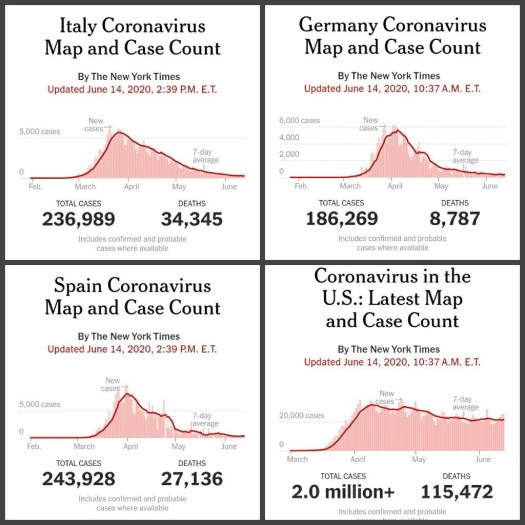
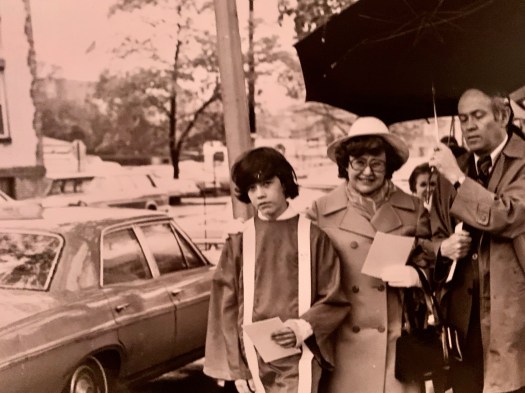


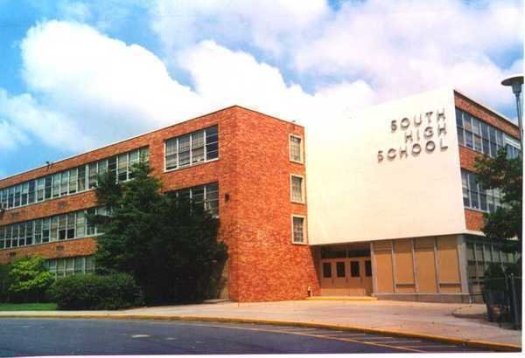


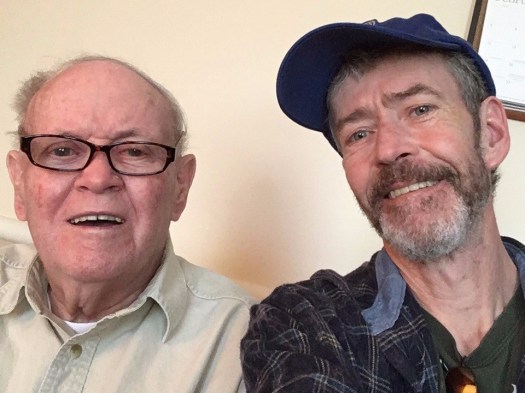


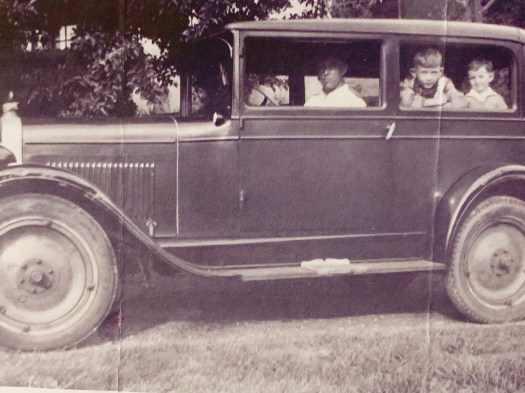


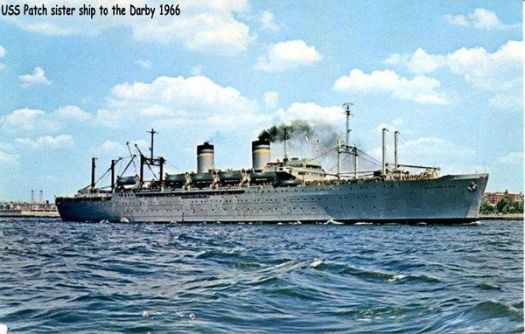






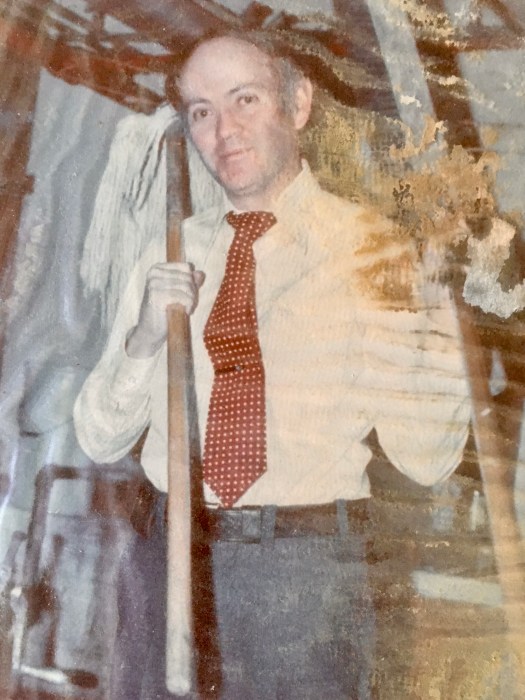


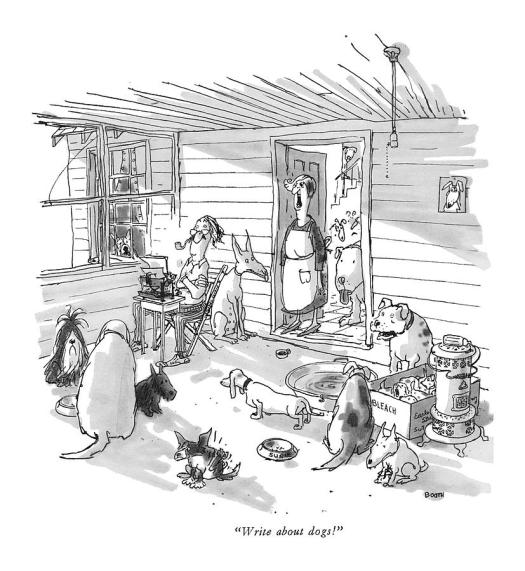


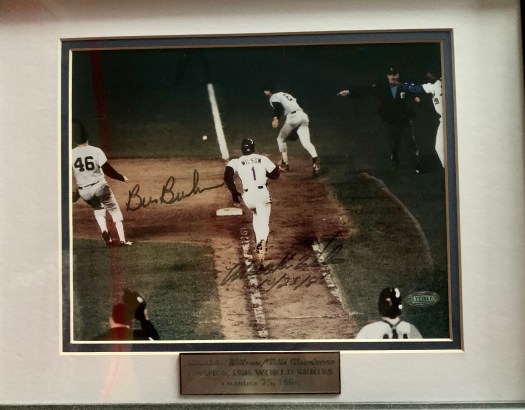






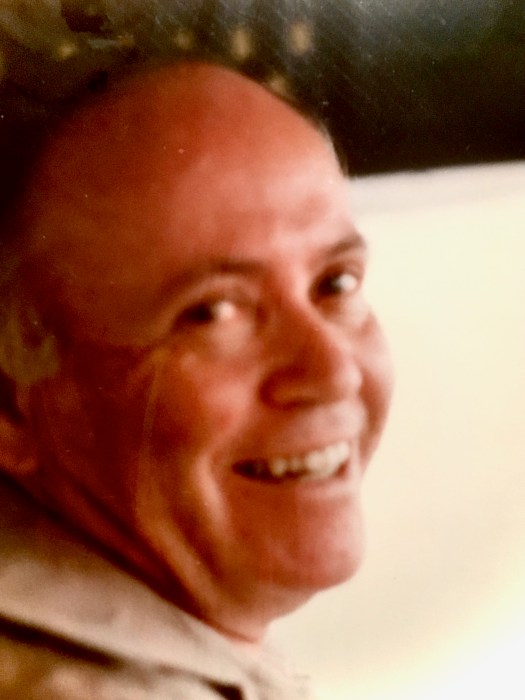


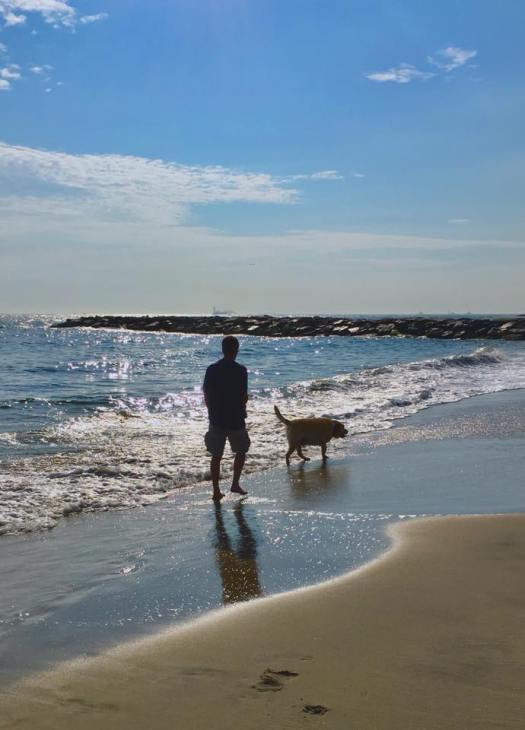


 It’s been another long, inexcusable break from blogging, but for better or worse, A Creek Runs Through It rises from the ashes today. Today, it’s time to go for a good, long walk. If you’re up for it, Mookie and I would be pleased to take you along on a tour of Valley Stream, Long Island, New York, or at least a nice, big chunk of it.





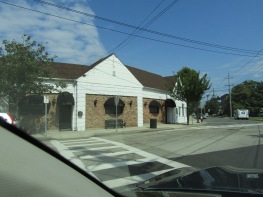


 We do have Ancona, which is famous for their true New York pizza, calzones and heroes, and where you are officially in with the Valley Stream in-crowd if George knows you by name. We have Itgen’s, famous for their homemade ice cream, and recently sold with the promise that it will continue. We have Mitchell’s, a nice little restaurant, though I prefer the Valbrook Diner up on Merrick Road, and an Italian Restaurant called Mia’s that’s been on my list of places to try a lot longer than Meli Melo. We used to have Morris’ Variety, which for years was the place to get everything from a screw to a fake Christmas tree. It was taken over a few years back by Raindew. Not quite as quirky as Morris’, but it serves the same purpose. They got me hooked on Yankee Candles. A lot of businesses have disappeared over the years, but there are a surprising number of survivors.


 We have a neat and clean and picturesque village park called Hendrickson Park a mile and half due north of Duffy’s Creek, which gets it fresh water and anti-freeze runoff from Mill Pond – which we’ll pass on the way back – and from Hendrickson Lake via pipes that go under Merrick Road and through the Village Green. Hendrickson Lake features a fine walking and biking path that leads up to Valley Stream State Park, and there’s an equally fine community pool complex in the park that we pay lots of money to swim in every summer. But no dogs are allowed on the path, and they can only swim in the kiddie pool on the day after Labor Day because everybody at Village Hall likes Mike Powers, who first had the idea. And how could you not?


 And don’t think that Mookie doesn’t get in on all this. For three of the last four years, he’s worked a three-hour shift at the “Doggie Kissing Booth”, raising money to support the Friends of Valley Stream Dogs. On Fest Day, he’s in Mookie Heaven, wagging people over to him as they walk by (“Ohhhhh!!! Look how cute!!!) and convincing them to hand Mike a dollar so they can lean down and get a big, sloppy wet dog smooch. Once Mookie is sufficiently overwhelmed, Bella the Chocolate Lab takes over, and that’s usually when we grab a compleato from San Antonio and head on home to the backyard. The creek is too icky for Mookie to swim in, so he has a kiddie pool to jump in to cool down after his walk. I can offer you a cold Dr. Pepper.



 Once upon a time, in the year 2002, during the my first summer as a married grown-up paying a mortgage to live in the house I grew up in on Duffy’s Creek, a small child went missing from the family next door because he was watching me scrub the green shit off the siding on the side of our little house, which is one of the many small joys of living on brackish water. Sort of like being Born on The Bayou, but not quite as cool. But I can still hear my old hound dog barking, chasin’ down a who do there. Chasin’ down a who do there.


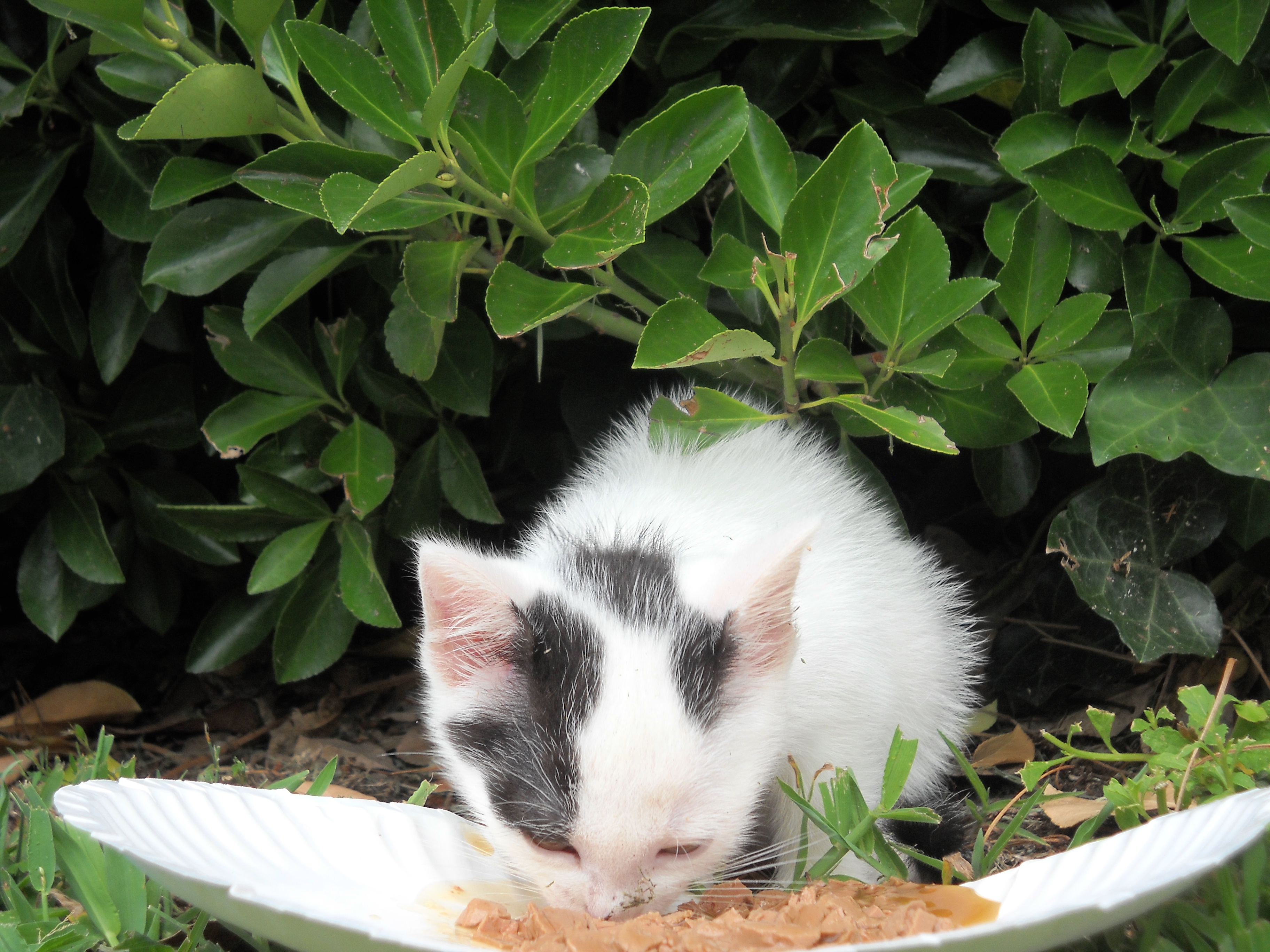














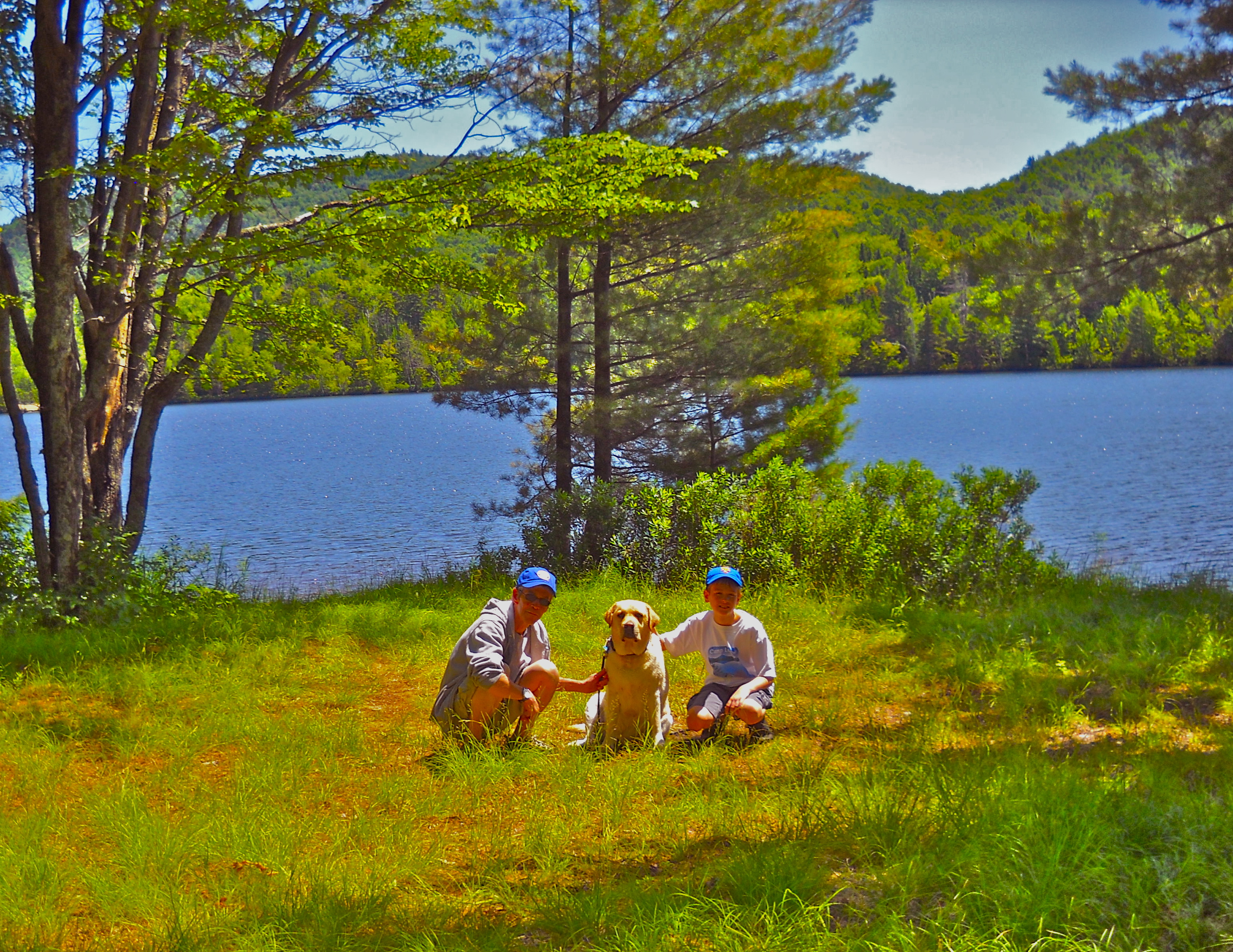

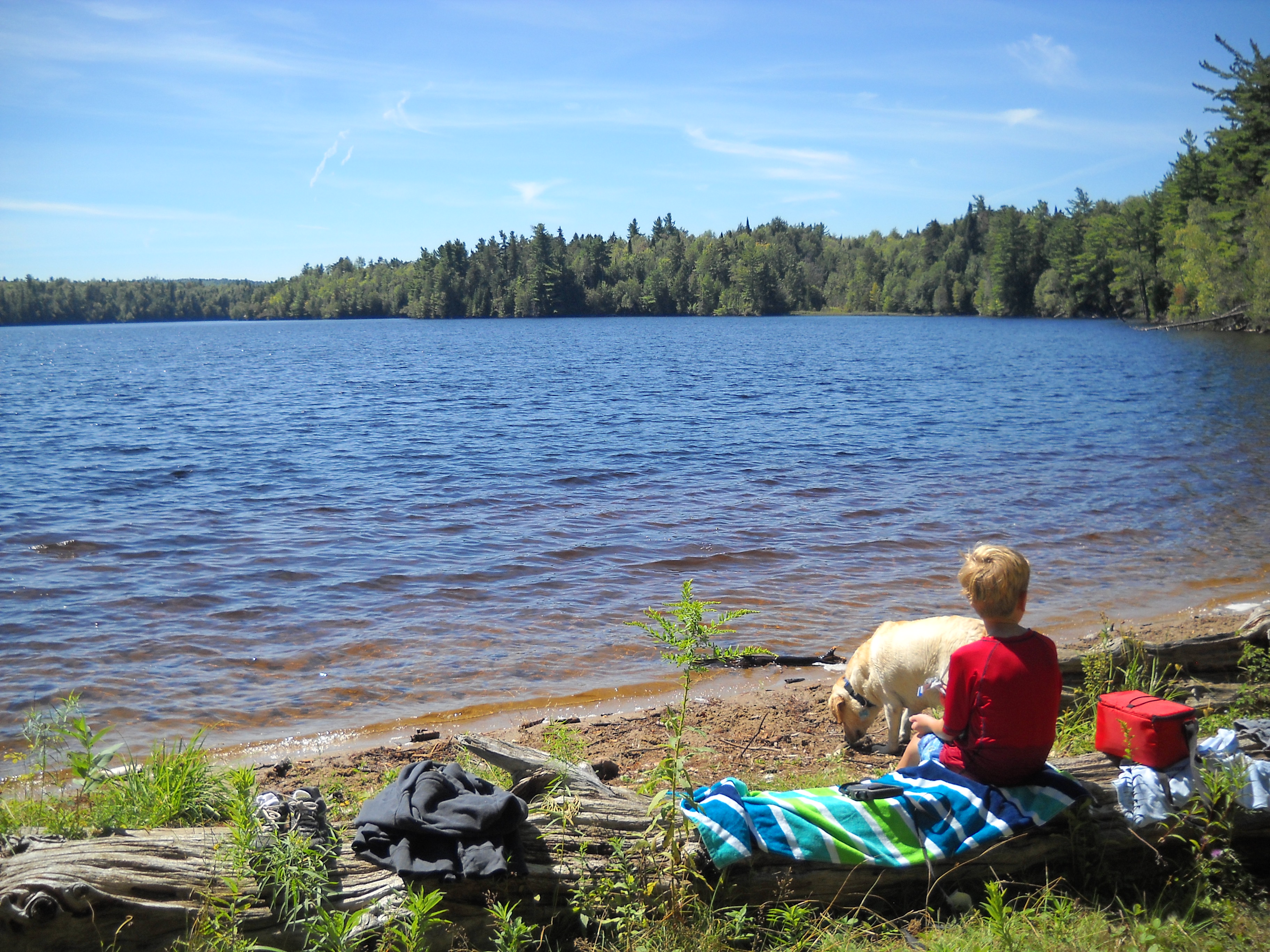





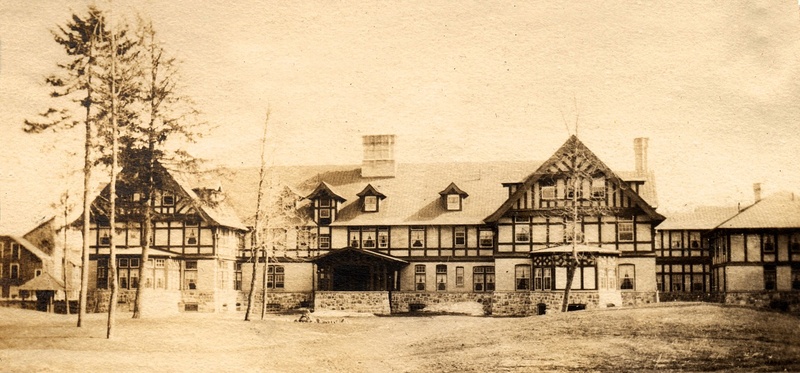


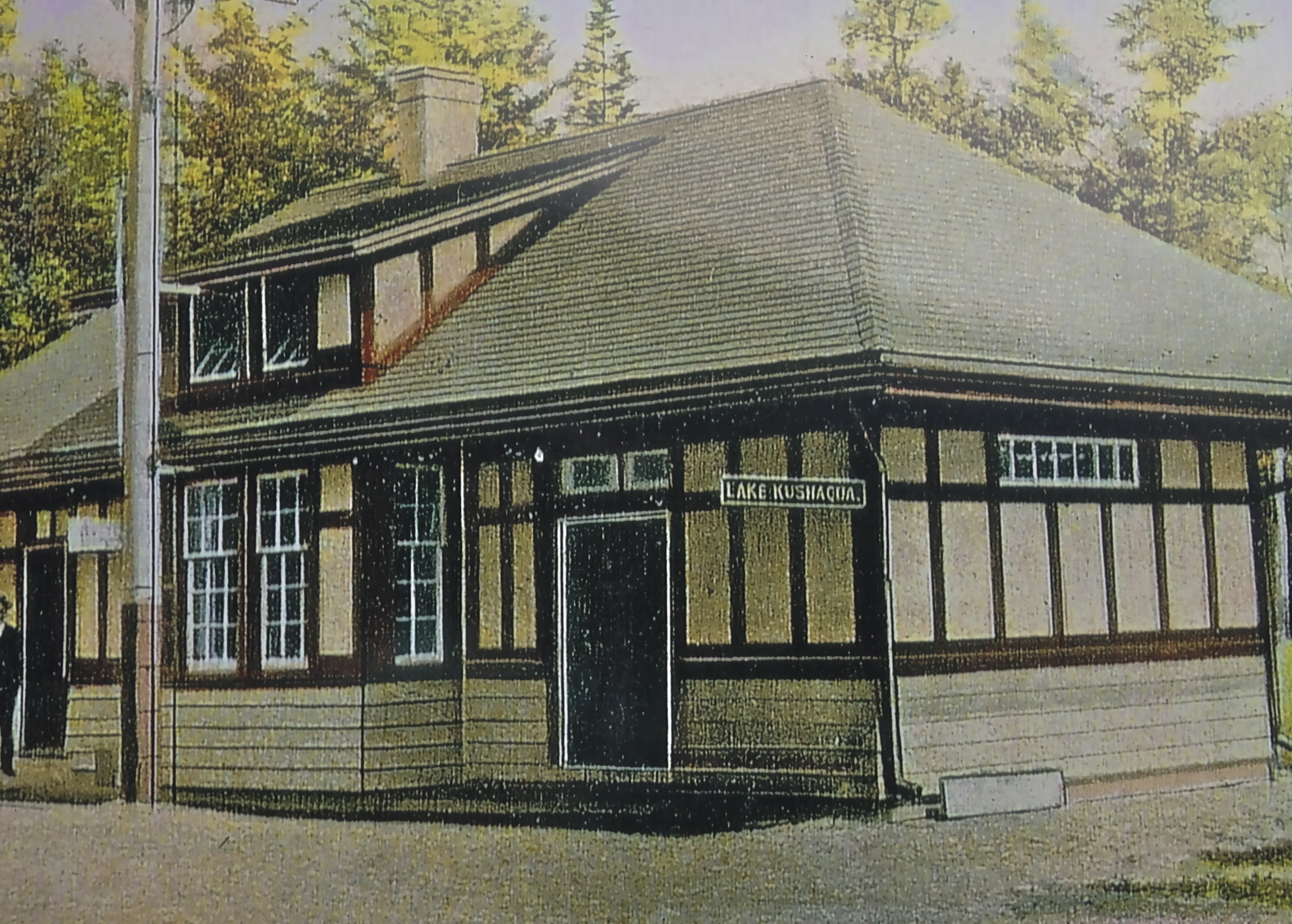


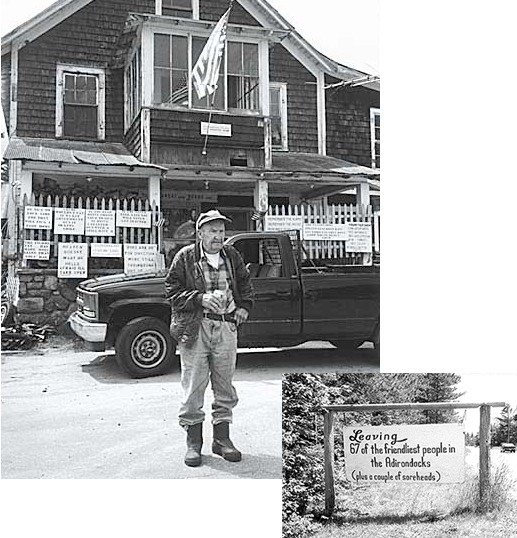

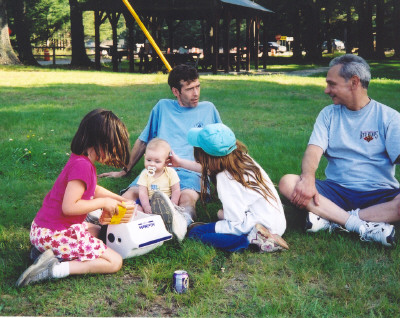




 A Creek Runs Through It